For the environmentally-conscious airport manager, two converging trends provide something of a dilemma. Since the early days of the pandemic, there’s been a renewed interest in air travel — something that’s good news for the industry’s bottom line. But there’s also an increased awareness of the effects of carbon emissions on the environment, and an increase in planes taking off could have adverse consequences there.
That’s what makes a recently-issued report from Heathrow Airport — the busiest in Europe, according to recent data — so interesting. Heathrow’s annual sustainability report summarizing the year 2025 describes climate change as “an existential threat to aviation, to the planet and to us all personally.”
What is the airport doing to address those concerns? The report touts a few areas of interest, including adding zero-emission buses to the airport’s fleet and reducing overall waste at Heathrow by 3%. The report also points to Heathrow using more sustainable jet fuel, with 3.1% of the flights taking off from the airport making use of such materials. Heathrow revealed that planes’ emissions were down by 7% since 2019, with more efficient aircraft cited as a contributing factor.
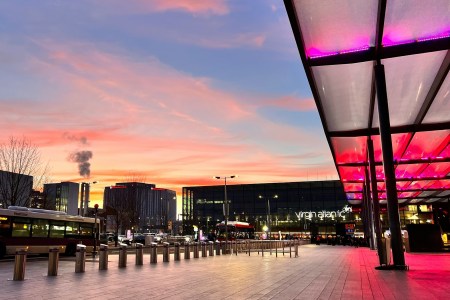
Heathrow Airport Rolls Back Liquid Limits
This follows similar changes elsewhere in England and ScotlandThe report also contains some mixed news on where the reductions in emissions are coming from. Between 2019 and 2025, Heathrow’s “on the ground carbon emissions” dropped by 18%, but the supply chain carbon emissions had risen by 16%. (“[I]ncreased capital expenditure” was the reason cited.) As Darin Graham reported at Skift, these reductions could have another added benefit: paving the way for a third runway at Heathrow.

More Like This


This article appeared in an InsideHook newsletter. Sign up for free to get more on travel, wellness, style, drinking, and culture..