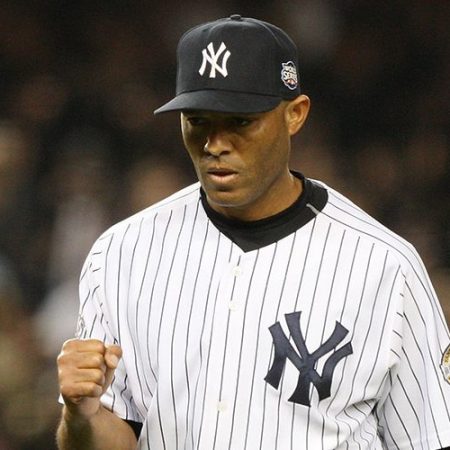
On Tuesday night, Team U.S.A.’s World Baseball Classic ended on a bitter note with the team of MLB superstars frowning as they received (and, in some cases, promptly discarded) their silver medals. But before they fell to Venezuela in the final, fans watching at home got used to hearing a familiar tune — the guitar solo from “Free Bird” — during the biggest moments of the international tournament. When Bryce Harper tied the game in the late innings with a massive homer, Fox’s broadcast played “Free Bird” as he rounded the bases. When David Bednar worked his way out of a jam in the quarterfinal against Canada with a huge strikeout of Owen Caissie, the network played the Lynyrd Skynard classic to celebrate before going to commercials.
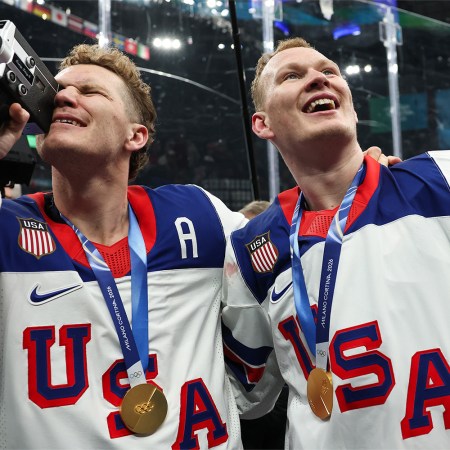
But the World Baseball Classic isn’t the only international sporting event where “Free Bird” has been used as Team U.S.A.’s unofficial anthem. Last month at the Olympics, that iconic guitar solo was played after every goal scored by both the American women’s and men’s hockey teams. Other Olympic hockey teams opted for more traditional music emblematic of their nation’s culture for their own goal songs; Slovakia, for example, went with a modern recording of the old Slovakian folk song “A ja taká dzivočka.” It may not be accurate to call “Free Bird” a traditional American folk anthem, but there’s no denying it was embraced by the sporting world as a celebration song befitting the stars and stripes this year. But how did we get here?
U.S.A. Hockey’s relationship with the song actually pre-dates this year’s Olympics. It all started when defenseman Zeev Buium convinced his teammates at the 2025 World Junior Championships to use the 1973 hit — or, more specifically, the driving guitar solo that begins four minutes and 45 seconds into it — as their goal song. From there, it took off, and eventually the 2026 men’s and women’s Olympic teams both voted to use “Free Bird” as their goal song, too. (And given that they both wound up winning gold, it got played a lot.)
“This is all player-driven,” U.S.A. Hockey manager of communications Melissa Katz recently told Yahoo. “After how much it caught on during the [World Junior Championships], it was a no-brainer to keep the momentum rolling with that goal song. From our under-18 teams to our Olympic teams, they’ve embraced ‘Free Bird’ over the last year.”
It has clearly resonated. Throughout both the Olympics and the WBC, “Time to play ‘Free Bird’” became a popular refrain in broadcast booths and on social media alike — so much so that some sites are selling merch. According to Spotify, streams of “Free Bird” “increased more than 100%” in the United States during the Olympics, with streams spiking 140% on the day the American men’s team won gold. And it gets the players hyped up, too.
American forward Brady Tkachuk told Yahoo that while the song can be tough to hear over the roar of the crowd when he’s on the ice, “When we were at the women’s game, it gave me chills.” But what is it about “Free Bird” that makes it such a perfect song to represent America in international competitions? How did a song that’s at least three decades older than most of the players become a de facto anthem in 2026?
Lyrically, the story of “Free Bird” — the narrator declining to commit to a relationship with a love interest because he’s a free spirit afraid of being tied down — fits pretty well with how America tends to see itself. Freedom is something that’s been etched into the American identity since the very beginning. The majority of us, after all, are descended from immigrants who decided their home countries weren’t doing it for them and forged their own paths rather than sticking with the familiar. The track also has the advantage of not being overtly political or flag-waving the way something like “Proud to Be an American” is, widening its appeal. And in a very literal sense, the phrase “free bird” easily calls to mind a bald eagle soaring triumphantly. The refusal to be tied down and the stubborn determination — “this bird you cannot change” — both feel distinctly American, too.
The twin guitar solo (played masterfully by Allen Collins and Gary Rossington), much faster-paced than the rest of the song, makes sense as the snippet that gets blasted in stadiums. It’s brash and showy, like American athletes often tend to be. And like those athletes selected to represent our country on their sport’s biggest stage, it’s technically impressive. It rocks in that big arena-ready way that something like “The Boys Are Back in Town” — another classic you’ll often hear at sporting events — rocks. It’s a big, bold riff perfect for celebrating the big, bold things happening on the field (or ice). It hints at American exceptionalism, for better or for worse, but it’s a hell of a lot catchier than “God Bless America.”
Maybe Buium put it best: “I think it’s because it represents what the U.S. is all about. We’re all Free Birds.”

More Like This

This article appeared in an InsideHook newsletter. Sign up for free to get more on travel, wellness, style, drinking, and culture..