Carpal tunnel. Stenosing tenosynovitis. Ulnar nerve entrapment.
Not the sexy terms you’d expect to hear from longevity-obsessed coeds hanging out in infrared saunas. But perhaps the 20- and 30-somethings should devote as much attention to their flexor tendons as they do their heart-rate variability and VO2 max.
Holding a phone or hovering over a keyboard puts your fingers, hand and wrist in an unnatural position for a long period of time. We all know we spend too much time on our devices — nearly a third of our waking hours, on average — and often for stretches where we forget to stand, look away or even breathe (a phenomenon called “screen apnea.”)
So it’s plausible that you could type or text for years without noticing stiffness set in, which makes this ripe territory for a repetitive use injury. What are the risks? What can you do to turn back the clock on your flexor tendons? Here’s what you ought to know.
Ankle Strength Is an Underrated Key to Healthy Aging
Better balance, fewer injuries — longevity starts at ground levelThe Toll of Typing
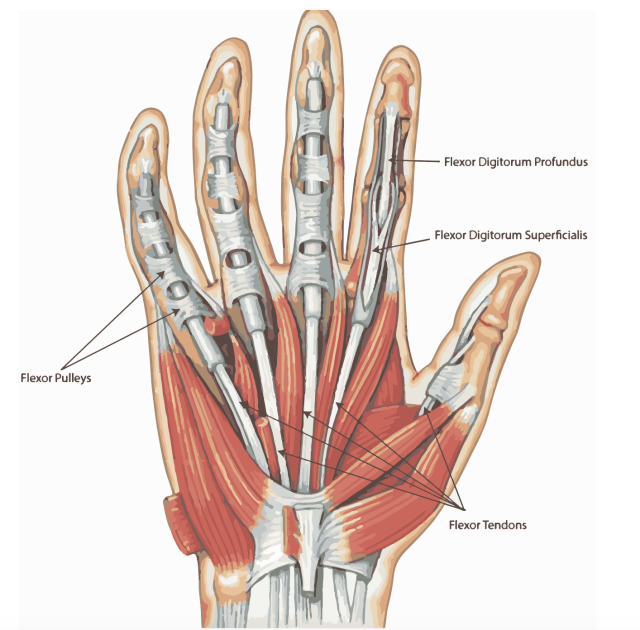
Your hand’s flexor tendon system connects the fibrous cords in your palm to the muscles in your forearm. It’s an intricate little network of pulleys and sheaths that enable us to perform any number of tasks: pick up an orange, open a drawer, flip off a driver.
But we didn’t evolve to keep that system at constant work and attention. Depending on your typing style, it’s possible that decades of typing could lead to carpal tunnel syndrome — a condition in which the palm’s median nerve is compressed and numbness radiates from the fingers to the forearm. As you age, the condition can weaken your pinching muscles and cause you to drop things.
For one, you’re at a heightened risk here if you rely on “hunt and peck” typing, which puts an inordinate onus on a few fingers. But most studies have looked into the intersection of keyboard use and wrist posture. This study concluded “there may be an increased risk for carpal tunnel syndrome for those who use a keyboard for more than 20 h per week” and demonstrated that non-neutral wrist extension raises carpal tunnel pressure.
For years, I’ve used an elevated laptop stand, understanding it’s a great way to keep the screen at eye level and beat tech neck. But an angled keyboard creates a separate suite of issues. Authors in a different study wrote: “Changes in the median nerve were greater during typing using a keyboard tilted at 20° than during typing using a keyboard tilted at 0°.”
Phones Are Not Helping
Hand pain is on the rise, especially among students, and research suggest hours of holding smartphones and scrolling through them are to blame.
Here’s a telling stat: in a study where the average age was 19.8 ± 3.07 years (so, young people who typically don’t have age-related ailments), “76.65% reported experiencing pain in one or both hands, with the right hand being the most commonly affected.”
Problematic phone use has been liked to de Quervain’s tenosynovitis, which is a painful inflammation on the thumb side of the wrist. The condition is more commonly associated with middle-aged adults, so orthopedists are alarmed (if unsurprised) to see young people already reporting pain and stiffness. One study even called young people a “vulnerable group,” on account of their excessive phone use: “[They’re] susceptible to severe musculoskeletal issues.”
Phones don’t seem heavy to us — certainly not in relation to a bag of groceries or even a thermos of coffee. But common models can weigh up to 250 grams, and we often hold them in a sky-facing “claw” grip. The unnatural position creates little tears in your hand’s muscles, and the frequency with which we perform it can outpace your body’s ability to nourish the area.

You Really Want to Live Longer? Get a Grip.
The metric is a better predictor of premature death than your blood pressureHands-On Defense
If you’re anything like me, this sort of information probably engenders a bit of wellness weariness. Another thing to worry about. But we have to live in this digital world, and barring societal adoptions of assistive technology (eye typing, voice dictation, etc.), you’ll probably be tapping and texting for years to come. So here are seven tips that could reduce pressure on your flexor tendon system along the way:
Optimize your workspace
It’s worth investing in your ergonomics. Connect a monitor, or raised laptop (to protect the neck), with a flat keyboard (to keep your wrist in a neutral position), and maybe forsake the mouse, which creates an imbalance from one hand to the other.
Take frequent breaks
Something you should already be doing for your eyes, low back and brain. Get up, move around and shake things out — ideally every 45 to 60 minutes.
Perform wrist-related stretches
Here are some reliable ones: wrist flexor stretch and wrist extensor stretch. I’d also try tendon glides, a rehab package for patients who’ve broken their hands. The mini exercises are enormously satisfying.
Strengthen your grip
You can creative here. As it happens, grip strength has strong ties with longevity (and is probably something those hypothetical sauna folks are interested in). Try squeezing a tennis ball for 10 reps per hand, or rapping a rubber band around your fingers and flexing out for 15 seconds.
Consider the phone grip
Those round attachments you’ve likely seen around can take some of the load off your fingers. (Arthritis-related communities online credit these contraptions with reducing hand pain.)
Put down your phone
Real simple, I know. But using it less is your absolute best defense.
Watch for early warning signs
You’ll know just from reading this article if you have issues. (I’ve been flexing my right hand the last 90 minutes.) It’s a repetitive-use problem caused by autonomic behavior; the area needs more attention than we tend to give it. If you’re concerned, talk to your orthopedist or physical therapist. They can give you more information.

More Like This



Twice a week, you'll find proven advice and tips, expert interviews, deeply reported features and personal essays on living better — for however long you’re here. Subscribe to Champ now.