In an earlier era of the internet, looking at an online advertisement meant that you were seeing the same version of the ad that other people were seeing. As technology has evolved, that also means that ads have grown more specialized; a reader or film buff might encounter an ad for a book or Blu-ray that they’d previously looked into buying, for instance. If the idea of that being the tip of the proverbial iceberg unnerves you, there’s some even more unsettling news on the horizon.
In an unsettling article for 404 Media, Jason Koebler explored the phenomenon of advertisers using AI-generated images and text to customize ads based on the interests of the person encountering them. Koebler points to a Ticketmaster ad campaign on Facebook that shows the same fans watching a college football game, but with different text and color schemes based on the college or university highlighted. Those color schemes include the clothing worn by the people featured within the ad.
What strikes Koebler as particularly noticeable in this ad isn’t the presence of AI. Instead, it’s the client. “[I]t is notable that a company as big as Ticketmaster is using generative AI for its Facebook ads,” Koebler writes. Ticketmaster isn’t the only large corporation using AI in its advertisements; The Verge’s Jess Weatherbed recently reported on a holiday-themed Coca-Cola ad. Weatherbed was critical of the result, writing that the onscreen characters “move unnaturally, like flat images that have been sloppily animated rather than rigged 3D models in CG.”
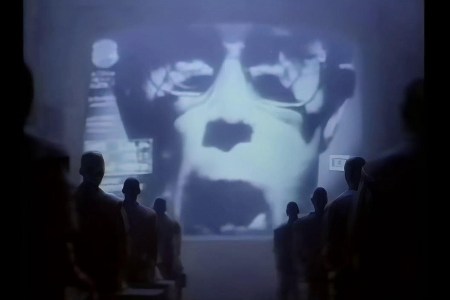
How Apple’s “1984” Macintosh Reveal Changed Advertising
Debuted during the Super Bowl on January 22, 1984, Apple’s iconic ad announced the MacintoshUnfortunately, 404 Media’s analysis of AI-generated online ads makes a convincing argument that we’re all about to see a lot more of this kind of thing. Why? Koebler points out that using AI means not having to pay photographers or models, and instead allows for an absurd degree of customization. There are plenty of things that AI might be able to do to benefit humanity; creating advertising mascots that can’t quite make it out of the uncanny valley, however, is not one of them.

More Like This



This article appeared in an InsideHook newsletter. Sign up for free to get more on travel, wellness, style, drinking, and culture..