The first rule of working concessions at the U.S. Open: do not show up in your well-worn Vans Old Skools. You will slip and eat shit in front of the walk-in.
Is this an amateur move? Well, I am a food-service amateur. Save for a summer job as a Cracker Barrel hostess (I still have the brown apron to prove it), I’ve never held a restaurant job. So how did I find myself running to get a gallon bag full of lobster claws and knuckles in the kitchen of a concession stand at Billie Jean King National Tennis Center?
Before I answer that directly, you first have to understand how much the Open has grown in the last decade. In 2015, 691,280 people attended America’s Grand Slam tournament. By 2025, that number exploded to 1.14 million. Along the way, it became something more than a tennis competition: it’s now a three-week eating, drinking and entertainment spectacle, supercharged by hundreds of thousands of Honey Deuces. (A friend who works with Baldor Specialty Foods, which supplies the hand-scooped melon balls used as the cocktail’s garnish, told me that if they lined up every pallet of melons end to end, it would be close to three football fields long.)
Today, the U.S. Open isn’t merely a tennis tournament with food stands. It’s a temporary city with restaurants and bars that appear in a flash, and will disappear just as quickly come September 14.
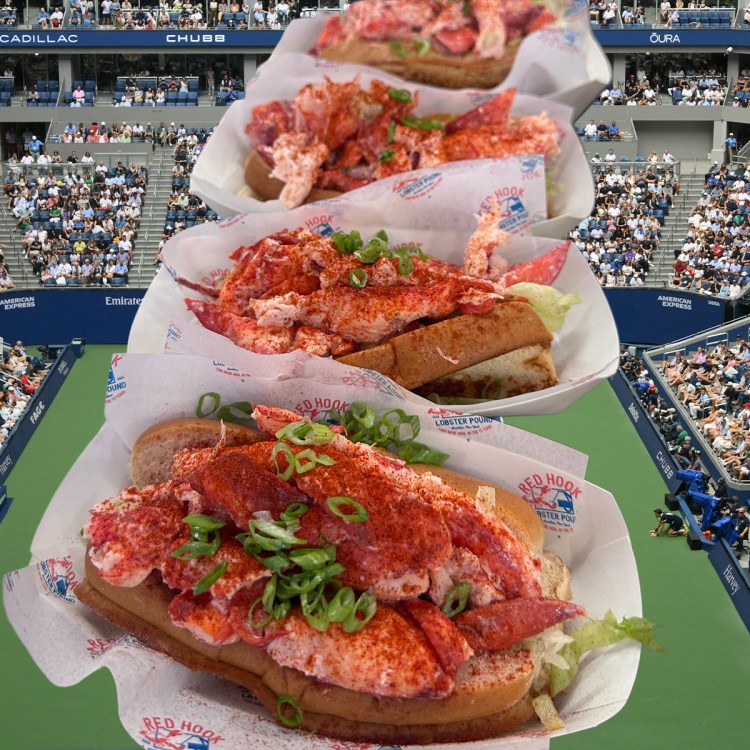
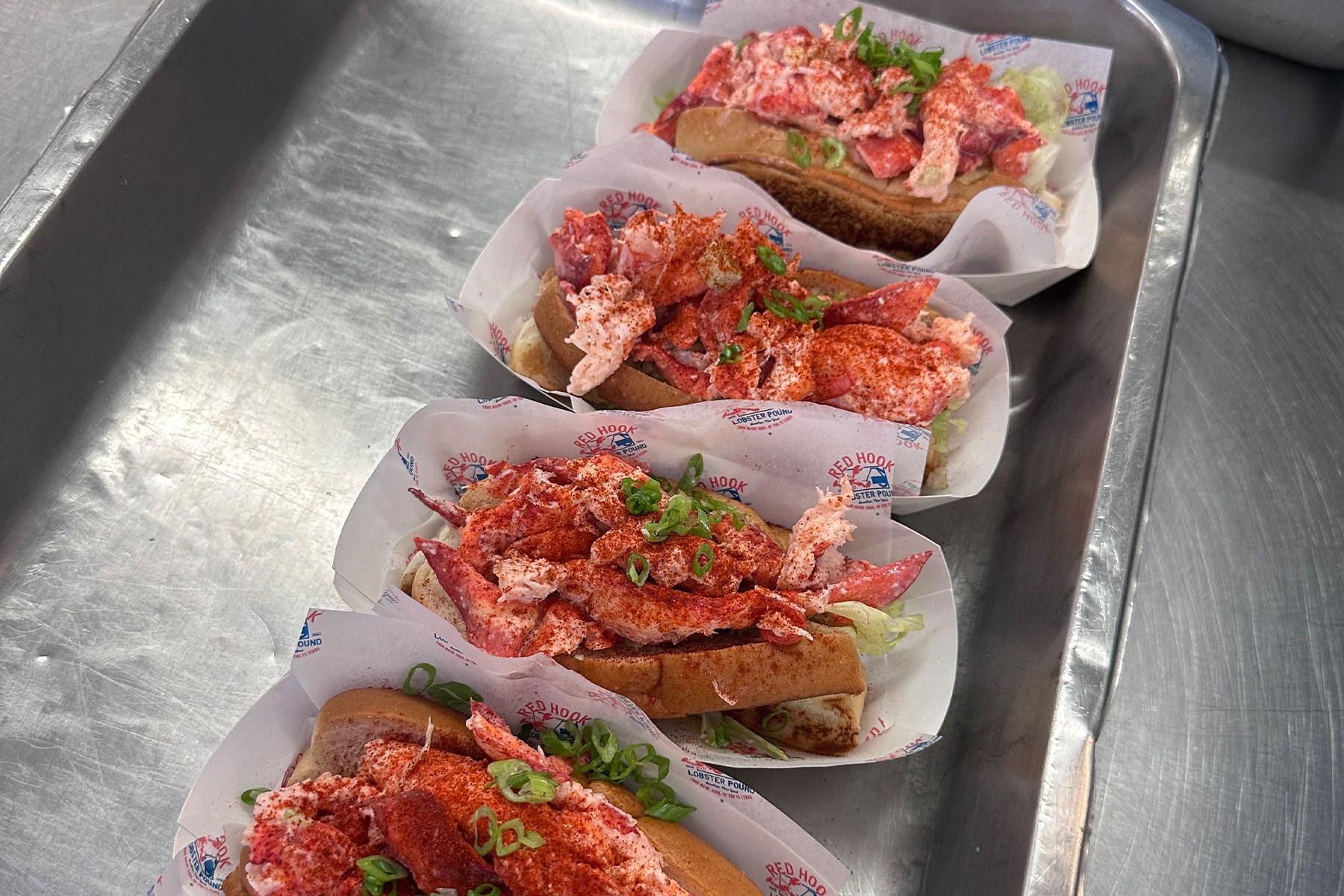
Well, to all you spectators it’s a flash. In reality, it takes a shitload of manpower to run that temporary city and the concessions within. For the last three years, one of my best friends, Justin Harter, has been the U.S. Open manager for Red Hook Lobster Pound, a Brooklyn seafood restaurant that slings lobster rolls and fish and chips at two locations at the tennis complex. For a solid month around the tournament, I don’t see him unless I get a ticket. On match days, he arrives at the stadium complex around 8:30 a.m., and often doesn’t leave until 10 p.m.
As the Open’s cultural clout expands, you can’t escape talk of the on-court action, the A-list athletes, the celebs, the clueless and unruly influencers. But what does it take to feed the one million people who walk through the gates? I asked Justin if he’d let me work a shift to see the underbelly of the tournament. After ironing out some logistics and signing my name on a couple of forms, I was in.
Unleash the Fans
I arrive at Billie Jean King National Tennis Center at 9 a.m. on Tuesday, September 1. First stop: credential pickup near the Unisphere, that iconic stainless steel globe ringed with fountains. It’s a humid, misty morning, and the tennis fans are ready; there’s a huge crowd of people waiting for the main gate to open in 30 minutes.
I make my way to what’s dubbed “Food Village,” where the Red Hook Lobster Pound has one of their concession stands (the other is inside Louis Armstrong Stadium). Justin warned me that the lunch rush gets crazy — a 50-customer-deep line for three hours straight — and the nerves are already getting to me. I put on my navy Red Hook Lobster Pound T-shirt and matching ballcap and get to learning.
I’m working the register, which apart from the obvious also involves pouring beer and soda, fetching bottled drinks from the fridge behind me and serving lobster rolls, fish and chips, and French fries from the pass between the kitchen and the order window. The work area is small, so I can grab most things just by turning around or taking a few steps. I start to get comfortable calling out “Behind!” so people are aware I’m nearby. Isabella, the cashier next to me, gives me tips on how to gracefully pack lobster rolls into a paper boat and pour the beer out of the finicky taps so it isn’t all foam.
The concession stand opens at 10 a.m. At 9:57, there’s a woman asking for a Connecticut-style lobster roll. Thankfully, she’s a red herring. It’s a rainy day, so the Lobster Pound’s stadium concession stand is getting the brunt of customers; the unexpected four-hour match between Flavio Cobolli and Francisco Comesana keeps people inside, too.
Things start to ramp up around noon, the typical lunch rush. At that point, I never stop moving, bouncing between the register and the various stations to grab orders. I’m bashful at first but quickly start yelling at the hungry masses. “I’ll take the next customer down here!”
Around 3:15 p.m., Justin relieves me of my duties and we head to the Louis Armstrong stand so I can have a go there — but the Open has other plans. At 3:22, the Cobolli-Comesana match ends, and thousands of fans start flowing down the stadium stairs.
“Actually, you need to see this,” Justin says. We whip around and hightail it back to Food Village. “You’re about to see what it’s really like.”
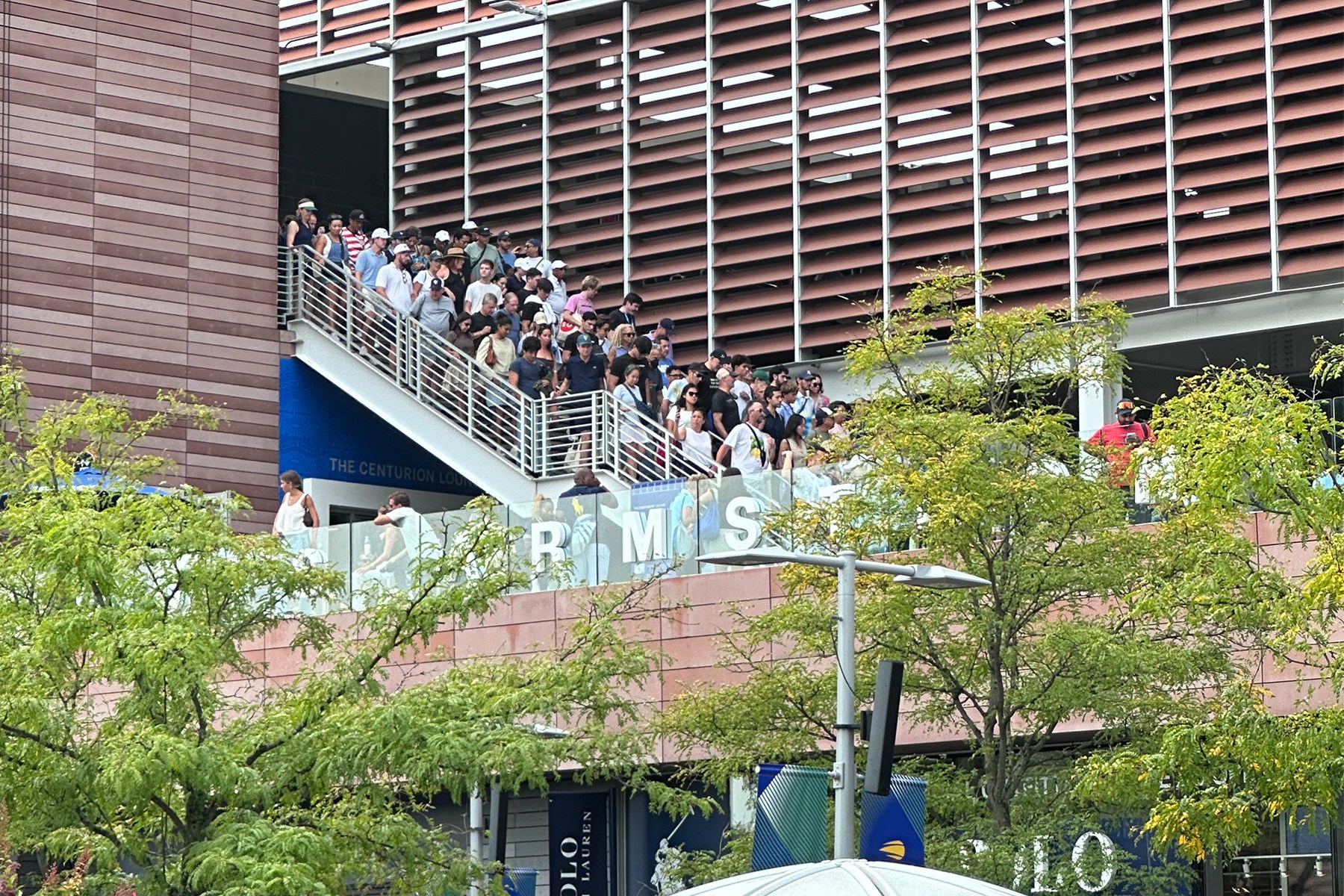
Earlier in the day, Isabella pointed to those stairs and told me that “when a match is over and everyone starts to come down those stairs, it’s like an alarm goes off.” You have a perfect view of it from the Lobster Pound’s stand, and that shit is scary — 14,000 people streaming out at once, all ravenous for something, anything.
I stand near the Connecticut lobster roll line to observe. Justin runs a tight ship. He’s quick to tell people they fucked up and to do better on the next batch. He’s also constantly running back and forth, expediting and encouraging, pepping everyone up with supportive words. He tells the line when they need to double down on rolls and when there might be some relief in sight.
When the stanchions finally clear out, he claps. “Great job,” he says. “We made it through that line.” The unspoken part of that pep talk? There’s more where that came from.
15 Days, 8,000 Pounds of Lobster
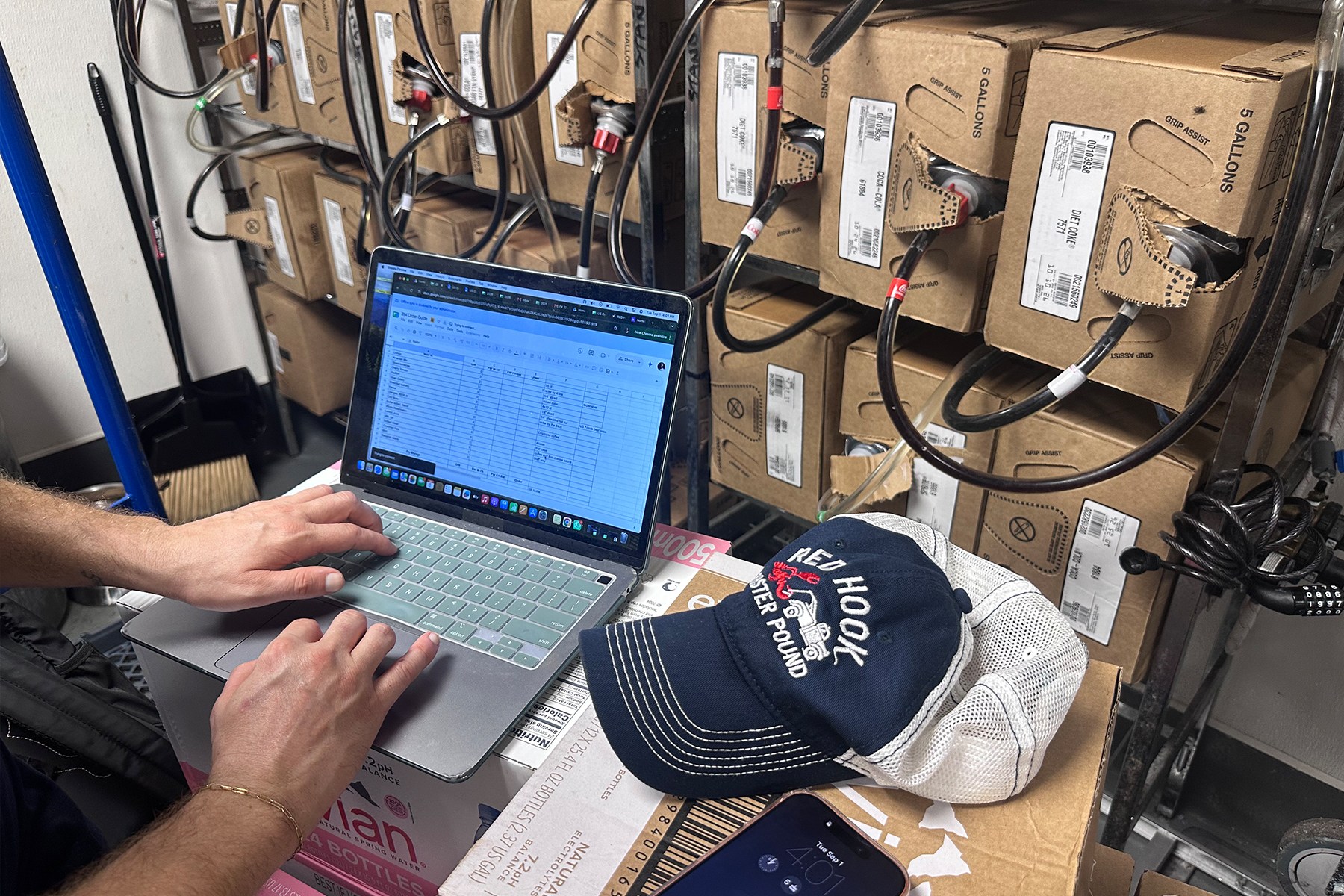
At 3:49 p.m., the crowd on the stairs thins to a trickle. As Justin and I start to pack up, his eyes widen as he remembers he has 11 minutes to place his order from US Foods, one of Red Hook Lobster Pound’s ingredient vendors. “They are really strict about their 4 p.m. cutoff,” he tells me. He perches his computer atop a makeshift desk — Evian boxes stacked on a dolly. “This is the witching hour, with the shift change and getting all the orders in on time. It can be so crazy if a match lets out late.”
As Justin locks in, I start chatting with Cyndi Stanimirov, the director of operations for Red Hook Lobster Pound. She tells me the staff of the restaurant’s Red Hook location does all the prep for the entirety of the U.S. Open. “It’s a huge collective effort,” she says. “And summer is the busiest time for the restaurant, on top of our Rockaway and Smorgasburg locations. [Food vendors] say they train all year for the U.S. Open, and that’s actually a fact.”
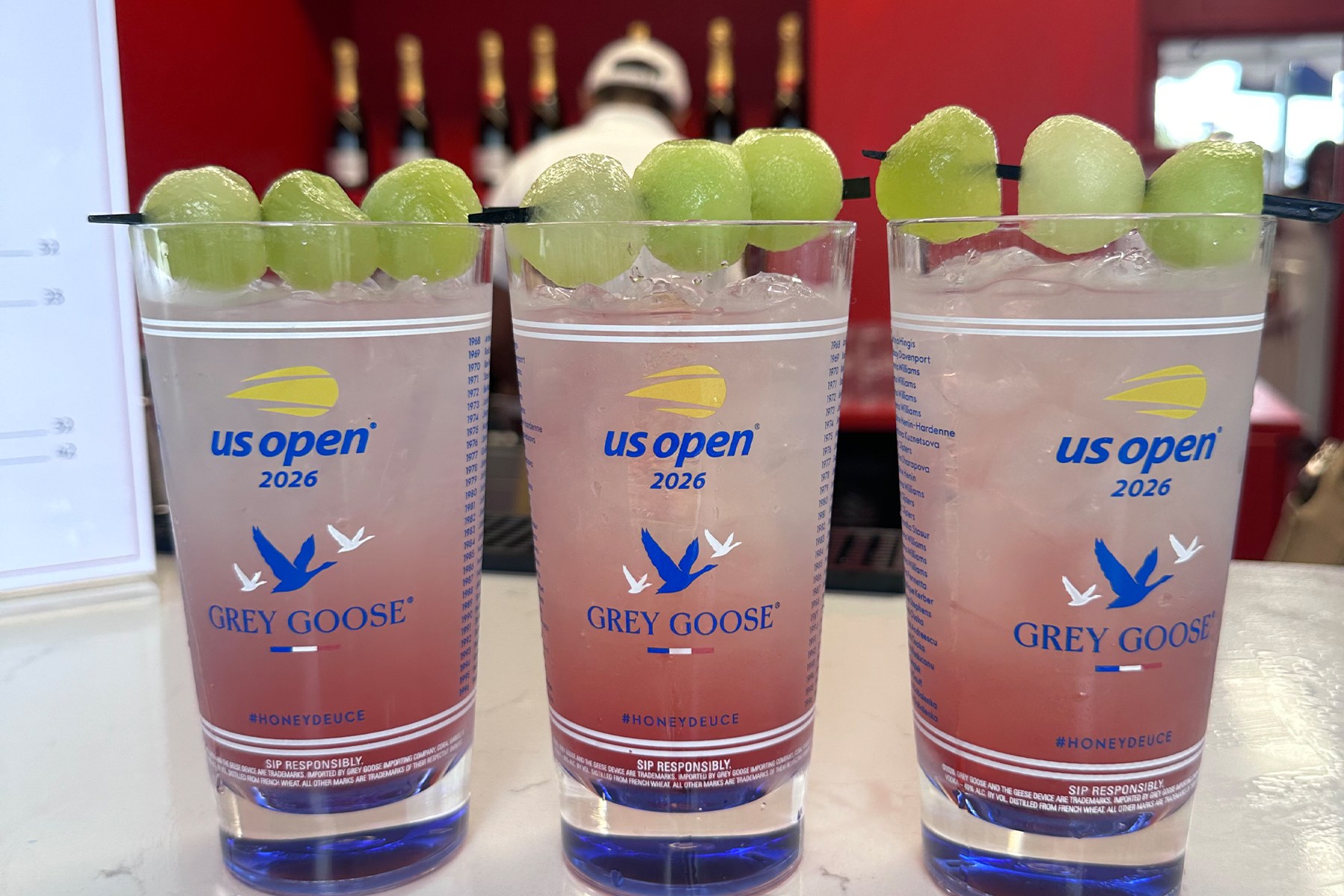
“It’s literally 4 p.m. — order confirmed!” Justin punches the air in triumph. Now we can take an actual breather. For Justin and Cyndi, that might be popping in to watch a match, grabbing food or getting a drink. We spring for the latter, sidling up to the Moët & Chandon Bar at Food Village for a Honey Deuce that’s made from scratch and not poured from the tap. “It’s way better,” Justin says as we scoop our drinks and sit at a nearby table. The cocktail has a pink gradient from the Chambord, and three melon balls sit perched across the rim of the beloved souvenir cup. You can see people carrying them around the tennis center grounds, stacked high like a spectator trophy.
My six-hour shift is over. I’m covered in lobster butter and probably getting a bruise on my thigh from when I hit the deck. I ask Justin how he finds anyone who’s up to doing this 15 days in a row.
“I do video chats so I can understand people’s demeanor: whether they smile, whether they’re happy. Chemistry matters,” he says. “But I also had 10 people come back from last year because it was such a good experience for them. That’s made a huge difference in training because returning staff is able to teach new people in the moment about the pace. It’s not just coming from management — it’s coming from their buddy. They want to do just as good as the person next to them.”
Justin tells me that the Lobster Pound’s first year at the Open was a bit of a wash because it was such a big learning experience. But by year two, they were dialed in and ready to go. They are already on track to exceed last year’s numbers.
“We sold 420 pounds of lobster yesterday,” he says.
“Susan [Povich, co-owner of Red Hook Lobster Pound] calculated 6,706 pounds for the whole thing,” Cyndi adds. “But I think we’re going to end up between 7,000 and 8,000.”
“Cyndi and I love working together on this,” Justin says. “It takes a certain breed, and we just happen to be that breed. We love our jobs, we love what we do and we’re really proud of the product and the people we hire. What we present ourselves as stems from the top, from Susan and Ralph [Gorham], the owners. It’s infectious and it’s fun, even though you’re tired.”
As we stand up from the table, I feel a bit unsteady in my Vans, which I don’t admit to my companions who will be here until 10 p.m. It’s my time to head home, but before walking to the subway, I follow Justin and Cyndi back to their Food Village concession stand for another crucial moment in the day. There’s no mad rush for rolls, or another vendor deadline. Instead, they’re delivering a cheesecake to Jessie, one of the cooks. Today’s his birthday, and it’s time to sing.

More Like This
Twice a week, you'll find guinea pig features, personal essays and expert interviews on living better — for however long you’re here. Subscribe to Champ now.