The following contains spoilers for Wicker
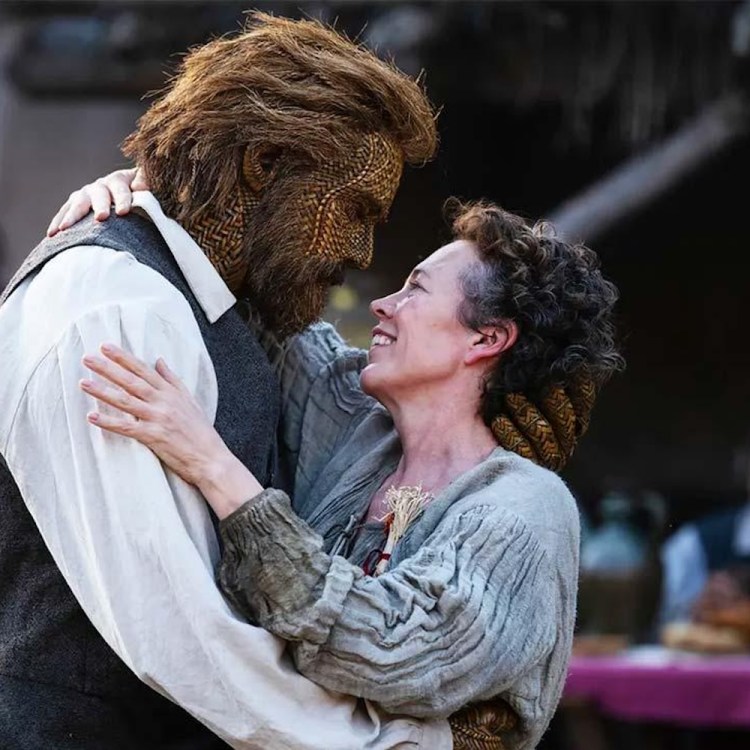
Back in July, a trailer for the film Wicker went rapidly viral on social media. Starring Olivia Colman and Alexander Skarsgård, who plays her husband — and is also entirely made out of wicker. Six feet and four inches of sheer basket-weaving material. The trailer went viral for its NSFW depictions; it starts off with Olivia Colman laying down on a bed topless, moaning, when a wicker hand caresses the side of her face, guiding her to sit back up. More intimate shots between Colman and Skarsgård are woven in throughout the trailer, clearly indicating that though wicker may just be a kind of fiber, Skarsgård’s character would be as alive as any other living human man. The internet quickly deemed it one of the most erotic movies of the year.
I had the opportunity to see the film Wicker prior to its release last week at the AMC Lincoln Square location. Going into it, I expected I’d be watching a montage of wicker-on-woman sex scenes. (I was not opposed.) And, while certainly steamy, I was more shocked by the emotional depth and messaging that unfolded throughout the story. It was profoundly undersold in the trailer, and I left the theater in an emotional spiral. Has Skarsgård dressed as a basket solidified him as the most poignant motif of dating culture this year?
Wicker is based on a short story called “The Wicker Husband” by Ursula Wills-Jones. Colman’s character, a conventionally unattractive fisherman literally named “Fisherwoman,” asks the local basket weaver in the village named “Basket Weaver” (Peter Dinklage) to make her a husband after receiving harsh criticism from other married women for rejecting marital traditions in the town. The film feels like an allegory — character’s names are reduced to their occupations, and this simplicity makes everything feel like a symbol. Starting with, what felt like to me, one of the strongest central ideas: What if anyone could build their perfect partner, and what are the ramifications?

Inside the Sultry, Bejeweled, Spectacular World of Company XIV
I went backstage at the New York theater company that has spent two decades blurring the lines between burlesque, ballet and cabaretIf one could mold and create them, like a Sim — pick out their height, their occupation and yearly salary, their hair type or eye color — who might they be? It’s like swiping on a dating app, filtering through preferences we all inevitably have — and are now drastically fatigued by. It’s been written about a million times, surely, and Wicker is the alluring antidote: There’s no pressure in having to find them, there’s no fear of rejection. It simply pulls on a fantasy that eliminates all of the parts that feel dreadful about dating today. At their first introduction, the wicker man simply shows up to the local church on the day of his wedding to the fisherwoman, and neither one of them has second thoughts. They marry, move into her oceanside cottage and begin a blissful marriage — and not just because of their arrangement.
The wicker husband and fisherwoman fall into dynamics that feel routine. She becomes quickly enamoured by him, and he is a doting, textbook husband. Wicker is surprisingly also very funny, one of my favorite satirical elements being how Skarsgård perfectly portrays a man who has solely been put into the world to be a husband. His actions are so simple but so clearly meaningful to the fisherwoman; more often than not, he’s either making repairs on something in their cottage (“The bed is broken. Bring me a hammer. I will fix it,” he says to her in one scene) or spewing some of the most romantic, one-liners that come right off the top of his head, because of course they do. (“You are the reason I breathe and live,” or “Without you I would never have seen the sun on the ocean, or the clouds in the sky.”) It’s another play on an idea that plagues modern dating culture: the idea of having someone who just knows you. That with this perfect person in front of you, you’d never have to communicate a need, you’d never have to ask for something to be done, you’d never question how much you might mean or how much they care about you. It’s the perfect piece of escapism media that encapsulates what everyone who’s stuck swiping really wants.
But, as can be the case in real life, wandering eyes from local townspeople begin poisoning the well. The women in town start acting lustful toward the wicker husband and unsatisfied in their own relationships (fairly so — the husbands in this film are evidently not great partners) after seeing the way he acts and speaks to her, going so far as to concoct rumors that the wicker husband is cheating on the fisherwoman in an effort to break them apart. The men in town also become clearly jealous of the wicker husband’s impact in the village.
In one scene, the wicker husband goes to a local bar and sits with several other husbands, all of them complaining about their wives and venting frustrations in their relationships. The wicker husband brings up that he has to fix their bed that day because it broke again. When one of the men responds, “What makes you want to do about it, anyway? I mean, the fence, the door, the roof even. Does she weigh you down with her nagging? Is that it?” The wicker husband responds: “It makes her happy. And then I am happy. And then the bed needs to be fixed.” It renders the men speechless and spitting out their drinks. The wicker husband is never really swayed by the commentary of the other men, and the men remain dumbfounded by the care he has for his wife. It’s a comedically well-done scene about masculinity, which is one of the other persistent themes in the film that I loved the most. In an era where young men are influenced by manosphere-pilled dating ideals and what their expectations should be, the film excelled in depictions of toxic masculinity (ranging from refusal to participate in mundane, household chores and neglecting basic emotional needs in their relationships to putting thick, metal collars on their partners during marriage ceremonies and auctioning for wicker wives themselves far later in the film, when they realize the “standards” of their wives have become “too high”). It also illustrates the difference in a man who feels insecure or confident in a relationship — and how that, in turn, impacts the dynamics in a healthy relationship.
The pace of the film picks up in a rapid and dark way, bringing up topics like fertility, greed and vengeance, and even a wicker wife. It’s persistent in its ability to keep up with trending themes in a way that feels allegorical and relevant in an underrated way. And to see it all portrayed by Skarsgård feels influential, as he so effortlessly takes on this masculine lead with a dominant vulnerability and attentiveness that gives this theme its deserving recognition.

More Like This




This article appeared in an InsideHook newsletter. Sign up for free to get more on travel, wellness, style, drinking, and culture..