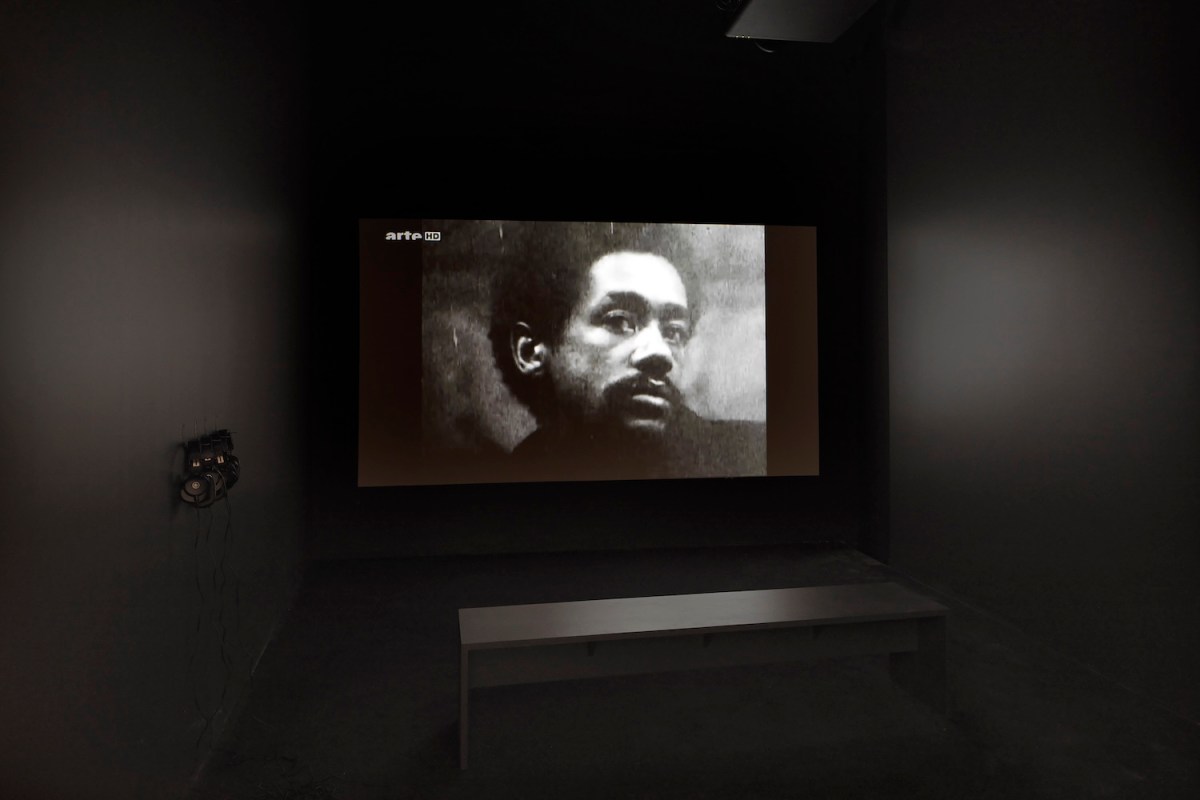
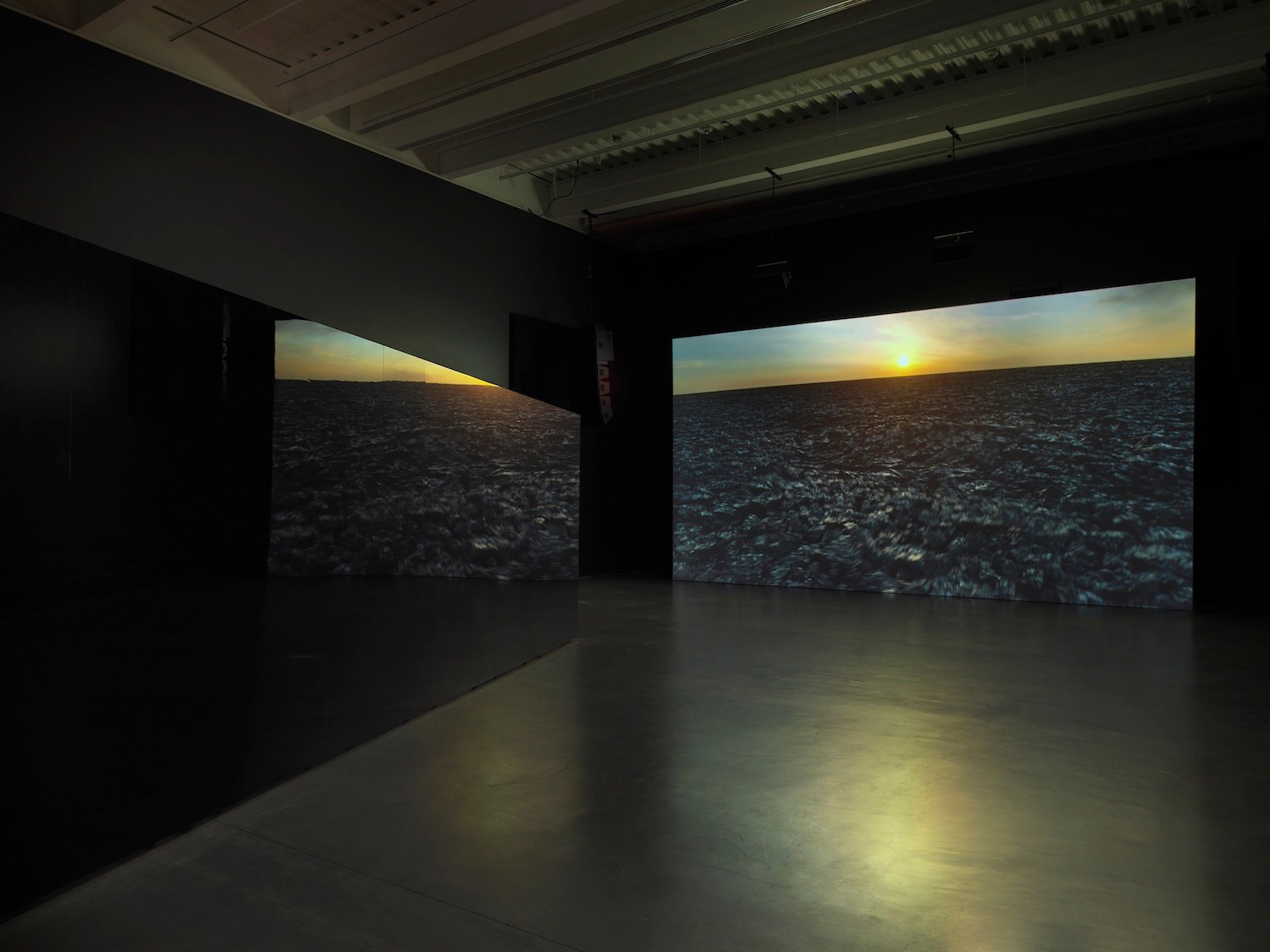
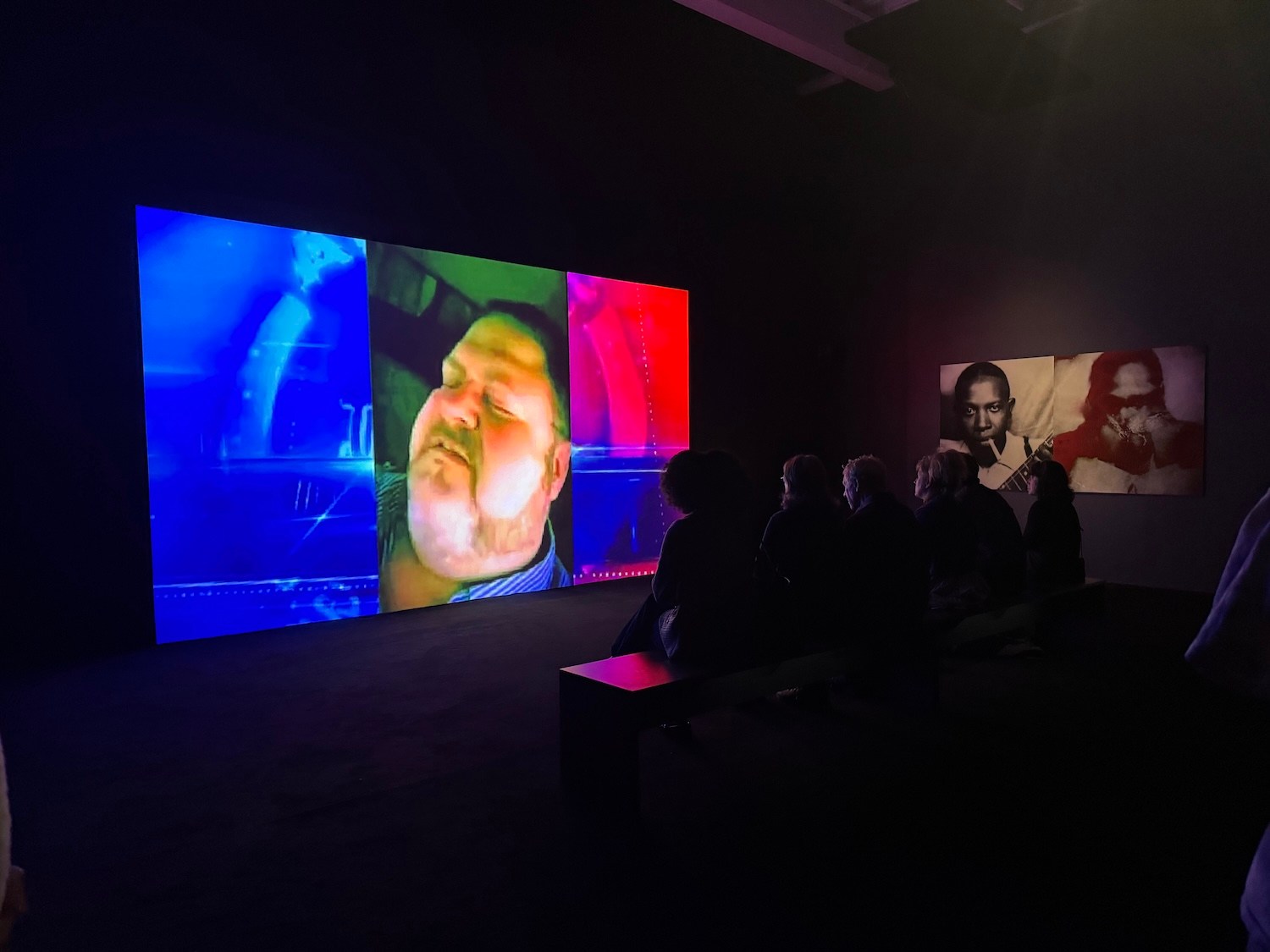
Last Saturday, I made it to the Arthur Jafa retrospective “I Am Tony” currently showing at the New Museum in Manhattan through Jan. 3. It’s a mix of old work and new, featuring wallpaper, sculpture, collage and the video work he’s become most famous for. Installations like AGHDRA (2021) make incredible use of the New Museum’s recent building expansion by OMA, allowing for a cavernous, dark room to house a floor-to-ceiling projection of Jafa’s 85-minute video, featuring endless, digitally animated oceanic waves that look more like molten rocks set to heavily remixed cuts of the Isley Brothers and Roberta Flack. While upon first glance BEN GAZZARA (2024) just looks like the end of Taxi Driver, Jafa actually restaged and edited the final shoot-out from Martin Scorsese’s film. He replaced the pimp and goons played by Harvey Keitel with Black actors to bring Paul Schrader’s original script to life before the studios asked him to change it. It loops several times, with minor tweaks each time to either include harsher commentary from DeNiro or at one point, a cameo from Stevie Wonder. I was amused watching the European tourists earnestly reacting to ridiculous segments of his experimental film The White Album (2018), wondering if they thought a clip of comedian Michael Blackson and Erykah Badu freestyling about what they’d do “For the D” was some profound act of resistance or what they’d make of these goth teenagers dancing to Future’s “Mask Off”.
Jafa began his career as a filmmaker, working as the director of photography for his then-wife Julie Dash’s film Daughters of the Dust and Spike Lee’s Crooklyn, turning to art after struggling to secure financing for his own projects. He eventually broke through in 2016, garnering international acclaim for his piece Love is the Message, The Message is Death, a seven-and-a-half-minute video set to Kanye West’s “Ultralight Beam,” consisting of found footage, news clips and music videos, all placed in a dizzying way that’s intended to capture the totality of the Black experience. Clips of police violence play next to sermons in gospel churches next to Chris Brown hitting the Dougie, and the experience of watching Jafa’s film feels akin to the modern experience of scrolling online, where you can witness joy, excellence and trauma all in the span of a minute.
Interestingly, Love is the Message is cast off to the side, on a small screen with headphones for those who want the accompanying sound. In the museum, it functions as a small-scale installation incongruous to the cultural significance of the work. In June of 2020, the Smithsonian and several other prominent art institutions decided to livestream the video piece for 48 hours, amplifying its message in response to the Black Live Matters protests that erupted around the country after the murder of George Floyd. It stamped Jafa’s work as one of the most culturally important artworks of the 21st century, though you’d never be aware of that history based on its positioning in the museum. Given how choreographed and deliberately placed the rest of the works in the exhibition are, this felt like a choice. Jafa’s video work has always been profoundly interesting to me because of its use of contemporary imagery – music videos, memes, viral online clips. They’re so of our times, which gives his work an immediate sense of familiarity and, by extension, a compelling urgency. If you spend even a fraction of your time online, you feel like you’re in on what’s going on. The flip side of that is that the recency of his images are prone to shifting interpretations, since their histories have yet to settle. Could the reason Love is the Message is seemingly placed to the side because of the soured reputation of Kanye West who, among his many crashouts and controversies of the last decade, released a song called “Heil Hitler” in 2025?
I’d argue that Jafa is keenly aware of the ever-changing reputation of pop culture imagery, and that over time, the constant shifts in meaning will only further enrich his work. I first came across Love is the Message at the Hirshhorn Museum in 2018 and was stopped in my tracks. I watched it several times, taken by the depiction of the Black experience in America, in all its triumphs and injustices. Watching it again, it still has that same effect. Though my understanding of the images and music has changed, that only makes the experience more profound, and if anything, invites some level of self-examination to our own relationship with Blackness in America, regardless of who we are.

More Like This

This article appeared in an InsideHook newsletter. Sign up for free to get more on travel, wellness, style, drinking, and culture..