Later this year, American science fiction fans will have the option to go see a new film that was shot in Swedish with a Swedish cast — yet will be shown without a subtitle in sight. No, the forthcoming Watch the Skies (also known as UFO Sweden in its country of origin) is a very different cinematic beast: one where new AI technology will be used to substitute in English line readings from its cast and manipulate actors’ mouths onscreen.
The fact that this was done with the cast’s consent is an interesting wrinkle on the debate over AI’s use in films. Matt Donnelly at Variety, who was the first to write about the film’s use of this technology, pointed out that the company behind the dubbing, Flawless AI, states that their technology is entirely compliant with SAG-AFTRA regulations.
The film’s writer and director, Victor Danell, explained the thinking behind using Flawless AI’s technology in a behind-the-scenes video. “We have the creative control,” Danell said. “And to act out the film in English was a really exciting experience.”
Having seen a number of badly dubbed foreign films over the years, the idea of a more precise approach to that — and one that includes the original cast — certainly sounds preferable. Thinking about this new technology also brings to mind Parasite and Mickey 17 director Bong Joon Ho’s comments about subtitles as a “one-inch-tall barrier” that audiences didn’t need to be intimidated by.
The invocation of AI in filmmaking terms has led many to bristle — which is entirely understandable. The Brutalist experienced a minor backlash earlier this year when it came to light that AI had been used to alter some dialogue spoken in Hungarian, for instance.
See/Hear: The Best Movies, TV and Music for March 2025
Bong Joon-ho drops his follow-up to “Parasite,” Lucy Dacus returns with a new solo LP and moreOn the other hand, Watch the Skies doesn’t sound like it’s crossing many ethical lines; in this case, it sounds like the cast have all signed off on the English-language version. And it’s worth remembering that filmmaking has long used technology to accentuate performances long before AI technology existed.
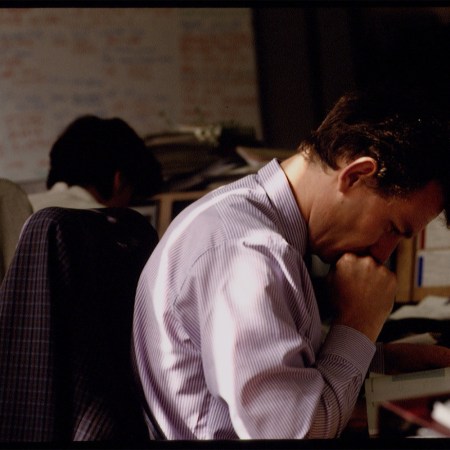
There’s a great story recounted in Michael Ondaatje’s book The Conversations: Walter Murch and the Art of Editing Film in which Ondaatje recounts how Murch combined two very different takes from Willem Dafoe to create an emotionally affecting moment that wasn’t in the screenplay of The English Patient.
Sometimes, the question to ask isn’t about the technology itself — it’s about who is using it and to what ends. As for how the English version of Watch the Skies utilizes it, we’ll know soon enough. The film is set to open in the U.S. on May 9.

More Like This
This article appeared in an InsideHook newsletter. Sign up for free to get more on travel, wellness, style, drinking, and culture..