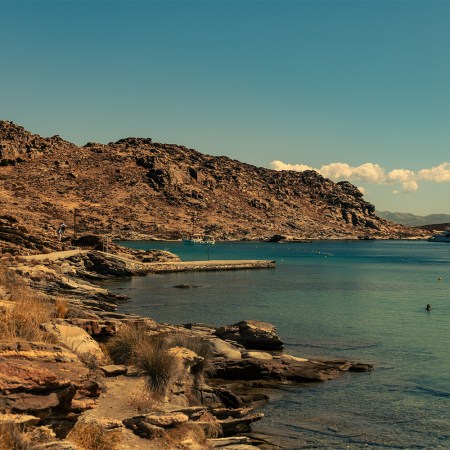
The planet’s glaciers melting at an accelerated rate is, for (hopefully) obvious reasons, cause for alarm. But most of the coverage of this phenomenon has focused on glacial melt in the Arctic Circle or in Antarctica. Those aren’t the only places on Earth where you’ll find glaciers, however, and a paper published earlier this month in Communications Earth & Environment puts the spotlight on a crisis happening in central Asia — specifically, the Pamir Mountains.
The paper’s authors note that the region is where “some of the world’s last relatively healthy mountain glaciers” can be found. That’s cause for celebration, right? Well, it might not be time to break out the sparkling wine just yet. The authors go on to write that “snowfall and snow depth have been substantially lower since 2018, leading to a decline in glacier health” — and go on to explore the wider implications of this situation.
A few possibilities for why these glaciers have remained stable, at least until recently, are — according to the authors — “snowfall, summer cooling and reduced net energy.” They note that determing the health of a glacier can be challenging for various reasons, including their sheer size. Using data recorded in Tajikistan beginning in 2021, the scientists working on this study came up with a system to model changes in the glaciers over time.
Among the scientists’ discoveries were that “peak snow height has been substantially lower since 2018” relative to the period between 1999 and 2018. That reduction in snowfall has resulted in a loss of glacial mass.
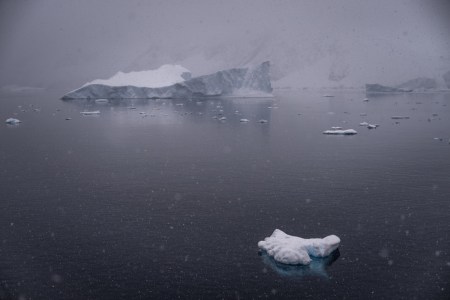
A Day Dedicated to Glaciers Reveals How Much They’re Shrinking
Decades of data paints an ominous pictureThese findings are alarming, but there’s more work to be done. “We don’t know if this is just an inflection in the natural cycle, or if it’s really the beginning of a trend that will go on for many years,” one of the study’s authors, Francesca Pellicciotti, told 404 Media. Pellicciotti went on to explain that the next steps involve getting even more historical data — something that would add more context as to whether the issue is an outlier or evidence of something more severe.

More Like This
This article appeared in an InsideHook newsletter. Sign up for free to get more on travel, wellness, style, drinking, and culture..