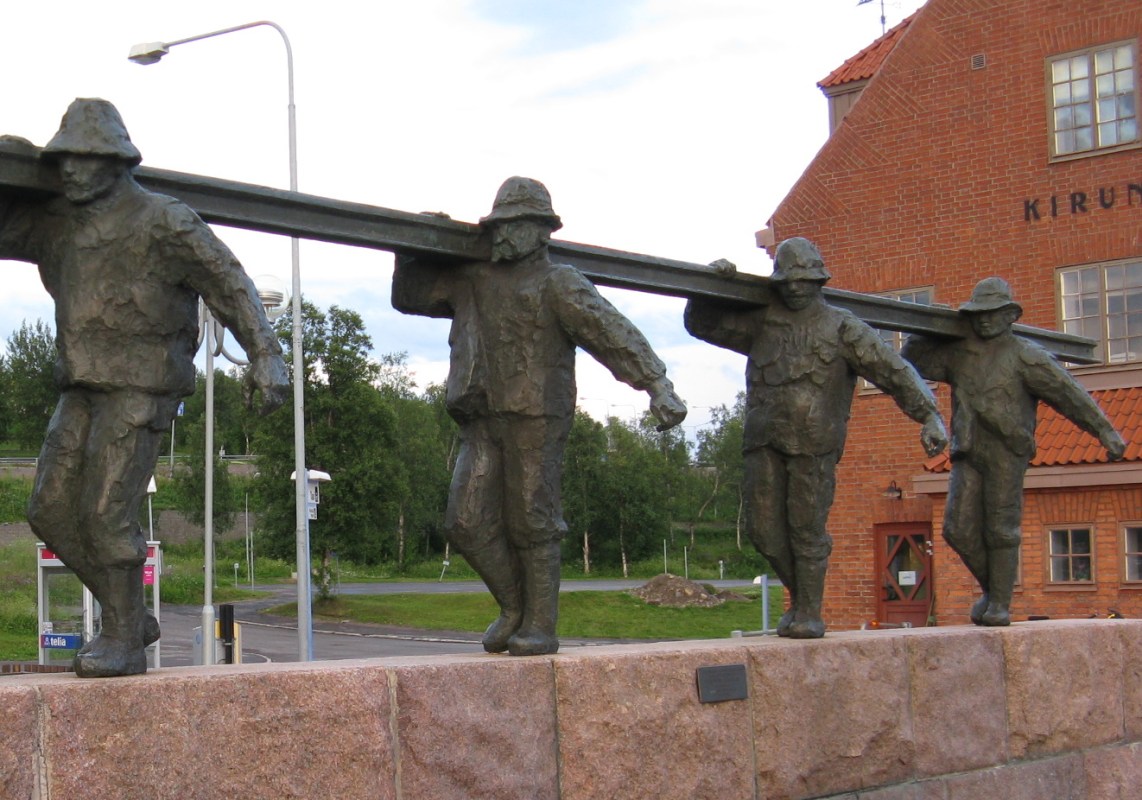
The corners of history abound with stories of cities that have had to be abandoned for one reason or another. Centralia, Pennsylvania might be the most famous example — a town made uninhabitable by an underground fire. Centralia is far from the only town that’s had to face a difficult decision — abandonment or relocation — over the years. But the response of the Swedish town of Kiruna stands out for its comprehensiveness — and for the epic scale on which it took place.
At Metropolis, Molly Butcher writes about a new exhibition tracing the recent history of Kiruna. The short version? Kiruna is a mining town, with an iron mine located nearby. What provided the town with industry wound up having an unpleasant side effect: the mine made the land on which parts of the town stood unstable.
Kiruna is currently in the process of being moved 2 miles to the east — or at least some of its buildings are. (Others are being demolished and, presumably, replaced.) And given the role of iron mining in all of this, that industry has played a role in determining the speed of the move:
As the price of iron goes up, the speed of extraction increases. And as the mine removes the equivalent of a 12-story building of material from the ground each day, the city sinks at a rate of two inches each year.
The exhibit documenting the move, Kiruna Forever, is hosted by the Stockholm-based museum ArkDes. It’s running there through early February of 2021.
Subscribe here for our free daily newsletter.
Meet your guide

More Like This


From bleeding-edge menswear and wellness reportage to dining, dating, culture critique and beyond, all brought to you in their respective fields. Choose your favorites and sign up now.