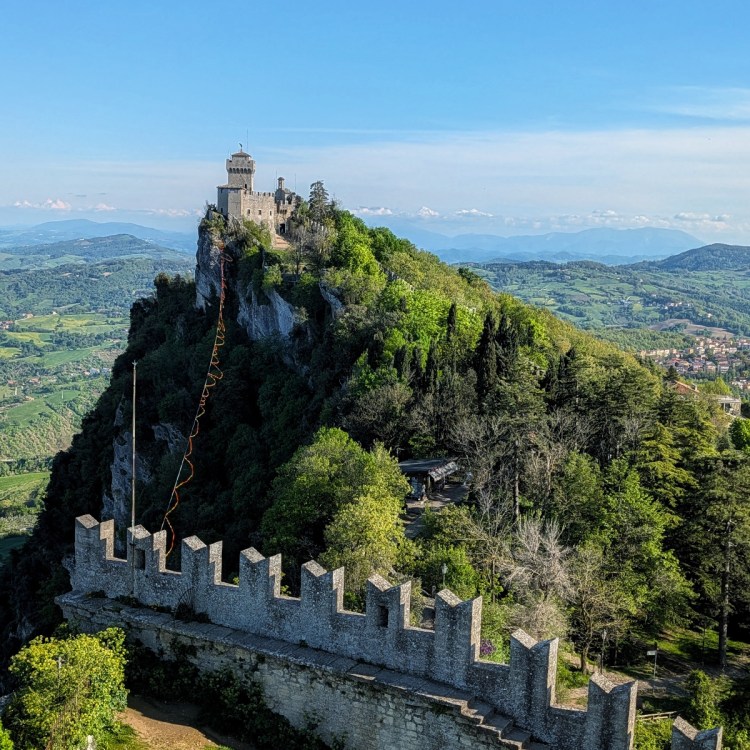
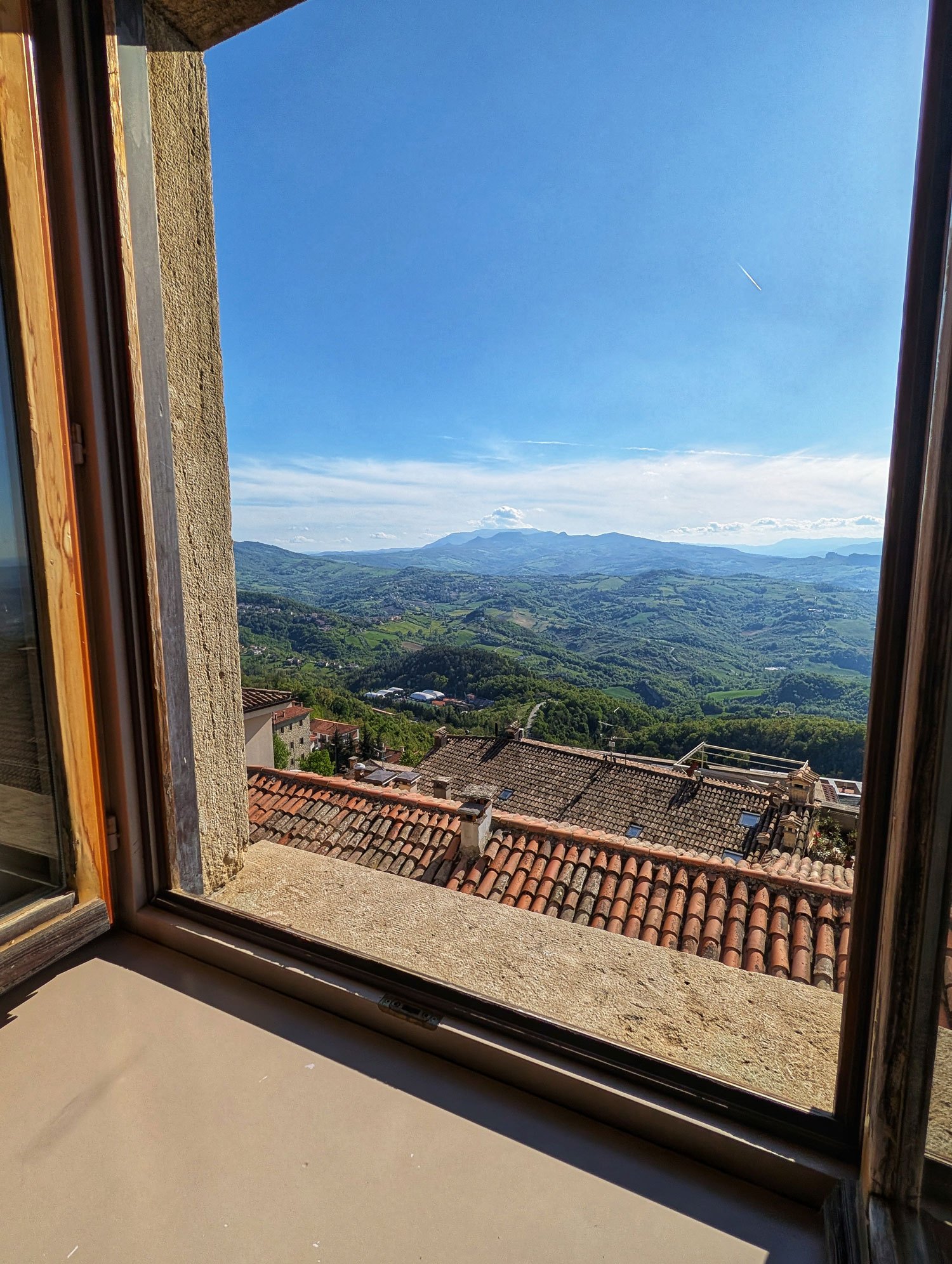
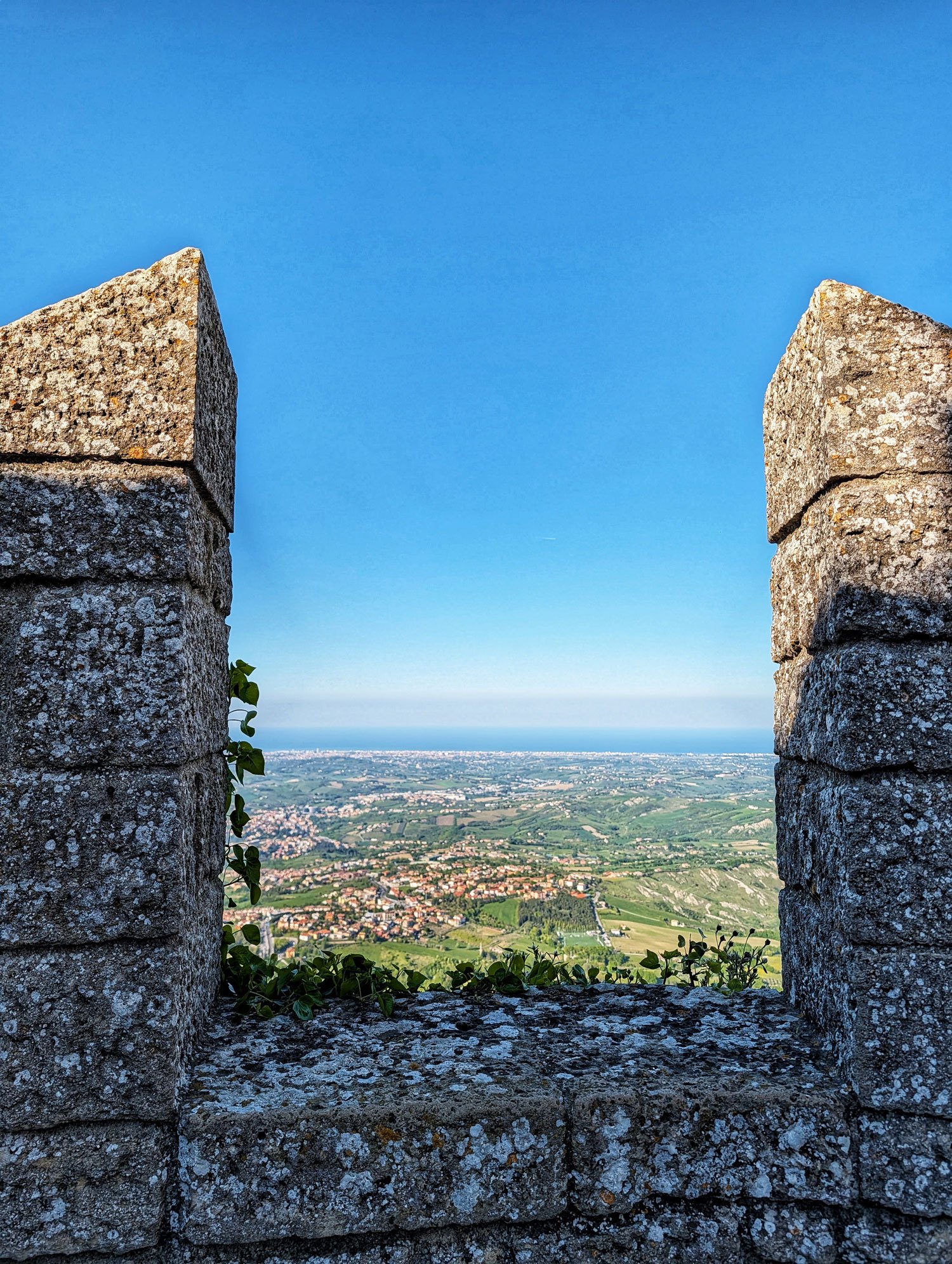
As I opened my window shutters one sunny morning last spring, I felt as if I were in a fairy tale. From my perch atop Mount Titano, the only sounds I could hear were the occasional chirping birds as I peered down into the verdant Emilia-Romagna countryside, dotted with charming Italian hamlets. As it turns out, nature shines brightest when there are no selfie-stick-toting souls in sight. After a day of hiking around the steep surroundings and their medieval fortifications, a sound night’s rest had restored me to full strength, and I was ready to explore more of Italy in the day ahead.
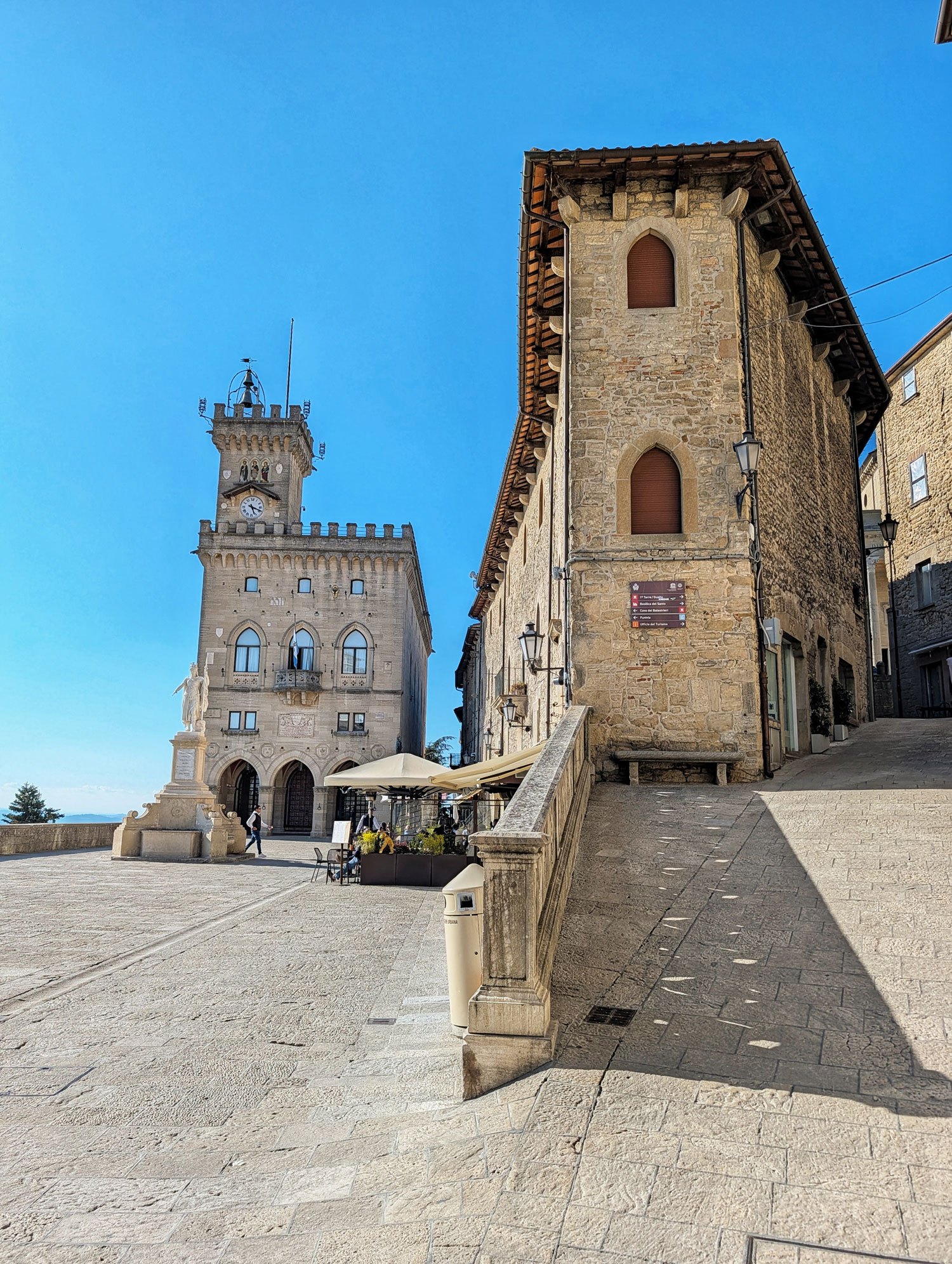
Except first I would need to get back to Italy. Because while I was looking down at the country in every direction — the Adriatic Sea to the east, Florence about 60 miles to the west — I was somewhere else entirely. I was in the Republic of San Marino, one of the oldest and smallest countries in the world, a landlocked, craggy little micro kingdom engulfed by Italy yet distinct and independent from it.
Once you arrive in San Marino and its 24 square miles of land — that’s basically the island of Manhattan, though with 33,000 residents as opposed to a couple million — you’ll begin to understand how it was able to maintain sovereignty from its vertiginous perch atop Mount Titano. A series of three castle towers and a winding stone wall through the mountains made for an intimidating approach, for one thing. Add in some timely alliances, alongside the republic’s desire to keep to itself, and ruler after ruler decided to let them be.
Founded in the third century — AD 301, if we’re keeping track — San Marino is regarded as the world’s oldest extant sovereign state and oldest constitutional republic. It’s also one of Europe’s seven microstates. My overnight stay in April capped my mission to reach the complete septet, and as the vast bulk of travelers only make San Marino a day trip, I was treated to that splendorous bit of morning solitude.
Meet the Micro Kingdoms
The Republic of San Marino is joined by Andorra, Liechtenstein, Luxembourg, Malta, Monaco and Vatican City among the microstates of Europe. What they share is the wonderful absence of the tourist throngs that bog down the rest of the continent. Instead, you’ll find nothing but pristine settings to explore at your leisure, soaking up the scene and the history of each place as you go. They represent Europe as it once was, perhaps — studded with a vast number of city-states that were eventually woven together into much larger cultures and countries. These remaining microstates are fiercely proud of their distinct history and place in the world, however small in a literal sense that may be.
Luxembourg is a bit of an outlier, as it’s larger than the rest combined, but otherwise matches the billing: it’s surrounded by far larger and more powerful neighbors (Belgium, France, Germany), yet wields its own millennia-long history establishing bona fide independent roots from those neighbors. Except Liechtenstein was only established in 1719, which makes it older than the United States, but still 1,400 years younger than the likes of San Marino. And then there’s Malta, an island nation, which isn’t surrounded by anyone in a literal sense.
OK, so exceptions abound, as each of the European microstates has its own particular quirks and characteristics. But they’re all small. Like, teeny-tiny. Luxembourg — that’s the big one, remember? — is smaller than Rhode Island. But the point is, they all punch far about their weight, and as such are much much deserving of your travel time and attention than most people give them credit for. Some are glorious hiking destinations, some are peppered with ancient castles and ruins to explore, and warm hospitality reigns supreme in them all.
And one has a pope. But besides your tickets and tour times, Vatican City doesn’t need to be planned around. Just show up in Rome and you’ll figure that one out. Monaco, also, is very much on the global tourist trail and needs no introduction or particular game plan. Let’s home in on the remaining five, then, for a grand journey across Europe’s micro kingdoms.
Meander Your Way Through the Microstates
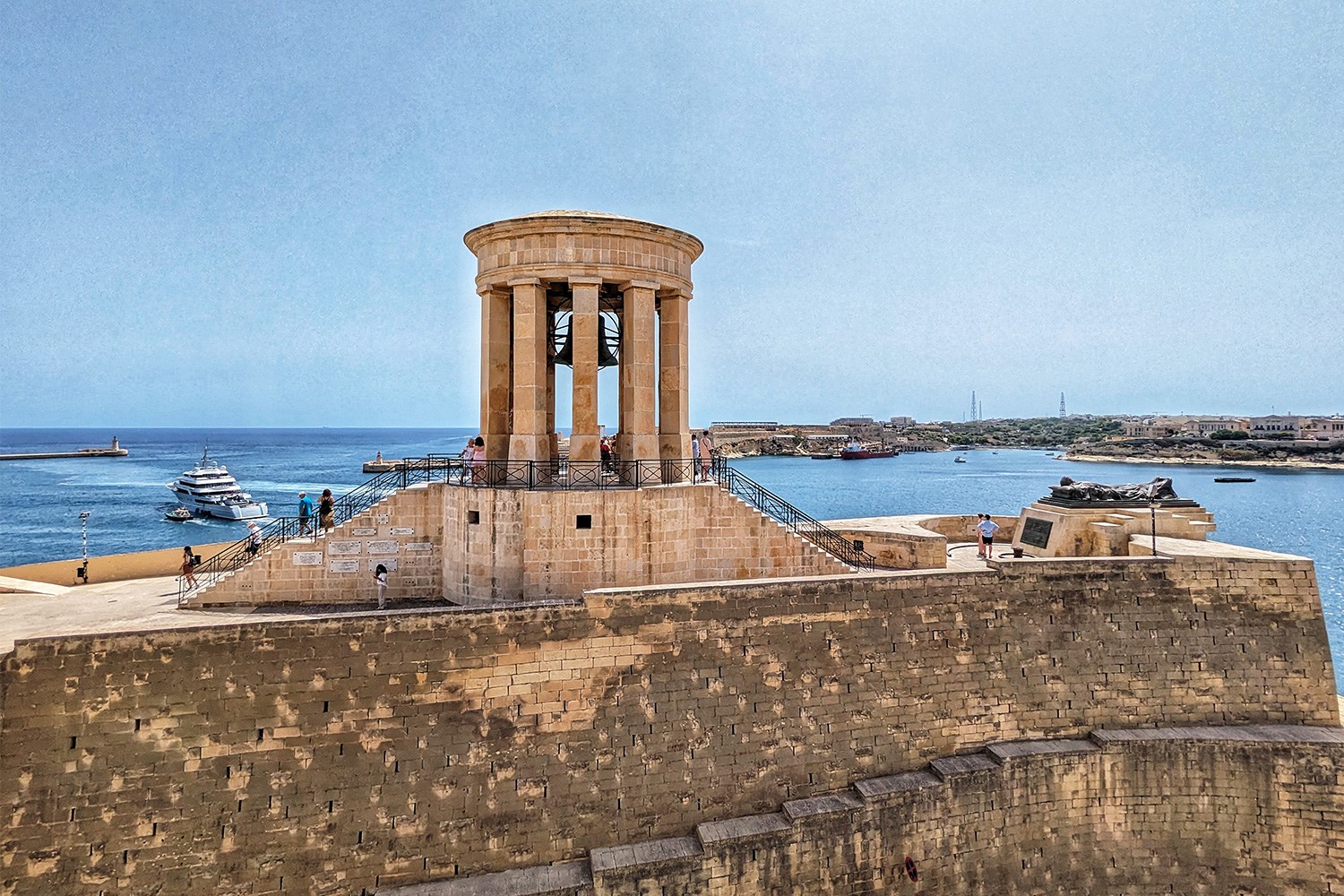
San Marino has a Game of Thrones meets the Great Wall vibe, but if it reminded me of anything else, it was Malta and its intact, fortified capital city of Valletta. (And, ironically, it was Malta that served as one of the early filming locations for Game of Thrones.) With its prime Mediterranean positioning, proximity to Sicily and now even direct flights from the U.S., Malta is well entrenched and yet still underexplored compared to more well-trodden neighboring destinations. It’s an island nation defined by its contrasts and combinations, and a visit here offers staggering preserved architecture, engaging history and, most captivating of all, food flecked with flavors from its many global influences.
Consider this quick snapshot: the Romans gave way to the Byzantines, who themselves succumbed to two centuries of Arab rule, imbuing Malta with a distinct Moorish pizzazz seen in its architecture, heard in its language and tasted in its cuisine. Sicily played conqueror, the Spanish Empire had its time in charge and then handed things off to the Knights of St. John, who were responsible for defeating an Ottoman siege in 1565 and constructing those still-standing, and still-imposing, fortifications. Napoleon came around, because of course he did, and then the British, meaning just about every major historical player left an imprint on Maltese history and culture.
There are beaches galore across its three populated islands, not to mention world-class scuba diving, megalithic ruins that predate Stonehenge, and then a modern hospitality apparatus with Michelin-starred restaurants and luxury hotels. In Valletta, I stayed at Iniala and relished its prime locale that made walking through the city a breeze, as well as its waterfront views, which I found were best enjoyed with a Negroni in hand. I also partook in the hotel’s principal restaurant, Ion Harbour by Simon Rogan, savoring a seafood-centric ode to Maltese cuisine. After my time in the capital, I continued onto Mdina, a historic city in the countryside, and stayed at the Xara Place, enjoying another Maltese feast at De Mondion.
Truth be told, while those fine-dining tours de force were unforgettable, some of the best eats I had in Malta were of the handheld, street food variety, namely the country’s signature pastries known as pastizzi. Endless riffs now abound, but the two mainstays include ricotta and spicy mushed peas, the latter of which, to my palate, veered into Indian samosa territory
Liechtenstein is a wee sliver of a country smushed between Switzerland and Austria, with the Rhine serving as its border with the former and the Alps doing the same with the latter. Take advantage of the SBB, Switzerland’s train system, to get to Sargans or Buchs, and then hop a bus over the border from either. I took an hour-long train from Zurich to Sargans, where there’s regularly scheduled, direct bus service into Vaduz, the capital of this quaint country whose royal heritage remains an omnipresent beacon.
Liechtenstein’s glorious Alpine environs are its main appeal. I hiked early and often, tiring myself out with steep treks that offered castle views, and stretched my legs in the morning with brisk walks along the Rhine. After returning from one such outing, I stopped into the Cellars of the Prince of Liechtenstein for a royal wine tasting on a vineyard that dates back to the 15th century. The current vineyard manager, a sommelier, is also Liechtenstein’s princess. Because that’s how it works over there. While I wish I could say a princess served me wine, she must have been focused on her royal duties on the day I visited.
The Italian Seaside Town That Still Feels Like a Secret
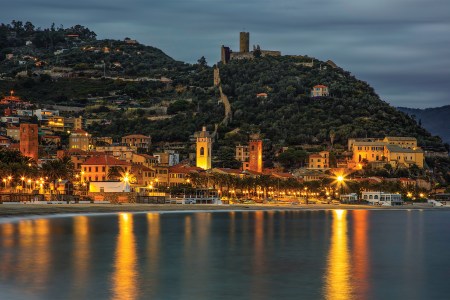
Tucked along the Ligurian coast, Noli is a charming medieval town with sandy beaches, excellent seafood and an easygoing Italian rhythmAndorra is nestled like a nugget of gold in the rocky ore that is the Pyrenees in between France and Spain. Rent a car and drive from either Barcelona or Toulouse, with a similar three-hour ride in either direction. The whole of the country is a paradise for hikers and skiers, serving as a resort getaway dotted with mountain lodges, and known for the enormous Caldea thermal water complex.
I found that driving in from Barcelona isn’t for the faint of heart, what with its staggering switchbacks, but it did offer me a majestic view of crystal-clear streams, soaring peaks and mountain valleys. The picturesque country was first recognized by Charlemagne, and currently has the unique pairing of an independent government along with two co-princes, the president of France and a Catalonian bishop. As for the language, that would be Catalan — luckily, I discovered that even my “mas o menos” level Spanish was understood well enough to order a baguette with jamon from time to time.
The capital city of Andorra la Vella is festooned with walking streets lined with shops and restaurants, and noted for attractions such as La Noblesse du Temps (The Nobility of Time), a bronze sculpture of a melting clock by Salvador Dalí. With that checked off my list, I quickly pushed off into the mountains. While skiers flock here in the winter, I personally visited in the warmer months for a hiking trip to explore the UNESCO site of the Madriu-Perafita-Claror Valley, and the many renowned trails in and around the region. A few to consider include the Pic de Casamanya, Estanys de Tristaina and Estanys de Juclar.
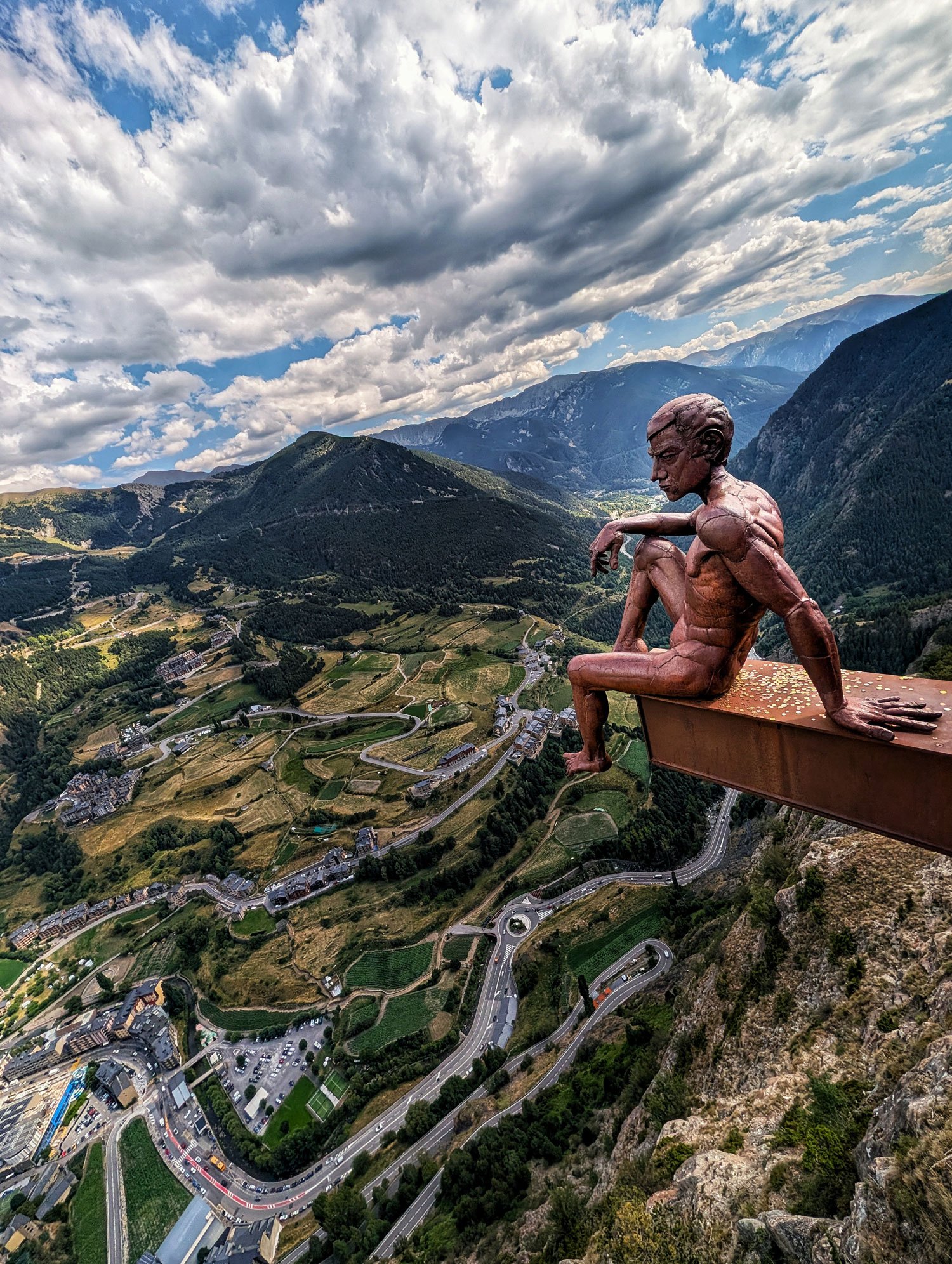
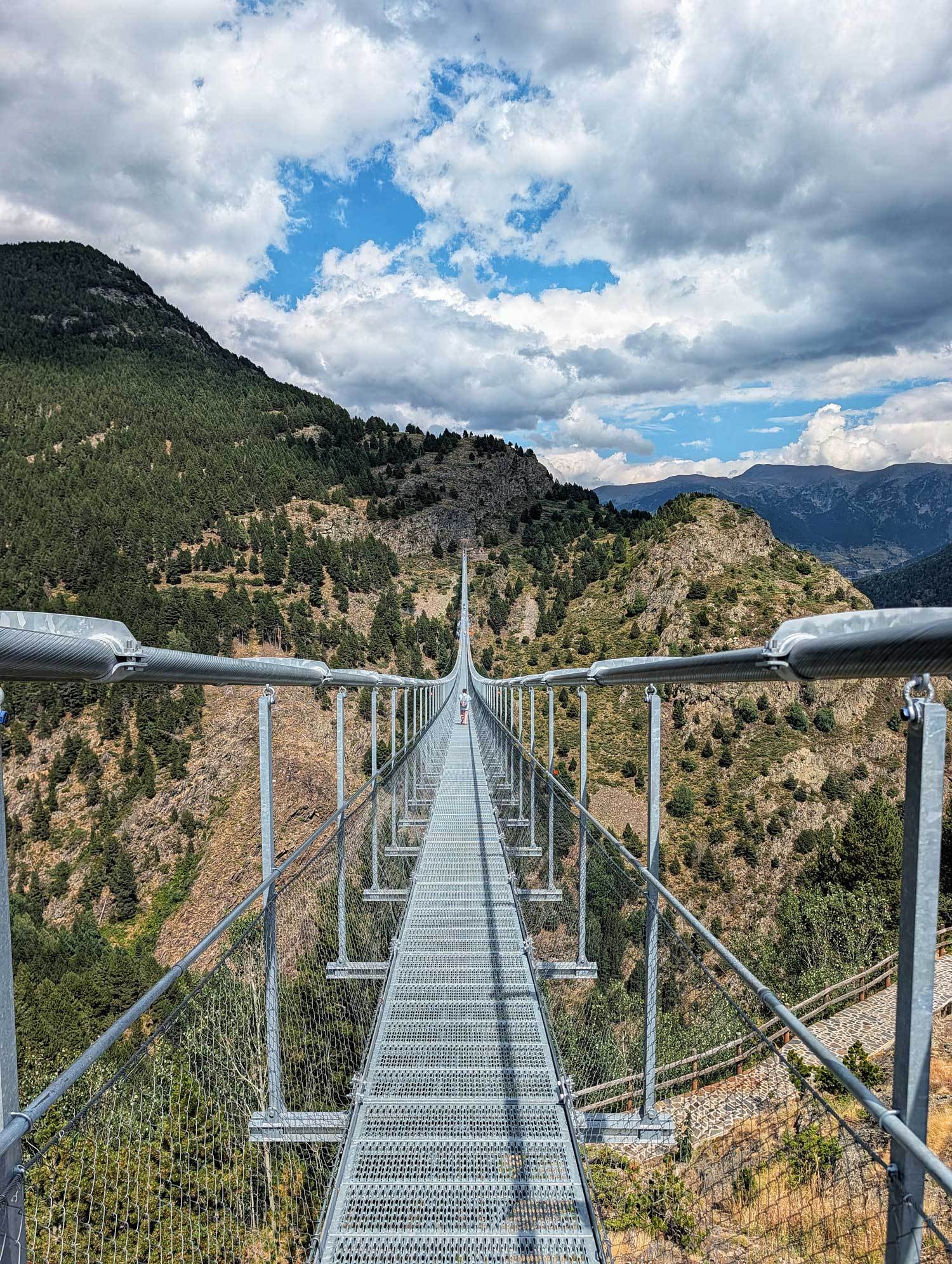
Elsewhere, the Tibetan Bridge is the second longest of its type in the world, and I felt every bounce and sway as I walked across. It’s the star of several such vistas in the country, a list that also includes the Mirador del Roc del Quer, a cantilevered viewing platform about 1,600 feet up from valley floor below. You can visit both destinations with a single ticket that gets you bus access and admission to each site, with the bus departing and returning from Canillo on an ongoing circuit throughout the day. The entire country is at elevation, and I was huffing and puffing on my expeditions, which at least made a completed summit all the more satisfying. After a few days of precipitous hikes, those Caldea hot springs proved to be a gift from the mountain gods.
Luxembourg is flirting with the whole microstate thing already, but definitely wouldn’t have qualified four or five hundred years ago, when it was about 10 times larger than it is now. Luxembourg City (now the country’s capital) was founded in 963 and the modern country gained independence in 1839; today, it’s the only grand duchy in the world. Another global point of distinction? It has a free public transportation system, for both residents and visitors — a fun fact I only learned after needlessly dropping €50 on a taxi from the airport.
The country is also a financial center and serves as one of the primary administration sites for the European Union, so it’s well connected to the continent. Hop on a train from Paris or Brussels, or a short flight from somewhere like Amsterdam.
Luxembourg is known for its formal French fine dining, but there are Luxembourgish restaurants and bistros as well, and wine bars aplenty. While I knew there would be French fare on tap, about the last thing I was expecting to find here were inventive, avant-garde cocktails. L’Observatoire serves up flashy drinks from a rooftop that offers the best view in town, looking across a ravine to the historic city center, while the swanky 18 Bar is a gem found inside the Hôtel Le Place d’Armes. The hotel is in the heart of the Old City of Luxembourg with its preserved, clifftop ramparts and towers. Nearby, explore the gilded Palais Grand-Ducal and be sure to walk across the Pont Adolphe with the Pétrusse Valley below.
Which brings us back to where we started. History and castles. Hiking and nature. Quirks but no crowds. If your favorite European getaway is now teeming with tourists, consider exchanging it for one of the continents micro kingdoms. Or, like me, all seven.

More Like This
We're always on the scene eating, drinking and traveling near and far to bring you the best of what's happening out in the real world. Sign up for IRL now.