The NBA season has officially started, which means receding from daily life and healthy routines to toil over stat lines, game tape and bad takes from analysts and amateurs, flirting with an aneurysm every night your beloved team plays and misses a doozy. There is a normal way to view the NBA, as an entertaining professional sports league that takes you through the winter and into the spring, and then there’s the way that I and many others in my immediate orbit like to engage with the league: as a critical text that functions as a pathway to understanding American culture.
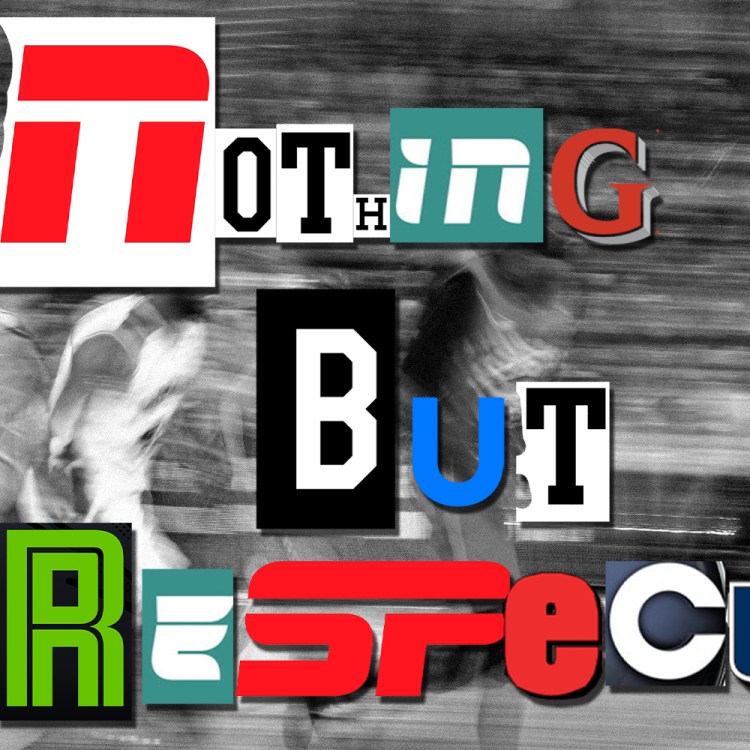
My favorite pieces of basketball writing and media will start literal — a team on a win streak, a meme taking over the sports internet — and evolve into a referendum on politics, culture, the internet and our understanding of the contemporary American psyche. In today’s media landscape, few people do this better than Harry Krinsky and Patrick Redford, the hosts of Nothing But Respect. For over a hundred episodes, Krinsky, a podcast producer and media consultant, and Redford, a staff writer for Defector Media, have been breaking down stories around the league with a metatextual flair — the Toronto Raptors by way of Drake, the Lakers ownership drama through HBO television, the Minnesota Timberwolves upcoming season accompanied by analysis of Nick Shirley’s and Timberwolves owner Marc Lore’s ghost kitchen enterprise. They’re the ultimate distillation of the Deadspin spirit, which makes sense given Defector Media, home of Nothing But Respect, was started in 2020 in response to Deadspin’s demise at the hands of corporate bigwigs who wanted the website to “stick to sports.”
To celebrate the start of the NBA season, I chopped it up with Krinsky and Redford about the state of basketball media, why online writers gravitate toward basketball and to hear their predictions for the upcoming season.
This interview has been significantly edited and condensed for clarity.
Minh Tran: How did this [show] start?
Harry Krinsky: In 2021, I was doing consulting work with Defector, helping them launch their podcasts. I got assigned a few, including a basketball trial pod that Patrick was on which didn’t go anywhere because they decided they didn’t want to do a basketball pod at that time. I was wearing an Online Ceramics shirt, and he complimented it, so I knew he got it.
Patrick Redford: Like I said, it was 2021.
HK: A couple of years went by where we were internet friends and discussed basketball media. You wrote a piece about the state of basketball blogging.
PR: Which was this insanely long, agonizing story that popped way more than I thought it would and got a lot of people yelling at me. Something I’ve learned is that nobody does good media criticism anymore, but everyone obviously cares. People complain about Pat McAfee’s sunburnt omnipresence, but nobody will do the work and put it into an article — when they do, it goes crazy. In 2024, you emailed me saying we should make a podcast, and I agreed instantly.
Why Does Arthur Jafa’s Most Famous Work Feel Like an Afterthought?
Our culture editor visited Jafa’s installation “I Am Tony” at the New Museum in Manhattan. Here are his takeaways.MT: In terms of dynamic duos, who brings what to the table? Who’s LeBron and who’s Rich Paul? Who’s Deleuze and who’s Guattari?
PR: Harry does everything. He does all the producing.
HK: No. No.
PR: He really seeks to collaborate in all his creative pursuits, which is a fun energy to have. He’s the engine. I’m just a guy.
HK: A big inspiration for us was TrueAnon, both as a highly researched chat show and an idiosyncratic show about one specific thing that’s also about everything. Between Brace [Belden] and Liz [Franczak], I think I’m Brace and Patrick is Liz.
MT: The NBA feels more intertwined with media, online culture and meme ecosystems than any other sports league. What is it about the NBA that lends itself to theorizing about the larger state of the world?
PR: I have a two-part theory here. Maybe 20 years ago, when the internet started becoming relevant to sports, you started seeing all the divergent approaches to how the leagues handled that. The NFL believed linear TV was the only thing that matters. “If you post a picture of Tom Brady throwing a touchdown, we’ll come to your house and shoot you.” Whereas the NBA put stuff on League Pass had liberal, fair use interpretations and put stuff on YouTube. They may have unintentionally anticipated how the internet would work 20 years later, where these gates of copyright were going to fall and thought it best to be the most amount of things to the most people. I think the other crucial aspect is that this is the league with Black people and Black fans, and because of that, it is so much more tapped into the people who make culture in America. In the 2010s, I found it very easy to become a basketball blogger. The reason I do this is because I was on Twitter having so much fun reading posts and watching people post clips, and I found the permeability of the ecosystem really refreshing.
MT: I always think about your episode on the history of House of Highlights and the proliferation of all that media that serves as the foundation for the way all sports meme culture works today. It’s interesting how it started online, and yet now you’re seeing big prestige outlets talk like that too. I don’t know if ESPN has done the all-caps, emojI-style lingo yet.
HK: Oh, they definitely have.
PR: “Admin crazy for this one.”
HK: Omar Raja, who was the founder of House of Highlights, now works at ESPN. So it shouldn’t be surprising to me to see the ESPN account talk like a child, but I get so saccharine about it.
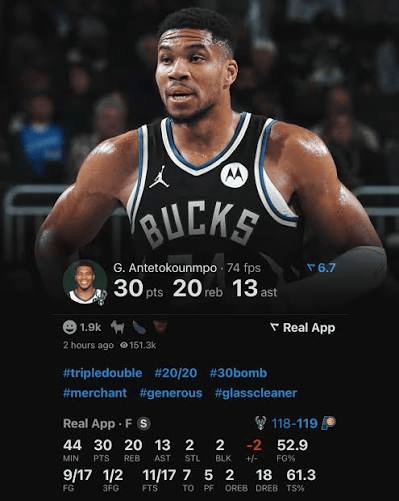
PR: Are you familiar with the Real app?
MT: No.
HK: Oh god.
PR: It’s this box score app that the Zoomers love, and it’ll post a player’s box score with a three-emoji breakdown of their performance with a three-hashtag breakdown where it says #grifter, #unethical, #defensemerchant. And I see this stuff and am aware of how it got started and think we got to open the schools. I hate this so much. Just use the ESPN app like an adult. You don’t need an alligator emoji to tell you that Victor Wembenyama had a good game.
HK: To Patrick’s point about the changing media, these sort of 2005 to 2012 blog writers really resonated with a lot of people. Bill Simmons was writing in this basketball sense, but so many other basketball bloggers moved into bigger fields, like Jay Caspian Kang and Wesley Morris. So were these people writing about basketball because they were gravitating toward the ability to have all these clips?
PR: Whether consciously or not, I think they understood that the NBA was this nexus of all culture.
MT: I’ve determined there are three main archetypes of NBA media. One is the traditional analyst show, ESPN, Zack Lowe. Then there’s the “fan pod” (Bill Simmons, whatever Barstool has got going on) and then the “player pod.” I’m curious what your thoughts are on this NBA media ecosystem, and whether you think it’s tenable?
PR: I think what you see there is people responding to incentives; the insider pod will always exist. ESPN pays $4 billion or whatever for the NBA rights and you have access-driven people, and so they serve an audience that is looking for news. Whereas the player podcasts are more reflective of the changing economy of content where everything is the same. I just wrote this Michael Porter Jr. story, and the point there is that he sort of idiosyncratically but correctly thinks that himself and Sneako and whatever porn star he interviewed are basically the same person, which is almost correct. You have to monetize being famous via content, even if you’re on the Boston Celtics.
HK: The thing I want to add is, I think the whole ad-supported podcast is a losing game. The kids are coming up, the old guys aren’t dying and ad demand is getting driven farther down. It’s a losing game, and people don’t want to think about that. But if you view it through that prism, player pods often have an express purpose that is not to make money by ad revenue — it’s to be a PR wing of the players. These old stars talking to the old guard of the media, they’re the only people able to make ad-supported stuff work right now because of their audience capture and scale. The other ones have a few ways to make money: You can go the Patreon route, or take emerging Kalshi or Polymarket money.
MT: What’s your current NBA media diet?
PR: I listen to a lot of podcasts as sources of information as much as I do texts. I have distinct group chats for my post-[Zach] Lowe Post posts and then also I have 95 screen recordings of Nate Duncan saying funny shit. I am a “Dunc’d on Prime” subscriber. That specific show is an amazing way to approach the league because they’re so cynical. They think every contract is a bad contract, every player is bad, every prospect is ass. That approach is so opposite of how I view basketball, but they’re right most of the time. I also pull up the NBA YouTube page most mornings and just watch highlights on my monitor, which is real boomer shit. And the best basketball writing I find is when Harry sends me a link like, “Here’s a crazy ass Substack essay by a guy we’ve never heard of. Should we have him on the show?”
HK: I listen to Lowe, I listen to Simmons on basketball and then I’ve struggled with the Warriors team-specific ones. This sounds silly, but I do try to just watch a bunch of games. Also, every time Ock Sportello writes about the NBA, I read it, and I read Patrick’s writing. I really like Joe Viray, he’s sort of a clip breakdown guy on Twitter. He does great Warriors clip breakdowns.

MT: Moving into predictions for the season: Does the opinion turn on sports betting in the league?
PR: Yes. I think there’s a Republican state legislature somewhere that is introducing some mild regulation because “our young white kings, their lives are being ruined. We have to do something about this.” I think that the ambient sentiment is pretty against it. Obviously LeBron getting in bed is whatever, and people are going to keep doing it. But I think they will realize that they have a PR problem and that’s what they’ll respond to.
HK: This is just a take, but I have a hard time believing that this “prediction market isn’t gambling” thing is going to resonate with people. It just feels like a company line, this technicality that broadly feels so unfair and conniving.
PR: Yeah. It’s selling someone a gun and being like, “Well, you can also shoot trees with this.”
HK: And even outside of whether or not you believe in gambling, it just feels like you’re breaking the rules. The rule is that we have regulated gambling, and then you can’t just have not regulated gambling. It’s almost like how everybody can get behind closing up tax loopholes. I also think this is going to be a calculator rat referendum year. I think there’s going to be a return to real hoops.
PR: I think you’re right, and I think the specific sort of basketball lineage that leads me to think that everyone has now watched the Oklahoma City Thunder play basketball for three years and this idea that talent is more widely spread around the league, everyone kind of agrees with that. You look at any team, you know who their 12th guy is or whatever. This idea that of playing hard and attempting to grab rebounds, everyone does this shit now, and I think that it increases the primacy of the shot creator, the real hooper.
HK: I was talking to somebody sort of within the NBA, and they were talking about how all of this lowish-hanging fruit has been exploited by everybody such that the next one they’re trying to figure out is if there’s a way to crash offensive rebounds in a more analytic way that you box out before the shot goes up. I just don’t think that’s winning you a game in the same way that the old stuff, like having Shane Battier shoot 11 corner threes, can actually swing a game.
MT: Who will Michael Porter Jr. have on his podcast this year?
PR: My instinct says it’s not going to be Nick Shirley or someone like that… let me think about this. I want to give a good answer.
HK: I’ve been throwing around this idea of trying to entrap Enes Kanter in a fake podcast. Could I make up a podcast where I get Enes to come on and then almost Sacha Baron Cohen-style fake interview him? I don’t think I’m going to do it, but by the same token, do you think Michael Porter Jr. would have us on? If we were just like, yo, we want to talk, two leftists in good faith want to debate you about faith and basketball.
PR: Zohran Mamdani should go on the Michael Porter Jr. show. I watched every “Curious Mike” clip from the last year yesterday, and he has the Joe Rogan thing going, where what makes him a great podcaster is his porous brain and ability to say, “Damn, that’s crazy,” to literally anything. He has Lexie Brown from the WNBA, and she’s saying, “Okay, here’s why we did a labor action to get more money. Here’s why Enes Kanter is a clown.” And [Porter Jr.] is like, “Yeah, definitely. That’s tough.” Then Enes Kanter comes on and he’s like, “I identify as a woman now.” And MPJ’s like, “Totally. That’s facts.” So I think if Zohran goes on, he could convince MPJ that the state-run grocery store is good or whatever, but he could say this to a podcaster who would be like, “Yeah man, that childcare shit’s crazy.” I think he would find a willing receptacle for his ideas.
HK: There’s a great moment in “Curious Mike’s” podcast with Sneako where Michael Porter is like, “Yeah, people say that everybody who makes lots of money had to make a deal with the devil, but I made $100 million and I didn’t make a deal with the devil.” And then he thinks for a second and says, “But it’s probably just because it’s basketball, that’s different.” His level of reasoning is really something.
MT: Will an NBA player start a frontier AI lab? If so, who will it be?
PR: Spencer Jones. Have you seen how this guy posts? He’s this Stanford nerd. All of his posts are: “How did you spend your first NBA check?” “Well, I invested in venture and AI startups and I still live in a cheap place to maximize my investment.” And then he’ll post about his portfolio, and I’m like, “You actually do need to shut up and dribble.” I don’t know if he’ll have enough money to do it, but he’s the guy, he has the temperament. Or anyone on the Golden State Warriors, Jimmy Butler is a good one.
HK: I’ve been saying this a few places, but I’ll say it again here. I really do think Kyle Kuzma is going to retire to work in venture capital in the next 18 months, but I don’t think it’s going to be in an AI frontier lab. I think he’s going to be buy side.
MT: He sees the bubble. He’s risk averse.
HK: He’s “picks and shovels,” whatever they say.
MT: Who will be the NBA’s White Boy of the year?
PR: So, we were talking about this in a group chat. I think the state of the “crazy ass white boy” is in a very interesting place where you have Chet [Holmgren] coming in and affirmatively doing a blaccent, but also kind of backing off a little bit. And then Cooper [Flagg] comes in and he kind of has this New England soft blaccent thing. And then Kon [Kneuppel] is this red boy. So, it’s not going to be Kon. I think my prediction is Bennett Stirtz of the Oklahoma City Thunder.
HK: Patrick and I have texted about this, but there are way more American-born white players in the NBA than there were 15 years ago. It’s not something I spend all that much time thinking about, but when I do, the main thing I think about is, based on how much American political conversation centers around race, I’m kind of surprised that it isn’t a conversation. I don’t know what to make of that.
PR: I’m remembering a Michael Porter Jr. clip where he’s talking to Steiny of the Nelk Boys and he was like, “Do you wish you were Black?” And Steiny’s, “Yesssss, I really do.” And I think that that libidinal, often unstated desire, is a clear motivation for some of the league’s white fan base, and like Harry said, it’s interesting that it’s not talked about in any way. I’ve toyed with writing a sort of state-of-the-NBA white-boy thing for years, but ultimately I don’t really have a strongly held opinion on it either. And I don’t have anything to say. I knew that we weren’t ready when Jack Harlow released a song called “Tyler Herro” and no one batted an eyelash. That’s when I knew we were not ready to have a dialogue.
MT: Final question: Who’s your dream guest?
PR: We’ve tried to get MJ Lenderman for a long time. The theory of the show is “who are people who know and care about basketball who are interesting people in totally different creative industries.” Getting Liz Franzack and Tom Krell on, that’s the model. Thomas Pynchon. He’s clearly a basketball head, but he would never do it because he’s probably dead.
HK: Derik Queen. The rapper Veeze. Adam Friedland of “The Adam Friedland Show.” Carles. That’s a big one. I want to talk to Carles of Hipster Runoff. And yeah, MJ Lenderman would probably be our purported dream guest. That’s the one we’ve spent a lot of time trying to get. It would be interesting to have a meta basketball conversation with Zack Lowe. I wouldn’t call that dream guest though because it just occurred to me.
PR: I don’t think he would do it because I think a lot of media people are reticent. Defector is one of the only places that does media criticism. We have the Deadspin lineage. I think because of that, they think if they’re going to come on that we’re going to get their asses. If you’re reading this, Zach Lowe, come on. We’re not going to grill you.
HK: Oh, Ocean Vuong.
PK: Ocean Vuong would be great.
MT: I was very surprised to see his game tape.
PR: He’s got a Krinsky-esque thing going with his game.
HK: Little jitterbug.
You can find the show wherever you get your podcasts, and on Instagram at @nothingbutrespectpod, @lexaprotools, and @patrickredford.

More Like This


Twice a week, you'll find proven advice and tips, expert interviews, deeply reported features and personal essays on living better — for however long you’re here. Subscribe to Champ now.