A few weeks ago when I learned that the fintech company Ramp was putting on an original musical for one night at the Broadhurst Theatre, I felt a mix of intrigue and exhaustion. Last year, when they coordinated a big marketing stunt starring Brian Baumgartner from The Office as a CEO locked in a glass box to process manual receipts, I was somewhat amused by the novelty of it all (especially relative to the droll, played-out marketing of other tech companies). I even caught myself praising the marketing strategies of an AI-powered fintech company. This time around, they upped the ante, renting out a roughly 1,200-person capacity theater that was previously home to Cats: The Jellicle Ball, securing a cast that included Billy Porter, Jessica Vosk from Wicked, Billy Zane from Titanic, and music and lyrics by Jason Michael Snow (an actor from The Book of Mormon). Thus, I ventured to find out what the hell was going on.
Several days before the show, I emailed Ramp’s comms team to see if I could secure tickets as a member of the press. I had actually gathered several email addresses from members of different departments, and believed that by emailing all of them, they’d appreciate my verve and level of determination, and as a result, dole me a ticket out of respect. When I got ghosted by all parties, I gave up until I found out about a dress rehearsal happening the night before with very lax and loose invite policies, and decided to test my luck by shuffling in alongside some acquaintances who were going that night. On Thursday night, in a Comme des Garçons button-down that couldn’t be further from “black-tie optional,” I waltzed into the theater.
Ramp’s signature color is “Solar yellow,” a kind of chartreuse that resembles yellow Gatorade and veers dangerously close to Nickelodeon slime. It’s bright and synthetic looking, like the kind of acid you dip an innocent man into to birth a villain, or if you asked an LLM chatbot to approximate the color of the sun. My most generous reading of their color scheme is that Ramp is the sun that powers all businesses, saving said businesses time and money by streamlining their financial processes, from dishing out corporate cards to managing invoices. They’ve sung this song to the tune of a $44 billion valuation as of this past June, expanding their services and integrating a neat AI story into their mission to keep up with the times.
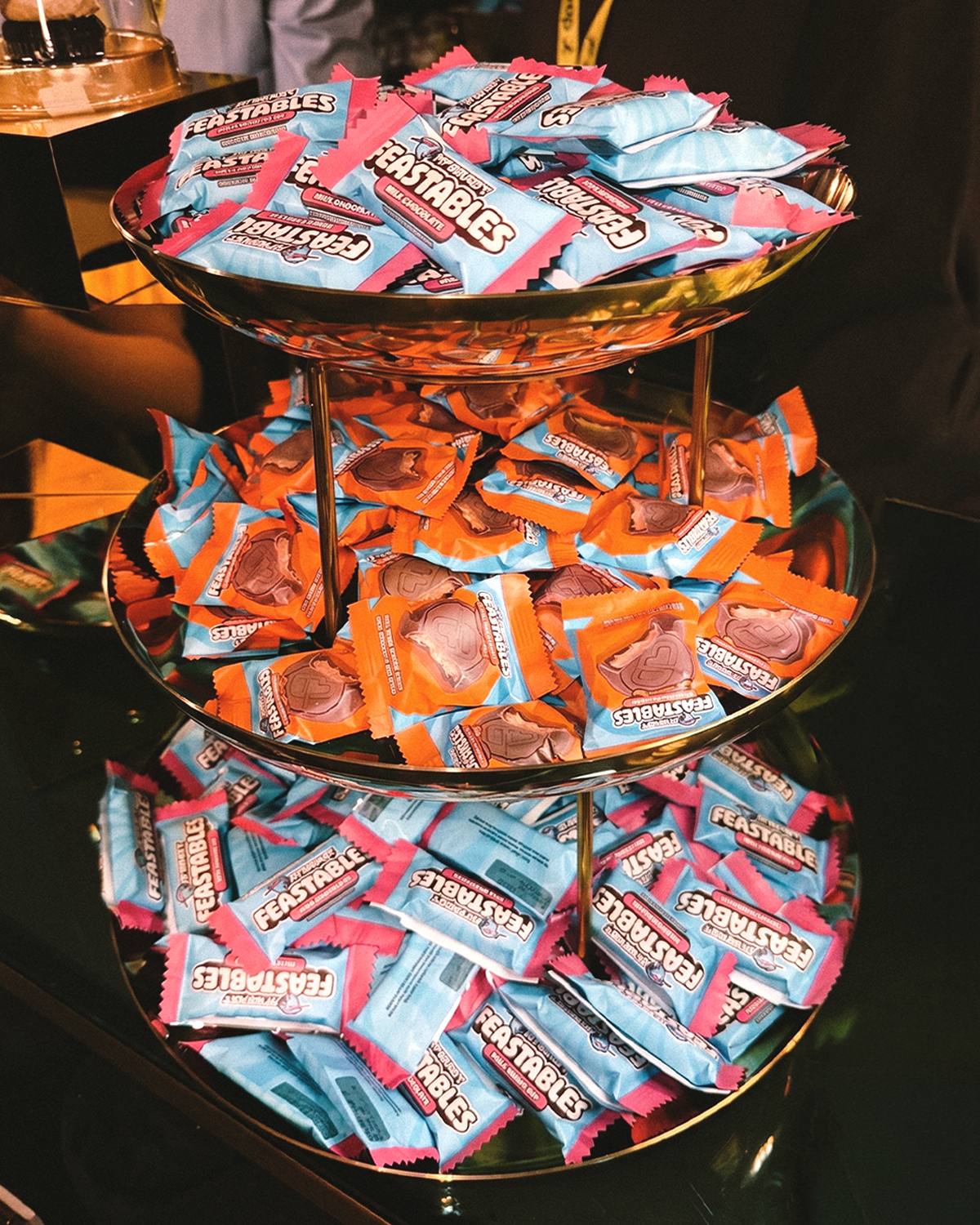
Their musical at the Broadhurst Theatre was as much a celebration of their past success as it was a way to lure prospective clients into being a part of their future. Photographers took pictures of tech workers on the “yellow carpet,” consisting of swarms of young men in ill-fitting suits taking pictures to put on their Hinge or LinkedIn profile. One must presume that for a certain crowd, being at something like this constituted a flex. Some people walked around with the nameplate “Bill” on their chest, the special swag of the evening gifted to anyone lucky enough to share a name with Ramp’s new product. Somehow, there was no assigned seating, so I threw a jacket over a chair and made my way to concessions, where interns with name tags gave out snacks and beverages from Ramp’s many brand partners, and I lined my pockets with MrBeast Feastables Chocolates.
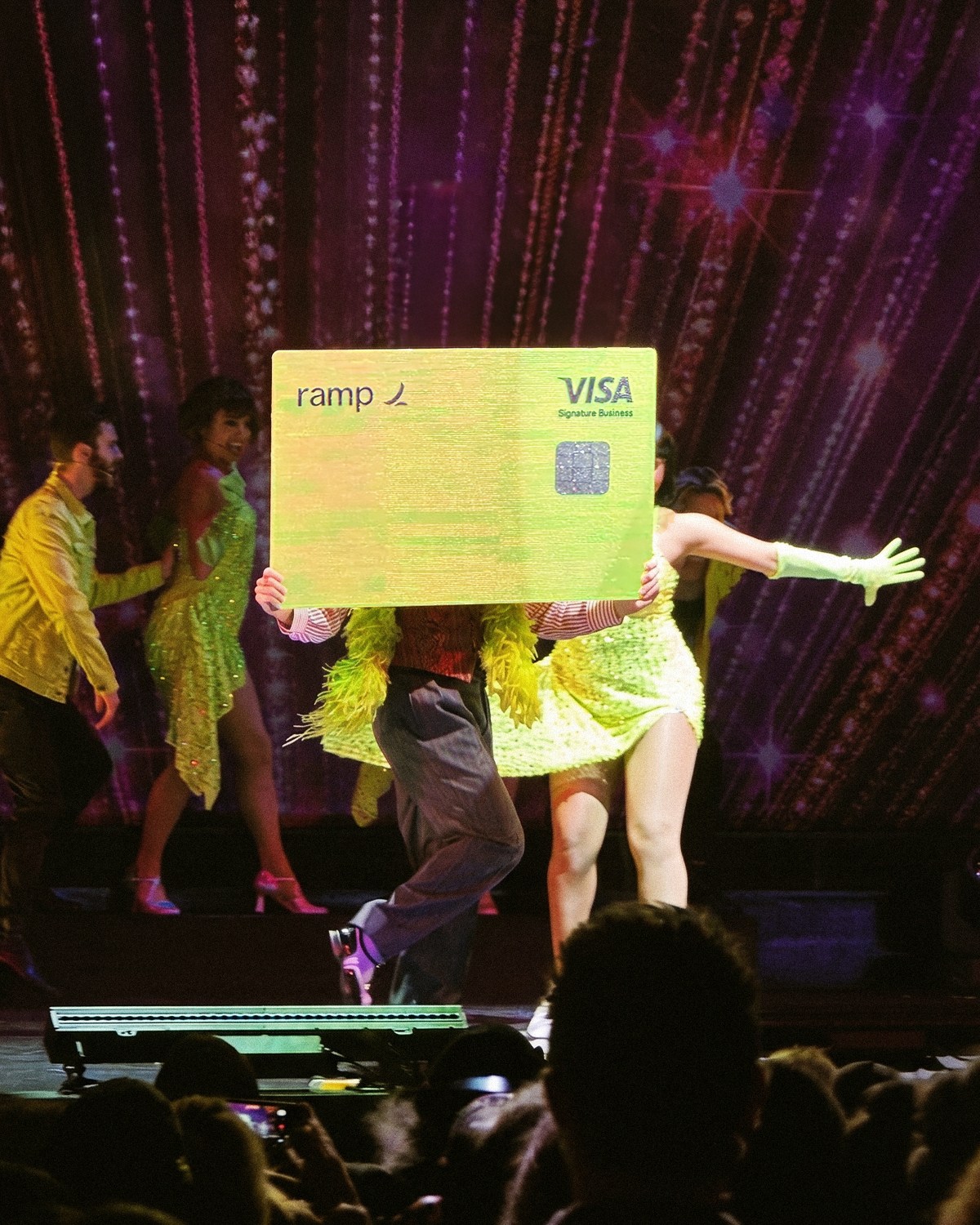
When the show began, contrary to the customs of the theater, we were encouraged to pull out our phones and record as much as we wanted. All attention is good attention, whatever. The story of Bill Pay The Musical revolves around Jessica Vosk’s character, an overworked business owner who gets sucked into an ad that takes her, Wreck-It-Ralph style, across different worlds to meet different “Bills,” learning of the many ways Ramp’s new “Bill Pay” product can help their lives, and eventually hers. The musical numbers were quite thoughtful (for a show put on by an AI-powered fintech company anyway), with enough “Bill” puns to make you groan. There’s Billy Mays, Kill Bill, “Bill-bo” Baggins, and “canceled Bills” like Cosby and Clinton, who are all meant to teach you about the great joys of Ramp’s new AI-powered product.
I didn’t quite understand how this applied to my life, but I am not someone who lives in the wondrous and thrilling world of B2B SaaS. For someone who is, maybe this was a great time. The crowd was in high spirits, hooting, hollering, cheering and waving around the glowsticks that were given to them upon arrival. Brian Baumgartner’s cameo midway through the show even got a standing ovation from some members of the crowd.
Duncan Sheik’s Final Gift to New York Theater
The singer-songwriter and composer, who died this month at the age of 56, pushed Broadway into the 21st century. Now, his works are set to reignite off-Broadway.Then, the hour-long runtime started to drag, and everything began feeling like musical-theater brainrot, rife with overstimulating visuals and references that cater to the 30 Rock Millennial. For some reason, the Kill Bill set piece featured a video game screen in the background as Vosk slayed various Bills on stage, with points for every kill, and I was confused how this related to Tarantino’s film at all. At one point during the show, I watched a white background dancer start doing the “Shoot,” a move created by Memphis rapper BlocBoy JB in 2017 that was popularized by Fortnite. Whoever choreographed this show probably did not get this from watching Memphis rap music videos.
One of the main tensions I wrestled with the whole night was the earnestness of musical theater contrasted with the cynicism endemic to the nature of advertising. It wasn’t too long ago when the idea of using storytelling to hawk products was anathema, and doing so made you a sellout. As time went on, advertising became more narratively complex, and we started thinking of ads and product rollouts as objects deserving of analysis.
In the days following the musical, people on X began praising Ramp’s musical as a masterclass in product launches, breaking down why they’ve been so successful in this space. Disregarding the fact that these posts are usually written with AI, is this not tiresome? Do you not feel soulless engaging with a piece of work whose metric of success is an arbitrary KPI instead of how it made you feel? I know writing about my experience is exactly what they want, and if the sheer spectacle of the event is any indication, at least they have a sense of humor and self-awareness about how banal their product is. Still, I can’t help but feel queasy that at a time when the arts and humanities are struggling, those with more money than God can purchase great artists for whatever they want. How far are we from having an OpenAI Writer-in-Residence, or Palantir Forward-Deployed Painters?
At the end of my night, I rifled through my pockets looking for the MrBeast Feastables Peanut Butter Cups I had grabbed earlier, only to find that they had melted into mush. I guess the chocolates, like the rest of the evening, just weren’t meant for me.

More Like This
This article appeared in an InsideHook newsletter. Sign up for free to get more on travel, wellness, style, drinking, and culture..