I have a confession to make: Until two months ago, I really didn’t know that much about wine. Sure, I knew how it was made and could put together a decent wine pairing after browsing the list at a restaurant. I was familiar with certain terms and regions, specifically ones I’ve visited. But if you’d start to talk about the nuances of Burgundy or Bordeaux, my eyes would glaze over as I tried to look intelligent when actually I had no idea what you were talking about.
You could certainly argue that I had more wine knowledge than the average person, but being a journalist and avid enthusiast (read: drinker), I wanted more. Learning is always good for the brain, and I love to acquire more knowledge, especially when it’s something I actually care about.
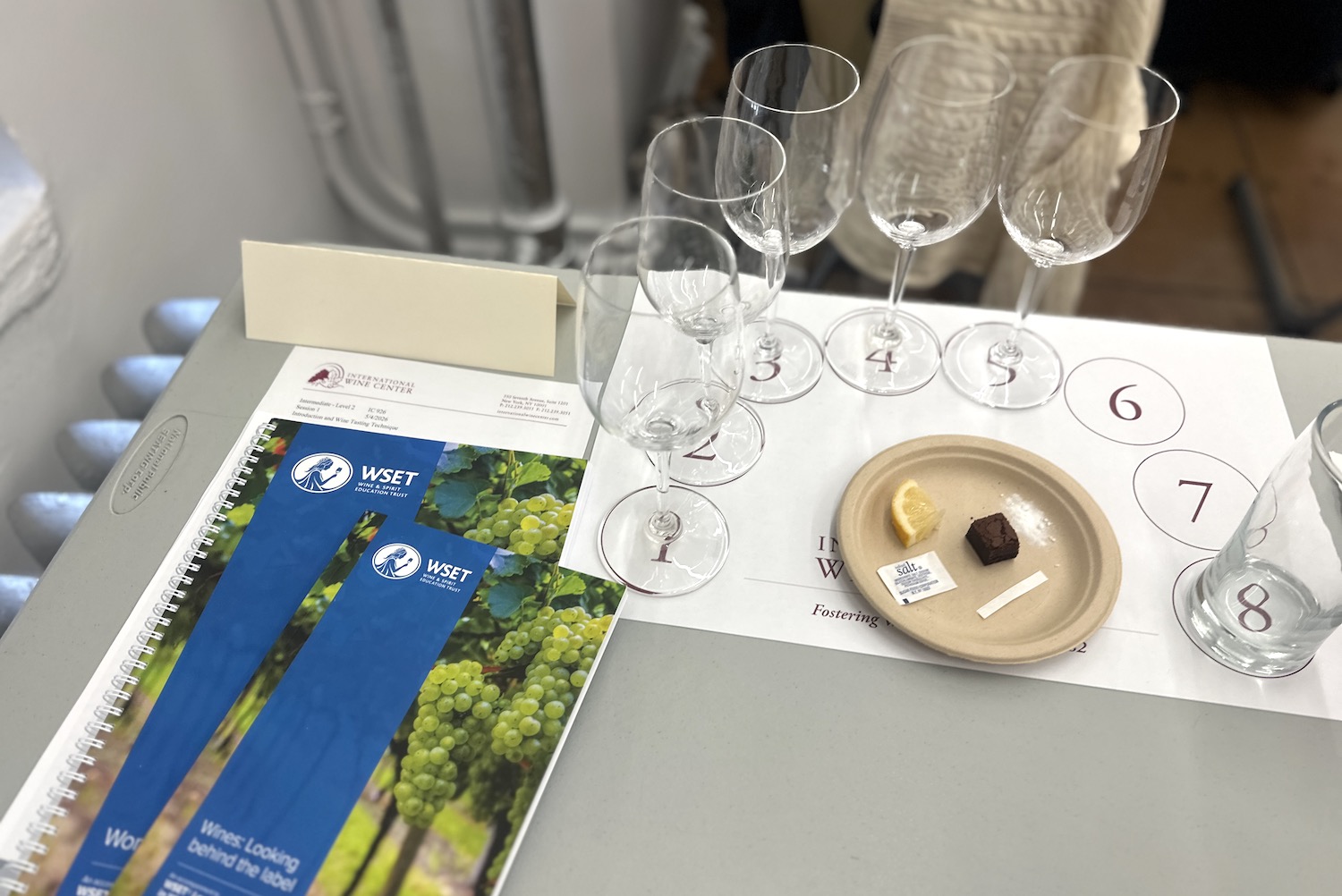
I’d heard great things about Wine & Spirit Education Trust (aka WSET) from both people in the industry and friends who got their Level 2 Award in Wines just for fun. So my husband and I enrolled in the eight-week course, packed our pens and portable spittoons (aka empty coffee cups) and took our seats in a classroom of Manhattan’s International Wine Center (IWC). As we went around the room and introduced ourselves, I quickly realized that attendance was evenly split between enthusiasts and industry folk.
“I would say the number of enthusiasts might even be north of 50% these days,” Dave Rudman, partner and managing director of IWC, tells me over the phone two days after I take the Level 2 wine exam. “WSET has been around for 57 years. It was founded to meet the needs of the wine trade in the United Kingdom but has evolved over time to be globally recognized for both professionals and enthusiasts. I think enthusiasts are keen to take it on because you can learn about something the way a professional would want to learn about it.”
I think that’s what I loved about the first day of classes: our instructor, Tad, spoke to us like we already knew what he was talking about. It’s not like he skimmed over important information because he assumed we understood, but when you enroll in Level 2, it is presumed that you can keep up. If you really need the basics, that’s what Level 1 is for.
You’re given two books at the start of class: one for reading before each lesson and one for taking notes during. About half of the class is dedicated to learning terms, regions, grapes and techniques, and the other half is devoted to tasting wine. And one thing was very clear from that first class: I’ve been tasting wine all wrong.
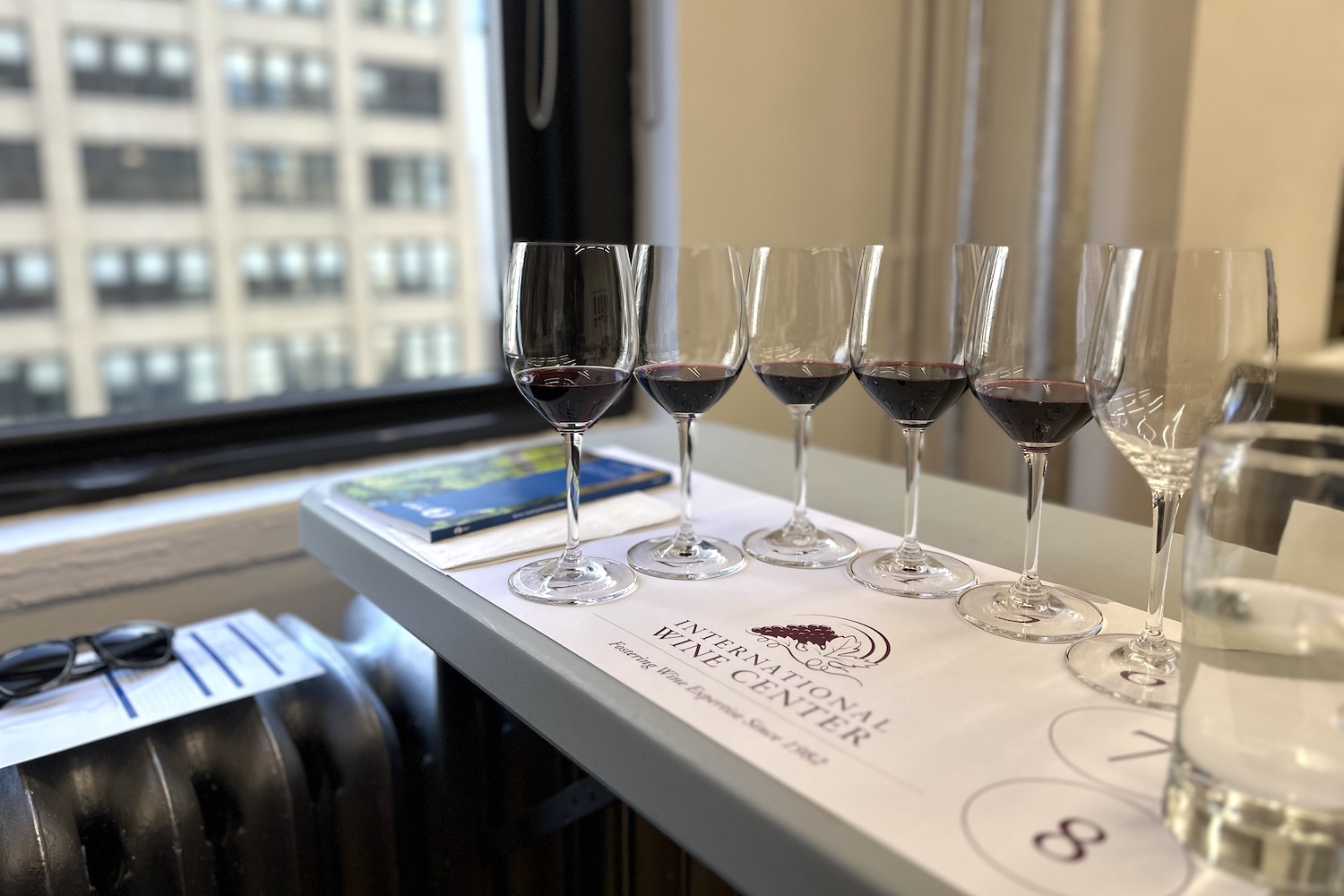
Sure, I knew to swirl the glass so the aromas would come forth, how to nose the wine and how to tell if it was high in tannins. But I couldn’t pick out acidity, body or any of the flavors imparted by winemaking or aging, save for the vanilla notes from oak barrels. That is one of IWC’s biggest strengths when it comes to WSET classes: The quality of both the instruction and the wine poured for the tastings.
“I think people are surprised, in a good way, about how much time we spend on wine tasting,” Rudman says. “It costs a lot of money, but IWC has one of the best wine programs. Other schools definitely taste fewer wines and don’t make the same investment. We always go for the premium designation.”
The Best Wine Accessories, According to a Drinks Writer
From a 41-bottle fridge to the handsomest Champagne saber on the market, these items will enrich your drinking experienceWe did indeed get to taste a lot of wines, about six in each class. The goal is for them to be typical of the grape and region so you can have a better understanding of the day’s teachings. I don’t have the sharpest palate, but it’s true that practice will improve any skill, and now I’m way better at judging the quality of a wine.
During our week two lesson, one of the teachings was deciphering a red wine label from Burgundy. My husband and I looked at each other with blank stares — we’re expected to know what a wine is just by looking at the label, no grape name in sight?! What seemed almost impossible in the second class is now something I can do, and it’s been a game changer. I was recently at a wine dinner for Château Minuty at Daniel, and the sommelier was talking about her recent visit to a winery in Hermitage. When she walked away from our group, I turned to my friend and said, “I actually know what that means now!” (Syrah from the Rhône Valley.) I felt truly accomplished, bringing my recent knowledge into a professional situation.
Another thing that became clear during class is that a lot of excellent, Old World (read: European) producers don’t use marketing to promote their wines. Look at how New World wine countries like Argentina popularized Malbec and New Zealand touts Sauvignon Blanc — it took a lot of money to make those wines household names in the United States. So even if a specific French grape or region, for example, isn’t a household name, having those WSET learnings in your back pocket can make all the difference when shopping for something new.
“There are some really progressive producers from the Old World that have done really well in the U.S. because they have been willing to adopt those Western practices of positioning, labeling and marketing,” Rudman says. “But it’s not traditional at all. There are French producers making great wine, but they have those really traditional-looking labels. People who don’t know are not willing to pay a high price for those wines because they’re not marketed towards them. So if you can crack the code and see behind the label, you can take advantage and get much higher quality wines at lower prices.
The wealth of knowledge is obviously a big reason you should take a WSET course. But bragging rights aside, it can help you become a better consumer. Not only will it open up a world of wine that is not being marketed toward you, but it’ll also help you know which bits of advertising are bullshit.
“Level 2 is specifically titled ‘Looking Behind the Label,’ and it’s such an empowering thing for a wine consumer to be able to cut through the marketing that’s trying to get you to pay more for a bottle,” Rudman says. “Because we assume, naively, that more dollars is better, right? But it’s not true, in virtually every industry and every category of consumer goods. If that’s your thing and you want to spend that money, definitely go for it, but be educated.”
I’m still awaiting my Level 2 Award in Wine test results, but my mind is already wandering towards Level 3. Whereas Level 2 was eight weeks of class, Level 3 is something like a five-month commitment, unless you take the two-weekend intensive. It’s daunting, to say the least. But the wine world is full of endless knowledge, and even though I’m still soaking in my recent learnings, I can’t help but want to dive even deeper.
“We have a lot of people who start here at Level 1 or Level 2, and they go all the way through,” Rudman says. “They’re just enthusiasts and not doing it because they have a career in wine. They just think, ‘Why wouldn’t I keep coming back?’ And wine sits within this context of world history. It’s cool.”
To learn more about WSET and find courses near you, visit wsetglobal.com.

More Like This


This article appeared in an InsideHook newsletter. Sign up for free to get more on travel, wellness, style, drinking, and culture..