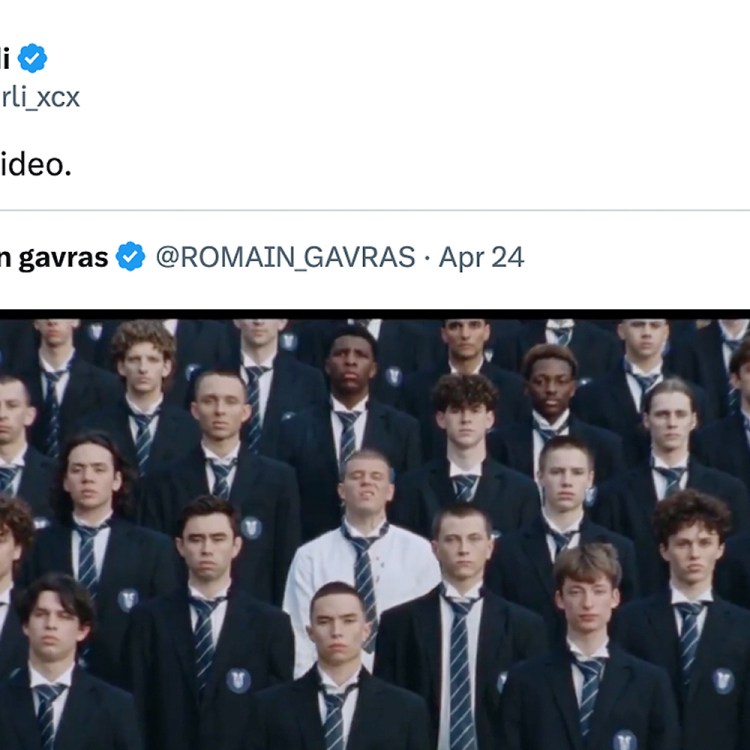
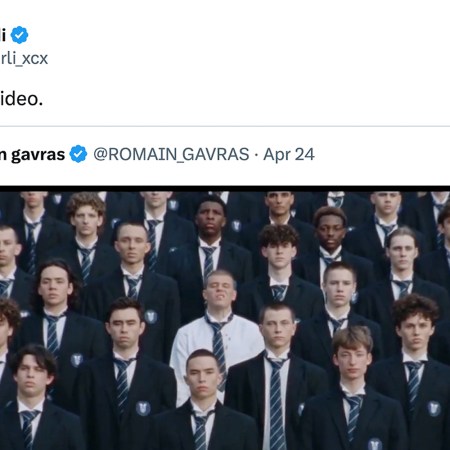
There’s a lot going on with Gen Z right now. For one: They’re giving people some pretty weird, empty looks dubbed “the Gen Z stare.” There’s also a lot to say about how they’re dating right now. Specifically, that they aren’t. They’re also not really having sex. According to a recent study from Match.com, about 50% of them are only having it once a month.
This isn’t exactly brand new information. “The Great Gen Z Sex Recession” has been covered recently over the past few weeks. It was discussed in The New Yorker last month, touching at the earliest mentions of a sex recession starting as early as 2016: publications like Bustle and The Atlantic were discussing how young people just weren’t really doing it as much as they used to.
There’s a few common denominators here: the pandemic, early access to pornography, fear of getting pregnant or impregnating someone, difficulty struggling to initiate intimacy. But some studies show that Gen Z’s perception of sex shifted far before the pandemic started, citing drops in sexual partners from as early as 2019.
Carter Sherman, author of The Second Coming: Sex and the Next Generation’s Fight Over Its Future, told Wired we can trace the early instances of this back to 2010 — the social media and smartphone era — and it contributes to a phenomenon called “comparing and despairing.” Sherman talked to 100 people under the age of 30 for her book.
“You look at other people’s lives, you look at other people’s bodies, and you are made to feel like you are less than,” Sherman says in the interview. “And young people described basically being very aware of their sexual marketability, which is to say that they became really aware of how attractive they were or were not through things like likes and matches and follower counts, and that constant rating on yourself can make people not really want to engage in intimacy, in sex, in relationships.”
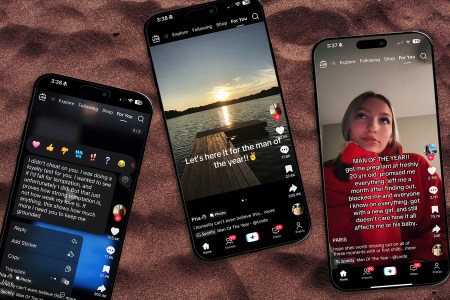
Women Are Coping With Men in This New TikTok Trend
Using audio from Lorde’s new song “Man Of The Year,” women are sharing stories of diabolic things men have done to themIt’s a sad yet understandable reality: We’re all well aware of social media being detrimental to one’s mental health — especially in teenagers and young adults. In this survey, roughly 70% of Gen Z-ers said they’re not ready for a relationship, even though they want one, along with 30% of them opting to more likely be “intentionally celibate” and another 30% saying sex should only be had after a committed relationship, which shows a shift away from hookup culture.
It’s not that they’re uninterested in dating, either — 68% of them are interested in marriage, according to the study, and 68% of them also said “vanilla sex” is a dealbreaker. So I guess they want to have some more kinky sex with someone who intends to stick around for longer than a hookup? It doesn’t seem like too much to ask for, but it certainly shows a shift in how casual sex is perceived by Gen Z.
An article from Evie Magazine from March cited that 62% of surveyed Gen Z-ers said they don’t do one-night stands, compared to a 2004 survey, where 78% of millennials at the time all reported having sex on a first date. This makes sense, given that the Millennials who participated in the Match.com survey were deemed the most sexually active generation surveyed.
And there’s a plethora of videos on TikTok about it that evidently supports this shift:
“Hookup culture is a low-IG coping mechanism for loneliness,” the poster in this video says. “Two people are in a relationship, and the moment one thing goes wrong, they quit. Sounds like the perfect practice to get a divorce one day.”
“Like sorry I never understood hookup culture,” one commenter wrote. “Like I’m not tryna shame anyone but HELLO?” wrote another.
“People in this generation have little to none self respect ngl, and social media has made it 10 times worse,” wrote one user.
A lot of videos and concepts like these are also tied to “purity culture,” which has also made a comeback, especially in the rise of Gen Z-ers becoming more religious, and one factor that I definitely feel like is making an impact. There’s an increase in women yearning to take on more traditional gender roles — trad wives, if you will — Christian-adjacent pop music topping charts and, more specifically, higher percentages of Gen Z males attending church.
Another particularly interesting part of the study is that 50% of Gen Z-ers are using AI to help them with dating. As a fellow Gen Zer myself, to this I respond, why would you do that? And how? For some, this looks like an AI dating coach that can help you on the dating apps. Because having a robot spark conversation for you while trying to date someone sounds like a great way to start a real relationship. It’s also helping find matches — 22% of dating app users reported finding more matches with AI — and, sometimes, may even be the match itself: 33% of Gen Z-ers are using it as a romantic partner — and so are 23% of Millennials.
Is this particularly worrying? Certainly. I couldn’t imagine hitting it off with someone online only to find out they haven’t actually been a real person, but rather an AI bot who’s been generating the conversation this whole time. Isn’t there already a TV show about fake personas on dating apps? At least those are actual people, I guess.
Ultimately, there are a lot of factors at play here. I’ve given myself a headache writing this trying to account for all these massive pendulum-swinging moments that are so deeply affecting Gen Z’s motivation to have sex. Have it, don’t have it, it doesn’t really matter. Self-awareness is great — if it’s not your thing, it’s not your thing. Or just let the people who want to do it, do it. But at least try having a conversation yourself on a dating app before you use AI.

More Like This


We're always on the scene eating, drinking and traveling near and far to bring you the best of what's happening out in the real world. Sign up for IRL now.