Nota bene: All products in this article are independently selected and vetted by InsideHook editors. If you buy something, we may earn an affiliate commission.
The first time I used the Snoo, it freaked me out.
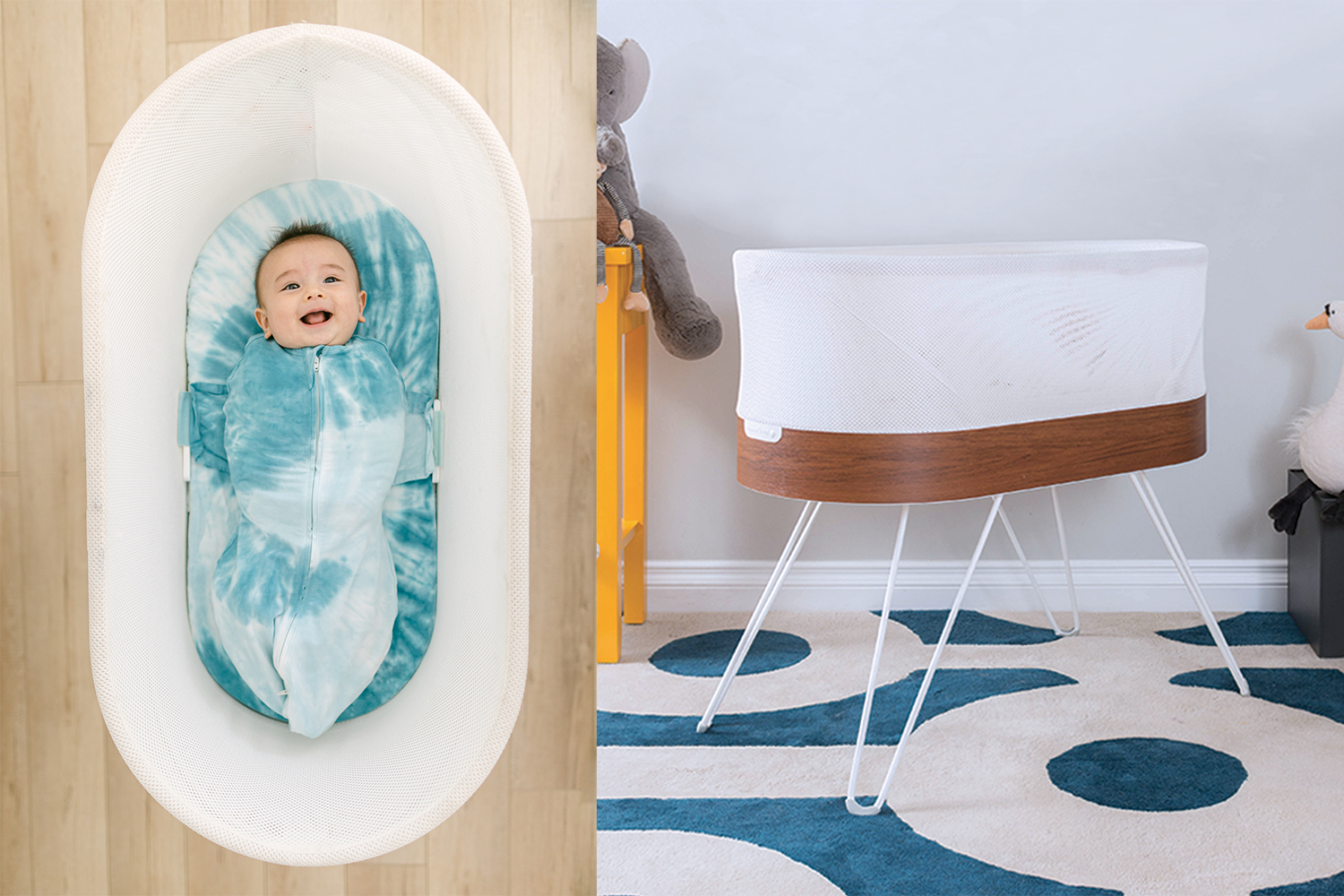
My wife and I placed our baby into the high-tech bassinet on her fifth day on this earth, praying the machine would help her sleep, and thus aid us in fighting back the hallucinations brought on by new-parent sleep deprivation. We wrapped her in the approved organic cotton swaddle, clipped her into the sleek oval bed and pressed the glowing button on the side.
White noise emanated from beneath our helpless infant while the robo-bassinet rocked her back and forth. She cried. The Snoo rocked louder and faster. She cried harder. We pulled the plug after 30 seconds. We just brought this perfect being into the world, we thought, we cannot abandon her to the care of this unfeeling, one-eyed robot!
One month later, at our wits’ end with a baby who wouldn’t sleep longer than 30 minutes anywhere but our arms or in a wrap carrier, there we were again, gazing over the mesh sides of the Snoo at our child securely attached inside. This time, it worked. Four weeks after starting to use it in earnest, our reluctant sleeper was consistently waking up only once or twice a night to feed, and snoozing soundly the rest of the time.
I’m now on child number two, and the Snoo worked miracles for him too, though in different ways than the first. My wife and I have become unofficial ambassadors, as we’re personally responsible for at least two other couples buying this $1,700 bassinet. In other words, I’ve gone from a Snoo skeptic to a true believer.
What’s So Great About the Snoo?
The Snoo Smart Sleeper, as it’s officially called, is a sensor-equipped bassinet that uses sound and motion to help babies up to six months old sleep better. Parents will know its creator, Dr. Harvey Karp, as the pediatric wizard behind the perennial best-seller The Happiest Baby on the Block and his signature method for soothing infants contained within, known as “the 5 S’s”: swaddle, side-stomach position, shush, swing and suck. Also in that book is Karp’s theory that explains why he invented the Snoo in the first place: Babies are born too soon, he posits, so during the “fourth trimester,” the first three months of a baby’s life, you should try to replicate the conditions of the womb.
If that’s true, it’s no wonder many babies don’t sleep well when they’re put down completely still in a silent, cold bassinet.
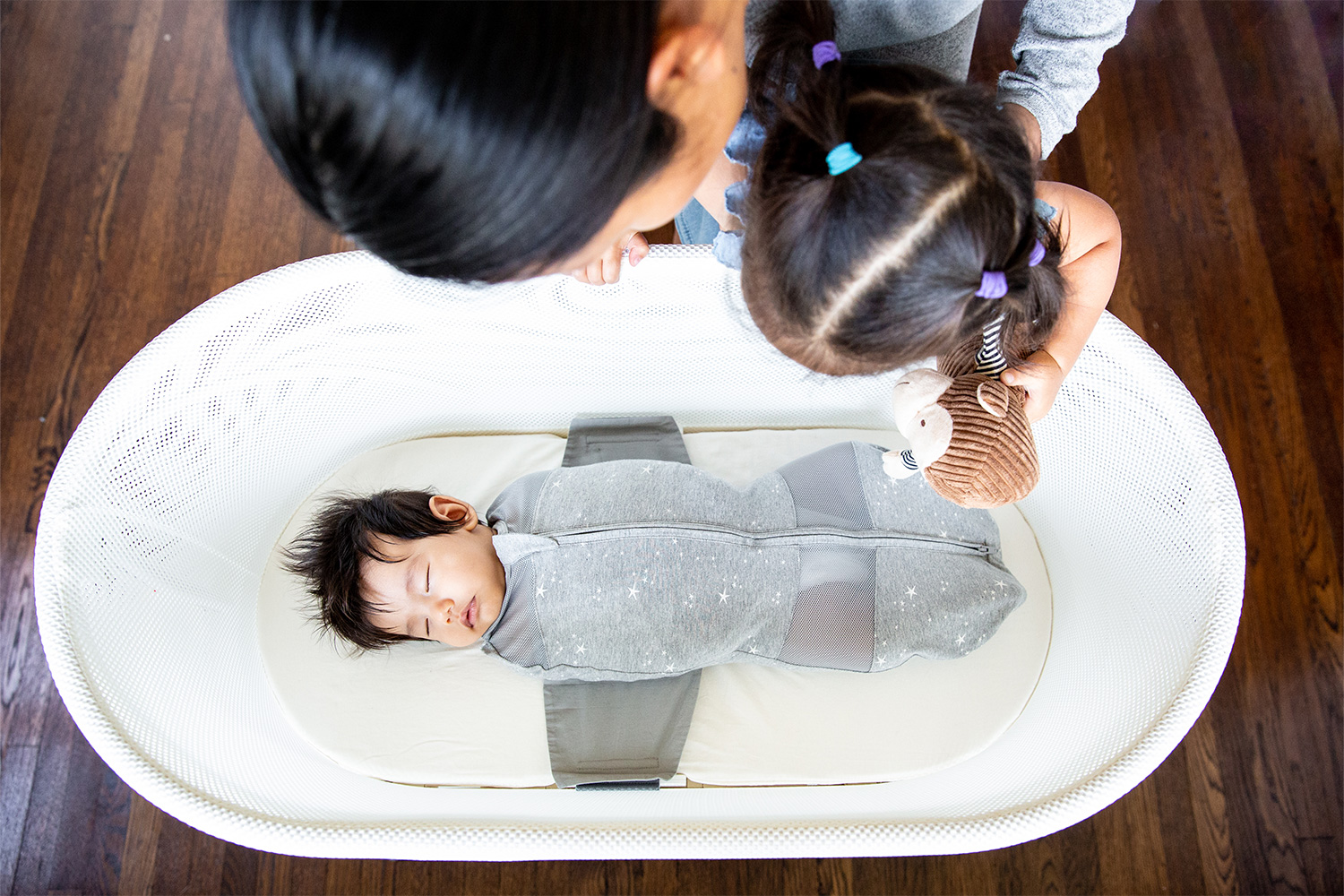
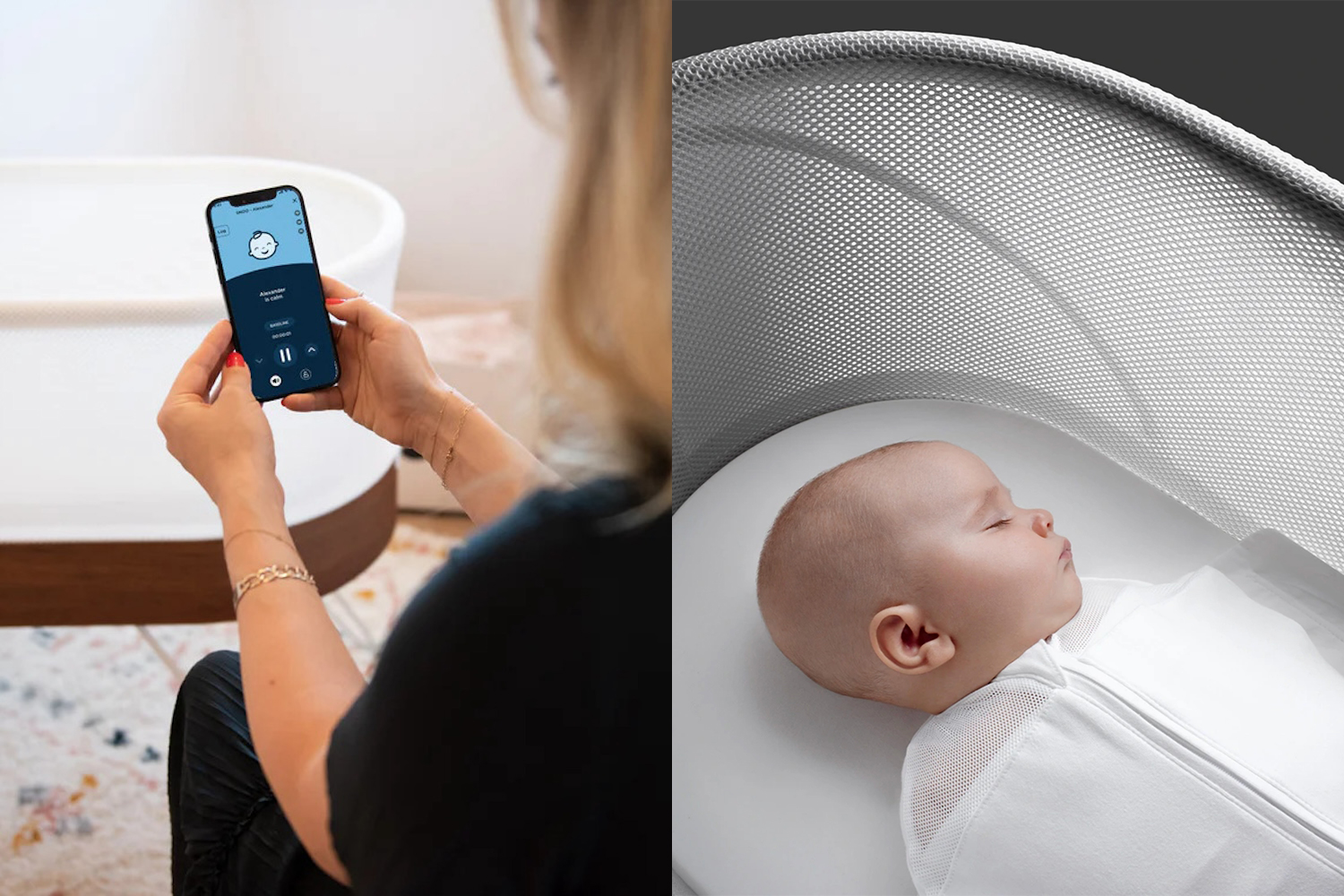
To replicate the womb’s environment, the Snoo has parents swaddle their baby tightly with the included sleep sack, and then gently rocks the infant on their back and lulls them to sleep with continuous white noise (the womb, if you’ve never thought about it before, is quite a noisy place). If a baby fusses for long enough or even cries out, the bassinet will recognize the noise and increase the speed and volume, with a goal of calming the baby down before automatically adjusting the levels back down again.
The promise of the Snoo is almost intoxicating for sleep-deprived parents: Karp’s company Happiest Baby claims its product will not only put your baby to sleep, but keep them asleep.
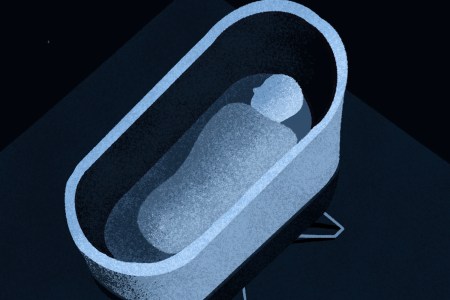
Dr. Harvey Karp, The SNOO and the Quest to Solve Bad Sleep
A high-tech bassinet has revolutionized the market. Will it ever reach the masses?During the nights my first child would shriek for long stretches for no apparent reason, I would have paid much more than $1,700 to soothe her. I’m sure most new parents have those same excruciating nights.
Even though the Snoo has been around since 2016, and has been praised by Vogue editors and A-listers alike, my experience talking to other young parents can be summed up by one question that always arises: “Does it actually work?”
That’s the thing about the Snoo: If you poke around online, you can find people who call it the single most important item they bought for their newborn just as easily as you can find people who say their kid hated it. The missing component in that dichotomy is that every baby is different, a sentiment I know is hard for some to take to heart. But it’s true: one parent’s miracle cure is another parent’s expensive disappointment.
So will the Snoo work for you and your kid? I’ve now used it for two very different babies, and here’s my experience.
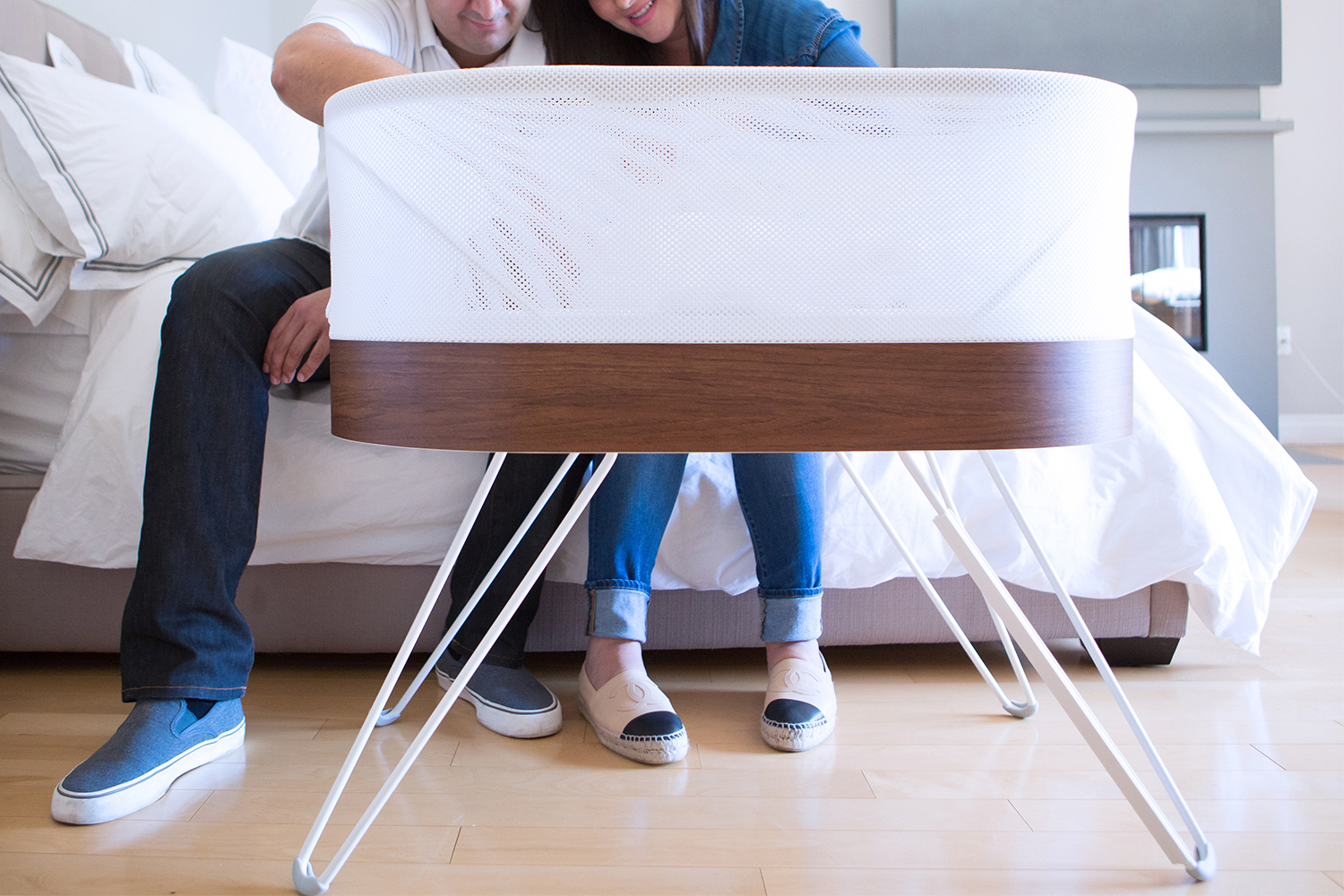
Snoo Smart Sleeper: The Basics
The Snoo is recommended for infants up to six months old, or until they can roll over consistently. I used it for my first kid starting at one month old up until she was five months; for my second, I put him in it immediately, but stopped using it before he was four months (I’ll get to that later). The point is, you’re only supposed to use it for a relatively short period of time, and even siblings may react differently, but it can be a game changer in those early months.
While a $1,700 bassinet may seem like a lavish expense, especially for people who could get one from family or friends for free, or who could buy a new, non-smart baby bed for under $300, you’ve got options with the Snoo.
Happiest Baby offers refurbished (or “pre-loved”) models for $1,195 (those are currently marked down to just $896), as well as rentals that cost $159 per month. As a bonus, many people can use their FSA or HSA funds to pay for the Snoo, not to mention the growing list of companies from J.P. Morgan to Red Bull that offer the bassinet as an employee perk (check with your workplace!). There’s also a huge secondary market for these, whether it’s eBay or Facebook Marketplace.
One crucial thing to know is that you’ll have to pay extra to access the Snoo’s full functionality (by way of a “Premium” subscription on the Happiest Baby app) unless you’re a new customer buying or renting directly through Happiest Baby or an authorized partner.
Snoo Smart Sleeper Bassinet Specs:
What I Like About the Snoo
It Helped My Kids, My Wife and Me Get Much-Needed Sleep
After working through that initial hesitation with my first kid, the Snoo helped her begin to sleep in two or three solid chunks throughout the night, with minimal shushing needed from the bassinet, starting at two months old. She needed a considerable amount of soothing before we clipped her into the Snoo — swinging, singing and shushing from me or my wife — but once she was out, she slept remarkably well.
Looking back over the logs, she had a six-hour stretch at two months and a nine-hour stretch at three months. Those were magical exceptions, not the norm, but it shows how effective the Snoo’s constant rocking, shushing and swaddling can be compared to the barebones recommendations from the American Academy of Pediatrics, which says babies should sleep on their backs in their own sleep space on a firm, flat surface with no blankets or other soft items to prevent the risk of Sudden Unexpected Infant Death (SUID), which includes the more commonly known Sudden Infant Death Syndrome (SIDS).
My second child took to the Snoo differently. We put him in right away when we got home from the hospital, and while the first couple weeks were mostly unsuccessful, by two weeks old he was in it all night, from 8 or 9 p.m. until 6 or 7 a.m., with two to four wake-ups on average. Unlike my first child, we could put him in the Snoo wide awake and it would lull him to sleep without a Herculean effort on our part, which was a godsend when we were trying to figure out how to take care of a newborn and toddler at the same time. On the flip side, he started fussing more in the Snoo earlier, so we transitioned him out of the bassinet and into a crib before he turned four months old.
The Design Is Simple and Intuitive, Even at 3 a.m.
The Snoo could have easily been a case of function over form, and there are a few other so-called smart bassinets out there that are indeed giant plastic eyesores. Happiest Baby was able to dodge that label thanks in part to Yves Béhar, a celebrated industrial designer who collaborated on the Snoo. You’ll know him as the mind behind Samsung’s Frame TV and Herman Miller’s Sayl office chair.
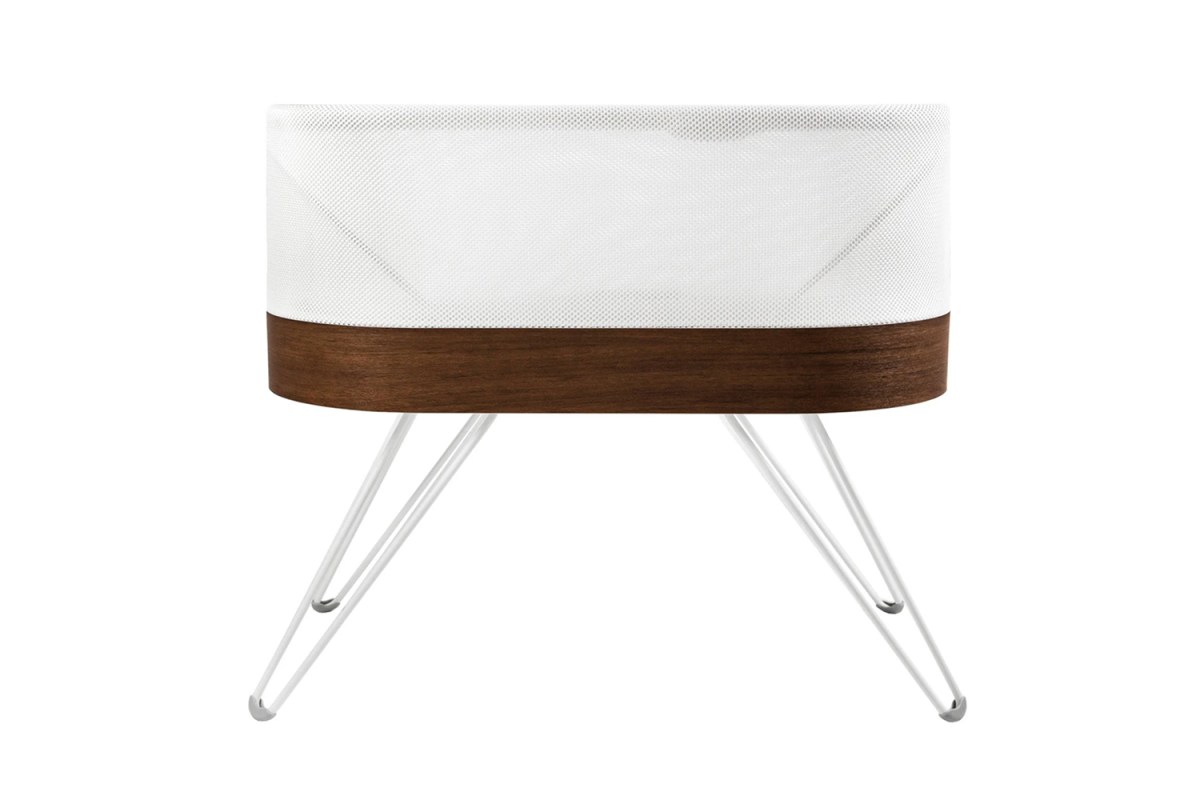
In practice, the Snoo is easy to assemble and disassemble, with four legs that clip in and screw down with no tools needed; simple to use, with one single, elegant button on the end to turn it on or pause it, and full functionality available via the cleanly designed app; and visually neutral so that it won’t feel out of place no matter what room you place it in, with white mesh sides and a wooden base.
I even found that it travels well. My wife and I loaded the Snoo into our SUV on two separate cabin trips up north in Minnesota, when our first kid was three months old and again at four months. It was a lifesaver both times.
App-Based Experience Gives You Freedom and Peace of Mind
Like many new parents, we overprepared for our first kid. Her nursery was custom-painted by my brother and mom, her shelves and drawers overflowed with onesies and burp cloths, I took our dog to obedience classes to make sure she wouldn’t be a psycho with a newborn. But then, when she finally arrived, naturally there were things we didn’t think of — like how the camera I meticulously mounted in her nursery wouldn’t matter until she started sleeping in her crib.
Thankfully, the Happiest Baby app, which acts as a remote control for the Snoo, offers peace of mind there. It alerts you when the bassinet begins to soothe your baby, and what level it ratchets up to, so if you’re in another room you can get a sense of whether they just fussed a little bit or are in full-on meltdown mode and need you to rush in. Since your baby will be in a swaddle and clipped in on their back, you don’t need a camera watching them too, as you don’t have to worry about them rolling over like in a traditional cradle or getting an arm or leg caught in the bars of a crib.
What You May Not Like About the Snoo
Essential Features Are Paywalled
If there’s one thing to complain about with the Snoo, it’s this: In 2024, Happiest Baby put a bunch of the bassinet’s critical features behind a paywall, which led to “a firestorm of parental outrage,” as reported by The New York Times. The unofficial subreddit of Snoo users even placed a permanent disclaimer on the page that reads, “Seriously screw this company! Putting features behind a paywall app is total bullshit! So disappointed.”
To be clear, the Snoo is still functional without paying for the Premium app subscription; and if you buy a new or refurbished Snoo directly from the company or an authorized partner you’ll get a nine-month Premium subscription for free, and renters get free access during their entire rental plus one extra month beyond it. But if you get a Snoo secondhand, or if you use it for a second or third kid (like I did with mine), you’ll be forced to pay a $20 per month subscription for Premium access.
I say “forced” purposefully, because in my mind it’s not worth paying for this advanced piece of baby tech without being able to access all the features. This blog details everything that’s paywalled. For me, the most important reasons to have Premium access are the detailed sleep logs (which show how long your baby was sleeping and being soothed) and level lock, which allows you to keep your baby rocking at a higher level than the baseline if they prefer more stimulation.
They Incorporated an AI Chatbot Into the App
I’ll give Happiest Baby its deserved kudos for giving Snoo buyers access to real-deal sleep consultants seven days a week for people who need advice. I’ll also criticize them for jumping on the AI chatbot bandwagon in a space where, I believe, they absolutely do not belong.
Right at the top of the Happiest Baby app is a button that says “Ask Happiest Baby”; when you click on it you’re directed to a chat. At the top of this screen in tiny type is the following: “Responses are AI-generated and may contain errors. Responses are not intended to provide medical advice, diagnosis, or treatment.”
I know the internet is full of terrible, factually inaccurate advice for raising kids, but as a product that’s trying to earn the trust of new parents around the country, incorporating a feature that even the company admits can potentially feed desperate, sleep-deprived parents false information is a bad move. When it comes to our kids, let’s drop the experimental AI and stick to reliable, fact-checked information.
Final Thoughts
When my wife and I told our beloved pediatrician that we were using a Snoo and asked her thoughts on the device, she was noncommittal. She didn’t think it was necessary, but if it worked for us, she wasn’t going to tell us to stop.
After using it with two kids, I can’t imagine what life with our newborns would have been like without the Snoo. Experts are clear that to keep infants safe while sleeping, they need to lie on their backs in baby beds that are free from obstructions. But our children wouldn’t sleep beyond one sleep cycle (20 to 40 minutes) in a regular bassinet, so for me, the Snoo was and is an essential for new parents, alongside things like a crib, changing table and diaper pail.
I wish the medical establishment took more seriously the obvious benefits of the Snoo, as relayed by countless parents in forums across the internet and in new-parent groups across the country. If they did, maybe it would be more accessible to sleep-deprived moms and dads who feel they have no recourse. I do believe it’s only a matter of time before that changes, but for now, whether it’s buying new or refurbished, renting, or scoring one secondhand from a local Buy Nothing group, you’ve got options, and you should take them, even if you have to pay the monthly subscription.