In Colonial America, taverns were more than places for food and drink. They also offered entertainment, lodging and served as a hub for sharing important news and discussing politics, providing headquarters for those conducting official business and strategizing amid the American Revolution.
The first tavern in what would become the United States of America was credited to Samuel Cole in Boston, opened on March 4, 1634. Taverns would grow rapidly across the colonies but started fading out in the 19th century, as they were replaced by specialized venues that served specific needs, such as bars, restaurants and inns. Despite the passage of time, there are still a few original Colonial taverns remaining in the United States. While some have become museums or refitted for other purposes, others were reinvigorated for serving in the modern era.
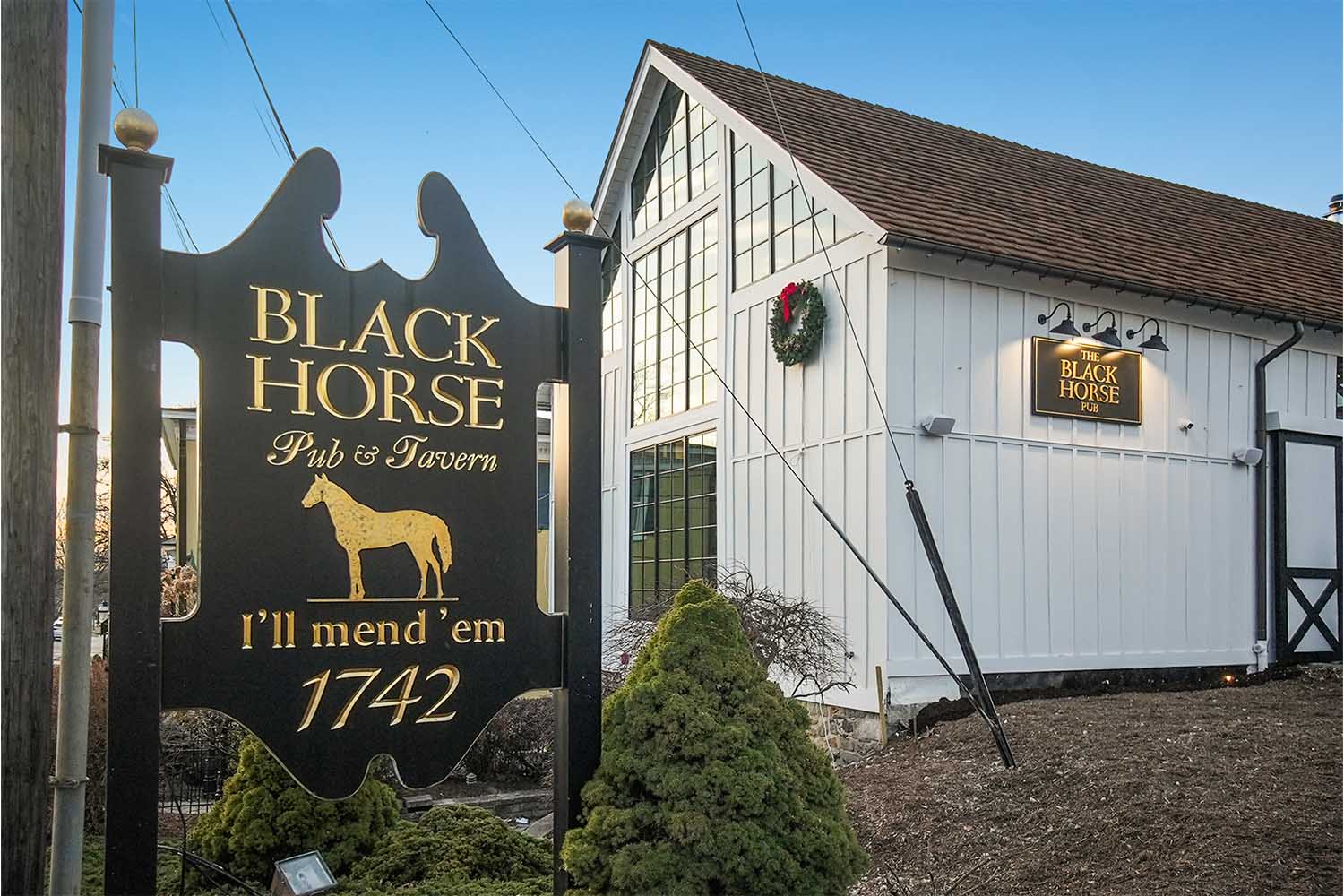
The Black Horse Tavern & Pub (Mendham, NJ)
Back in 1742, when Mendham was a rural crossroads and the Garden State was still a colony, this property started as an inn. (The current location of the pub was historically used as a horse stable.) There’s no definitive historical documentation confirming specific militia meetings or military use of the property, but local tradition has long held that George Washington stayed at the inn while passing through the area during critical moments in American history.
What is certain is that elements of the tavern’s original structure remain. Original floorboards were repurposed as beams in one of the venue’s rooms. Even details like the check presenters are made from onsite reclaimed wood. With a focus on familiar comfort-driven pub fare, the menu features favorites like chicken pot pie and the 1742 Burger, a nod to the pub’s founding year.
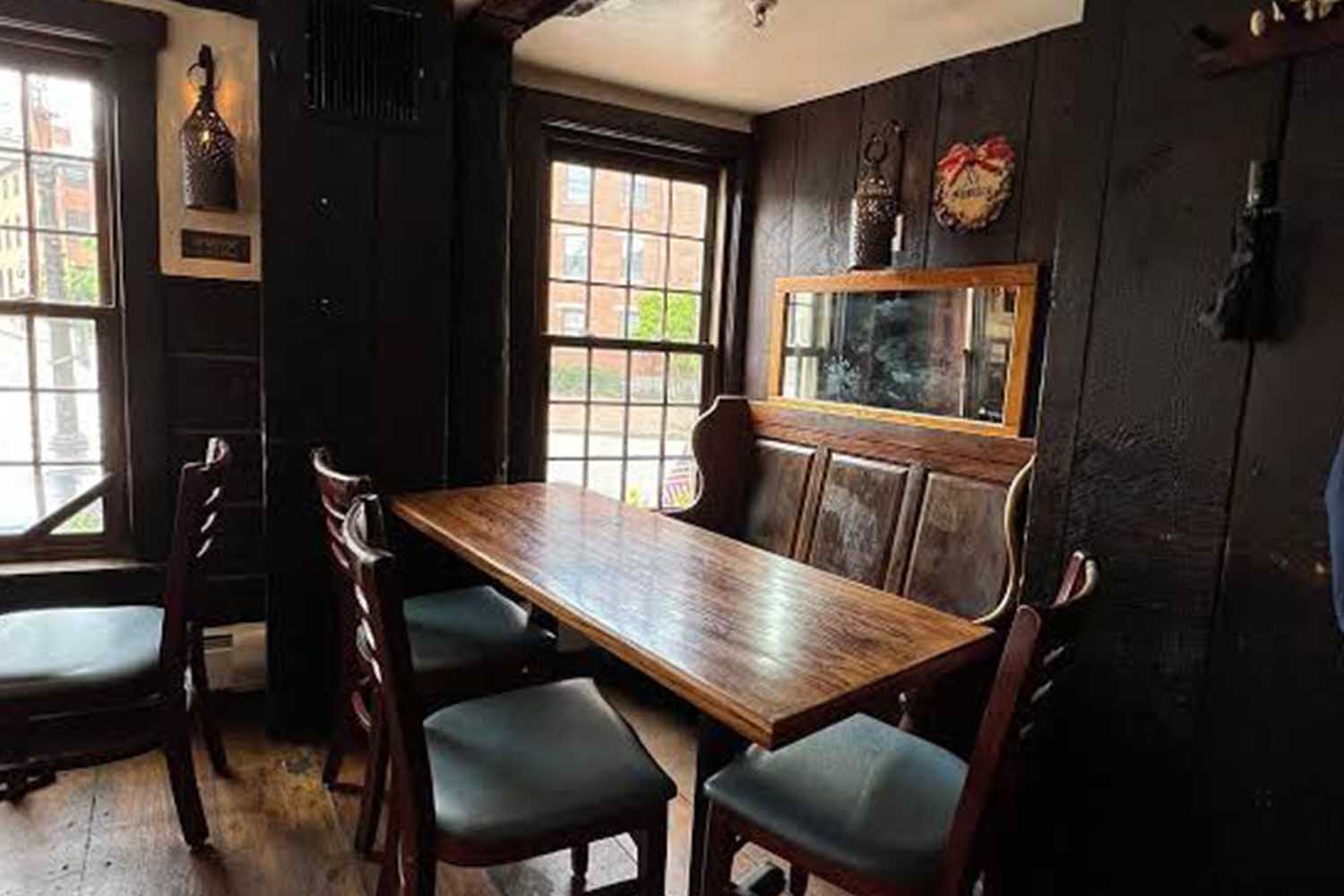
Warren Tavern (Charlestown, MA)
Near Boston’s Battle for Bunker Hill monument, Warren Tavern is named for Dr. Joseph Warren, an early key player during the American Revolution. A member of the Sons of Liberty, he was a physician who provided medical care for those injured in the Boston Massacre. As a military officer, Warren summoned Paul Revere and William Dawes for their famous messenger rides to Lexington on the evening of April 18, 1775. Warren fought as a volunteer soldier in the Battle of Bunker Hill, where he was shot and killed on June 17, 1775.
Warren Tavern came around in 1780 as one of the first buildings constructed after Charlestown’s were burnt down by British forces. Upon Washington’s death, a funeral speech for our first U.S. president was given here as well.
The tavern eventually shuttered and was used for a variety of purposes until it was turned into a bar again in the 1960s. But it still lays claim to maintaining its original structure, with its beams said to have been built from ship wood sourced from an old naval yard. If you go, try their New England clam chowder and the Sons of Liberty burger, along with a range of New England beers.
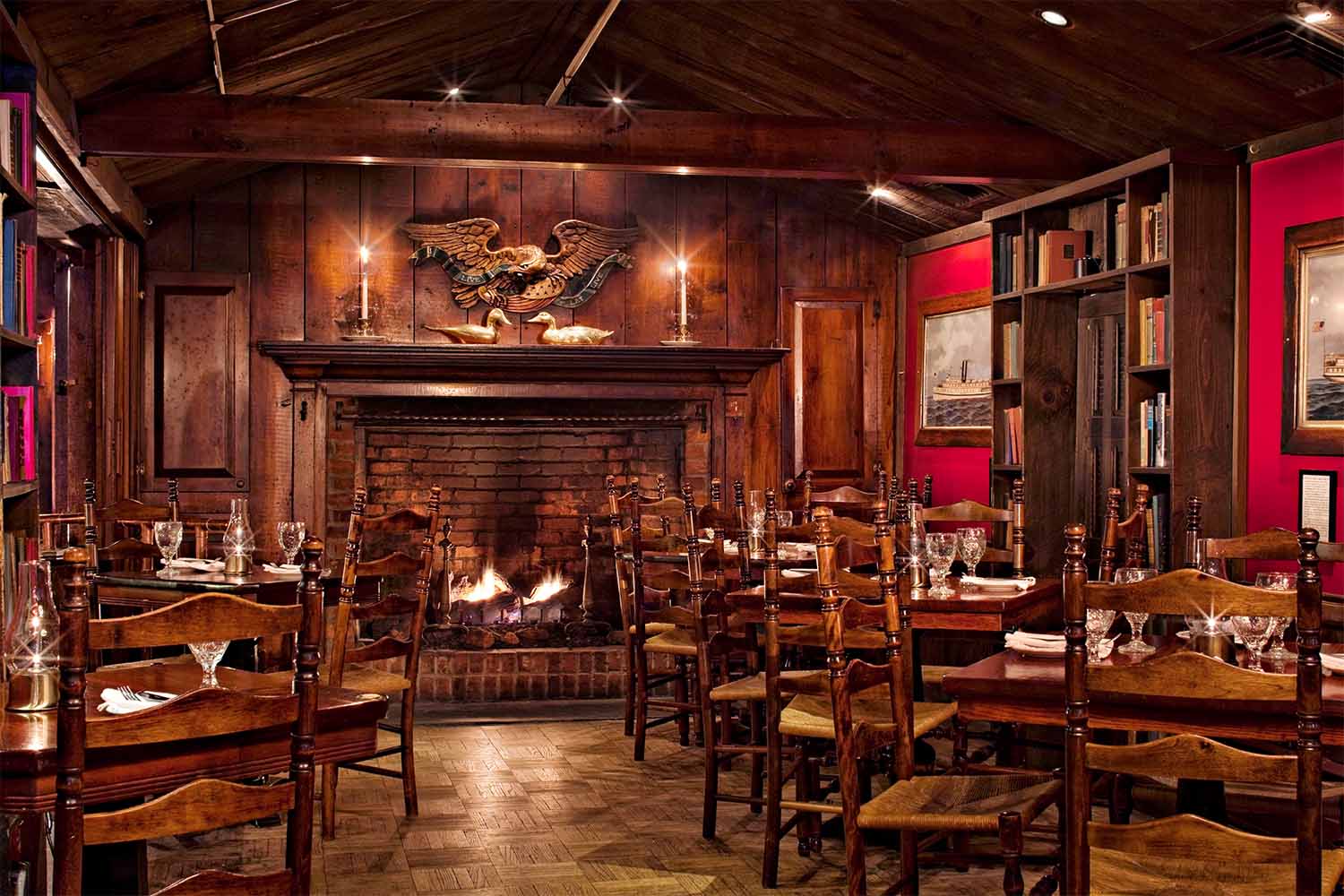
The Griswold Inn (Essex, CT)
This continuously operating inn dates back to 1776, and its origin coincides with providing food, drink and a place to sleep for shipbuilders and tradesmen coming to work on the first Connecticut warship of the American Revolution, the Oliver Cromwell. Built out of necessity, The Griswold Inn continued to establish quite a semiquincentennial history. During the War of 1812, British troops took over the inn as a base of operations. It also became a meeting place amid the women’s temperance movement and was subject to federal raids during Prohibition.
Purchased by the Paul family in 1995, the inn (also referred to as “The Gris”) features a wine bar, tap room, historic dining area and seasonal patio dining. A highlight is the Inn’s famous sausage sampler, served with housemade sauerkraut, braised red cabbage and whole grain mustard.
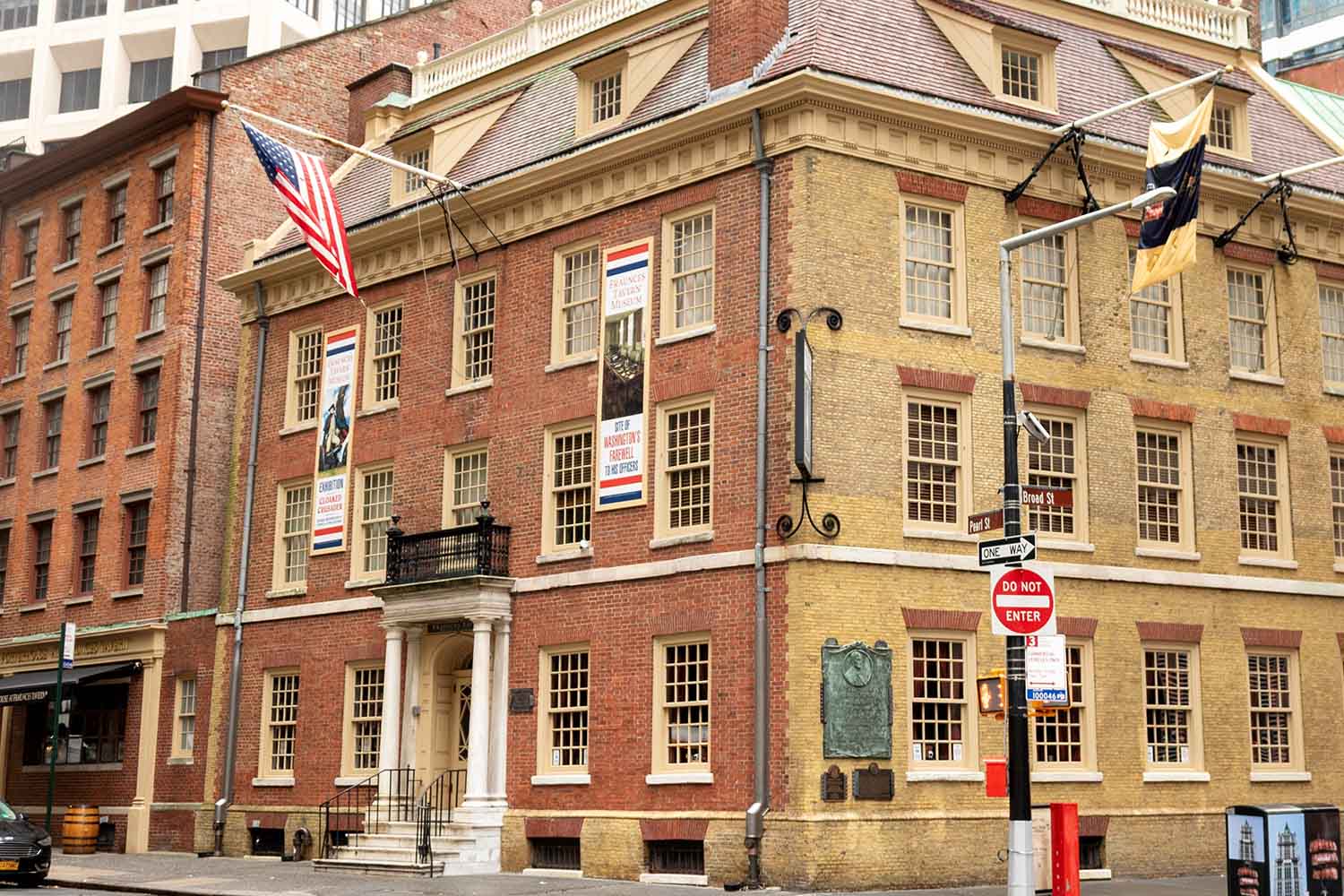
Fraunces Tavern (New York, NY)
Considered to be Manhattan’s oldest building, Fraunces Tavern is both a restaurant and museum with exhibitions relating to the culture and history of Colonial America, the American Revolutionary War and the Early Republic. Founded by tavern keeper Samuel Fraunces in 1762, this establishment was an NYC hotbed of Patriot activity. The Founding Fathers met and dined here, and the New York Sons of Liberty held meetings as well.
After the war, General George Washington gave a farewell address to his officers at the tavern. Alexander Hamilton and Aaron Burr ate together here a week before their Weehawken duel.
Fraunces would sell his tavern, and the building became a boarding house in time. In the early 20th century, it was saved from the wrecking ball by patriotic groups and restored to its original splendor.
Fraunces Tavern’s restaurant consists of eight rooms and five bars. The Washington Room and Bissell Dining Room, named for American Revolutionary War private Isaac Bissell, are used for events. Other areas include the Tallmadge Room, The Piano Bar Upstairs, The Whiskey Bar, the Independence Bar and Lafayette’s Hideout Bar. The latter two areas hold a weekday happy hour, and all menus incorporate contemporary American cuisine.
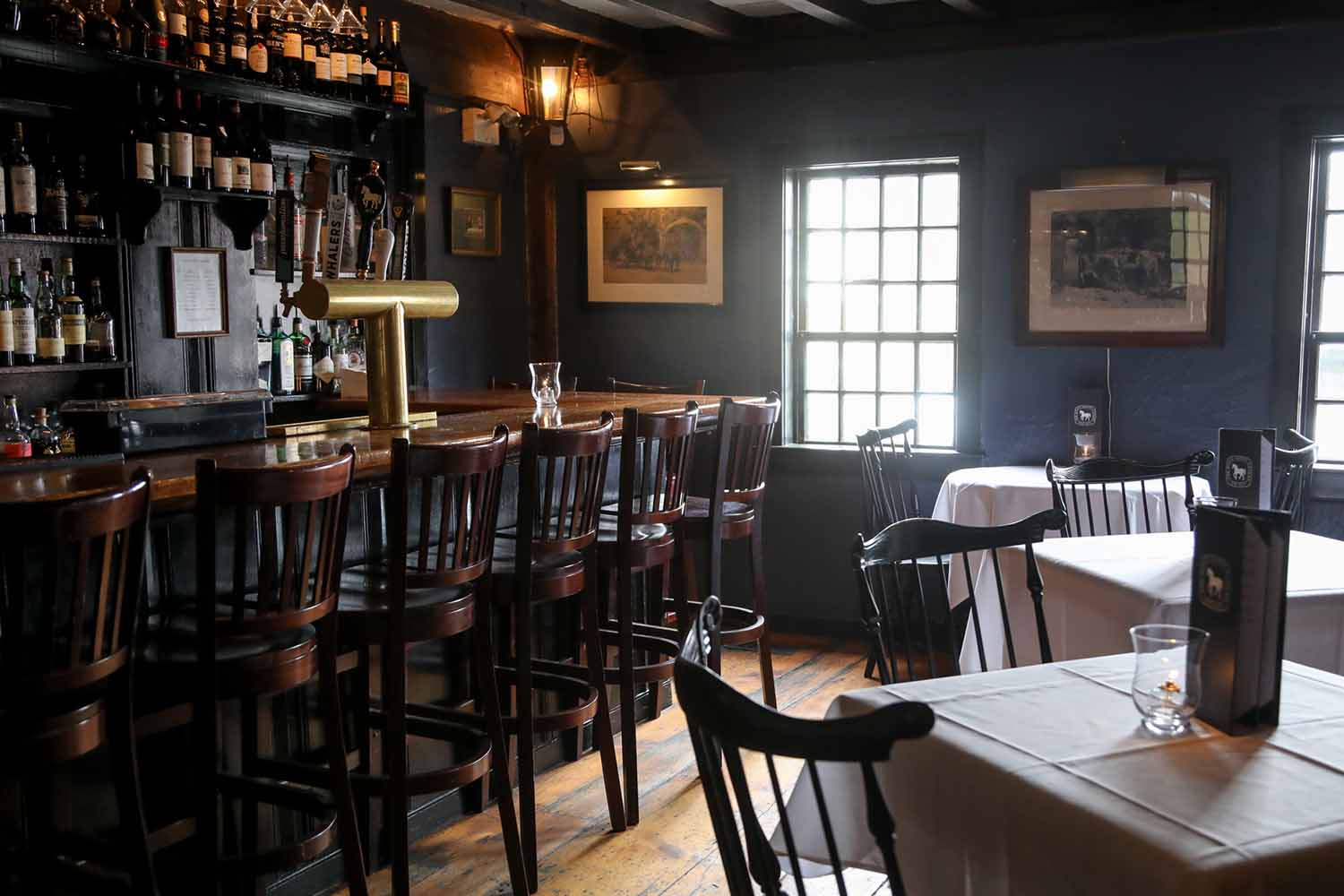
The White Horse Tavern (Newport, RI)
With the moniker the “oldest operating restaurant in the U.S.”, this tavern was originally built as a two-room residence for Francis Brinley and his family in 1652. The property was acquired by William Mayes Sr. and converted into a tavern by 1673.
For almost a century, the Rhode Island landmark served as the meeting place for the Colony’s General Assembly, Criminal Court and City Council. Mayes’s son, William, was a pirate in the North Sea who returned home and ran the family business with his sister, Mary Mayes Nichols, and her husband, Robert.
For the next two centuries, the tavern, for the most part, remained in the Nichols family. In 1776, Walter Nichols moved his family both out of the tavern and Newport amid the occupying Hessian mercenaries and British troops. He returned after the war was over.
In the 1950s, a local preservation society stepped in to save and restore the neglected tavern. Today, the dinner menu highlights contemporary Rhode Island cuisine, from fresh fish, clams and lobster harvested from Narragansett Bay, to seasonal produce, artisan cheeses and premium meats from nearby farms.
The Whiskey Rebellion Trail Is the Best American History Class, Uh, Ever
A craft booze-inspired tour highlights the country’s first civil unrest, from back in 1791Colonial Williamsburg (Virginia)
This living history museum and private foundation transports visitors back to 18th-century Williamsburg, which was the capital of the Virginia Colony from 1705 to 1780. Amid both original period buildings and rebuilt structures, there are three authentically replicated taverns. Each features its own backstory, servers in period dress, historically inspired menus and an ambience relevant to the era.
Christiana Campbell’s Tavern is named for the real-life daughter of a tavern-keeping family, who, upon the death of her husband, moved back to Williamsburg to open a tavern (in those days, a widow was legally permitted to own property). Today, its menu is known for seafood specialties, including crab cakes, spoon bread and oysters on the half shell. The Cellar offers a pre-fixe menu of lighter fare and drink pairings.
Shields Tavern was opened by Jean Marot in 1709 but was later managed by his daughter, Anne, and her husband, James. Here, you can partake in the Colonial tradition of the Groaning Board, an opulent, historically accurate family-style meal reminiscent of 18th-century tavern hospitality.
King’s Arms Tavern, founded by Jane Vobe in 1772, is known for a chophouse menu of original dishes, including peanut soup, prime rib and pork chops.
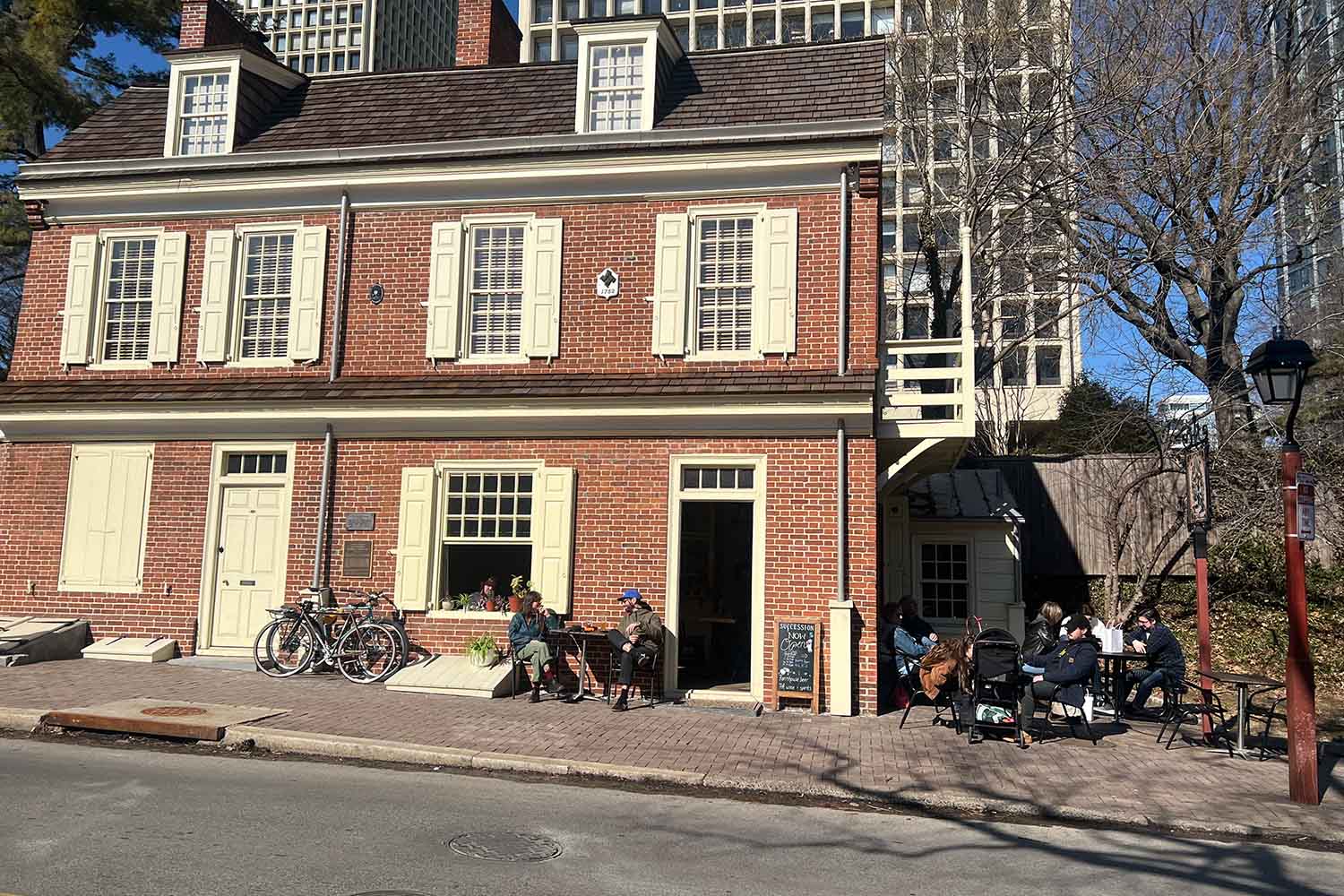
A Man Full of Trouble (Philadelphia, PA)
One account of early Philadelphia history cites that this tavern’s original name was “The Man Loaded With Mischief,” whose sign showed a man “carrying a wife on his back.”
There are two occupants of this circa-1759 establishment in Philly’s Society Hill, one of the city’s oldest buildings and only surviving Colonial tavern. The top floor is a museum with artifacts from Colonial and revolutionary Philadelphia, while its lower floor is a tasting room for Succession Fermentory, a Pennsylvania farmhouse brewery in Cochranville. The 25-seat, BYOF tasting room offers a range of farmhouse-style beers and ferments on draft, cask and in bottle. The menu also features a curated selection of Pennsylvanian wine, spirits and pre-batched cocktails like Fish House Punch, a Colonial recipe originating from an 18th-century Philly hunting and fishing club. It also hosts various private events, a speaker series showcasing Philly’s F&B industry and a Sunday night improv jazz series.
Trouble’s original clientele was largely sailors and dock workers from the nearby Delaware River piers. During the Revolution, the tavern was owned by a clockmaker named John Wood Jr. Over time, it changed hands and operated as a hotel in the 1860s — and became known by its current name.
In the next century, the building became a storefront for the Dock Street Market until the market shut down in 1959. A foundation saved it from demolition so that it and the neighboring Benjamin Paschall House would be restored.
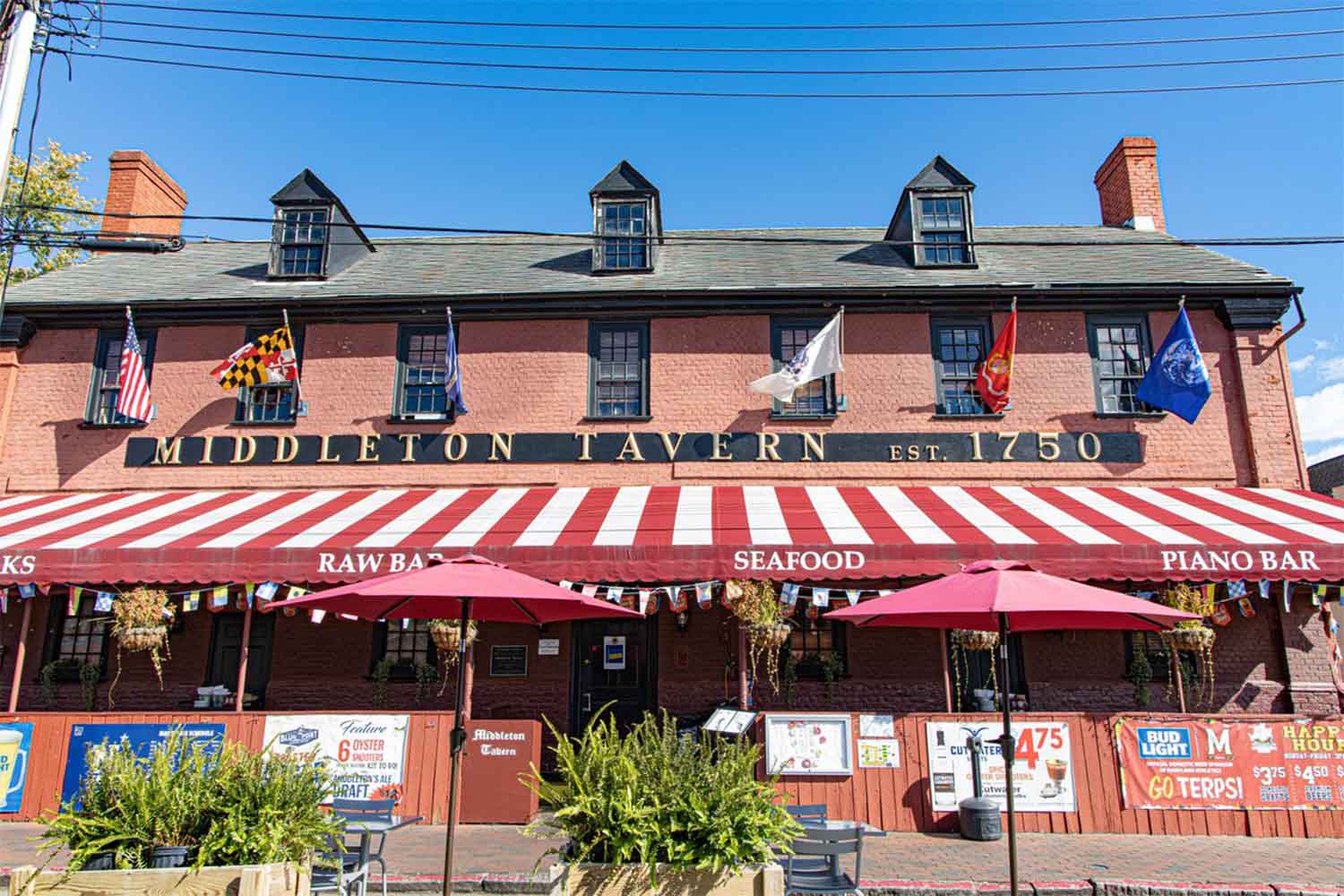
Middleton Tavern (Annapolis, MD)
This Georgian-style building near the Annapolis City Dock was bought in 1750 by Horatio Middleton, an innkeeper who ran a ferry service between the city and Maryland’s Eastern Shore. The harborside inn served as a base and overnight stop on the route from Philadelphia to Virginia.
One ferry passenger was Marylander Tench Tilghman, Washington’s aide-de-camp, who delivered the news of Cornwallis’s surrender from Yorktown to Philadelphia. Other noted visitors included Thomas Jefferson and Washington himself, the Tuesday Club (“a social organization of the city’s most enlightened and well-educated gentlemen”) and the Freemasons.
Following Horatio’s death, his widow Anne and son Samuel ran the business. The building would later become a general store and meat market. Early in the next century, it was another watering hole, Tydings’ Bar, which then evolved into a restaurant and souvenir shop until the mid-1960s.
It was Jerry Hardesty, a longtime owner who passed away in 2021, who would give the venue its original name back. Specializing in seafood and oysters, the tavern maintains its Colonial-era fireplaces, but all places change and adapt to the times. As their website notes: “Even before the American Revolution, Middleton Tavern was a popular gathering place for local gentry, seafarers, watermen and travelers to the Colonial capital. It was known for excellent food, drink, music, games and merriment… And so it is still today (although Keno, RaceTrax and Trivia have placed whist).”
Meet your guide

More Like This
Every Thursday, our resident experts see to it that you’re up to date on the latest from the world of drinks. Trend reports, bottle reviews, cocktail recipes and more. Sign up for THE SPILL now.