Earlier this month, the U.S. Forest Service announced a major reorganization, cutting dozens of sites where research is conducted all over the country. As the New York Times reported, this prompted an abundance of concern from the scientific community, due in part to the potential disruption of decades’ worth of ongoing research.
That would absolutely be a loss to the scientific community and a blow to our ability to better understand the planet on which we live. But this wasn’t the only long-running research that’s been threatened this year: an ocean away, an important collection of data that has persisted for over a thousand years also faced an existential threat. In the case of Japan’s record of cherry blossoms, however, the story has a happier ending.
As Fiona Spooner wrote at Our World in Data, data on when cherry blossoms were at their peak in Kyoto has been documented since the 800s. And while the sight of cherry blossoms in nature is a feast for the senses, having centuries’ worth of data on the same phenomenon is also a wealth of information on trends in climate. Spooner noted in her recent analysis that the date of the peak blossoms has been getting earlier and earlier in the year, with a steady drop since the 1930s.
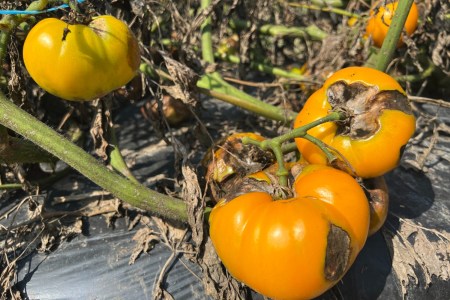
Crops Are Spoiling Faster Due to Climate Change
This can lead to an uptick in illnessThis documentation almost came to an end. In April, Our World in Data scientist Tuna Acisu took to Reddit to seek assistance in continuing the project. The scientist who had previously handled these duties, Osaka Metropolitan University professor Yasuyuki Aono died in August 2025.
As Acisu explained, “phenological data (when plants bloom, when birds migrate, etc.) is one of the few ways we can reconstruct historical temperature trends before modern instruments.” Thankfully, Acisu’s search was a success; The Guardian‘s Chris Baraniuk reports that another scientist will continue the work — making sure that a centuries-long tradition continues.

More Like This
This article appeared in an InsideHook newsletter. Sign up for free to get more on travel, wellness, style, drinking, and culture..