This past summer, my wife convinced me to go on a hike — a real hike — six miles round trip up a mountain to a lookout point high above a sprawling valley in upstate New York. I live in New York City, so I’m no stranger to walking. But hiking? In the heat? Uphill, across creeks, making sure not to snap my ankles on rock-strewn paths? I complained the whole time.
At one point, my wife, effortlessly sporty and recently back from a weeklong hike in Banff National Park with her dad and sisters, got ahead of me on the trail. For a moment, I felt disoriented. I could really get lost out here. And what would happen if I got lost? I’m not an experienced hiker.
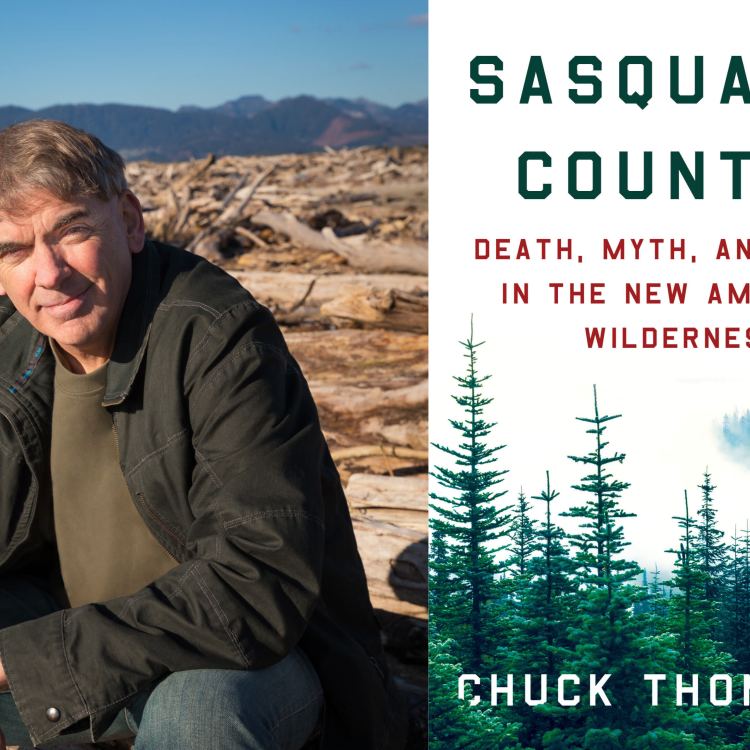
I thought about that moment while reading Chuck Thompson’s bracing new book, Sasquatch Country, a deeply researched account of two experienced hikers who died in the forests of Washington state and the viral rumor that they were hunting Bigfoot, which made them the laughingstock of the internet. It’s a story that’s both frustrating and heartbreaking.
Thompson is a veteran journalist and travel writer, a natural-born storyteller with a bullshit detector precision-engineered by years of reporting. His last book, The Status Revolution: The Improbable Story of How the Lowbrow Became the Highbrow, was a spicy look at snobs, social climbers and wannabes. My favorite of his is 2009’s To Hellholes and Back: Bribes, Lies, and the Art of Extreme Tourism, an irreverent, Bourdain-esque tour of “dangerous” destinations, including Disney World and Mexico City. He fell in love with Mexico City a decade or so before it became one of North America’s hottest culinary and cultural destinations.
In Sasquatch Country, he pulls a thread that weaves through rural America, the ruins of the media business, and a grieving family.
He lives in Portland but called me from outside Juneau, Alaska, where he lives part of the year. We talked about bears, the titular cryptid and the mistakes even the most seasoned hikers make.
John DeVore: The logline for Sasquatch Country is “Twin Peaks meets Into the Wild.” Your book isn’t fiction, so I assume the Lynch component mostly refers to the book’s backdrop: the mysterious, evergreen Pacific Northwest. But tell me about Jon Krakauer’s Into the Wild, a “man vs. nature” narrative nonfiction book about men who sort of underestimate the backcountry. Why does that book still resonate?
Chuck Thompson: It was on my mind when I was writing this. Into the Wild tells the story of a guy named Chris McCandless, the son of a wealthy family from the East Coast, kind of a privileged white kid who wanted to get out and experience real adventure and get in touch with nature. He went up into the interior of Alaska, badly misjudged his own abilities and badly underestimated the ferocity with which nature takes a toll on people. He ended up dying for the sake of seeking an adventure he really wasn’t prepared to take on.
The reason it became a bestseller and is still a classic of outdoor books is that about half the audience, or maybe more, were really inspired by Chris McCandless, a guy who just threw off the shackles of civilized society, put himself out in the woods, challenged himself and tried to really get in touch with nature. A lot of people found inspiration in that act and in the message it conveyed. However, an equal or at least very large number of people had the precise opposite reaction, which was: What the fuck is this moron doing out there? He doesn’t know jack shit. He had no business going into the woods, and that’s what you get. Fuck around and find out, sucker.
It’s similar to Sasquatch Country …
Right. So when these two guys I wrote about, Dean Pommerville and Eric Straughter, were found dead in a pretty unforgiving spot in the backcountry of Washington, a lot of people jumped to the conclusion that they were unprepared noobs who had bitten off more than they could chew. That they were city boys. That they were Portland liberals who like to stand on street corners and stop people from logging and want to defend every squirrel and insect in the woods, but put them out in the real forest and they don’t know how to survive for more than an hour or two because they’re such wusses. That was the going theme, and a lot of the internet reaction to their deaths was precisely that. What I’m saying sounds really harsh, but I’m condensing thousands of comments that were made online about these two guys after their deaths hit the media.
But that’s not the reason the story went viral. News organizations began reporting that the pair were “Bigfoot hunters.” Sasquatch hunters. Why did it bother the deceased’s family and friends?
One, because they considered it to be a lie, and two, because they understood the stigma that gets attached to people who presumably believe in Sasquatch to the point that they’re looking for them in the middle of a winter storm and die. The stigma that gets attached to Bigfoot believers is one of stupidity, naivete, gullibility. They seem like foolish people. Sasquatch became a supermarket tabloid punchline in the 1970s and ’80s. “I Was Bigfoot’s Bride.” “The Bigfoot Diet: He Lost 150 Pounds.” Once the supermarket tabloids took hold of the Bigfoot folklore and legend, it really diminished Bigfoot and put him in the province of kooks and idiots and morons.
So that’s what really upset the family. They’re in the midst of mourning the sudden loss of these two men over the Christmas holiday. Both guys were in good shape. There was nothing to suggest they were going to go out for a day and die. Shocking. You’re dealing with that literally on Christmas Day, and now, heaped upon it, the entire global news media is reporting that they died while looking for Sasquatch, and everybody on social media is piling on like they’re the two biggest jackasses of the season.
[M]ost people report the same reaction: they’re so frightened they’re momentarily paralyzed. They’re so petrified, or the moment is so big, that they can’t even move. People who claim to have had close encounters with Sasquatch repeat that story over and over.
– Chuck Thompson
You have some connections to the story. You knew Dean’s wife, Chris, right?
I had met Chris at the University of Oregon, sort of in passing. We were students at the same time and had a couple of mutual friends my freshman year. She was around our dorm. I said hi to her. I remembered her, but we were never friends. I never hung out with her.
How did you first find out about Dean and Eric?
I think I first heard about their deaths on a local television news report.
And even at that moment, was the Sasquatch hook there?
Yes, it was there from the very start. It led to every single thing. I think the first reports came out on December 28, and their bodies were recovered on the 27th.
But the news already had Sasquatch baked in, and that made you think what?
When I first heard that, I just believed it, like you believe anything else. Oh, two guys out looking for Sasquatch died. That sucks. I just kind of accepted the story like everybody else did. And as one of the search-and-rescue guys I interviewed told me, it’s not that exotic or a big deal in many parts of the Northwest to have a Sasquatch angle in a story. Sasquatch is pervasive. He’s everywhere in tourism marketing around here, so you kind of get used to it. To some degree, it didn’t seem hugely sensational. But I also knew that anytime you say guys died looking for Sasquatch, that’s clearly clickbait.
You’re from that area, right? Where the book takes place. Skamania County, Washington?
You could say I live in Oregon. I never considered myself an Oregonian. I grew up in Alaska, and that’s another personal connection to the book, which I write about. Growing up in Southeast Alaska, I lived through a couple of episodes when people went missing or people I knew were stranded, and I lived through these very dramatic, intense search-and-rescue operations.
Back to Skamania County, which is one of the most interesting characters in your book.
It’s a classic American riches-to-rags tale. It was once one of the wealthiest counties in the state, mostly due to logging. But in the 21st century, tourism is Skamania County’s biggest economic driver. The problem is, you’ve got a lot of people who aren’t part of the tourism economy. They’re loggers. They’re fishermen. They’re miners. They’re aluminum smelters. It is a county that wears its resentment of big-city Portland liberals on its sleeve.
Do you believe in Sasquatch? And why do you think people believe in Sasquatch?
As far as my belief, I’m a Bigfoot agnostic. I know it’s a cop-out. But if you had asked me that two years ago, I would have said, “No, I don’t believe in Bigfoot.” And I didn’t intend to include Bigfoot mythology in this book. It’s really not important to the book. When I started, the only part that seemed important was that Dean and Eric were unfairly painted as Bigfoot loonies. I didn’t think the rest mattered or was even interesting.
But as I got into the research, I just had to. It became such a part of the story: why people in Skamania County are so fascinated with Bigfoot, even at the government level. They really promote Bigfoot out there. It’s kind of their mascot. I think that’s a really significant reason Dean and Eric were painted with that brush — because it happened in that county. So I was kind of forced to look into a lot of the Bigfoot history and mythology there.
To answer the second part of your question, why do people continue to believe in Bigfoot? I think there’s a lot of evidence out there that seems credible, and that’s a big reason people believe. I just interviewed the guys from Finding Bigfoot, which ran for nine seasons on Animal Planet, and they tried to apply real science to this thing.
There’s a nine-season-long TV show about finding Bigfoot?
There is an enormously popular and successful show about finding Bigfoot that ran for nine seasons. Yes.
I’m guessing they never found Bigfoot. Do you consider yourself an outdoorsman?
Sure. I’ve spent my life hiking, camping and doing other outdoor pursuits: skiing, cross-country, backcountry stuff, rafting. Absolutely. I think I can call myself an outdoorsman.
OK, two-part question: do you know what to do if you encounter a bear in the woods? And do you know what to do if you encounter a Sasquatch?
I certainly know what to do with a bear. First, you don’t run. You stay still, make yourself look large and try to make a noise to scare it off. The last thing you want to do is follow your first impulse, which is to run, because then they’ll think you’re prey. I’ve had those encounters with bears.
I’m sorry, you’ve had those encounters with bears?
Yeah, definitely. The other thing they always tell you is don’t look the bear in the eye. And of course, if there’s a bear with cubs, you’ve got to be really, really cautious.
So you’ve tested this strategy … in the wild.
Yeah. The first time I ran into a bear, it was a mama with two cubs. She stood up on her hind legs, and I looked her right in the face. I just did. I was like, “Oh fuck, am I supposed to do that?” Luckily, she saw my buddy and me, dropped to all fours, got her cubs, and ran off. That was a really close call. She was probably about 20 yards away. It was pretty freaky.
Strangely, this is absolutely true: last week, a bear was going through our neighbor’s garbage. It was trying to break into his house, and he shot it with an arrow. And the bear ran across our front yard with an arrow in its shoulder.
That sounds horrifying.
Sasquatch encounters are interesting because I looked into a lot of them, and most people report the same reaction: they’re so frightened they’re momentarily paralyzed. They’re so petrified, or the moment is so big, that they can’t even move. People who claim to have had close encounters with Sasquatch repeat that story over and over. I was so stunned. He was so big. It was so scary. I just couldn’t even move. And then Sasquatch left. A lot of the encounter stories go like that.
Logging Roads, Hot Springs and Black Bears: A 400-Mile Bike Ride Around the Olympics
For a real-deal bikepacking adventure, do as I did: five days circumnavigating Washington’s breathtaking Olympic PeninsulaNear the end of the book, you’re retracing the steps of the two main characters in your book, and you talk to a retired Forest Service manager. You ask him, basically, if it’s plausible that Dean and Eric would drive an hour or so from Portland to the trail where they’d meet their end for a quick hike? “Absolutely,” he said. “There are times you just gotta get into nature.” Can you explain what he meant by that?
A lot of people who live in big cities are driven crazy by big cities. They don’t like being surrounded by people all the time. They don’t like the lights at night, or the concrete and cars. So these guys just wanted to feed their souls, to reset their spirits. They wanted to be alone. They wanted to walk among the trees, surrounded by ancient forest and the natural world. They wanted to get away from their computers. They were near Willard, Washington, in an unincorporated former logging settlement. It’s not off the grid, but it’s as close as you can get without going off the grid. I don’t want to make it sound like they were 100 miles from a road. They were two miles from a road, two or three miles from wifi. But it feels pretty remote when you’re out there, and that was what drove them out there.
Dean and Eric both worked in very high-stress warehouse environments. They worked long overtime shifts, multiple days in a row, with supervisors they didn’t particularly get along with, and faced constant demands and deadlines. So for them, nature was an escape. A place to get away from the stress of work, the hundred little indignities of the workplace in the 21st century, away from cell phones, computers, alerts, demands. That’s what that guy meant. His name’s Jurgen Hess, a retired Forest Service supervisor. He was just like, look, sometimes you’ve got to get away from all that stuff, and this is a great place to go.
Why was Dean taking Eric hiking that day?
Eric had recently suffered a pretty big personal disappointment. He was feeling depressed around the holidays, dejected about his future, just wasn’t feeling good about himself.
Dean had been a medical corpsman in the U.S. Navy for four years, caring for sick and injured Marines. He understood from that time that the best way to fight depression is through physical activity, and he thought this was going to help Eric lift his spirits. They’d been hiking together for more than a decade. And Eric was like, “Yeah, OK. What the hell? Let’s get out of town. Let’s get away from everything. Let’s go on a little hike and clear our heads and enjoy the Christmas season.”
How dangerous can hiking be? Asking for a friend.
I don’t know if I’m going to put “dangerous” on it, because obviously people go on day hikes every day. They go on long backpacking trips all the time and don’t die. But the weather and the elements and nature don’t give a shit about you, and it can turn on people instantly. People are a lot more vulnerable than most of them believe.
One thing I learned researching this book that caught me by surprise is that hypothermia can set in and kill you within an hour, even if the temperature is above freezing. It could be 45 degrees outside, and if you’re not prepared, and the wind and rain are whipping against your body, and you don’t have the proper clothing, some people will perish from hypothermia within an hour or two. I think a lot of people think hypothermia is something that affects you when the temperature is down to five degrees or zero. Once your skin gets wet and the wind brings that temperature down on your skin, if you can’t get out of that situation, you’re in a lot of trouble.
I walked the trail Dean and Eric started on, before they got off the trail, and I thought, how far could I get off this trail before I could no longer see it? All I had to do was walk 30 yards off that trail, and I could have been anywhere. I knew where I was, but you couldn’t see the trail. There were no guideposts around, and all I had to do was take a few more steps in the wrong direction, and I would have been totally lost out there. You really have to be prepared. That’s the key, and that’s one of the lessons of this story as well.
But I’ll say this: tell people to be prepared without derision, without making fun of them, without making them feel like morons or knuckleheads for not knowing it in the first place. People who enter the woods should never be made to feel less than simply because they don’t have the experience that others might have.
Thanks for that, Chuck.
More Like This
This article appeared in an InsideHook newsletter. Sign up for free to get more on travel, wellness, style, drinking, and culture..