Rafa Cabello started work at the age of 14. He spent the first five years of his career preparing staves, the cut and curved wooden boards that form the sides of a cask, which are then secured with iron hoops. “That gradual learning matters because it’s important to start with an appreciation for the wood — understanding its densities, its chemical systems, how one type of oak reacts differently to another,” he says. “It all really starts in the forest.”
Cabello is now CEO and master cooper at Toneleria del Sur in Spain, one of the world’s leading makers of traditional wooden casks for the brewing, distilling and winemaking industries. Indeed, its Casknolia-branded, hand-made casks won the company Cooper of the Year in 2024, an award launched three years ago by the Icons of Whisky Awards in a bid to get cooperages the respect they deserve.
What Is Coopering?
As Cabello has it, coopering is “a job of art, one that requires a feeling for natural materials and processes, which makes the human part of cask-making very important,” but also one of science. An appreciation of how a cask can mold the flavors of the liquid held within, sometimes for decades, is also necessary. One example: Thanks to differences in growth rates and local ecology, oak from Romania will be less dense, carry more grain and undergo greater oxidation. The result is more tannins, more bitterness and/or more grassy and herbal notes. Meanwhile, white oak from the United States typically imparts sweetness, while English oak is all about hedgerow fruits and vanilla. Although oak dominates coopering, other woods can provide different effects, too. Chestnut, for example, brings a lighter red color to the liquid it holds.
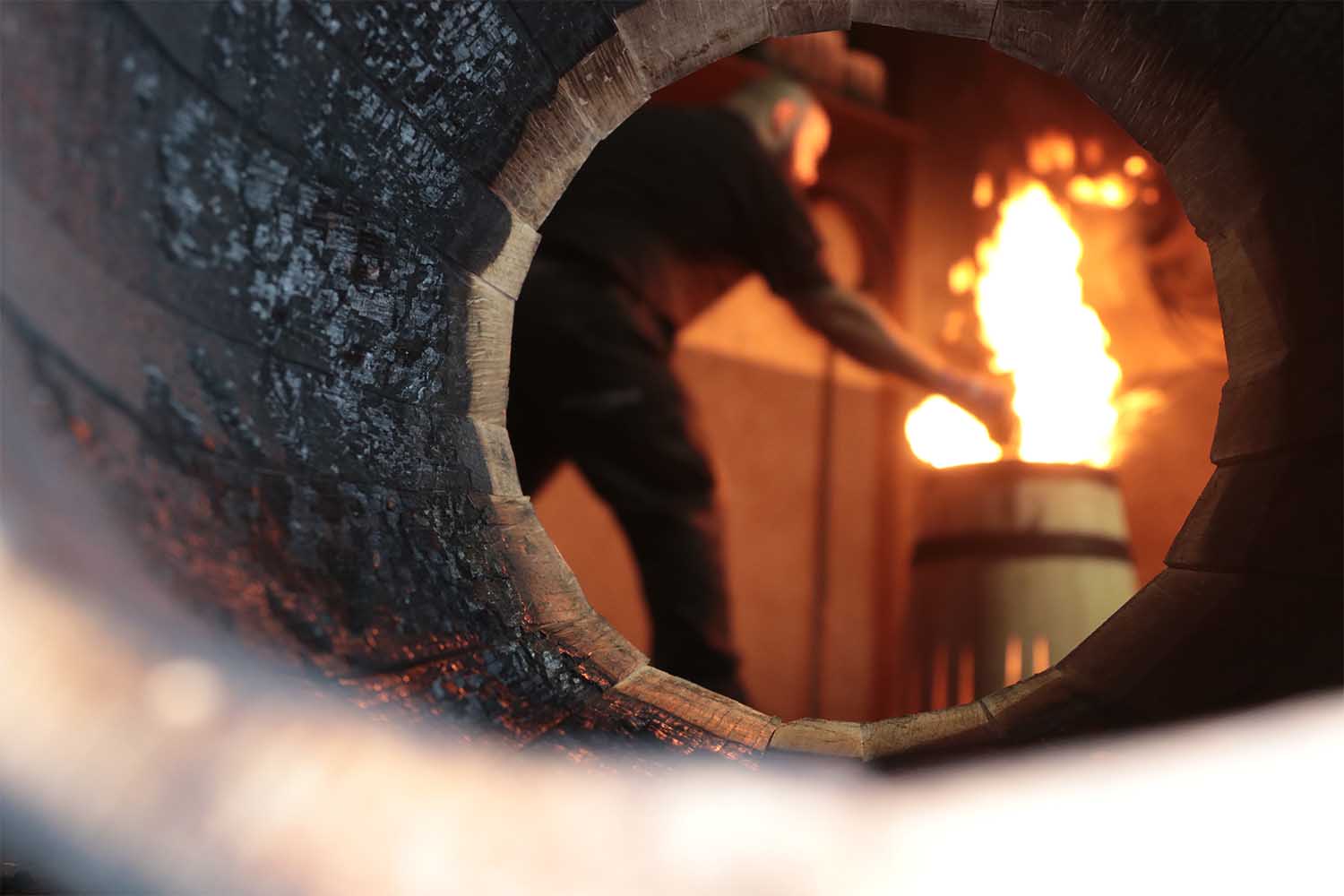
After a cask is built (insiders always call it a cask, not a barrel, which is technically a unit of volume measurement), charring its insides over an open fire removes undesirable compounds in the wood but brings yet another layer to the experience of whatever drink is matured inside it. The deeper the char, the smokier and more intense the flavors. “And what we’re selling, ultimately, is flavor,” Cabello says. “Distillers trust what the cooper brings to each cask. There’s a lot of room for exploring the potential [in the treatment] of casks.”
The Lost Art of Coopering
Not all distilleries appreciate the artistry that goes into a cask. “The situation across the industry now is complicated,” Caballo says. Coopering has long been far from transparent. Historically, each cooperage has closely guarded its preferred methods. Though the cooper’s craft may date back to 2600 BC, most beer brewers have long turned to stainless steel casks, partly because for the same money you’ll get two instead of one. Other customers, faced with growing cost pressures, are opting for cheaper, machine-made casks that can be crafted using poorer quality timber — but at a cost to the liquid, as any cooper would argue.
As with so many made-by-hand crafts, finding apprentices (cooperage is still an indentured trade in the UK) to keep the artisanal skill alive from generation to generation is challenging. To this end, Tonelaria del Sur recently launched an apprenticeship course backed by the Spanish government.

“It’s very hard to find a cooper of the highest level of skill now,” says Jamie Muir, distillery manager for Tomatin, makers of Highland single malt Scotch, whose in-house cooper Allan Barnett was recently named 2025’s Cooper of the Year at the Icons of Whisky. “We pride ourselves on having the best casks and the best maturation, but it all costs a lot of money. Coopering has been a transitory job, historically. The work is hard and requires skills that can’t be picked up in a few weeks. There are far easier jobs to go into across the whisky industry.”
Muir adds that explaining the complex relationship between cask and drink to customers is no easy task. The information doesn’t fit neatly onto a bottle label, so it tends to be overlooked. According to Alastair Simms of Jensen’s Cooperage, England’s leading independent cooperage, that’s why the trade is at risk of dying out. He has taken on apprentices before, but most quit within a year. Luckily he another one starting with him soon.
“It’s hard to find young people interested in learning a craft, and schooling doesn’t pay as much attention to hand skills as it used to,” says Simms, whose own training grew out of a holiday job sweeping a brewery floor. “That means there are very few coopers who can do it our way now, who can get a barrel out of a tree, by hand, from start to finish. It’s a job in which hand skills still really matter. The handwork involved gives you a proper understanding of how a cask comes together, and I believe that makes for a better cask — one that won’t leak, can be used for decades, that you can be proud of.”
That said, there is some good news for UK cooperages: Gary Drummond, a second-generation cooper with more than 18 years of experience, has founded Trossachs Cooperage, a new coopering facility based in Callander, Stirlingshire. Backed by a £1.3 million investment, the new facility hopes to “inspire the next generation of talent as it works towards becoming a certified training hub.”
Simms sees hope in the recent boom in small independent breweries and distilleries, too. Given the need to stand out in a crowded market and inability to produce in huge volumes, he reckons there’s a growing desire among them to experiment with what flavors can be imparted through the wood.

The Spill by InsideHook
Every Thursday The Spill lets you in on the latest in drinks news, reviews and culture. Don’t worry, it’s on the house.
That effect is very real, too. At one time, naval coopers would fill empty rum barrels with boiling water, roll them around and serve the contents, called grog, to the sailors. A merry time would ensue. Admittedly, too much wood alcohol in the liquid could send a drinker blind. While coopering has always involved recycling, now casks that used to hold wine, rum or whisky might be used to add something special to a beer or another spirit (like whisky or tequila).
Simms has been busy of late making such casks for a cider brandy company. But it’s this new interest that has recently allowed Jensen’s to sign a collaboration deal with Maine’s River Drive Cooperage. Starting next year, it will promote the sale of English casks in the United States, while Jensen’s will do the same for bourbon casks in the UK.
“Cooperage is a passion, and although I’m getting on for retirement age, you’ll have to take me out of here in a box,” says the 63-year-old Simms. “I’ve seen too many coopers stop work and drop dead because they go from a lifetime of hard, physical graft to doing nothing, and that’s no good for the body. Besides, I love this job more than my wife.”

More Like This

We're always on the scene eating, drinking and traveling near and far to bring you the best of what's happening out in the real world. Sign up for IRL now.