Like many automakers just a few years ago, Porsche went on the record and declared that its future would be fully electric. And, like many automakers in 2025, Porsche has gone back on the record to amend its earlier statement. In other words, Porsche still has a lot of electric vehicles in the pipeline — but their lineup in the years to come will have more internal combustion vehicles than they anticipated.
What’s behind the change in direction? In a statement, the automaker’s CEO, Dr. Oliver Blume, cited “new market realities.” Porsche’s announcement cites a few areas that are challenging them, including fluctuating demand in the Chinese luxury car market and the rise of tariffs on foreign auto manufacturers in the U.S.
“With a convincing mix of combustion engines, plug-in hybrids and battery-electric vehicles, we want to meet the entire range of customer requirements,” Blume said. “In the medium term, this approach is intended to support our business model and strengthen our market position.”
What does this new approach translate into? For one thing, delays in the debuts of some electric Porsche models. Porsche also announced that a new line of SUVs a class above the Cayenne would no longer be electric vehicles at the time of launch, instead being available as both plug-in hybrids and with combustion engines.
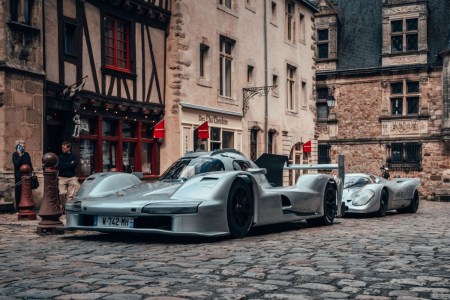
Porsche Reveals the (Mostly) Street Legal 963 RSP
An endurance race car reimaginedIn an article on Porsche’s altered strategy, Autoweek‘s Zac Palmer pointed out that this news may appeal to fans of the 718 Boxer and 718 Cayman, as gas-powered versions of both are set to stick around for a while longer. As of now, Porsche said that it expects hybrid and internal combustion versions of the Cayenne and Panamera to stick around “well into the 2030s.”

More Like This
This article appeared in an InsideHook newsletter. Sign up for free to get more on travel, wellness, style, drinking, and culture..