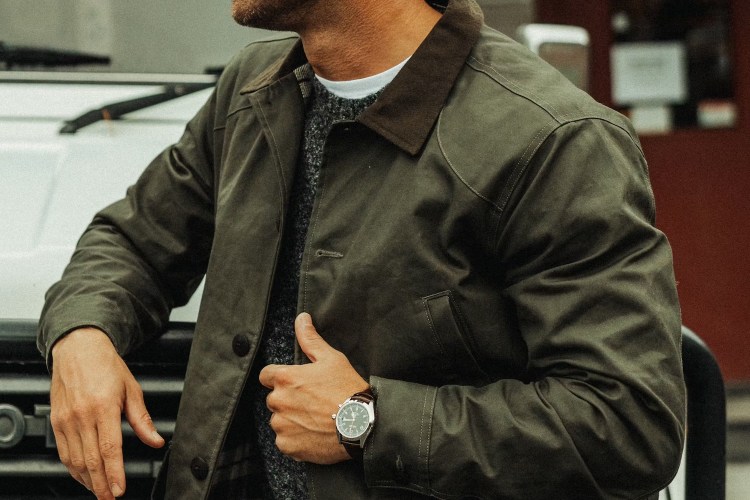
If you’re into men’s clothing, particularly of the tailoring variety, it’s likely you’re already familiar with The Armoury. The classic menswear store and its eponymous house label were founded by Mark Cho and Alan See in 2010 in Hong Kong. They’ve always carried third-party labels that are exceptional in their fields of focus — suits by Ring Jacket (now owned by Cho, as of this year), ties and scarves from Drake’s and Kenji Kaga, shirts by Ascot Chang. The list goes on. In late 2013, following the success of their first shop and sustained international fervor, they opened their first stateside location in Tribeca.
A few friends of mine — J. Mueser’s current Creative Director Jeff Hilliard and the host of the menswear podcast Blamo!, Jeremy Kirkland — were among those first hired to manage the new store. The pair soon brought me in on a freelance basis to do some photography for their Instagram and Tumblr (I know) accounts.
Full disclosure: The Armoury has been a client of mine since 2014. I’ve befriended many of its employees. I’ve watched the business continue to grow. In late 2022, the brand opened a second New York City location on the Upper East Side. With all of that upward mobility, new roles were carved out. Oddly enough, the role of creative director didn’t fall on any specific person until this year, when The Armoury named Kentaro Nakagomi, the founder of the film-inspired Japanese label Cohérence, to be the brand’s first.
While Nakagomi’s designs have yet to reach The Armoury’s shops, I’ve long admired his own brand after photographing it on the shop’s employees for many years. It’s an elegant and considered product, with no superfluous details, crafted meticulously in some of the best fabrics on the market. Last month when he visited The Armoury UES, I met up with Nakagomi to discuss his history with fashion, why he started Cohérence, his relationship with The Armoury and what to expect from his new role.
Christopher Fenimore: Can you tell me a bit about yourself? Your background, upbringing and schooling, whatever makes you tick, but all before your career. I read some interesting things in an interview you did with The Armoury about your childhood.
Kentaro Nakagomi: I wouldn’t say I grew up in a particularly unusual environment, but I was fortunate to be raised in a household where cultural influences were readily accessible. My father was a computer engineer from the days of black-and-green displays and open-reel storage media, before floppy disks existed. Before I was born, however, he had been a musician. My mother had also learned to play the piano and mandolin. As a result, we had all kinds of musical instruments around the house, including pianos, guitars, bass guitars, double basses, mandolins and various horns. I enjoyed playing some of them myself. My mother worked with kimonos and hand-knitted garments. I also grew up during what was probably one of the last generations when it was still fairly common for mothers to sew their children’s clothes at home. I was familiar with the process of unraveling a knitted garment, winding the yarn back into balls and knitting something entirely new from it. Sometimes I helped with this work.
CF: You’re leading me to my next question — how did you develop a passion for clothing?
KN: Clothing and the processes involved in making it were therefore a familiar part of my everyday surroundings. When I was in elementary school, I hand-embroidered a plain denim shirt myself, using a photograph of a western shirt as a reference. I believe it is still somewhere in my parents’ home. I also regularly accompanied my parents on their outings. We would watch independent films they wanted to see at small arthouse cinemas, visit special exhibitions at museums, browse secondhand bookstores and then take a break at a coffee shop while looking through the books we had found. It was a very adult routine, but one I grew accustomed to. I was also allowed to buy as many books as I wanted. By my early teens, I had started playing in bands. Around the same time, Tokyo was experiencing a vintage clothing boom, and I would visit secondhand clothing stores, trying to find pieces resembling those worn by my favorite artists. By high school, I had decided to pursue a career in clothing. I went on to major in textiles at an art university, then studied design and patternmaking at a design school. During that period, I was already having suits made by reasonably priced tailors while continuing to spend plenty of time browsing vintage shops.
CF: What were you doing before starting Cohérence?
KN: I began my career as an assistant designer at a comprehensive Japanese apparel company while spending my weekends apprenticing at a tailoring house. I subsequently gained experience working in both production and design across various regions, including Japan, Western and Eastern Europe, and Asia before becoming the design manager of a total-look brand.
CF: What initially inspired you to establish Cohérence? Did you feel there was a gap in the market for the kind of product you wanted to create?
KN: First I had the idea of bringing products made in Japan to an international audience. At the same time, coats had always been among the garments that interested me most. I was particularly drawn to the generously cut, romantically flowing coats I had admired in films and portraits of artists. Occasionally I would come across something similar in vintage clothing, but I felt that such pieces were difficult to find in ready-to-wear collections at the time. When I considered these two ideas from the perspective of maximizing the potential of Japanese manufacturing, trench coats and raincoats seemed to be the ideal intersection of everything I wanted to achieve. For example, materials such as the high-density cotton gabardine used in these garments do not allow for minor corrections during production or adjustments through pressing. Every potential change in the manufacturing process must be analyzed at the fabric and sample stages, then incorporated into precisely developed cutting patterns and reproducible production procedures. This kind of precision work and consistent quality control is something Japanese manufacturing excels at beyond other production environments. Furthermore, traditional waxed jackets and rubberized coats had already demonstrated that an exceptionally well-made industrial product could comfortably coexist with bespoke and handmade garments in the wardrobes of discerning enthusiasts.
CF: What are some of the core tenets of Cohérence? What makes the product unique?
KN: To remain faithful to the things and sensibilities that I hope will continue to exist in this world. To combine inspiration drawn from the past with contemporary technology to creating garments that are genuinely contemporary.
CF: What advice would you give readers looking to develop their own personal style? How have you refined yours?
KN: Be open to every area of culture beyond clothing. Step away from two-dimensional screens and virtual simulations. Experience clothing in person — look at it, touch it, try it on, smell the materials and heighten all your senses to truly experience what a garment is.
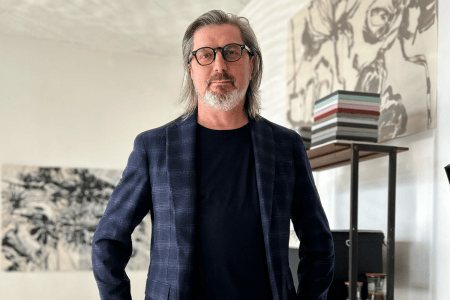
WAYWT With Bugatchi Head of Design Omar Bertona
Omar Bertona on the very specific clothing piece he’s on the hunt for, where he shops these days and moreCF: Do you have any personal rules when it comes to style? Are there things you always make a point of doing — or things you prefer to avoid?
KN: I start by prioritizing the factors that are beyond my control — the season, the weather and the occasion, whether it’s a ceremony, a meeting or dinner. When it comes to personal preference, I like things that aren’t too perfect. To me, “imperfectly perfect” has always felt cooler and more charming than “120% perfect.”
CF: How has your relationship with Mark Cho and The Armoury developed over the years? What does The Armoury mean to you?
KN: I first came to know Mark as a customer of Tailor Caid, [who is] an old friend of mine. This was just before he launched The Armoury. Later, when I started Cohérence, The Armoury became one of our stockists from the very first season. Over the years, we’ve spent time talking and sharing meals in various places — during fashion weeks, trunk shows and on many other occasions. We’ve maintained a long-standing relationship, both in business and as friends. Within a few years of its launch, The Armoury began attracting attention from various media outlets. There was a period when these young men, who had seemingly appeared out of nowhere wearing tailored clothing and braces, became fresh, cult-status figures. Today, with the history and maturity the business has developed over time, I feel that The Armoury is moving toward its next chapter.
CF: You’ve recently been appointed The Armoury’s first ever creative director. What do you hope to achieve in this role, and what excites you most about the opportunity?
KN: To bring greater refinement to The Armoury’s aesthetic sensibility and uniqueness and communicate these qualities to customers through a fresh perspective.
CF: Cohérence is a Japanese brand, and your products are all made in Japan. You will now be leading the creative direction of The Armoury, which operates stores in Hong Kong and New York City. What makes these markets unique, and do you need to take different approaches when designing garments for each?
KN: As I mentioned earlier, almost my entire career, including my work with Cohérence, has involved navigating the unique commercial environments of different countries and regions. For that reason, I don’t feel there is a significant gap in my understanding of the markets when working with The Armoury. Hong Kong and New York are both cosmopolitan cities, but they differ in climate and the lifestyles that develop around those climates. While maintaining The Armoury’s core identity, we respond to these differences through material selection and adjustments to garment construction to suit each environment.
CF: What was the last piece of clothing you purchased?
KN: A light olive-colored work shirt: a 1952 BVD piece originally made for the PX (post exchange).
CF: What is inspiring you at the moment?
KN: Art, film, music and books, as always. But also the smallest details I encounter on the street — unexpected combinations of colors and textures in people or everyday scenes, or even a fleeting visual misinterpretation, such as mistaking a passerby’s scarf for a collar.

More Like This

This article appeared in an InsideHook newsletter. Sign up for free to get more on travel, wellness, style, drinking, and culture..