Nota bene: All products in this article are independently selected and vetted by InsideHook editors. If you buy something, we may earn an affiliate commission.
I said goodbye to my AeroPress this summer. It was time. After brewing coffee for a decade across two states, the ingenious plastic plunger was relegated to the cupboard after my wife and I welcomed the (much) more refined Rancilio Silvia into our house. Don’t worry, I didn’t send the AeroPress to the great mug in the sky. Someone in our local Buy Nothing group gladly took it off our hands. It lives to brew another day.
If I’m being honest with myself, I need to rehome even more coffee gear. I’ve got enough equipment in my cupboards to run a small coffee shop from my kitchen window: drip machine, Chemex, French press and percolator, all of which are, at this moment at least, similarly dusty.
Part of my negligence has to do with the Silvia’s ascendancy. (A two-shot Americano is my nonnegotiable start to the day, preferably with freshly ground organic and fair-trade Peace Coffee beans out of my trusty Rancilio Rocky, a model that has sadly been discontinued.) The other part is that we’re in the midst of cold-brew season.
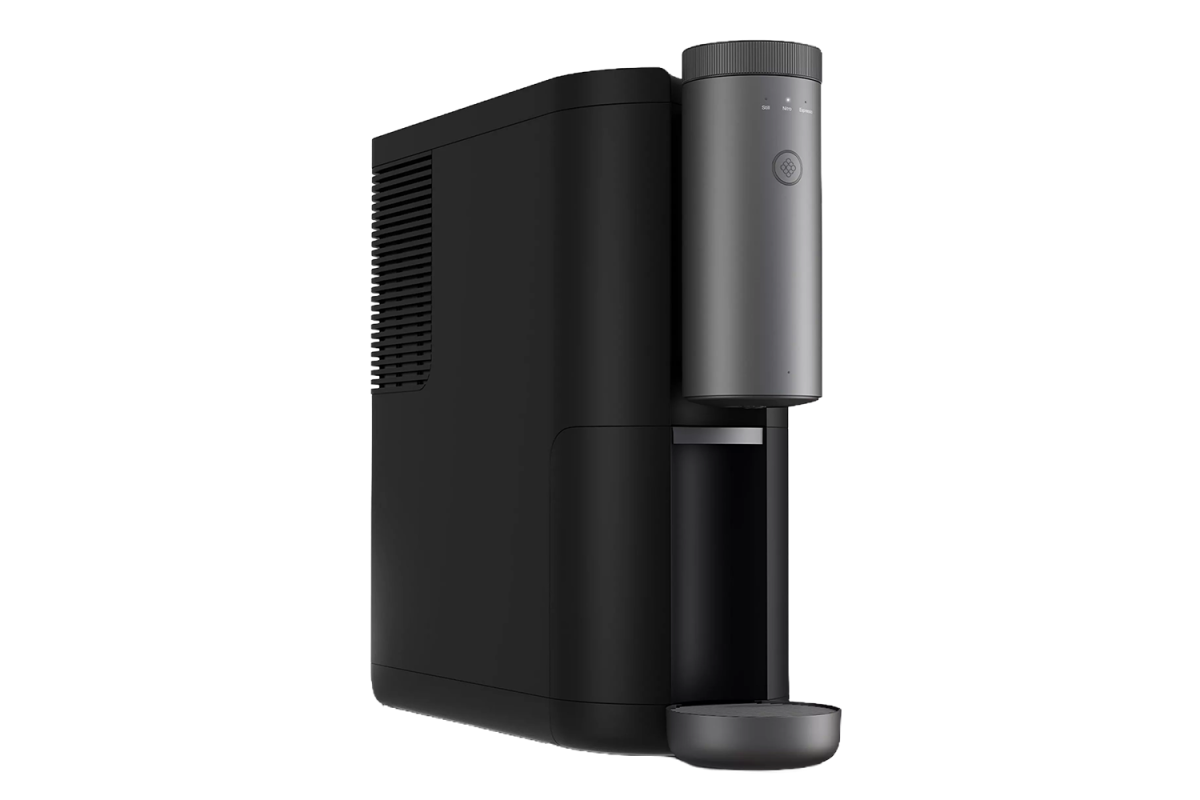
This year, I’ve not only employed my trusty Toddy to make my own cold brew at home, but I’ve been testing that humble $45 apparatus against a flashy newcomer on the home coffee scene, the Cumulus, a $695 pod-based machine designed specifically for three drinks: cold brew, cold espresso and — no kidding — nitro cold brew.
I’ve been testing the Cumulus for almost four months now. Let me start with a warning: if you’re a nitro junkie, keep reading at your own peril. I have a feeling today’s coffee allowance is going to jump a few hundred dollars.
Testing the Cumulus Cold Brew Machine
Here’s the magic of the Cumulus: all you have to do is insert one of their proprietary coffee capsules (which are available in a variety of roasts), press a button and out comes a 10-ounce pour of smooth nitro cold brew with an impossibly frothy head that’ll rival any Guinness. You only have to worry about filling up the tank with water (no need to connect a dedicated water line) and keeping their capsules stocked, and you’ll always have creamy nitro on tap. They’ve developed a patent-pending “Cold Cloud” technology which infuses the coffee with the delicious micro-bubbles, which means no nitrogen canister refills on your end. They designed this to be as seamless as possible.
Yet, as I found out over the last few months, “as possible” is the operative phrase there. For all its caffeinated ingenuity, actually living with the machine exposed many shortcomings.
There’s the fact that you’re stuck in the Cumulus ecosystem; you have to buy their coffee capsules for the machine to work. No swinging by a local store when you run out, and no grinding your own beans. The capsules are metal and thus recyclable, which is great, but the cheapest pack of 10 goes for $25, which means each coffee is $2.50 (and thus not as much of a discount as many would expect versus the $5.98 12-ounce nitro I can get from my local Starbucks). There’s the hulking footprint: to pack in hyper-chilling and replenishing-nitro tech, they made this thing taller than my microwave and deep enough to take up almost my entire kitchen counter.
The most irksome quirk for me, though, has been the real brewing time. For a $700 machine that’s built for convenience, it’s not all that convenient. Yes, once a full tank of water is cooled down, you can make up to eight coffees in quick succession that don’t require ice, as they come out between 34 to 45 degrees. The flip side of that is, if the machine is off and you turn it on to start cooling water, it will be 15 to 20 minutes before you can brew.
There have been multiple times when I’ve been rushing out the door — to drop off the kids! To make an early doctor’s appointment! To start a family road trip that won’t devolve into chaos! — and desperately wanted a coffee, but was thwarted by the overlong boot-up period. So I had to leave without and buy a $6.50 cold brew at my local spot. The upside: the latter option doesn’t just fill up my to-go mug, but my conversation well, too, which I find worth the couple extra bucks.
If you run on nitro cold brew, the Cumulus is a no-brainer. The fact that they’ve built a machine that can consistently churn out a velvety, coffee-shop-grade facsimile with no canisters is astonishing. But I did a blind taste test with my wife where we tried three different Cumulus roast options made into regular cold brew alongside a glass of the homemade cold brew I make in my $45 plastic bucket, and guess what? We both preferred the flavor of my Toddy recipe.
The Best Wine Accessories, According to a Drinks Writer
From a 41-bottle fridge to the handsomest Champagne saber on the market, these items will enrich your drinking experienceWhy the Toddy Reigns Supreme for Me
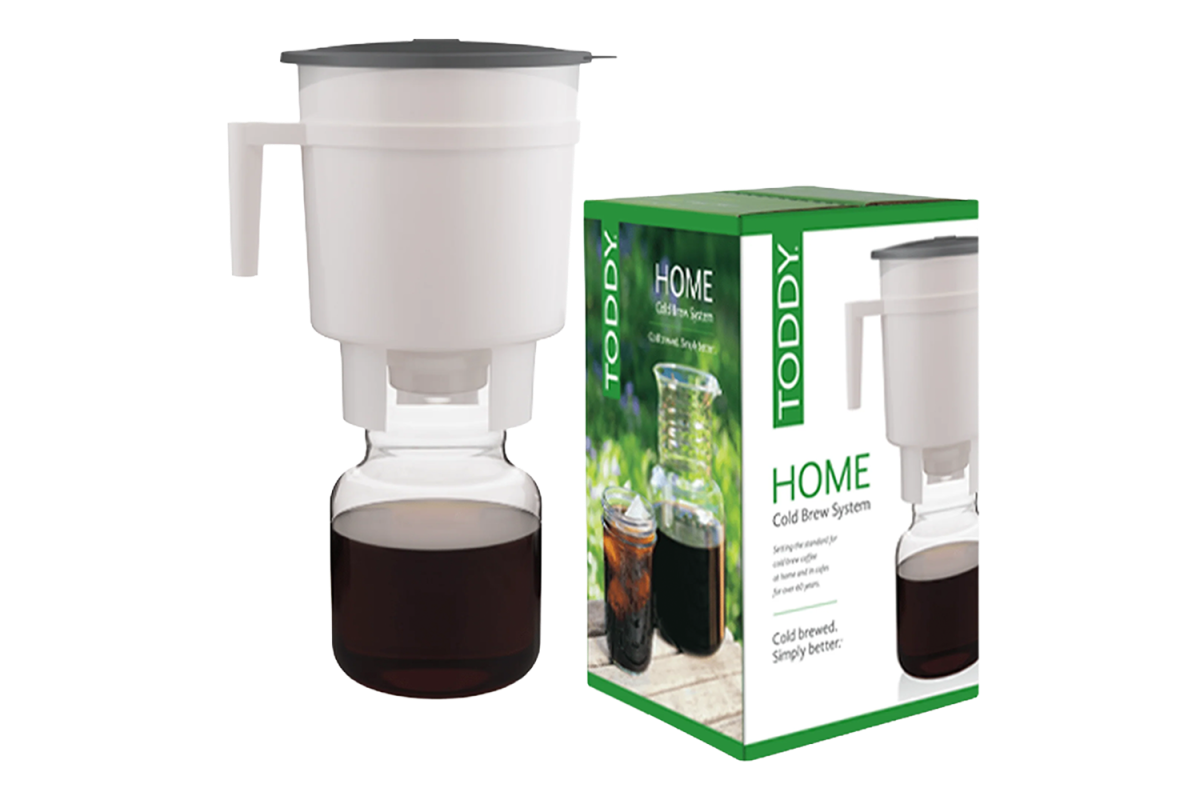
While the Cumulus is unimpeachably inventive, the Toddy is ingeniously utilitarian. It’s a plastic bucket with a hole in the bottom, a removable plastic handle, a silicone stopper, a felt filter and a glass decanter. That’s it. And that’s what makes it beautiful: its simplicity, which strips away unnecessary tech that can only be fixed by the company who sold it to you, and which forces you to understand your cup of coffee in greater depth.
With the Toddy, I’m not offloading my hobby onto a machine, I’m learning how to craft the perfect cold brew for myself, with whatever beans happen to catch my eye. It tastes better for it.
Am I making it sound like a chore? I promise it’s not. Admittedly the Toddy does require more from you up front to make your coffee. You need to grind your beans (a lot of them), mix them in the bucket with water per the instructions (you can use paper liners, but I don’t), steep at room temperature for 8 to 24 hours, filter into the decanter, then chill in the fridge. But once that’s done, you have incredibly smooth and complex coffee concentrate ready to go anytime, even if you waited until the last possible second. No waiting 20 minutes for a machine to power up. No mad hunts for capsules just to find you forgot to reorder more. No electricity needed besides your fridge, which would be running anyway.
Intrigued? I thought so. Here’s my full (and impossibly simple) cold brew setup for those interested in giving it a crack at home.

Peace Coffee Yeti Cold Brew Blend
My favorite coffee company, which sells beans in normal 12-ounce bags but also these Brobdingnagian five-pound bags, makes this chocolatey, almondy roast specifically for cold brew.