Every few years, like clockwork, a sex scene in a movie comes along and sparks a debate on social media over whether or not it was too gratuitous. Last awards season, it was Anora. Before that, it was Oppenheimer. But this week, a far broader discourse has emerged, one that questions whether all sex scenes are actually unnecessary distractions.
In a post on X that quickly went viral, one user wrote, “Movies really don’t need sex scenes. I’m not even going to come at this from a morality stance either. They just do nothing for the movie and destroy the flow. No one is sitting there going, ‘Wow, this random dark four minute sex scene really made the movie.’ Instead, it’s just two people being paid to have pretend sex on camera. It’s like having a commercial in the middle of a movie. Who is really excited about it?”
It’s an insane case of throwing the baby out with the bathwater. Just because some movies don’t need sex scenes, it doesn’t mean all onscreen sex is unnecessary. We already know that Gen Z is not having as much sex as older generations, but are they really this puritanical and incapable of understanding nuance? I have no idea how old this particular X user actually is, but given how many young people — Gen Zers, but also Gen Alpha — are parroting similar talking points on social media, we have to recognize that much of the pearl-clutching we’re seeing about this online is coming from people who have never had sex.
To be clear, there are plenty of sex scenes that are unnecessary or harmful — those that reinforce stereotypes, objectify or cater to the male gaze in a creepy way, giving the impressionable teens who watch them unhealthy and unrealistic ideas about what sex should look like. But there are many, many examples throughout the history of cinema in which a sex scene is crucial to the plot or reveals some important character development. (So many, in fact, that a recent post asking people for a “Necessary sex scene, one that ties the whole plot together” already has more than 1,300 examples in its replies.) You can tell a lot about a person by the way they have sex and with whom they have it. It is, by its very nature, an intimate, revealing detail.
Take, for example, that final sex scene in Anora. When Ani — spoiler alert — first initiates sex in the car with Igor, it’s transactional. As a sex worker, she’s so accustomed to being objectified and abused that when Igor shows her kindness, she has no idea what to do with it. When he tries to make eye contact with her or kiss her, she freaks out and breaks down sobbing because those displays of affection — or love, even — are completely foreign to her. How are you supposed to convey that without actually showing it onscreen?
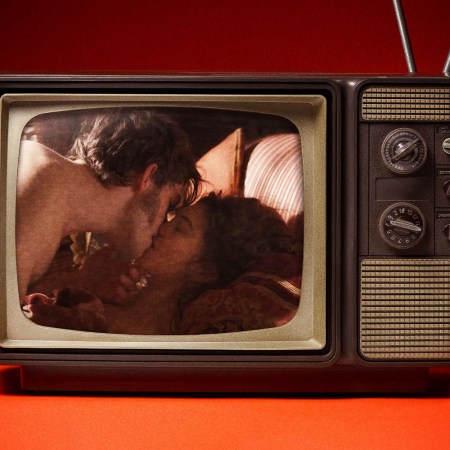
The same goes for TV intimacy. Heated Rivalry first gained attention online because people were curious about its graphic sex scenes, but it didn’t truly become a phenomenon until the more romance-forward episodes 5 and 6 aired. The show traces Shane and Ilya’s relationship over nearly a decade as it evolves from a secret, purely physical situationship to real, emotional love. As they grow closer and their feelings get deeper, the sex they have changes accordingly, becoming more playful or tender. It’s an incredible bait-and-switch: We tuned in to see hot, steamy sex, and by the season finale, we’re all swooning over sweet forehead kisses.
Heated Rivalry is also an excellent reminder that representation matters, and it’s important for young LGBTQ+ people — closeted or otherwise — to see a show that’s absolutely full of gay sex be so warmly and enthusiastically embraced by people of all stripes. (Yes, even straight hockey bros.) In fact, in a world where many people are still afraid to speak frankly about sex, sex scenes in movies and TV are often the only way, outside of porn, that young people learn about it, regardless of their sexual identities.
“Very often, how someone learns about intimacy is through what they see,” Ita O’Brien, an intimacy coordinator and founder of the consultancy/advocacy organization Intimacy on Set, told me back in 2021. “That is the medium through which we’re entertaining ourselves but also reflecting our humanity back to itself. That’s what people feel they need to aspire to. When it’s so unrealistic, it forms a real schism in how people think they should be and what they think is normal.”
So yes, there are obviously many ways in which a person’s sex life can be negatively influenced by what they’ve seen in movies. But scrubbing every movie of any onscreen intimacy isn’t the way to fix that. In fact, that’s why it’s more important than ever to counteract the bad with the good. You want to teach young boys about consent? Show what it looks like to obtain it. You think Hollywood sex scenes reinforce impossible beauty standards and harm teens’ self-image? Show them bodies of varying size, race, sexuality and gender experiencing sex and romance. It’s not that movies “don’t really need sex scenes” — they’re just in desperate need of the right kind.
Meet your guide

More Like This



This article appeared in an InsideHook newsletter. Sign up for free to get more on travel, wellness, style, drinking, and culture..