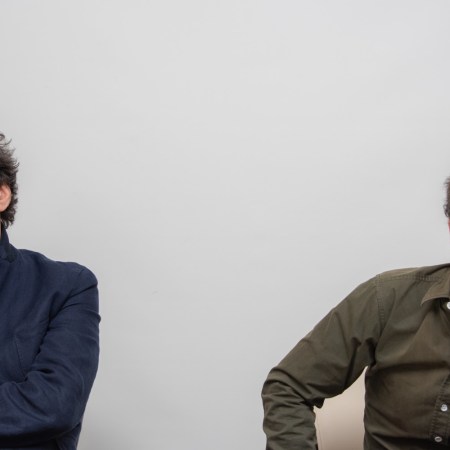
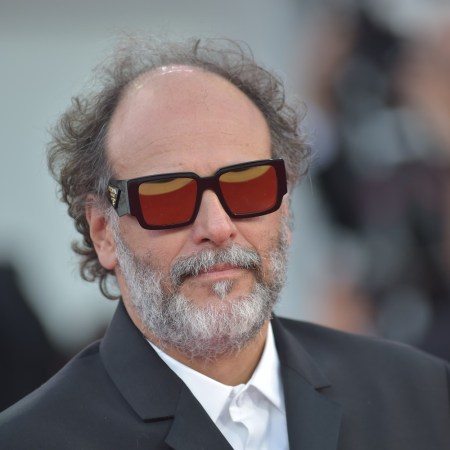
Thirty years ago, in the March 8, 1996 edition of the Chicago Sun-Times, Roger Ebert declared Fargo, which opened in theaters that day, “one of the best films I’ve ever seen.” Joel and Ethan Coen, who wrote, produced and directed the film (Joel was originally credited as sole director and Ethan as sole producer), were major American filmmakers by this point — their debut Blood Simple, made outside the studio system for $1.5 million, was presented at the 1984 New York Film Festival alongside Paris, Texas and Once Upon a Time in America, and Barton Fink won the Palme d’Or at Cannes in 1991 — but Fargo would mark the Coens’ first individual Oscar nominations, including a win for Original Screenplay (and Best Actress for Joel’s wife Frances McDormand, one of the many close collaborators whose careers are inextricable from the brothers’, including cinematographer Roger Deakins, sound editor Skip Lievsay, and composer Carter Burwell). Within two years, it came in at number 84 on the American Film Institute’s “100 Years… 100 Films” celebrating the centennial of American moviemaking — the newest film included. Its reputation has not dimmed since, nor has that of its makers.
Joel and Ethan have pursued individual projects the past decade (though according to Ethan, speaking in 2025, there are multiple scripts, both old and new, that the two may bring to the screen together in the coming years), but the Coen Brothers are now an American institution, whose body of work — with its quotable dialogue, narrative complexity, eccentric characterizations, deadpan-ironic worldview, rich and adaptable visual style and impeccable sense of storytelling rhythm — ranks with, like, Mark Twain as loquacious popular art on quintessentially American themes. But which of their films are better than the others, and which are worse? (Damn, we’re in a tight spot!) Let’s pit all the films from this deep and interwoven body of work (as directors, anyway; the screenplays directed by others feel like a different thing) against each other, and discover an objectively correct hierarchy against which your own aesthetic preferences may be measured for accuracy.
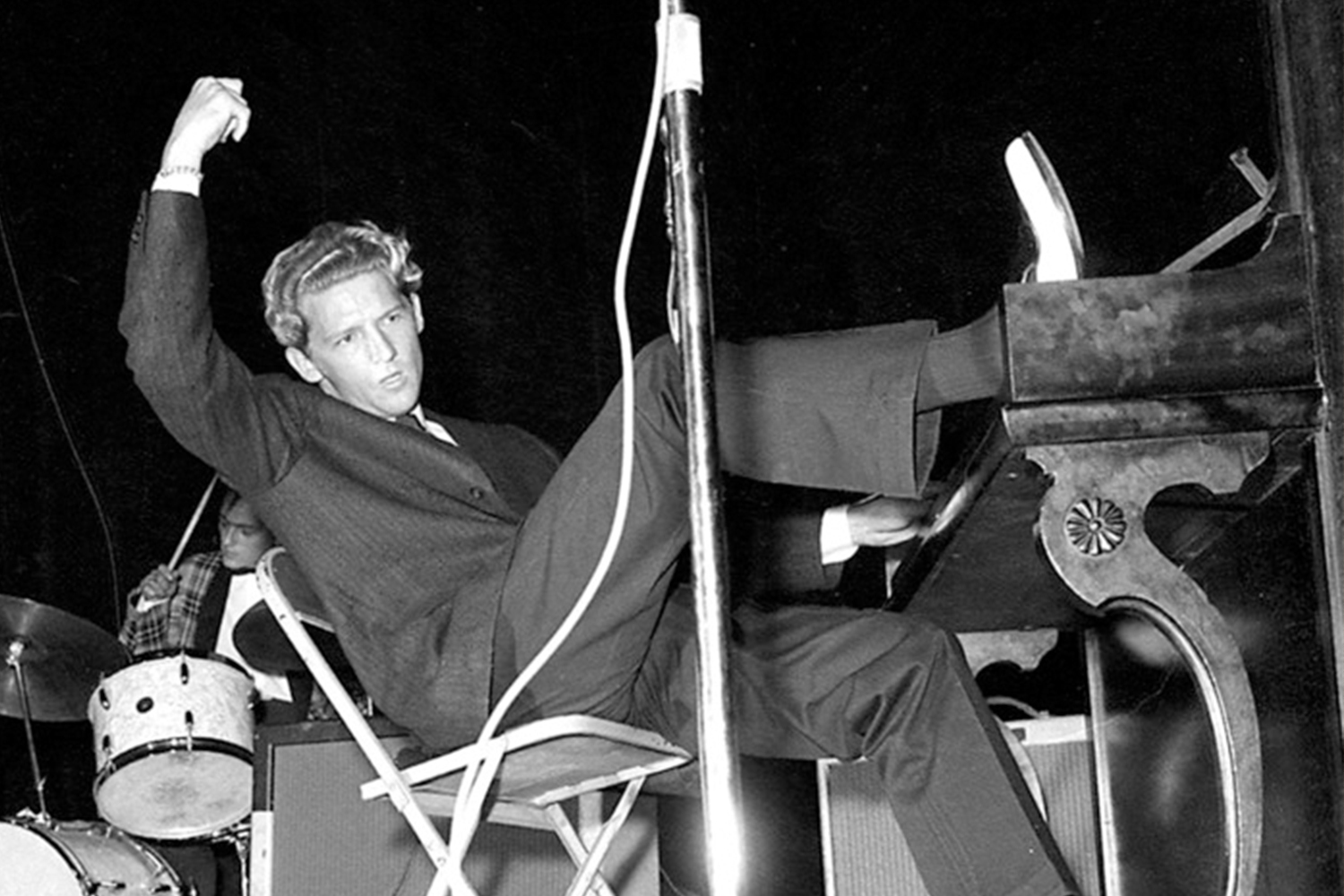
22. Jerry Lee Lewis: Trouble in Mind (2022)
Hardly a bad film, Ethan Coen’s solo directorial debut is a mostly archival music documentary, assembled with a wry eye for dated talk-show clips and a confident sense of the wider historical context around one of America’s first rock-and-rollers — as well as the first to be canceled, thanks to the “Great Balls of Fire” singer’s scandalous marriage to his 13-year-old cousin, and the first to mount a comeback after an image makeover. (In the early days of the mass media, Lewis turned the Augustinian confessional narrative of sin and redemption into a market play, adding more gospel to his repertoire and sticking to the country-music circuit, finding success as a conservative-coded niche act. This route seemed natural enough for the sharecropper’s son from Ferriday, Louisiana; two thirds of a century on, it is more nakedly transactional in the case of, to pluck a recent example, the evidently born-again Russell Brand.) Jerry Lee Lewis: Trouble in Mind outlines the Killer’s outrageous appetites and all-American huckersterism; his bellowing singing voice and deep-fried speaking voice, as it struts its way through thickets of verbal tics and patois; and his music’s debt to Black barrelhouse rhythm and blues and evangelical tent revivals. It is, in short, a portrait of the artist as a Coen Brothers character — as the concentrated essence of vernacular Americana in all its magnetic quirks and hypocrisies. Here is the raw material which is distilled through clockwork film craft and a wry worldview into the finished product of the rest of this list. — MA
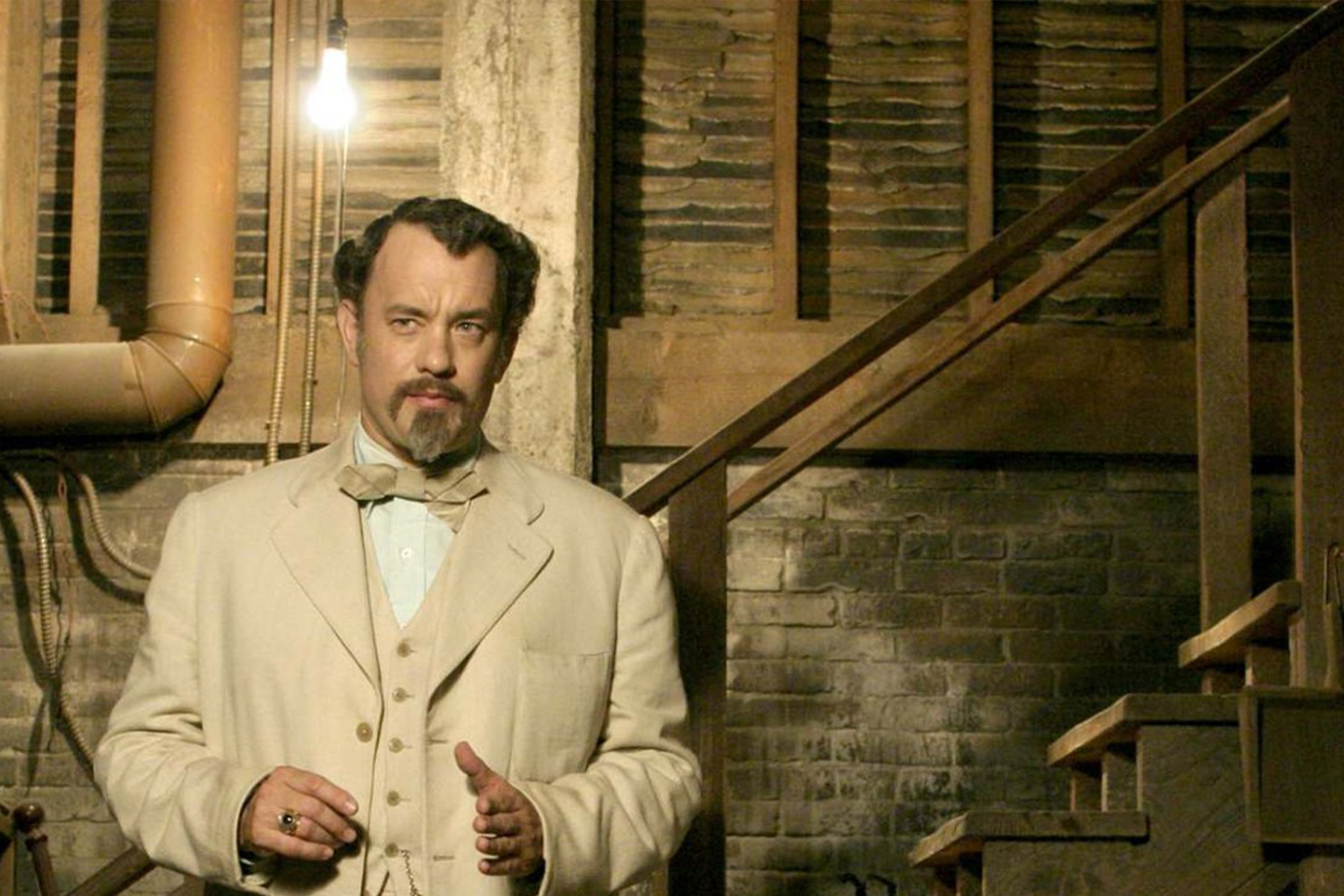
21. The Ladykillers (2004)
It is and it isn’t that bad. On one hand, it makes sense that the one Coens movie where hardly anyone breaks consensus and throws it into the top five, or even 10, or even 20, is their remake of the beloved 1955 Ealing Studios film starring Alec Guinness. It’s broader than even other broad comedies, and the attempts to update and Americanize the film by making the elderly widow targeted by a group of oddball criminals into a Black woman (Irma P. Hall, playing the part with inarguable gusto) who has notes of Coens-style doofusry (like donating to the historically racist Bible college Bob Jones University) feel, ah, perhaps a bit misjudged. (The Bob Jones running gag is so pervasive that it helps sour the movie’s conclusion in a way that multiple lead-character deaths cannot!) At the same time, it takes sterner stuff than mine to resist Tom Hanks playing the effete criminal quasi-mastermind Goldthwaite Higginson Dorr as a verbose Southern dandy, prone to turning everyday actions into feats of elocutionary grandiosity: “We must all have waffles, forthwith!” Hanks is very funny here, and there’s something appealingly reputation-thwarting in the Coens well and truly on assignment for goofy laughs. Though it’s the first movie where the brothers are actually dually credited as directors, in retrospect it feels more like what Ethan gets up to on his own, albeit sadly less besotted with noirish dames. May we all have passages of being this gloriously un-precious about our careers. — JH

20. Honey, Don’t! (2025)
If it’s tricky to defend the sloppy story construction of Ethan’s second in a planned trilogy of queer-themed B-movies with his wife (and sometime Coens co-editor) Tricia Cooke, it’s no chore at all to find momentary pleasures in its small corners; Honey Don’t! is a movie that’s practically all small corners. Margaret Qualley plays Honey O’Donahue, a private eye in shadowless Bakersfield, California, whose investigations of matters both client-based and family-related place her on the outskirts of various criminal activities centered around a crooked minister (Chris Evans). The way these low-level shenanigans do and do not connect to Honey’s story is admittedly frustrating, especially upon first viewing. But the movie has a pervasive melancholy that feels as if maybe Coen and Cooke didn’t plan for it at the outset. Not that it’s unintentional, mind; just that the townie desolation is allowed to sneak up on the movie in a way that feels both natural and unexpected, given, say, the clip-clop patter between Qualley as a femme Bogart and Aubrey Plaza as a butch fatale. Honey Don’t! isn’t as funny as the other Coen/Cooke/Qualley joint so far (a third is supposedly in the writing stages), but it’s a crisp (and sexy!) variation on the 75-minute noirs of yore that so obviously play into the whole Coen deal, together or apart. — JH
19. The Man Who Wasn’t There (2001)
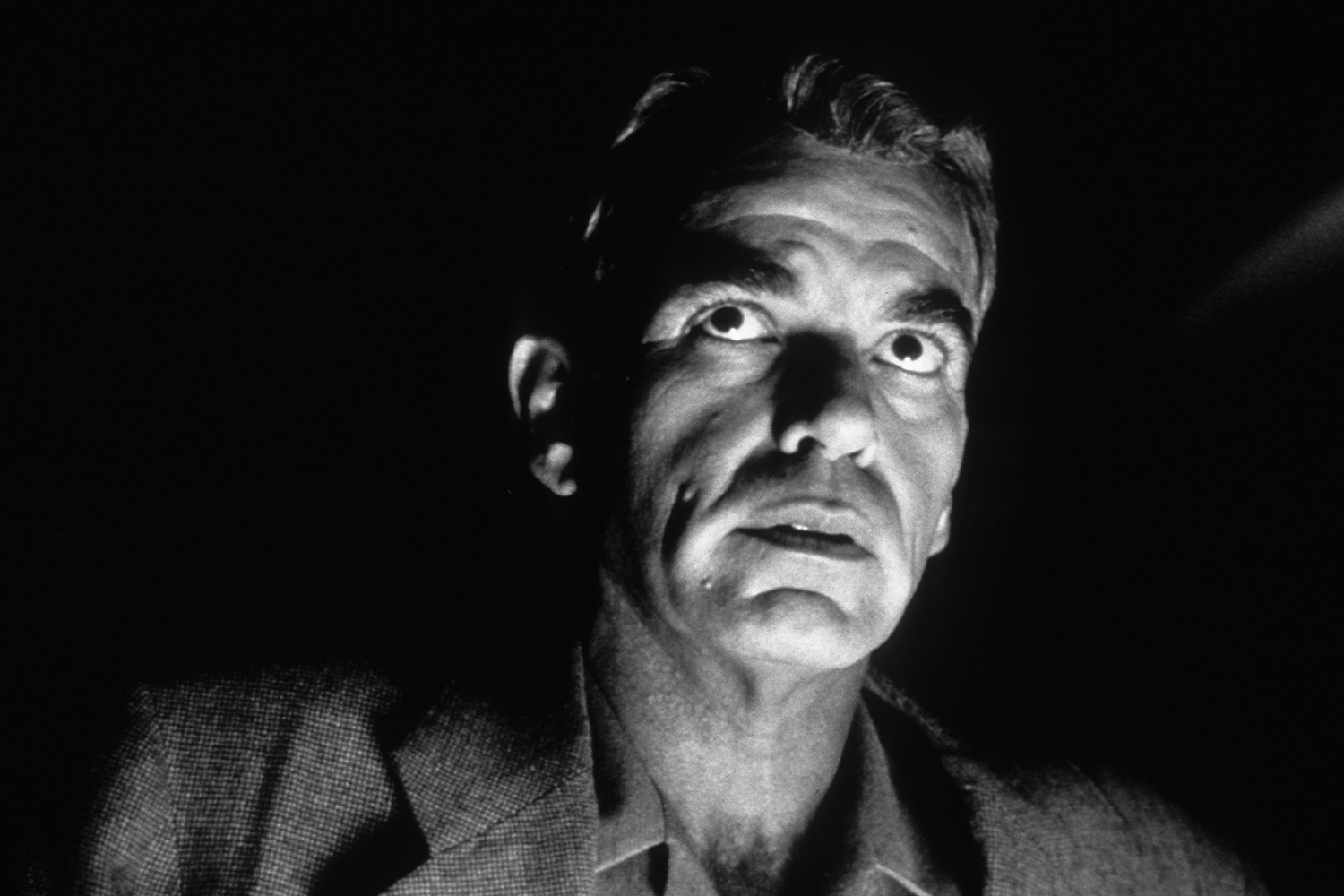
The brothers’ latest induction in the Criterion Collection (joined by numbers 2, 7, 11 and 13 on this list; those aren’t the spine numbers, nerds) sticks out as the most poker-faced exercise during a six-year run where the brothers made five movies, four of which are outright comedies. There are still comic highlights to the slow-motion noir of The Man Who Wasn’t There; there’s a scene where Michael Badalucco enters a pie-eating contest, a hilariously heartless moment where Frances McDormand uses an ethnic slur to dismiss her extended family and a Scarlett Johansson-delivered line I think about all the time. (“You know what you are? You’re an enthusiast!”) But the central project seems to be taking a pretty standard noir plot — a cuckolded husband looking to get $10,000 for a big investment attempts to anonymously blackmail the man sleeping with his wife, only to accidentally kill the man and even more accidentally frame his wife for the murder — and relocating it to the quotidian, nominally cheerful small-town world of barbershops, local department stores and exciting opportunities to invest in dry-cleaning (while also, as mentioned, slowing it way down; the actual plot could probably be covered in half the movie’s two-hour running time). Laconic anti-hero — really practically an anti-person — Ed Crane (Billy Bob Thornton) delivers narration that sounds pulpy at first, only it’s not one of the Coens’ language-drunk heightening of that style. Instead, it peels away (think paint, not fruit) the accounting of plot until it finds the existential numbness that often lurks below the surface of noir. The black-and-white cinematography, too, evokes noir with some eerie adjustments made, highlighting its whites and grays as frequently as its dark shadows. The whole thing is both brilliant and a bit patience-testing — one where the Coens might not fully beat the academic-exercise charges. — JH
18. The Tragedy of Macbeth (2021)
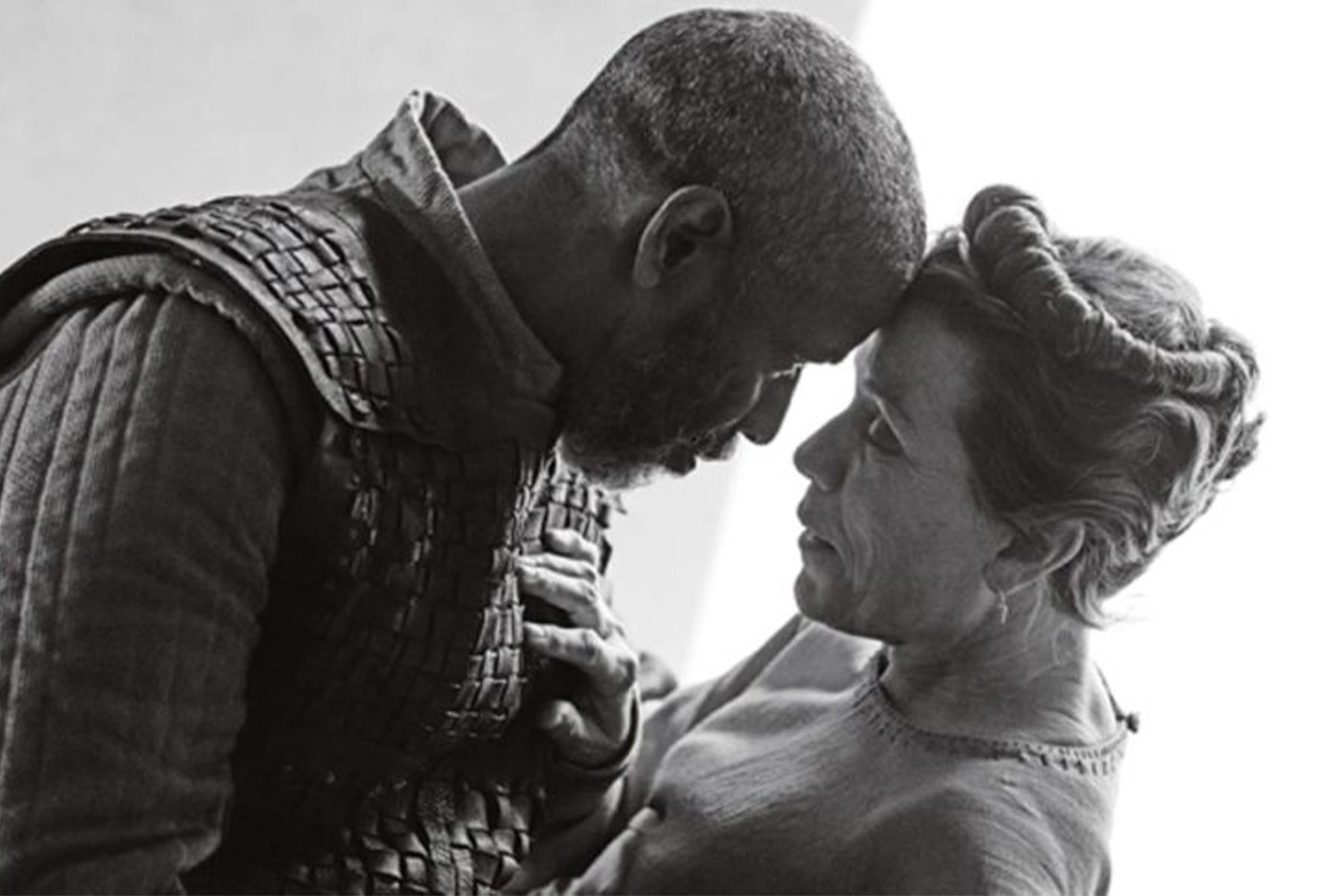
I try to resist the siren call, in the wake of the temporary Coens breakup, to neatly ascribe various elements of their work to one brother or the other. In their typically (but atypically, presumably unintentional) way, the Coens simply lean into it; what do they care if you assume that every silly or vulgar joke in their movies must originate with Ethan, and every moment of visual precision and despair must quietly bleed from Joel? I doubt the reality of their collaborations is that tidily bifurcated; accounts of their on-set management describe a duo completely in sync, not precisely dividing their movie’s hallmarks. But Joel in particular did his best to perpetuate whatever myths of their sensibilities by choosing for his first “real” solo effort (after all, he’s the sole credited director on the majority of the brothers’ films) a Shakespeare adaptation that, as such, eliminates the Coen touch from its dialogue entirely in favor of, you know, that other guy. (On the other hand, what a lofty pair of mismatched compliments, that Ethan can only be replaced by the Bard, while Joel can only be replaced by Ethan’s other life partner!) Joel’s version of Macbeth is a gorgeously angular and expressionistic lucid dream of the play, at once stagy and richly cinematic, imbued with a late-middle-age pragmatism by Denzel Washington and Frances McDormand as the Macbeths themselves. It only sits so low on this list because, be real: How often do the simultaneous desire for Coens and Shakespeare harmonize enough to favor this movie over one of the double acts? And also: Wouldn’t you love to see Washington — typically brilliant here, no doubt — find his way through a proper Coens movie? — JH
17. Intolerable Cruelty (2003)
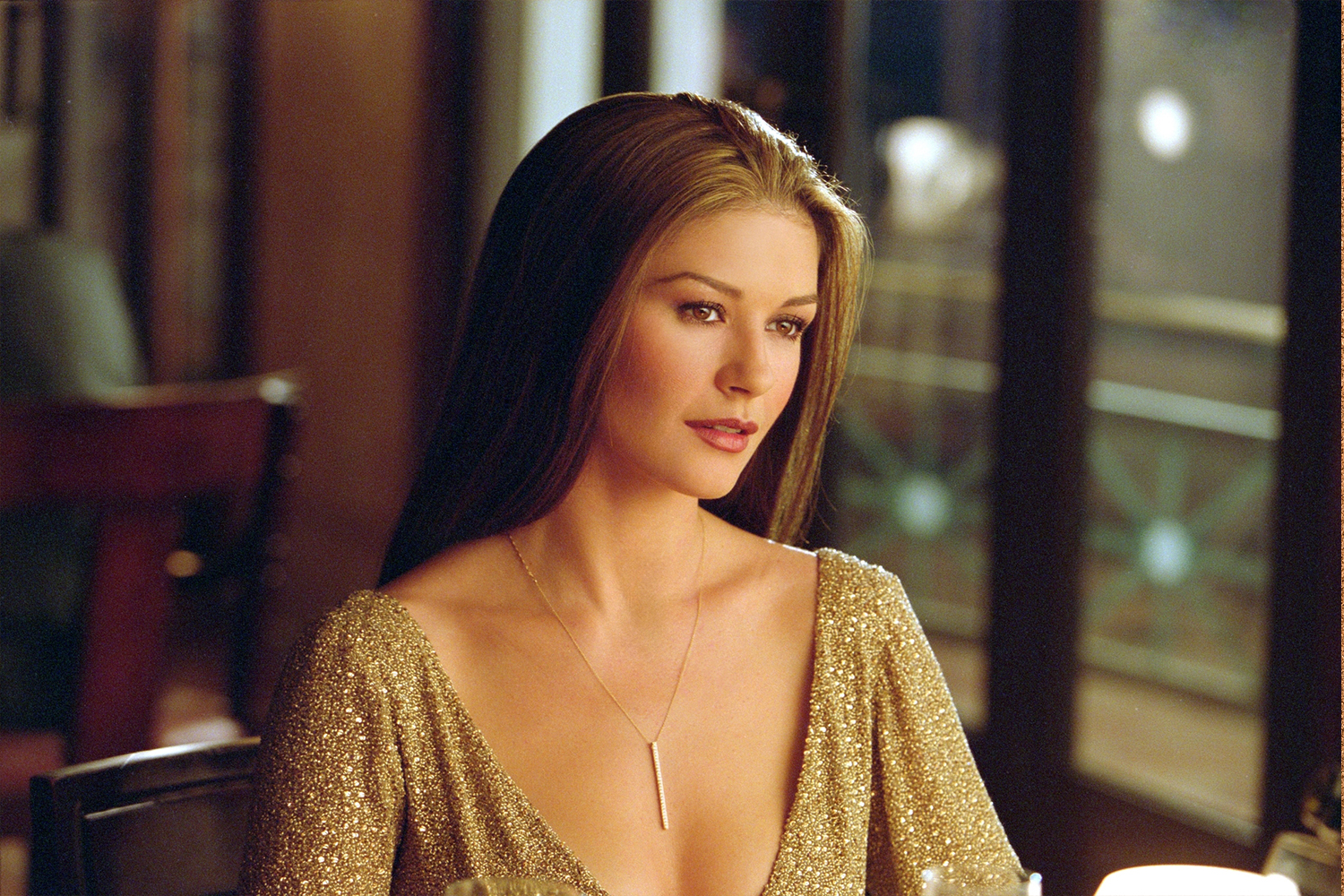
Various prenuptial agreements are written and torn up and brandished at crucial moments in Intolerable Cruelty; a film about the malleability of the written word, in which supposedly ironclad legal agreements are subject to a series of arbitrary reversals, is apt for the Coens, who have always blown the raspberry at lofty notions surrounding the concept of authorship. Intolerable Cruelty started as a spec script that the Coens rewrote in the ’90s and only salvaged from development limbo years later, after the project had passed from director to director, star to star and script doctor to script doctor. This is a tongue-in-cheek update of the classic comedy of remarriage, in which George Clooney gives one of his throwback turns as divorce lawyer thrown between suave and frantic by the Lady Eve–like adventuress Catherine Zeta-Jones. Cary Grant and Barbara Stanwyck is, now that I think of it, one of the ultimate what-if star pairings of Golden Age Hollywood — they never acted together, but think of the sly, sexy magic they would have made — and it’s an impossible prospect for Intolerable Cruelty to live up to. There is one element that transcends the merely knowingly, charmingly retro, though. The very great Edward Herrmann, with his Ivy League looks and goofy baritone, is one of those studio contract-player types the Coens loved so much — he could have stepped right out of the Ale and Quail Club (just google it). Here, he gets the role of a lifetime — not necessarily his own — as Rex Rexroth, the irrepressible tycoon and philanderer, with what we may now call a Special Interest in railway transport. His refrain echoes into the present-day ears of urbanists, futurists and leftists: “I JUST LOVE TRAINS! I LOVE TRAINS!” Talk your shit, Rexy. — MA
16. Hail, Caesar! (2016)
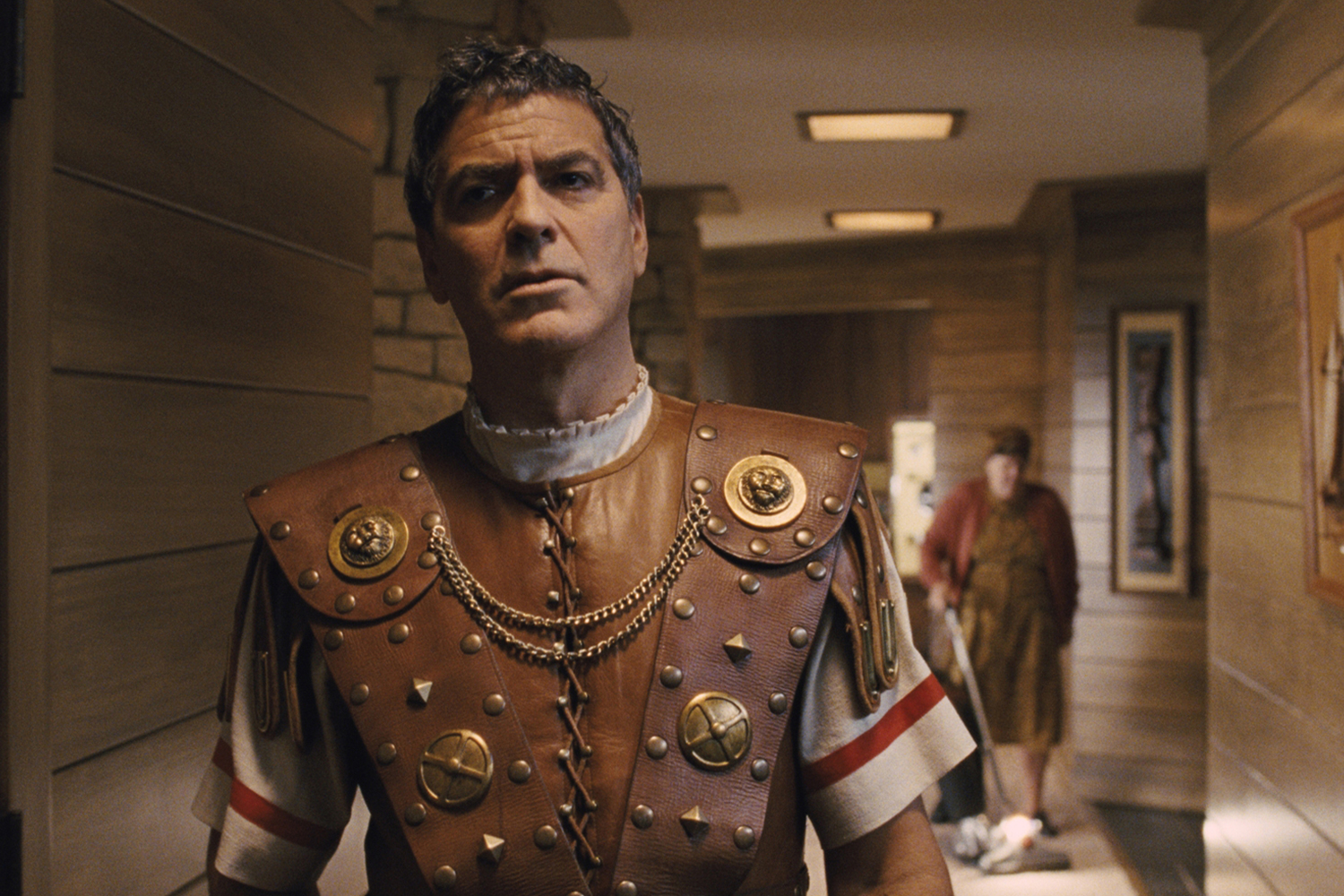
Set just after the Paramount Decree marked the recognized end of the Hollywood Golden Age, Hail, Caesar! is filled with loving parodies of the era’s lesser genres (the Biblical epic, the bathing-beauties B-musical) and stars Josh Brolin as a considerably softened version of the notorious studio-system fixer Eddie Mannix. A pious family man who constantly cleans up others’ messes and assumes others’ burdens, Mannix holds together the interlocking institutions that make up the American consensus — Hollywood, Catholicism, the nuclear unit, post-WWII capitalism — which echo across a backlot’s worth of subplots and hushed-up scandals: star pregnancies and fake adoptions, casting-couch rumors, communist screenwriters. He’s the one who keeps the whole world spinning, the moral center of a world of planted gossip items and myth-making, all of which makes Hail, Caesar! something like a sincere portrait of hypocrisy. One funny thing I remember from when this movie came out was people on Twitter taking the film’s conservatism at face value, going so far as to get mad at the Coens for portraying Hollywood blacklistees as accomplishing nothing at ponderous and interminable meetings, which I guess means that Peter Watkins’ La Commune (Paris, 1871) is a counterrevolutionary movie, too. — MA

15. Drive-Away Dolls (2024)
Drive-Away Dykes — the preferred title of Ethan Coen and wife Tricia Cooke, who co-wrote and co-directed the film — was conceived in the early 2000s and originally their script to director Allison Anders, known for her female-centered regional indies. A neo-noir and red-state road movie climaxing in immediately pre–Bush v. Gore Florida, which skewers lesbian bars and family-values conservatives alike, the film would have been at home in the boom years of turn-of-the-century Sundance, when studio’s indie divisions were outbidding each other for cheeky genre movies with a whiff of regional quirk and accessible liberal politics. But instead of being acquired 20 years ago by Miramax for even more than the $10 million they spent on Happy, Texas, Drive-Away Dolls was shelved until the pandemic, when a newly solo Ethan and long creatively frustrated Cooke revived the project — then came out as members of a queer polycule during the course of marketing it. As a nostalgic labor of love made by middle-aged people who spent 2020 stepping into their truth, Drive-Away Dolls is very moving; as a movie, it’s a lot of fun, anchored by Margaret Qualley in what is perhaps her most unadulterated form: a femme tomboy with the randy shit-kicking narcissism of the young Debra Winger. — MA
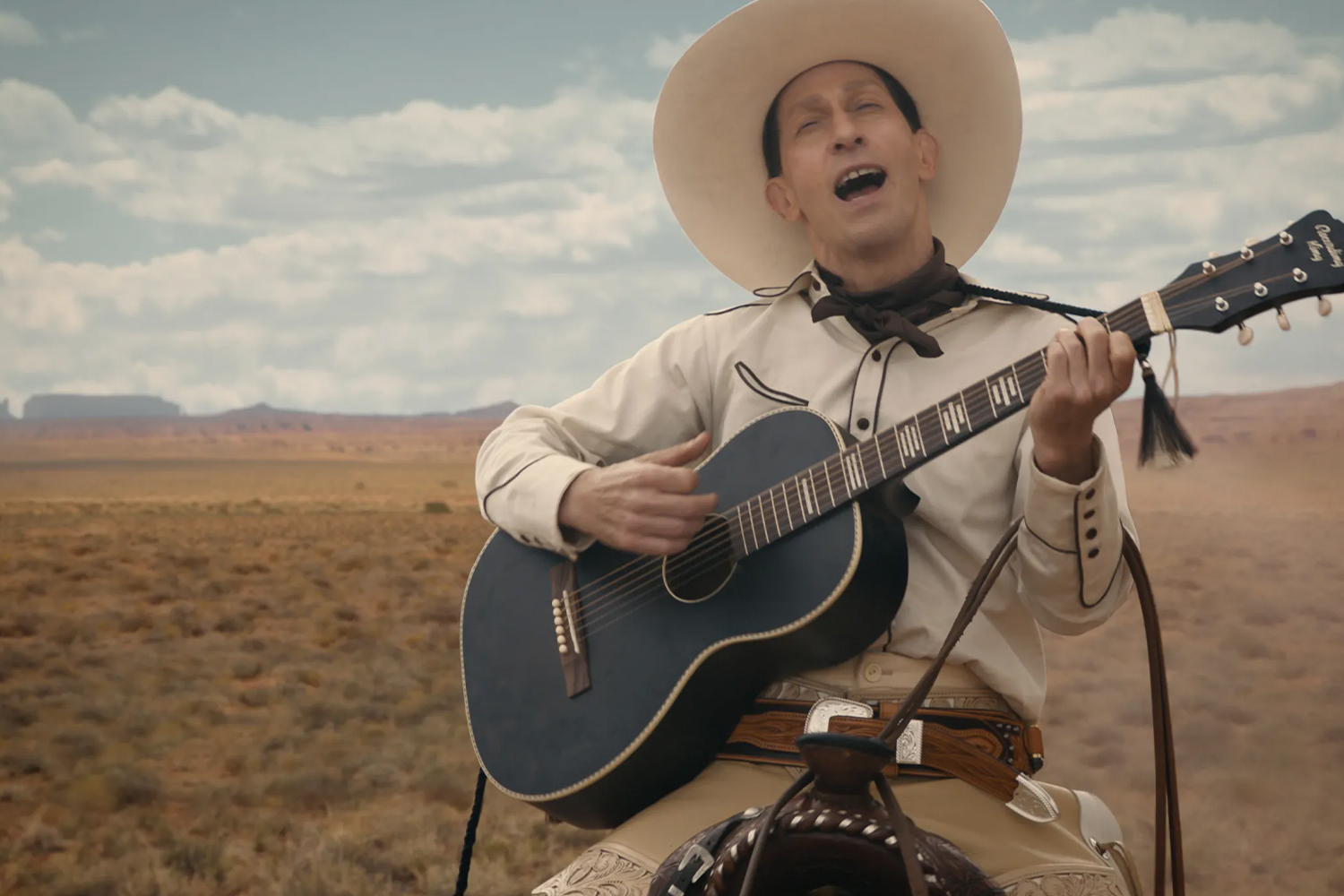
14. The Ballad of Buster Scruggs (2018)
Drawing from an obsolete form of popular culture — the Western short story — The Ballad is actually an album, or a dime magazine. Like churned-out fiction, each vignette sets up a single punchline, ironic twist or moral lesson. The film is thematically unified: most of its six chapters are about money, or more precisely about hubris and greed. In “Meal Ticket,” a character known only as “The Impresario” travels around with a captive creative known as “The Artist” who recites poetry for his supper, only to throw him over, literally, when he finds a coarser, cheaper novelty act; the reflexive meta-commentary on art and commerce is noted. The Ballad of Buster Scruggs ranks with The Killer, Fincher’s glib satire of mercenary professionalism, as the most openly cynical auto-commentary made by an auteur accepting the Faustian bargain of lavish Netflix funding with barely a token theatrical release. The Coens are best when setting several stories in parallel motion, and Buster Scruggs lacks the clockwork complexity of their best work, in which simple stories become complex in the layering. But each one does end in a death, from the heavenly cartoon of the other to the ominous Stygian final chapter, a parable about the passage into death which puts the worldly scrabblings of the previous shorts into perspective. It’s a harsh downer ending for the brothers’ career together — which, if you watch the film as it was intended, is brought up short when the credits immediately minimize and the streamer gives you 15 seconds to stop The Electric State from autoplaying. — MA
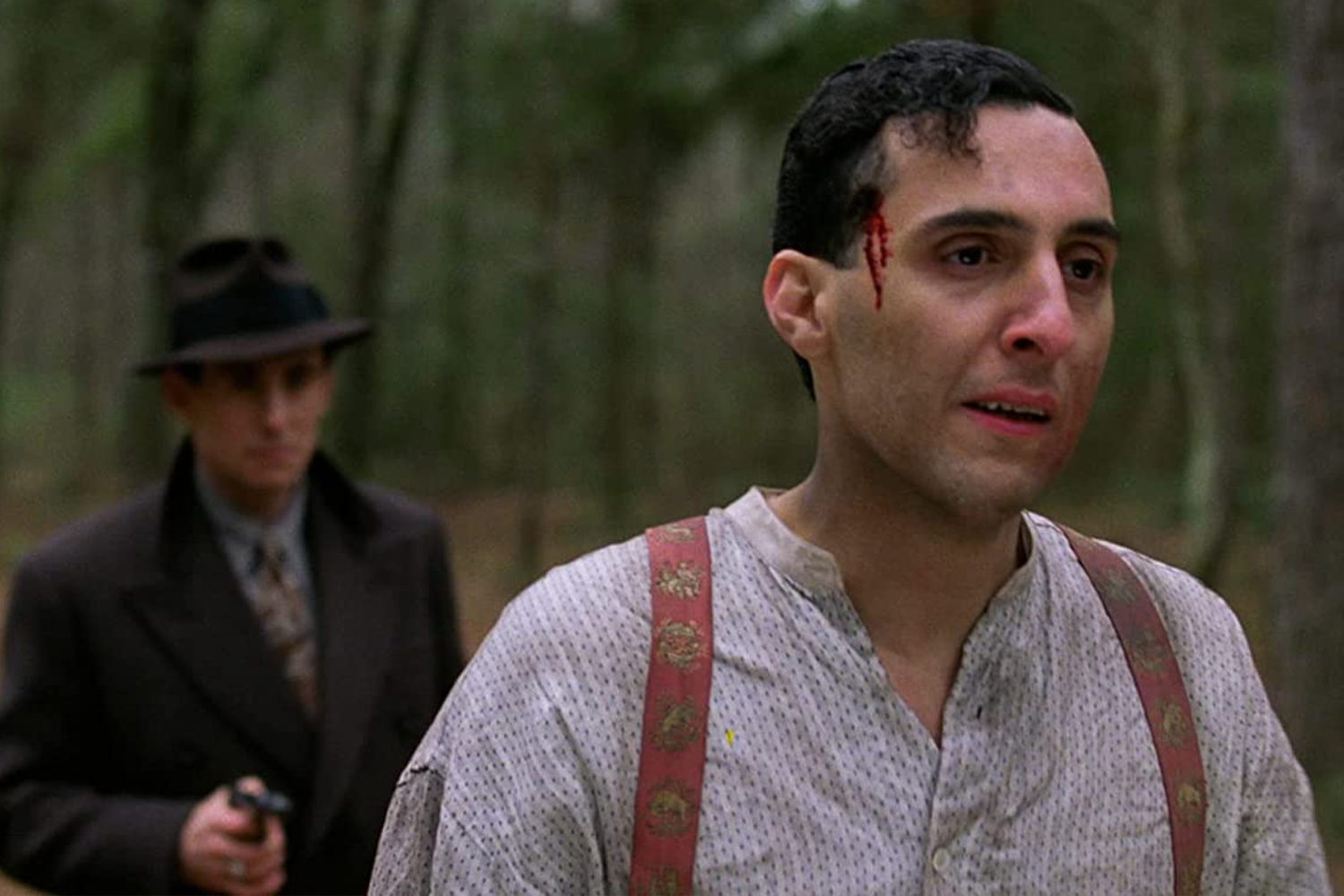
13. Miller’s Crossing (1990)
I must have seen the Miller’s Crossing VHS box on a video store shelf years before I ever rented it, because when I did, I was disappointed — what movie could possibly live up to that still, the long shot of man standing in a clearing in the woods surrounded by the fallen leaves, in black fedora and black trenchcoat and black pistol, and the man on his knees before him begging for his life? It’s an image out of the spiritus mundi, or at least out of Sergio Leone, one that concentrates all the mythic power of American pulp fiction, the operatic violence and moral grandeur, and the movie, having to fill in everything around it, can’t help but feel a little like an academic exercise in comparison. (I sometimes feel the same way about most Sergio Leone movies.) Miller’s Crossing, like Leone’s Fistful of Dollars, is a riff on Dashiell Hammet’s Red Harvest, but with the same Depression-era small-city setting and noir trappings, and so it ends up as a pastiche that moves in and out of quotation marks, sometimes burdened by its own thrall to its influences, sometimes romping too freely away from them. But the scene around that VHS cover shot is great, actually: the scene isn’t a still, it isn’t even a moment of stillness, it’s a kinetic and anxious setpiece in which John Turturro, as the intended victim of gangster Gabriel Byrne, makes himself so pathetic and downright irritating with his desperate wheedling appeals that you feel, as Byrne’s character does, alternating swells of pity and guilt and resentment and sheer hatred. Rather than an “operatic” approach to violence, the Coens’ tone is often ironic, irreverent, unglamorous, black-comic or even cartoonish, which, I suppose, is where the “moral grandeur” comes in. — MA
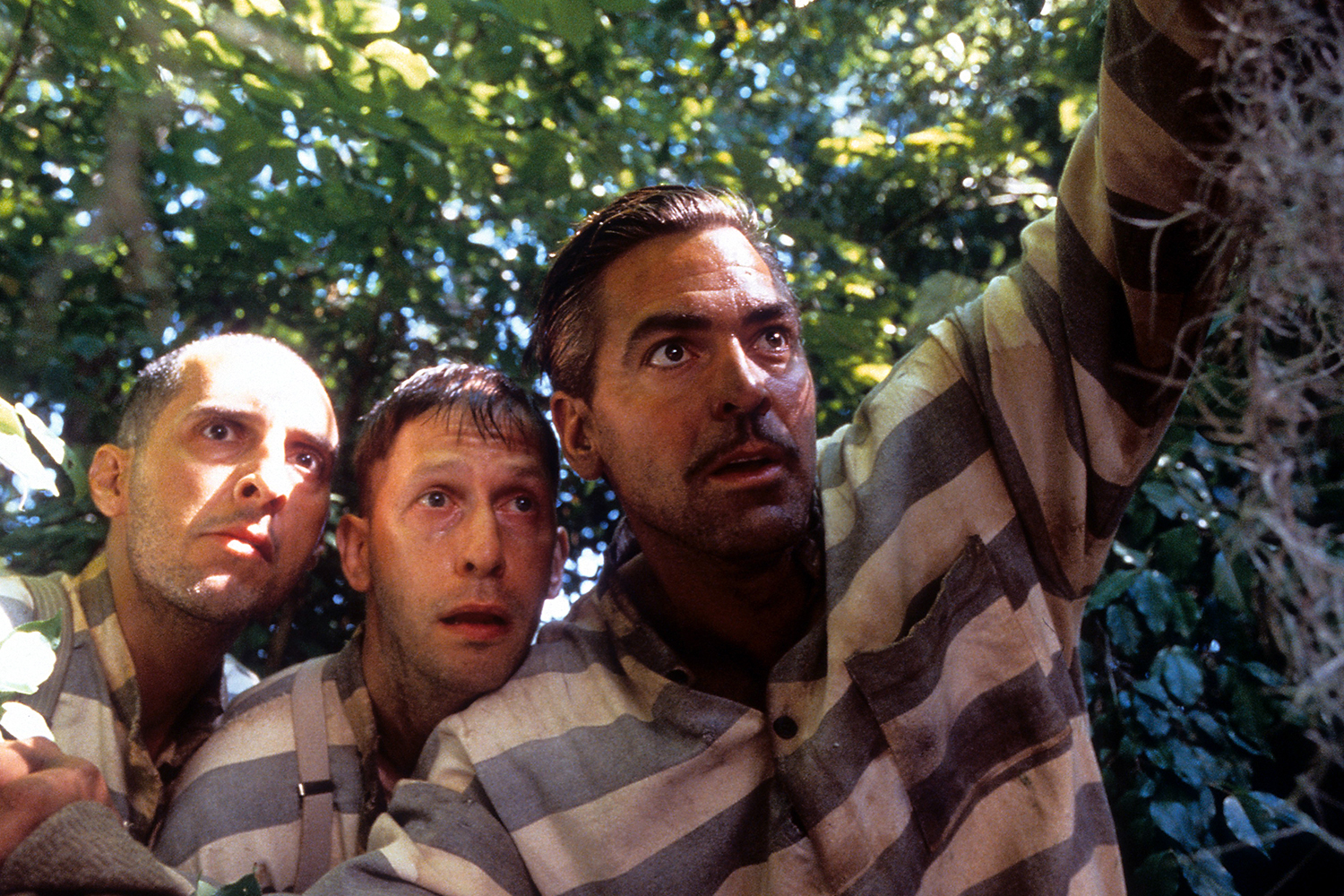
12. O Brother, Where Art Thou? (2000)
Hear me out: There are plenty of reasons that The Big Lebowski looms larger in the culture, of the Coens and elsewhere, than O Brother, Where Art Thou?, not least a soundtrack for the latter whose blockbuster success overshadowed its source movie’s mere hit status. But their Lebowski follow-up, an Odyssey cover in the picaresque style, might be just as quotable. If it does fall short in that department, it’s only because those quotes require more precision to replicate: “Damn! We’re in a tight spot!” is easy to remember, of course, with George Clooney’s scheming escaped convict Ulysses Everett McGill repeating it like a mantra, but there are some word-drunk Coen doozies here: “Well ain’t this place a geographical oddity: Two weeks from everywhere!” “Is you, or is you ain’t, my constituency?” “Say, any of you boys smithies? Or, if not smithies per se, were you otherwise trained in the metallurgic arts before straitened circumstances forced you into a life of aimless wanderin’?” The dialogue and the groundbreaking digitally adjusted cinematography from Roger Deakins form the connective tissue for a loose bunch of vignettes following the misadventures of Ulysses, Delmar (Tim Blake Nelson) and Pete (John Turturro) as they make their way toward a treasure their ringleader has assured them is forthcoming. At the time, O Brother became an unlikely career-biggest hit for the Coens — and if it’s not quite that level for George Clooney with those Ocean’s blockbusters on his CV, it is definitely one of those times where his movie-star visage did translate into actual box office dollars from people who, at the moment, was his constituency. (Another such moment, hilariously, is the very next movie on this list, which arguably savages one type of movie Clooney actually makes in all seriousness far moreso than this sweet-natured romp.) Clooney’s wild-haired mugging is a revelation here. We knew John Turturro could have a lot of goony fun wrapping an accent around Coen patter, but Clooney’s clipped yet grandiloquent Clark Gable bastardization is one of the most purely delightful performances in the Coen catalog. — JH

11. Blood Simple (1984)
Blood Simple has a brooding synthy score and cinematography, by Barry Sonnenfeld, that’s all shafts of blue-steel light piercing a haze of cigarette smoke; it’s all very Scott Brothers. Despite its independent production and Texas locations, which would put it more in line with the 1980s regional filmmaking boom, this is a glossy and quite sexy thriller, with a plot of cheating and double-crossing with heavy borrowings from James M. Cain. In other words, it’s actually very much akin to Body Heat, from earlier in the decade, and like Lawrence Kasdan’s knowing movie-brat neo-noir mashup, Blood Simple upon its release was received in some quarters as a consummately cinematic debut steeped in Hollywood tradition and by Pauline Kael, in particular, as a sort of inbred extension of the New Hollywood ’70s, an echo chamber. (“Blood Simple has no sense of what we normally think of as ‘reality,’ and it has no connections with ‘experience.’ […] It’s so derivative that it isn’t a thriller — it’s a crude, ghoulish comedy on thriller themes.”) Kael did pick up on a few things that immediately distinguished the Coens, though: M. Emmet Walsh’s sweaty, seedy private investigator in a cowboy hat the same shape as his VW Beetle, the first of the Coens’ great all-American heavies; and the god’s-eye-view plotting, which allows us to see the butterfly effect of a single miscalculation, which would become a theme of their career. Gratuitous grace notes — the moment when the camera, dollying down a bar, hops over the slumped head of a passed-out patron; the runner about John Getz’s Ray living on a dead-end street into which his angry visitors inevitably peel out — are like the Coens spending down a surplus of visual acuity and structural soundness, as if, even this early in their career, Joel and Ethan just found this so easy. In subsequent films, they would reallocate their resources — why not build the whole movie out of the second- and third-order jokes on the genre you know so well? — MA
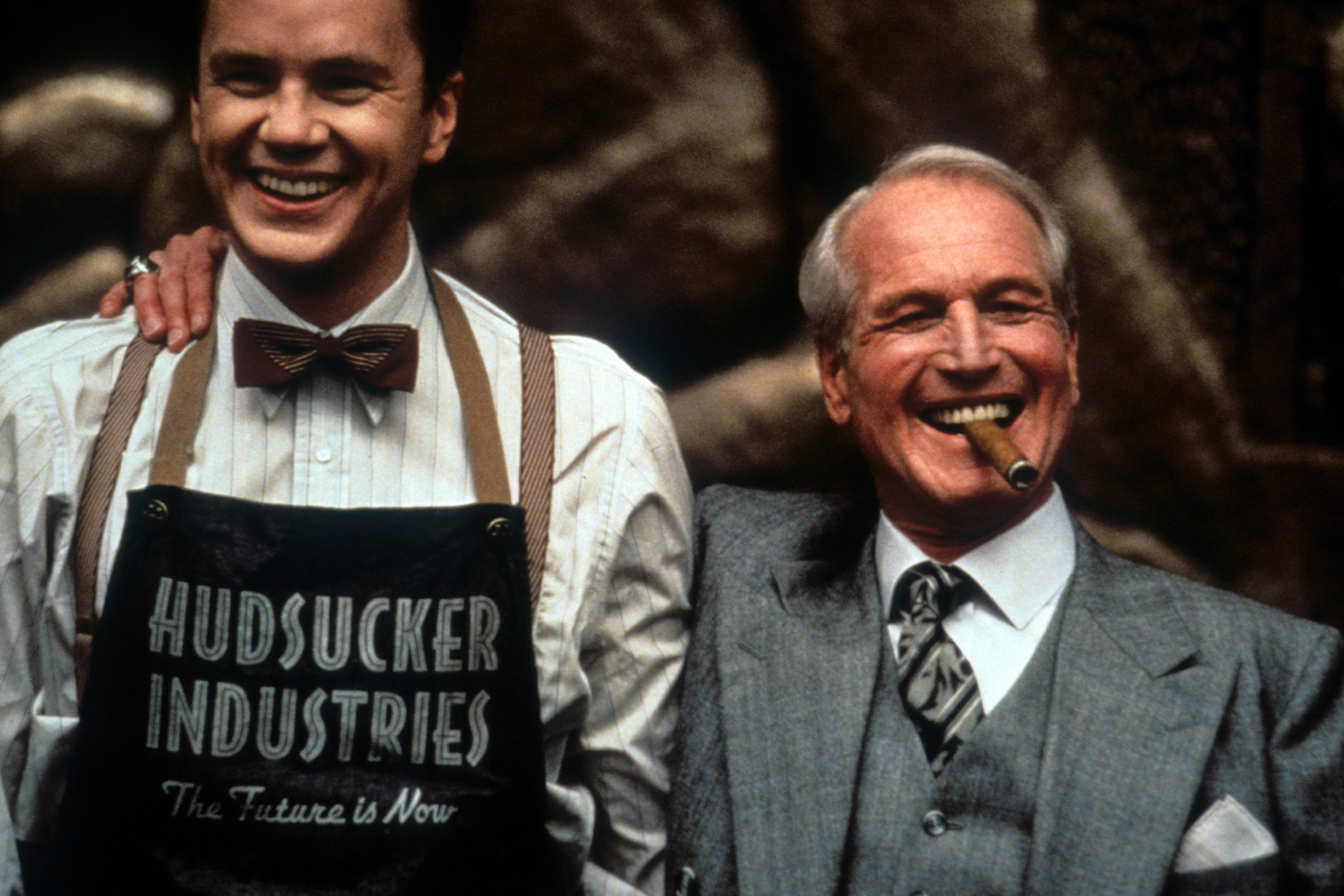
10. The Hudsucker Proxy (1994)
I remember doing the most dubious box office math of my young life in response to a USA Today blurb about the financial fate of this $40 million Coens comedy I had yet to actually see. One reason for my not having laid eyes on it, besides that I was a 13-year-old dumbass, was that it was initially only playing on five screens, from which it grossed about $105,000 on its first weekend, on its way to a paltry $2.8 million haul on its uncharacteristically expansive $40 million budget. Isn’t this the studio’s fault, though? I thought to myself as I read about the movie’s financial ruin. If they had simply released the movie on a then-standard 2,000 screens, its $20,000 per screen average would have earned back its budget in a single boffo weekend! (I may not have used the word “boffo,” but the intent was definitely there.) Look beyond my deeply flawed financial analysis and just imagine it: The Hudsucker Proxy on 2,000 screens! (Instead, it topped out on a few hundred, while another five-screen release that shared its opening weekend, Four Weddings and a Funeral, became a word-of-mouth sensation and eventual Best Picture nominee.) Had Warner Bros. proceeded with my moneymaking scheme, maybe I could have seen my first Coens movie earlier than a VHS rental, and gotten a slight head-start keying into movie references I wasn’t experienced enough to get.
Yet it was still a vivid experience, watching a Blockbuster copy of non-blockbuster Hudsucker on my grandparents’ VCR, because it’s such a visually rich film that it can even catch the eyes of kids who don’t know what Art Deco is. Funny, too: Wild to think how thoroughly contemporaneous critics dismissed its rat-a-tat dialogue as robotic pastiche rather than utterly hilarious, and found no charm in Jennifer Jason Leigh’s Rosalind Russell/Katharine Hepburn hybrid as a hard-bitten lady reporter pretending to be a hard-luck innocent to investigate goofball naif Norville Barnes (Tim Robbins), inventor, in this telling, of the hula hoop. Those grumpy dismissals — polar opposite from the blanket passes typically issued by 2026’s critical mass, and equally annoying in their way — echo today; it’s still relatively rare to catch Hudsucker Proxy in the upper reaches of many Coen lists. Maybe it’s the way its screwball tempo gives way to less convincing Capra sweetness — though honestly, it’s not entirely out of form for the real deal, as some classic Capra movies slightly outstay their welcome, too. Regardless of why it’s often seen as Lesser Coens, The Hudsucker Proxy was a weirdly workable introduction for me; it’s just daft enough to appeal to any number of indoor kids who don’t know jack about numbers and crash-course them in both financial fantasies and a bunch of movie history they’ve been missing. — JH
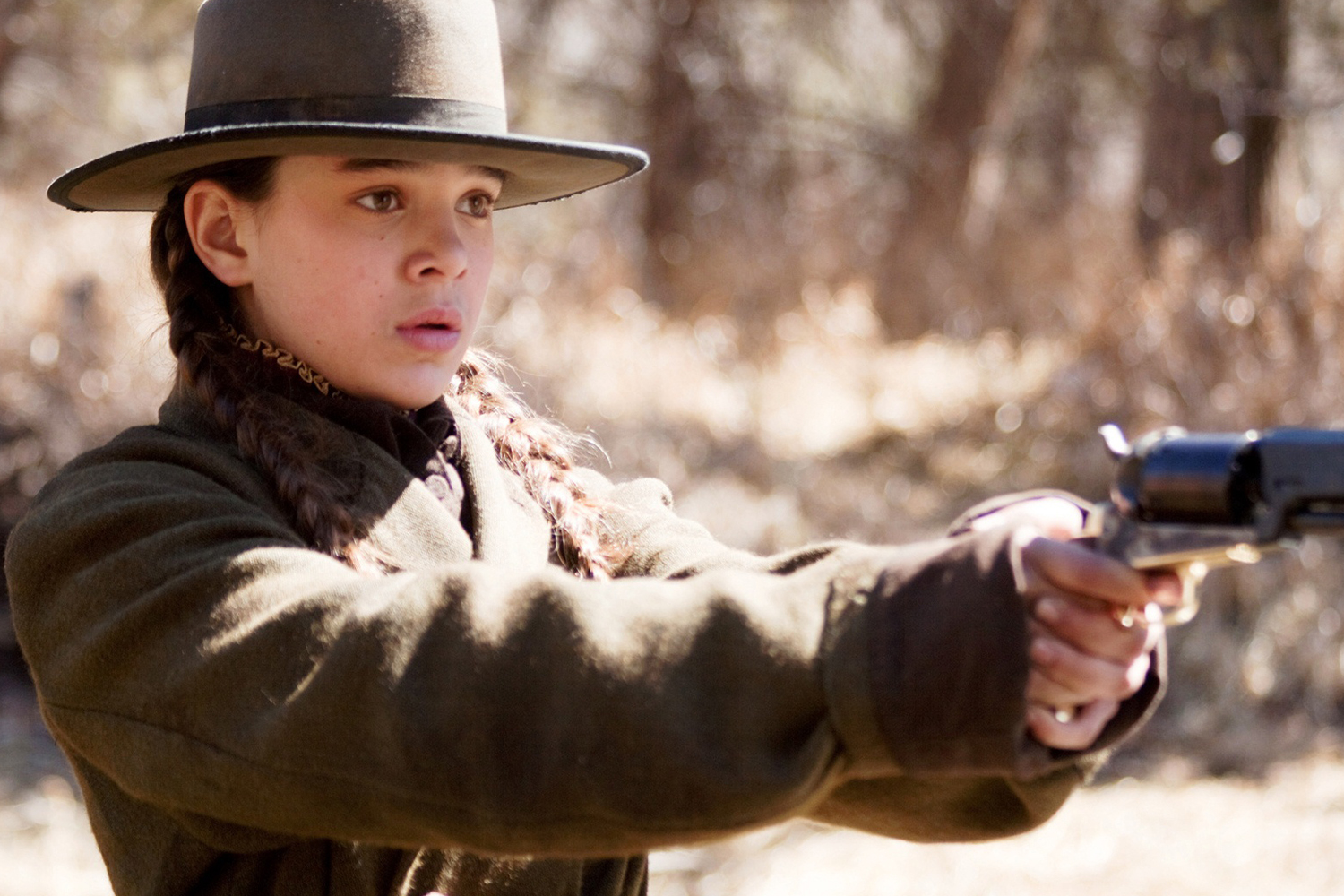
9. True Grit (2010)
An astonishing period in Coens productivity (four movies in 40 months), popularity (combined U.S. grosses: over $300 million) and, perhaps most unnerving, consistent awards-season success (20 Oscar nominations in total) was capped by their Christmas Day blockbuster in 2010, a somewhat more traditional oater bookending the first movie in this unlikely cycle, No Country for Old Men. That film, about which more shortly, won multiple Oscars; True Grit went 0-for-10, but remains the most-nominated and biggest-grossing of their movies by a comfortable margin. There was a lot of this unexpected mainstream success going around at the end of the 2000s; in 2010 alone, other Best Picture nominees included $100 million-ish hits from David Fincher, Darren Aronofsky and David O. Russell. The Coens come from a slightly earlier generation, with at least a decade of feature experience on any of those guys, so it’s only appropriate that their era-capper passes for mainstream entertainment, de facto remaking the movie that won John Wayne his Oscar, though it’s more of a re-adaptation of the original Charles Portis novel. Here it’s ex-Lebowski Jeff Bridges playing the eye-patched, dissolute lawman Rooster Cogburn, and a debuting Hailee Steinfeld as the girl who hires him to kill the outlaw who murdered her father. Despite a stoic ending, or maybe because that stoicism packs a lot of quiet power, True Grit stands as perhaps the most straightforward of the Coens’ work, without sacrificing any of their love for oddball characters and highly specific language (both shared with Portis), nor their eye for a striking shadow-painted image (shared with Roger Deakins, who has only lensed one more movie for the brothers since this one). By the end of the just-begun decade, the bottom dropped out of the movies-for-grown-ups market as everyone migrated to streamers, where the Coens made their final-to-date Western before taking a break from each other. — JH
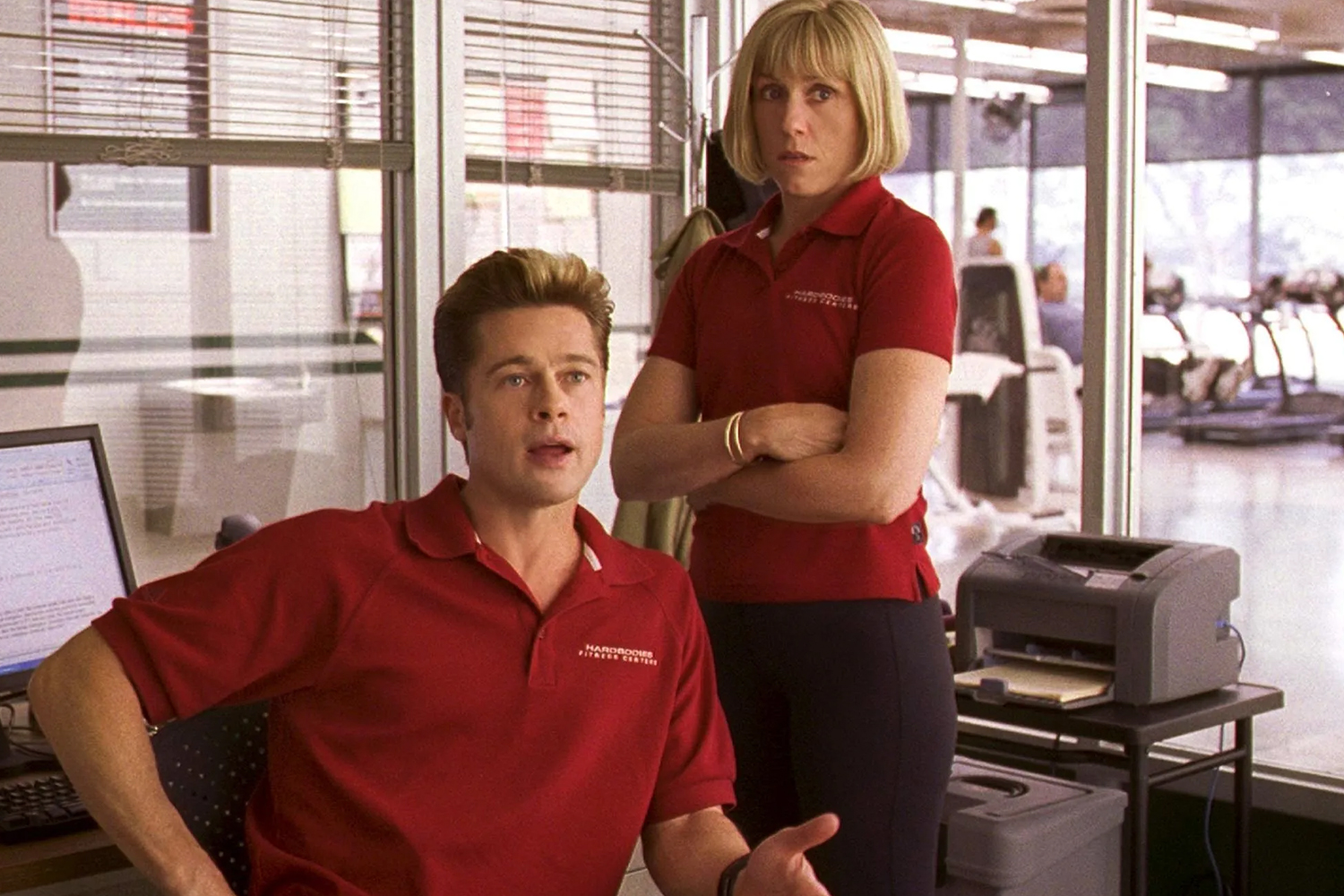
8. Burn After Reading (2008)
With his affected Texan drawl and tendency to malapropos signaling downhome eccentricity and giving folksy cover to with cowboy-booted imperial swagger and a capacity for horrific malice, George W. Bush was exactly the president the Coens had been predicting throughout the ’80s and ’90s — watch M. Emmett Walsh in Blood Simple, Trey Wilson in Raising Arizona, John Goodman in anything prior to the theft of the 2000 presidential election. (To extend the analogy, Paul Newman in The Hudsucker Proxy is something like, well, a proxy for Dick Cheney.) Deep into Dubya’s extended post-Katrina lame duck period, the Coens delivered their definitive statement on a decade of American idiocy and the body count it ran up. Like the invasion of Iraq, the plot of Burn After Reading is set into motion by a disgruntled ex-CIA officer setting out to settle scores with his old bosses — John Malkovich’s memoirs are petty and pointless, but just like the forged documents alleging that Saddam Hussein had attempted to procure enriched uranium from Niger, they fall into the wrong hands and things quickly spiral off the rails, setting off a panic in the intelligence community, and get people killed. Burn After Reading concerns a bunch of horny, venal idiots with itchy trigger fingers and fatal bravado blackmailing each other, spying on each other and stealing each other’s documents. Several members of Burn After Reading’s “League of Morons” (more accurate than “axis of evil” and less flattering than “coalition of the willing”) are employees of a gym called “Hardbodies.” The name is shared with scholar Susan Jeffords’ epochal 1993 study of “Hollywood Masculinity in the Reagan era,” a skeptical look at Rambo, Dirty Harry, Lethal Weapon and movie militarism during the dying days of the Cold War. This doesn’t seem like a coincidence. — MA
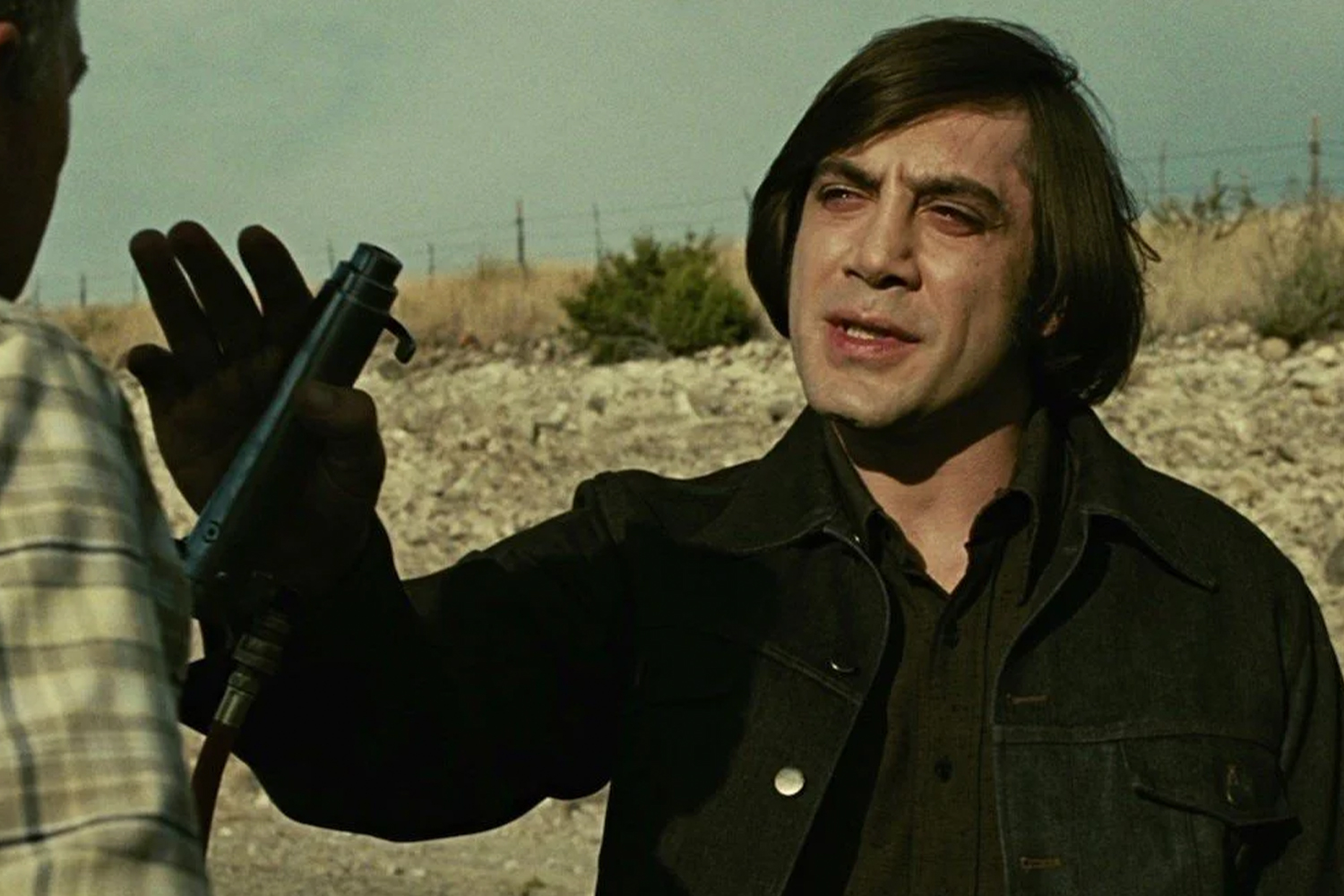
7. No Country for Old Men (2007)
“And for what? For a little bit of money. There’s more to life than a little money, ya know. Don’t you know that? And here ya are. And it’s a beautiful day.” This is not dialogue from No Country for Old Men. But I thought about that moment from Fargo while rewatching the Coens’ consensus masterpiece, which reached that consensus in part by doing what Fargo could not and winning the Academy Award for Best Picture. (In retrospect: Jesus, how?) Obviously there are certain thematic, visual and narrative similarities across the Coens’ filmography, but somehow the hype around No Country, as well as its Cormac McCarthy pedigree, initially obscured to me the full degree to which it plays like Fargo with most of the casual sociology, much of the humor and, yes, some of the humanity extracted from it, quite intentionally. What remains is drum-tight cat-and-mouse procedural — I had not remembered, from two theater viewings back in ‘07, just how much of it involves observing Llewelyn Moss (Josh Brolin) as he methodically attempts to cover his tracks while on the run with $2 million of found drug money, and Anton Chigurh (Javier Bardem) as he tracks that money down. They’re the cockier William H. Macy and deadlier Steve Buscemi figures, while Tommy Lee Jones as the sheriff following in their wake is the wearier, less hopeful Marge Gunderson. Is it my mapping that’s reductive, or is it maybe, a little bit, the movie itself? No Country itself is one of the most disciplined, restrained and bracingly bleak of Coen pictures — in a way that makes some critics swell with perverse anti-delight. I admire it deeply, love its craft and think this could be the best of many terrific Tommy Lee Jones performances (in addition to a weary-cowboy Marge, it’s also a laconic variant of his crackling work in The Fugitive). I also wonder if its view of evil eroding society is, unlike Fargo’s version, a little simplistic. But not necessarily, mind you, unrealistic. — JH
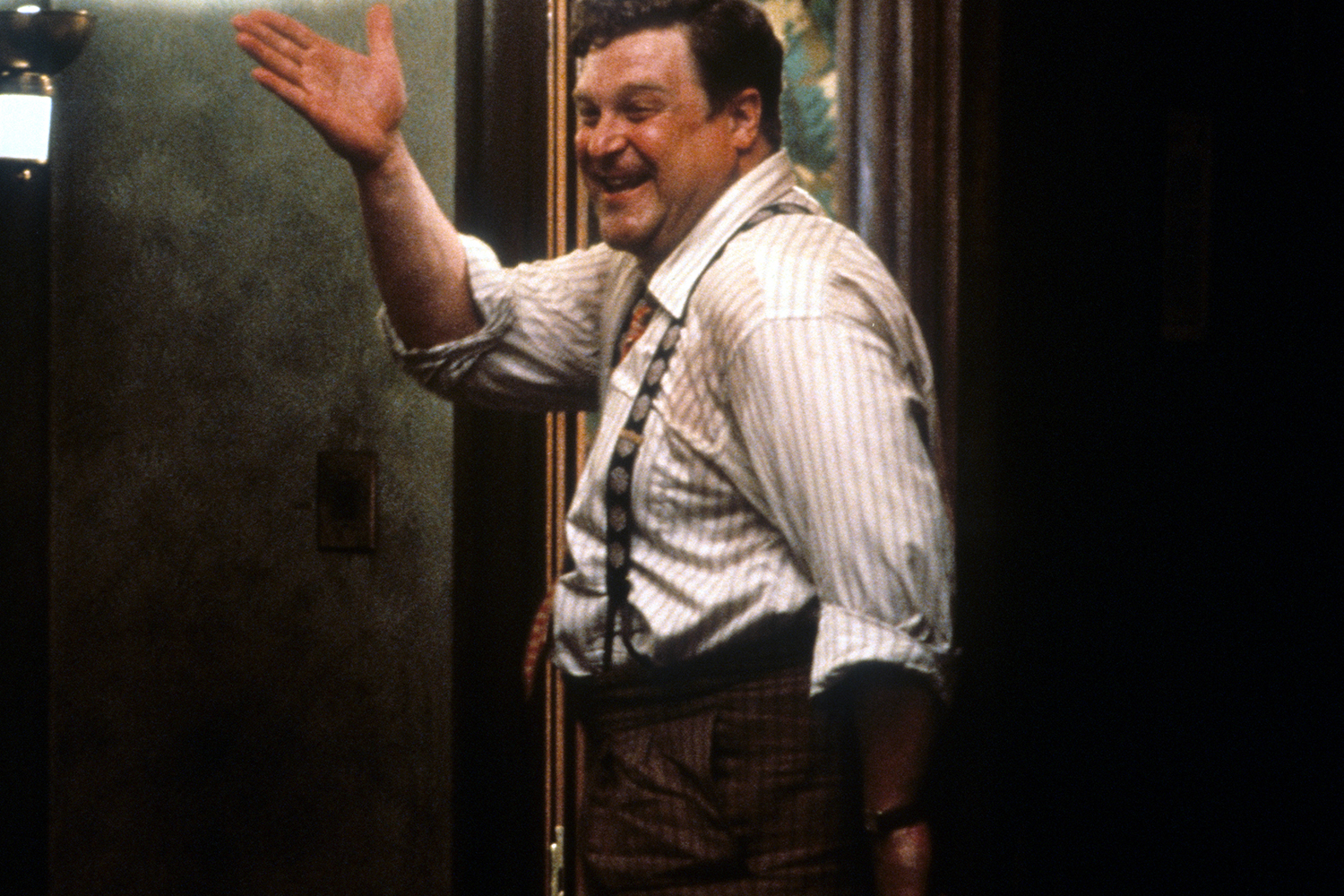
6. Barton Fink (1991)
Every single Coens movie qualifies as well-cast; have they ever made a movie without at least two or three standout performances? As such, it’s always a thrill when someone new to them — Tommy Lee Jones, Carey Mulligan, Michael Stuhlbarg, Margaret Qualley — turns up and immediately goes on the list of actors you hope will turn up again. And yet! There’s also something special about the movies that engage in Coensmaxxing (sorry), packing in as many of their longest-running rep-company members as possible. To wit: Barton Fink features five-timers John Goodman, Steve Buscemi (who’s also in their segment of Paris, je t’aime), Jon Polito, and goes so far as to star four-time veteran John Turturro. (Frances McDormand is in there, too, albeit only vocally; she’s the understandable champ, in nine of these 22 films.) The use of these actors (especially in retrospect) lends the movie precisely the right sense of closed-world claustrophobia, as pompous playwright-turned-blocked-screenwriter Barton holes up in a humid mosquito trap of a Hollywood hotel and loses his mind. Rather than creating some kind of Ultimate Coens Universe, that Barton Fink feeling is more distinctly menacing, a horror-adjacent trip through the hell of a writer’s mind. It’s also one of several hints that the Coens’ sensibility isn’t cruel so much as secretly self-effacing. — JH
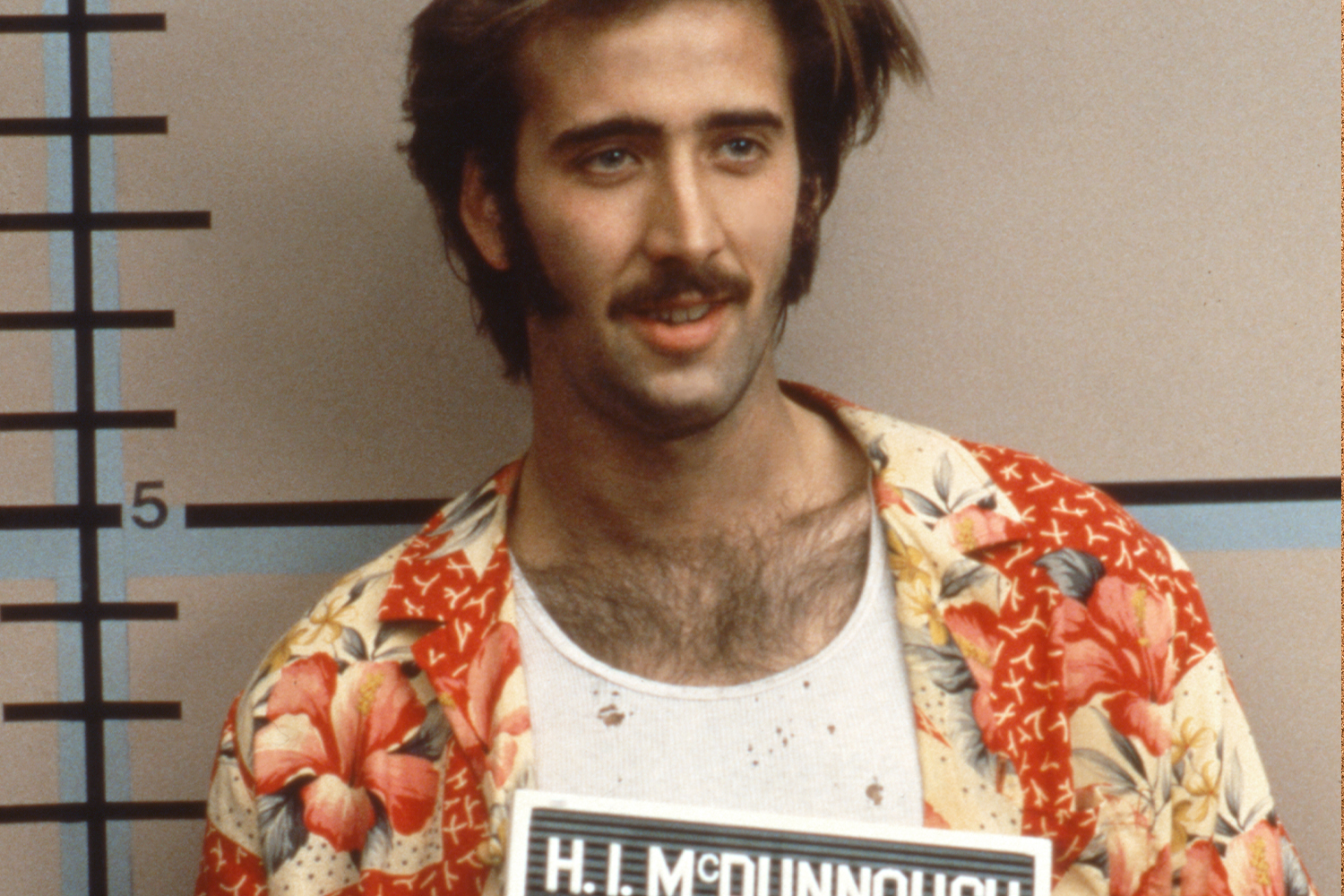
5. Raising Arizona (1987)
From what I can tell, neither of the Coens were parents in 1987. And maybe that’s both obvious and appropriate, given that Raising Arizona is a story of childlessness as much as a story of parenting: Barely-ex-con H.I. McDunnough (Nicolas Cage) and his ex-cop wife Edwina (Holly Hunter) are unable to have a child of their own (or adopt, because of H.I.’s criminal record), so they resort to kidnapping one of five quintuplets recently born to a rich couple. What the Coens capture, amidst comic mayhem that borders on Coyote/Roadrunner territory befitting the Southwestern setting, is the panic and chaos of hastily reorienting your life around a small being you instantly love with an unsettling fervor. (The gag is extended when two more miscreant cons kidnap the baby themselves and are immediately besotten, too.) It’s not just a cute way of saying that parenting is hard; the fact that “Nathan Jr.” doesn’t actually belong to the McDunnoughs undergirds the unknowability (and mortality) that follows the actually somewhat laughable decision to “become” a parent — and lends an additional high-wire danger to the careening slapstick antics so ably shot by cinematographer Barry Sonnenfeld. That unknowability comes to emotional fruition with perhaps the most surprisingly heart-tugging scene in the entire Coen filmography: H.I.’s closing dream of parenthood, grandparenthood and family in general, a hopeful vision that may not have an immediately viable path forward, yet persists with a fantastical clarity. You may find yourself asking: How is this Roadrunner cartoon making me cry? — JH

4. A Serious Man (2009)
When Sandy Koufax sat out Game 1 of the 1965 World Series in observance of Yom Kippur, his Dodgers were on the road against the AL pennant–winning Minnesota Twins, the former Washington Senators, who had relocated just a few years prior to Metropolitan Stadium in the rapidly expanding Minneapolis suburbs and a few miles from the new Jewish enclave of St. Louis Park, where Joel and Ethan Coen, descendants of Eastern European Ashkenazis, were then 10 and 8 years old. Koufax’s decision remains an inspiration to Jewish Americans: He was the rare Jewish superstar in a mainstream sport and still maintained a connection to an identity that was then, two decades after the Holocaust, emerging from the margins of American life. One wonders whether the Coen Brothers, young Baby Boomers with roots in the shtetl and a nice home in the suburbs, rooted for the semitic star, or the home team.
The Coens have mostly engaged with their Jewish heritage obliquely, but A Serious Man, which is set in St. Louis Park a few years after Koufax came back to Metropolitan Stadium to shut out Joel and Ethan’s Twins in Game 7, is their most direct engagement with faith — or, rather, with doubt. Michael Stuhlbarg’s Larry Gopnik has a secular job as a physics professor, which comes with an escalating series of Job-ian trials and confounding moral dilemmas: His son is getting into drugs, a student’s father is trying to bribe him and his wife is leaving him for… Sy Abelman?!? (As Sy, Fred Melamed, until then known as a voice actor and Woody Allen bit player, at long last unleashed his titanic sex appeal on a breathless and ravished America.) Turning to his community’s venerable spiritual leaders for answers, Gopnik finds nothing but ambiguous parables and weird, querulous rabbis — it’s as if Judaism’s disputatious intellectual tradition has assimilated into moral free-for-all of ’60s (“Do you take advantage of the new freedoms?”), and the ancient texts, averse to certainty in the best of times, might as well be written in Hebrew, for all all that he can understand them. With loving production design that recreates the plastic age of their childhood and recasts the bar mitzvah as a bourgeois Boomer ritual, A Serious Man is a great film about what it means for a Jew to become an American. The film’s leading promotional still, of Gopnik standing atop his house, fixing his TV aerial, recalls the title of MAD Magazine’s classic Fiddler on the Roof parody, which presented Tevye’s grandson as the patriarch of a brood of Jewish-American Princesses, depressed in Scarsdale and dreaming of his ancestors: “An Antenna on the Roof.” — MA
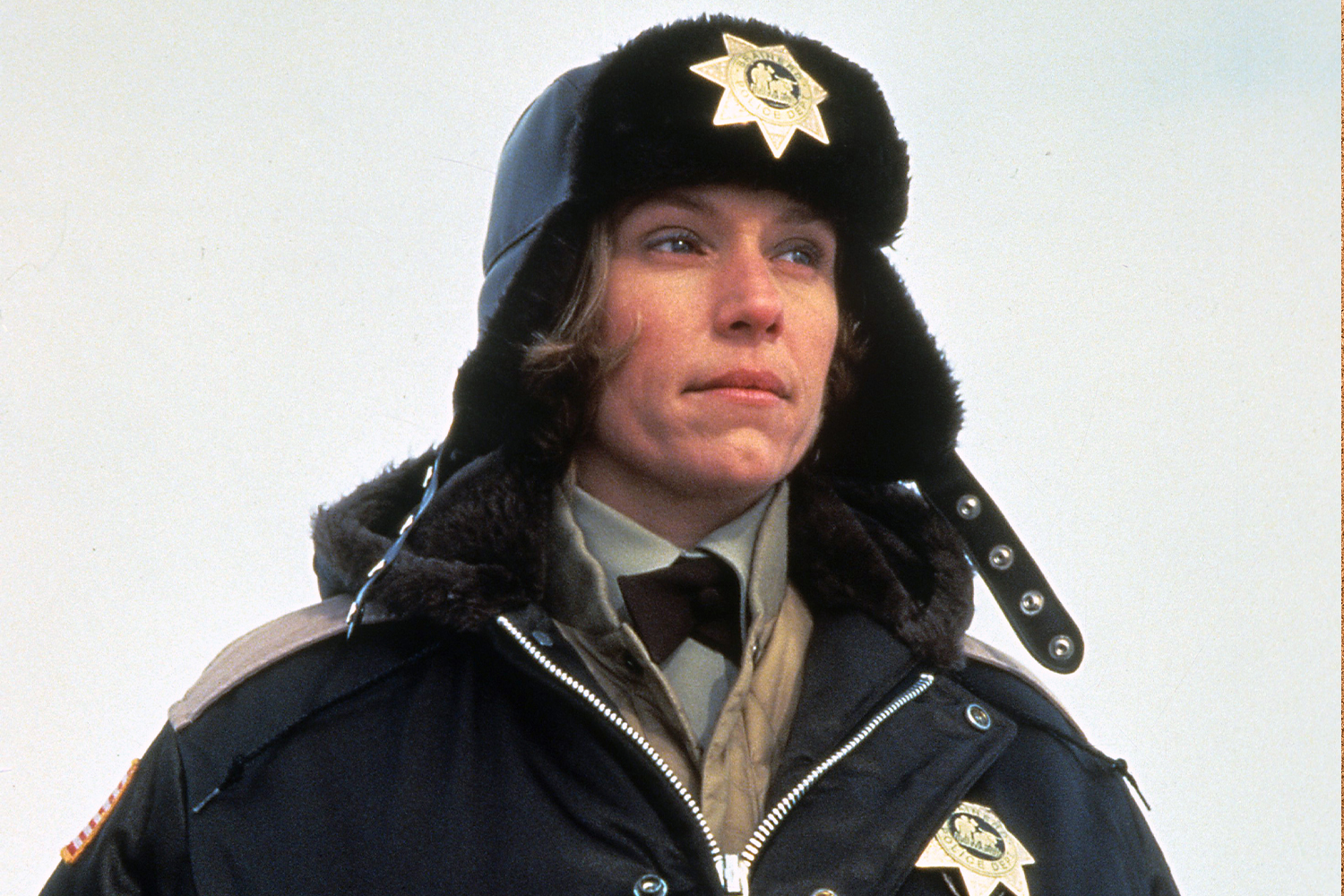
3. Fargo (1996)
I think so often of the scene in Fargo when the pathetic and beaten-down Jerry Lundegaard, his stupid plan to orchestrate his wife’s kidnapping and collect a ransom already snowballing far beyond his control, tells his despairing son Scotty, a teenager reduced to cuddling an old stuffed animal, that it’s going to be OK, that he knows it’s scary, but that mom is coming back, but in the meantime, if anyone calls, say she’s in Florida. And then Jerry leaves his son’s room before his mask slips, shutting the door behind him — and revealing his son’s poster of Frankie Stivic, “the Accordian [sic] King,” a beaming gray-haired man in Tyrolean hat and lederhosen. In the 1990s, the Coens were considered part of a wave of “postmodern” indie filmmakers, working on classic material from a distance, and while they were hardly in the vein of all the post-Tarantino posers and video-store savants playing violence glibly, for laughs, they often staged violence that was sufficiently abrupt and/or grisly that people did laugh. Because this was, again, the 1990s, a period of panic over the slacker impieties of an infinitely jesting Generation X, the case against the Coens was that they were glib, condescending, immoral, playing God by creating characters who were their inferiors and making jokes out of their misfortunes. The Accordion King poster is a joke at Scotty’s expense — it’s hilariously inappropriate in the moment, kitschy and corny and gives us a laugh at his expense in his extremity of pain. But Scotty’s dad, and the universe, are making a joke at his expense, too. The moment is cruel and unfair, but we recognize that cruelty and unfairness and feel guilty for partaking in it and compounding it. Scotty in that moment is so vulnerable and the Coens are no more unkind to him than the world is. In that moment I wish I could reach through the screen and touch Scotty Lundegaard, ruffle his hair or something, and I don’t think I would feel such pathos in the moment if the Coens hadn’t given him such lovably childish bad taste. — MA
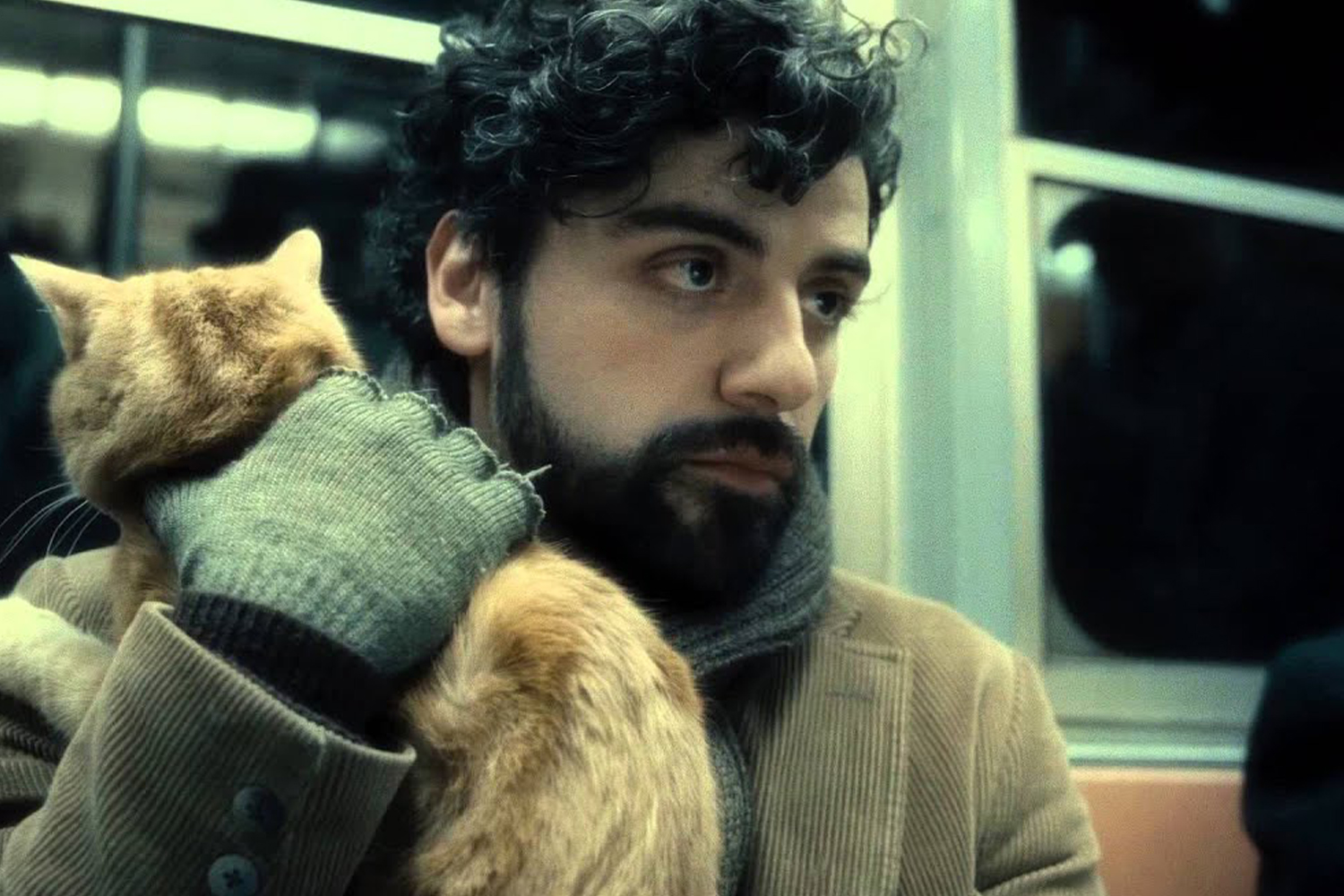
2. Inside Llewyn Davis (2013)
“I don’t see a lot of money here.” In the annals of Coen writing, it’s unusually plainspoken. Club owner Bud Grossman (F. Murray Abraham) is just being honest about the prospects of Llewyn Davis (Oscar Isaac), a folk singer who’s gone solo against his will, having lost his singing partner to suicide. But you don’t need to have suffered that kind of impossible loss to lock into the sinking feeling Grossman creates after Llewyn has sung and played “The Death of Queen Jane” as an audition with maximum yet delicate feeling. The verdict is delivered without malice, and stings as much as if it had been. (No wonder mostly-freelance movie critics love this one. No wonder there’s a whole Criterion essay about this moment.) Llewyn Davis isn’t the bleakest Coens picture (see number 7) nor does it feature the most openly emotional conclusion (see numbers 3 — the mallard! — and 5). But it might have the most sustained emotional fragility, all without ever ceasing to be (a.) clear that Llewyn himself self-sabotages as much as he’s a victim of fate (b.) extremely goddamned funny. (There are people who will tell you the scenes with John Goodman as a bellicose jazz musician inflicted upon Llewyn for a lengthy car ride don’t quite fit the movie’s tone. I am not such a person.) The New York City (and Chicago) folk-musician landscape in the early 1960s is not as desolate as the snowy Midwest, but the Coens make damn sure you can feel the slush in your boots. They also, at times, appear to be imagining a world without each other, one where their harmonies have been cruelly snatched away, which gives this movie an extra bit of lived-in sadness, even apart from the professional disappointments and near-misses that pile up as an unseen Bob Dylan approaches in the distance. Like Fargo, this movie exists in a highly specific place and the Coens’ own world simultaneously. — JH
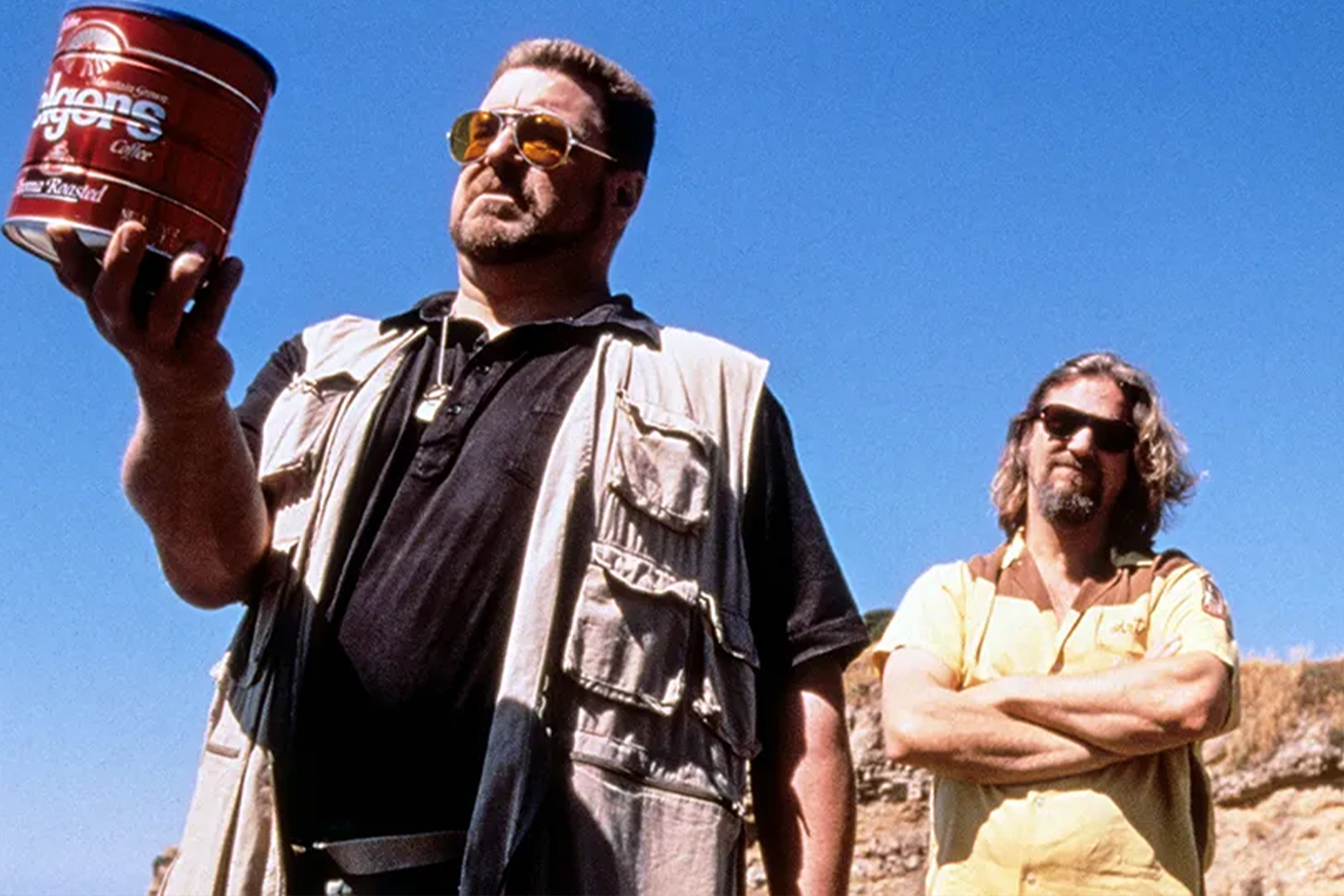
1. The Big Lebowski (1998)
The rare film whose status as a beloved and iconic classic actually does it no favors, The Big Lebowski is so much better than its reputation (the 225th best film of all time, according to the same IMDb users who rank The Shawshank Redemption as the greatest). Yes, the film is quotable (you’ve heard “this aggression will not stand” within the last week and would notice if you hadn’t) and lends itself to Halloween costumes (the Dude’s sweater is from Pendleton), drinking games (toke and imbibe whenever the Dude does) and easily disproven fan theories (Donnie is not a figment of Walter’s imagination, take that shit back to Reddit). It’s one of the stickiest movies of modern times — long before thirsty filmmakers began starting scenes with memes and then writing backwards around them, the Coens understood how to turn a phrase, pick a needle-drop, and plant a runner. The film has earned its place on each and every one of the countless dorm-room televisions where it’s playing right this moment.
For this reason, The Big Lebowski is an easy film to underestimate. As this list amply demonstrates, the Coens are brilliant magpies, incredibly fluent at lifting and repurposing genre tropes from prior ages of Hollywood, and subcultural miscellany from American history. Lebowski is incredibly fluent — the rich client in a wheelchair is The Big Sleep and a ghostly image of a lost girl surfacing in a grainy pornographic film is a neonoir staple; Maude Lebowski’s art is based on Carolee Schneemann’s and the nihilists’ album art is a Kraftwerk ripoff — and answers the brief of the hardboiled novel, with the detective as the moral center of a world that seems to be spinning further off its axis with each far-flung social space he enters.
As Robert Altman and Elliott Gould updated Raymond Chandler’s romantic cynicism for the hippie-hangover ’70s with The Long Goodbye, the Coens make The Long Goodbye’s subtext (Altman’s heavy marijuana use) into Lebowski’s explicit text, and bring the jadedness of the ’70s forward into the present day — or rather, not the present day, but the early 1990s, against a backdrop of renascent militarism designed to memoryhole the travesty of Vietnam that still haunts at least one bowling league.
By design, many Coen plots peter out — the thing you’ve been waiting for happens offscreen, and it turns out you’ve already seen the climax go by and not known it — but Lebowski, despite its reputation as an inner-circle rewatchable, is one of their biggest downers, resolving its mystery offhandedly, dropping Donnie’s death on you, and leaving you wondering if that’s all there is. It’s far less redemptive than the moral seriousness and green shoots of Fargo; in fact, it’s profoundly melancholic, in a way that speaks to the Coens’ deep affinity with the old, weird America to which their films pay homage. The bums always lose. — MA