What happens when the owners of a nominally public space decide they’d like some control over what, exactly, “public” means? Combine that with rising income disparities and a large number of homeless residents of cities; the result is what’s been dubbed “hostile architecture.” In practical terms, this indicates architectural features designed to keep people from lingering in a specific place.
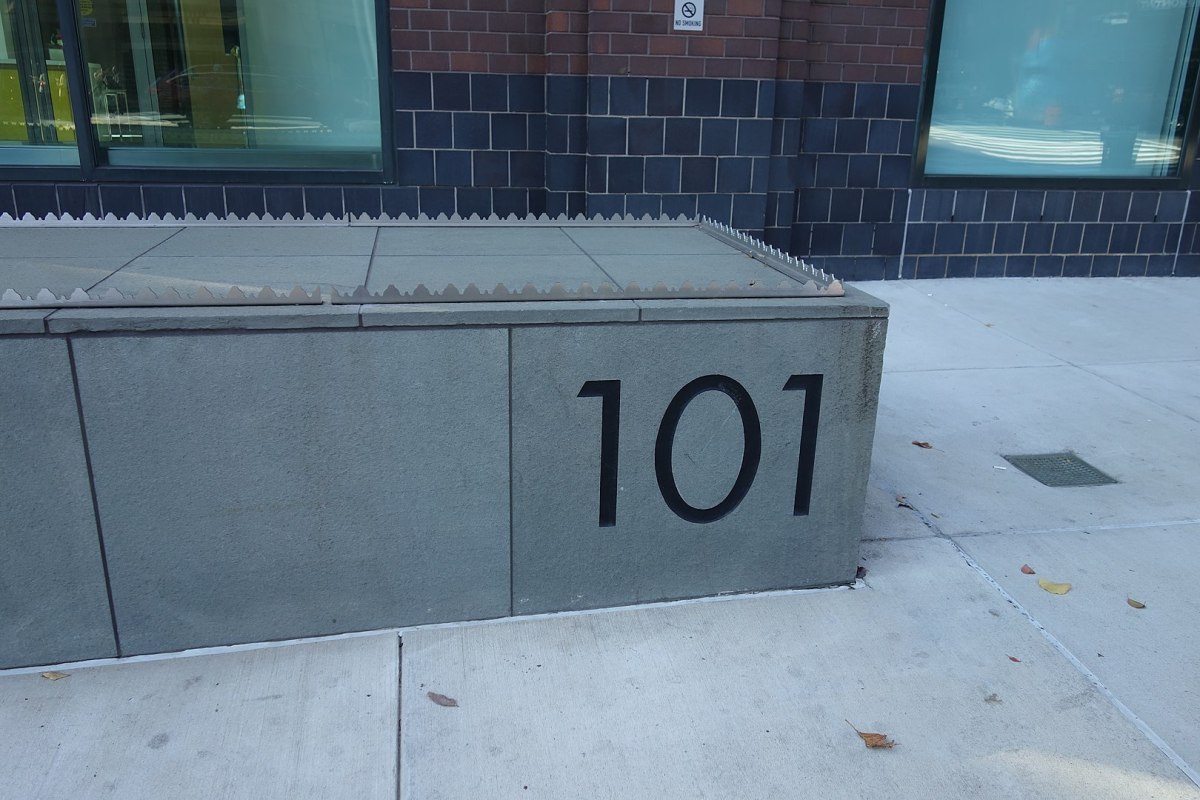
At Vice, Rick Paulas chronicled some of the most shocking examples of the form. This includes a series of metal spikes outside of a building in Hamilton, Bermuda, which resemble something from a medieval torture device.
Paulas notes that hostile architecture isn’t just about keeping the homeless out; it can be used to refer to any design choices that cause a space to be used in only one way. But it can be taken to extremes:
But in its most malignant form, hostile architecture can deter homeless folks from resting. In those cases, public or quasi-public spaces of cities — often defined by unequal access to transit, groceries, and other essentials — become a visceral extension of society’s collective disregard for their fate.
If, right about now, you’re thinking of a famous quote from Anatole France, you’re not alone. “The law, in its majestic equality, forbids the rich as well as the poor to sleep under bridges, to beg in the streets, and to steal bread,” he wrote more than a century ago. Unfortunately, people are still grappling with the same issues he chronicled back then.
Subscribe here for our free daily newsletter.

More Like This


From bleeding-edge menswear and wellness reportage to dining, dating, culture critique and beyond, all brought to you in their respective fields. Choose your favorites and sign up now.