First “Frozen,” Now “Gatsby.” What Trail Will Aisha Jackson Blaze Next?
Jackson has thrilled Broadway audiences by putting her signature stamp on classic characters. She thanks the “Black luminaries who paved the way,” even as she picks up that mantle herself.
Want to know what the future holds? You need to meet the people building it. In our series Who’s Next, we profile rising stars of culture, tech, style, wellness and beyond.
A billion-dollar crown jewel is nothing to trifle with. Disney understood that well when it set out to turn Frozen, the highest-grossing animated movie in history at the time, into the highest-grossing musical on Broadway. That’s why the theatrical arm of the Mouse burned through multiple directors, choreographers and Elsas on its way to the Great White Way. It’s also why, the first week after the musical opened in March of 2018, Aisha Jackson had never done a full rehearsal.
You see, Jackson was the standby for Anna, the other princess in the show. Standbys are essentially emergency understudies: If there’s a freak accident that requires a lead actor to bow out of a Broadway performance, these covers jump into action. It could be hours before the curtain rises, or it could happen in the middle of a performance.
On March 28, six days after the $30 million musical officially opened, no one was thinking about the possibility that Patti Murin, who originated the role of Anna, would need a replacement. Jackson’s first comprehensive Frozen rehearsal was scheduled for two days later. Once she was comfortable with the role, Murin could take a breath and lean on her.
It was a two-show day, and the matinee went off without a hitch. Then, as Jackson got back to the St. James Theatre in Manhattan after dinner, she got the news: the bronchitis that Murin was battling had taken its toll. Jackson was going on that night. She had two hours to pack in as much rehearsal as possible.
“I need to take a second, I need to pray, I need to call my family, I need to make a video, I need to cry and then we can start,” Jackson remembers saying at the time. “We’re going to do this. Here we go.”

Jackson’s wigs and costumes still weren’t finished. She needed to run through as many scenes and songs on stage as she could. She didn’t even know where she was supposed to stand for places at the beginning of the show. But by the time the 1,700 audience members were seated and the orchestra began playing, she had found her spot, and her wig, costume and microphone were in place.
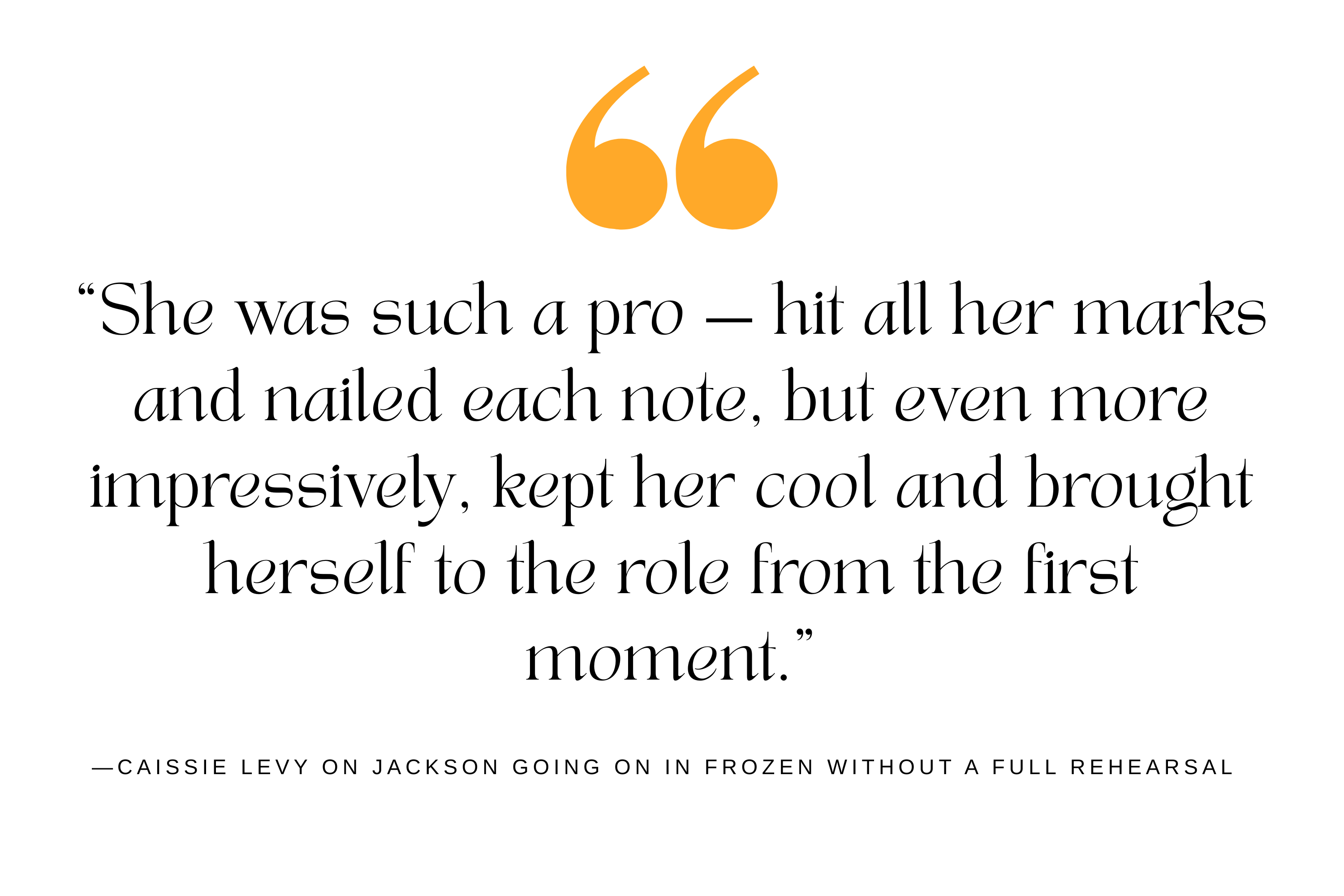
“I’ll never forget the night Aisha first went on for Anna!” Caissie Levy, who originated the role of Elsa, tells me via email. “She was such a pro — hit all her marks and nailed each note, but even more impressively, kept her cool and brought herself to the role from the first moment.”
“Aisha was a star,” she adds.
For Jackson, the performance was her own coup de théâtre: It was her first bow as a principal on Broadway, a milestone she didn’t realize she was going to hit when she woke up that morning. It was also the first time a Black actress played Anna on that stage — a “wonderful responsibility,” as she calls it, and one that Jackson has carried time and again during her rapid ascent in the theater.
On that Wednesday in March, Jackson got a taste of the seismic effect that wonderful responsibility could have, not just on her own career, but on the world.
“This patron came to me after my first show,” Jackson says, “and she was like, ‘I was sitting in the audience and you came out and this little girl saw you and said, “Mommy, she looks like me!”’”
“I was like, and that’s why I do what I do.”
Anna & Allie & Daisy & Aisha
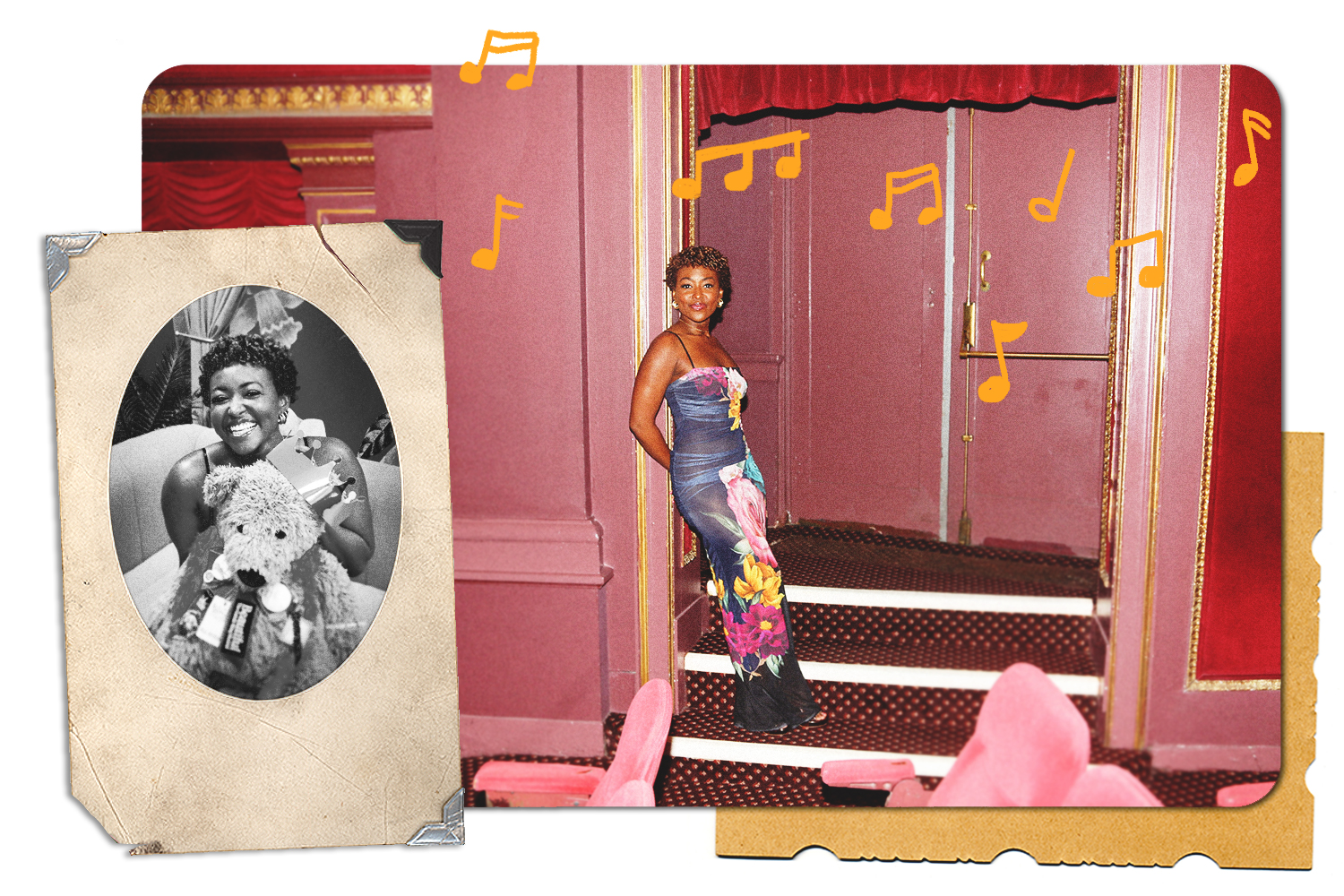
If Jackson’s star power ignited on Broadway that day in 2018, it’s only grown brighter as she’s moved from an on-again, off-again standby to an eight-shows-a-week leading lady. In the last two years, she’s starred as Snow White in Once Upon a One More Time, a Britney Spears jukebox musical; as Allie in Ingrid Michaelson’s adaptation of The Notebook (that’s the character played by Rachel McAdams in the movie version of the novel); and now as F. Scott Fitzgerald’s inscrutable socialite Daisy Buchanan in The Great Gatsby, currently playing at the Broadway Theatre.
“Anna [in Frozen] is this goofy, silly, leads with love, is so thoughtful, loves her sister. I’m like, oh yeah, that’s me,” Jackson tells me in early August, seven weeks into her Gatsby run. “But Daisy, she’s a little selfish, she’s a little manipulative. She lives this life of luxury. But underneath all of that, she’s deeply unhappy with her life and with her circumstances that she’s been dealt.”
You could say that’s the opposite of how Jackson felt when she got the call to be Gatsby’s new Daisy, following the tenure of Eva Noblezada and Sarah Hyland. She was part of a few developmental sessions for the musical before it got to Broadway, so not only was she familiar with the creative team — including composer Jason Howland who she worked with 10 years ago during her Broadway debut in Beautiful: The Carole King Musical — but her voice remembered the music. At least, a rough early version of it.
“I’ve been blessed to do a couple pre-Broadway workshops, but you never know if you’ll actually be able to present it in front of a Broadway audience,” she says.
“A couple” is a massive understatement. The only thing more impressive than Jackson’s packed Broadway résumé after just a decade in the business is the laundry list of shows that have enlisted her many talents during the tumultuous, painstaking work of actually creating a musical, including Ain’t Too Proud, What a Wonderful World and Suffs. Theatermakers don’t just like to work with Jackson when they’ve perfected a musical — they like to work with her when they’re hacking and slashing and slapping their shows together, too.
As she noted, though, it’s the official Broadway castings and openings that count. (“The credit is on the résumé forever and always,” she says about Once Upon a One More Time, which flamed out after less than three months.) And looking at the roles Jackson has landed, there’s an undeniable similarity: In four of her last five Broadway shows, on top of all the other trials of playing a lead — extraordinary vocal demands, complicated choreography, grueling schedules, giving the same galvanizing performance on a packed Friday night and a thin Wednesday matinee — she’s also been a Black artist inhabiting famous roles that are normally played by white actors. Exacerbating this dynamic is the fact that Broadway audiences have been, and still are, overwhelmingly white.
Jackson doesn’t see this trend in her career as a trial, though. She sees it as an “extremely special” opportunity that she holds “with pride and honor.”
“I’m stepping into the shoes of characters that are beloved,” she says. “So I start with a fan base of people who love them, right? And then I get to allow a demographic who doesn’t often see themselves represented in these well-known characters that they probably have imagined themselves in, but they’ve never seen it. I then get to pinpoint the relatability of these characters that transcends race and opens up the perspective of people.”
The latter is easier said than done, especially at a time when the concept of diversity has seen a rapid change from widely-accepted goal in many industries just a few years ago to its current status as a political flashpoint. Despite the current toxic cultural climate, Jackson speaks about this topic with an easy, surefooted grace, hallmarks of someone who has walked through the fire and emerged on the other side stronger.

“There’s Space for Me Here”
Aisha Jackson may not be starring in The Great Gatsby on Broadway if it were not for the impact of three people: Heather Headley, her brother Victor and her father, also named Victor.
It’s her father’s occupation as a pastor that led to her first memories of singing on a stage, which happened to be during church services at her elementary school outside of Atlanta. It was her older brother who joined her in “belting out Aida in [her] parents’ bathroom.” And it was Headley, who won a Tony Award for her performance as the title character in Aida, who helped Jackson understand that she too was capable of turning her youthful passion for musical theater into a career.
“Seeing a dark-skinned Black woman lead made me know that I could do it as well,” Jackson said. “I was like, oh, okay, so I’m capable of that. There’s space for me here.”

Connections Editor Wyna Liu Can Make or Break Your Day
The exasperating “New York Times” puzzle has become a sensation. Liu is just as surprised as anyone.While certain racial barriers were broken ahead of Jackson’s arrival on Broadway in 2015, she’s had to go it alone navigating other paths. Like during her time in Frozen when she received an Instagram message that said, “I saw the show tonight. when i first see you, i was like: wait why is anna colored?” That one is actually a tame tip of this massive iceberg, because the point the audience member eventually made was that Jackson’s performance changed her mind about who she believed could play that role. There were plenty of unapologetically bigoted reactions Jackson had to contend with.
“I’ve also had messages of hatred and dislike about a Black woman embodying these roles,” Jackson says, whether it’s Anna or Daisy. “But it’s like, well, then it’s not for you. It’s for the person who needs to see themselves in this role.”
In that way, Jackson is already paying it forward at the spry age of 34. She’s quick to list off the “Black luminaries who paved the way for us,” including Broadway icons like LaChanze, Norm Lewis and Lillias White. (In February, she honored all three of them at an annual concert she organizes called Black Excellence on Broadway, put on by Love & Light Productions, which she runs.) But she’s already picked up the mantle of luminary herself. While other actors may wait until they’ve racked up Tony Awards to fully champion causes like diversity and representation, Jackson decided early on that any success she could achieve would be part of a greater good.
“Coming to New York and seeing how many shows were full casts of white people and the creative team had no drop of color in them, I was like, oh, I don’t like that,” she says. “I would love to see more diversity in these positions, more diversity on the creative team, more diversity behind the scenes, more diversity in the orchestra. Be the change you wish to see.”
Today, being the change means singing the roof off the Broadway Theatre eight times a week as Daisy Buchanan alongside Ryan McCartan’s Jay Gatsby. It means using her bio in the Playbill to stand with Black legends of the theater who were recently disparaged by Patti LuPone. (“Thank you to every Black woman who has shone their light and paved a way for me to be here, including Audra McDonald and Kecia Lewis.”) It means mentoring the next generation of young performers when she has a moment to breathe during her hectic show schedule.
That’s not to say she doesn’t have personal dreams just for Aisha alone.
“I also want a Tony Award, K? So that’s on the docket,” she says with a wink. “We got to get up to our EGOT!”
As for the dream role she hopes will notch her name in Tony history, she has an idea about that, too: “It hasn’t been written.”
Photography: Images of Aisha by Johanna Stickland for InsideHook
All other photos via Getty