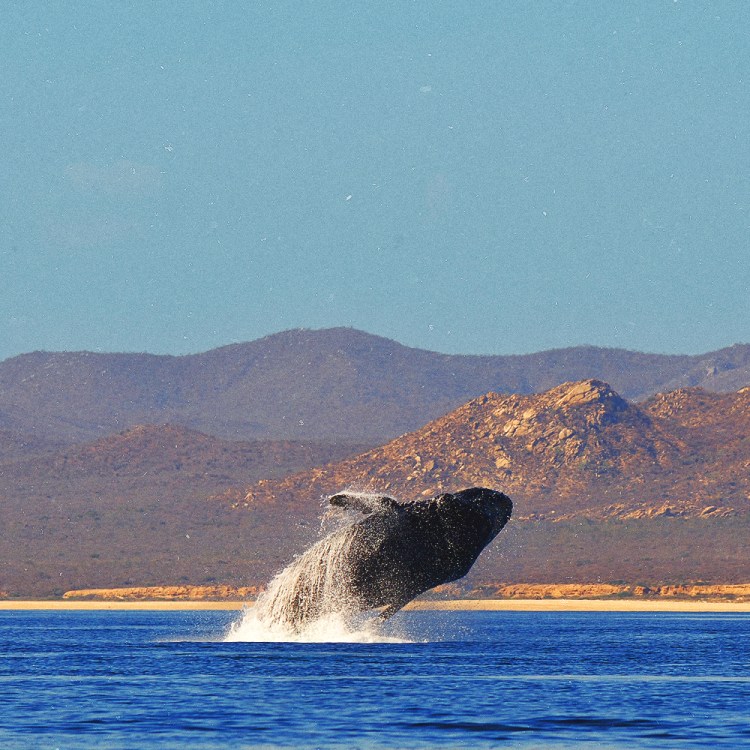
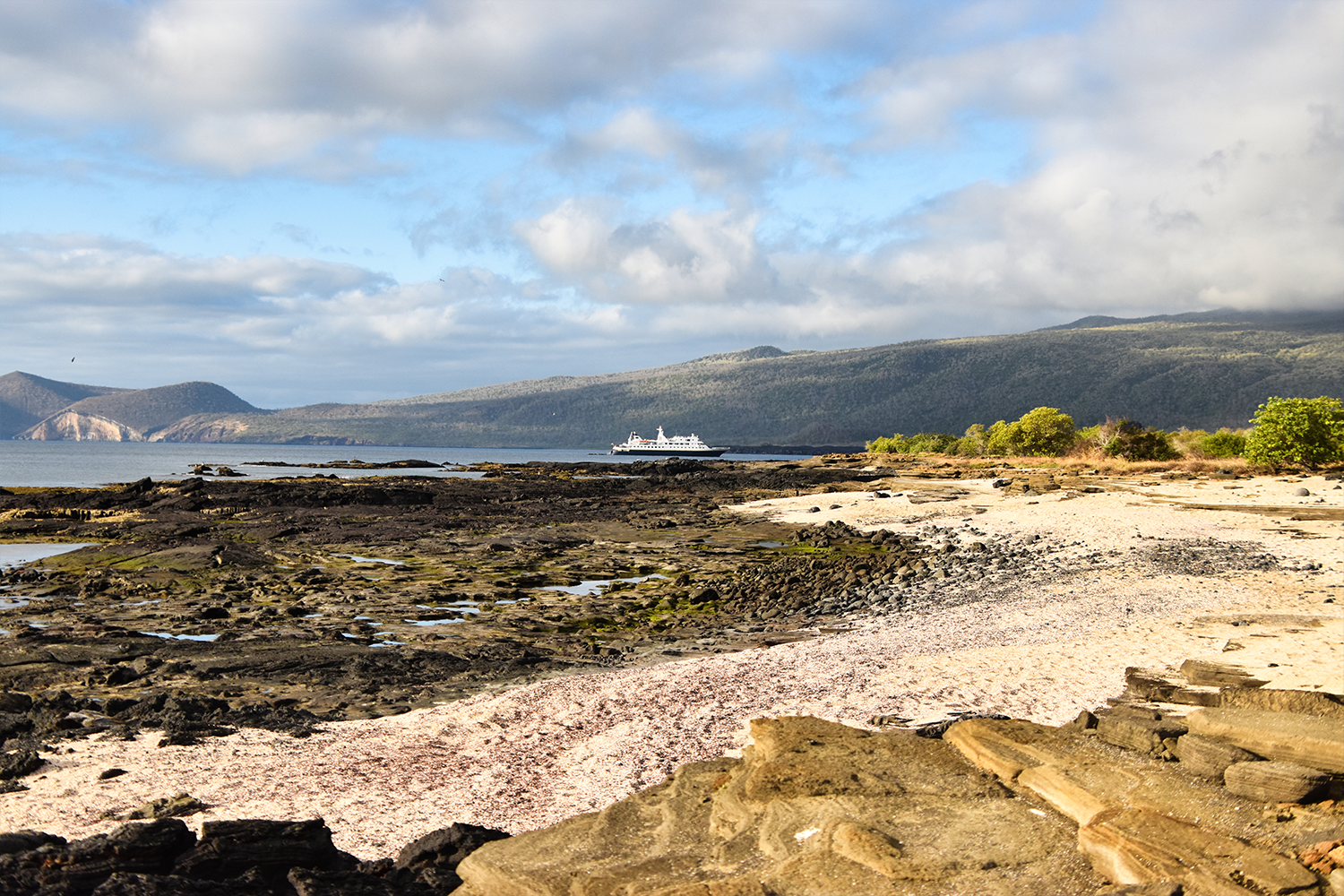
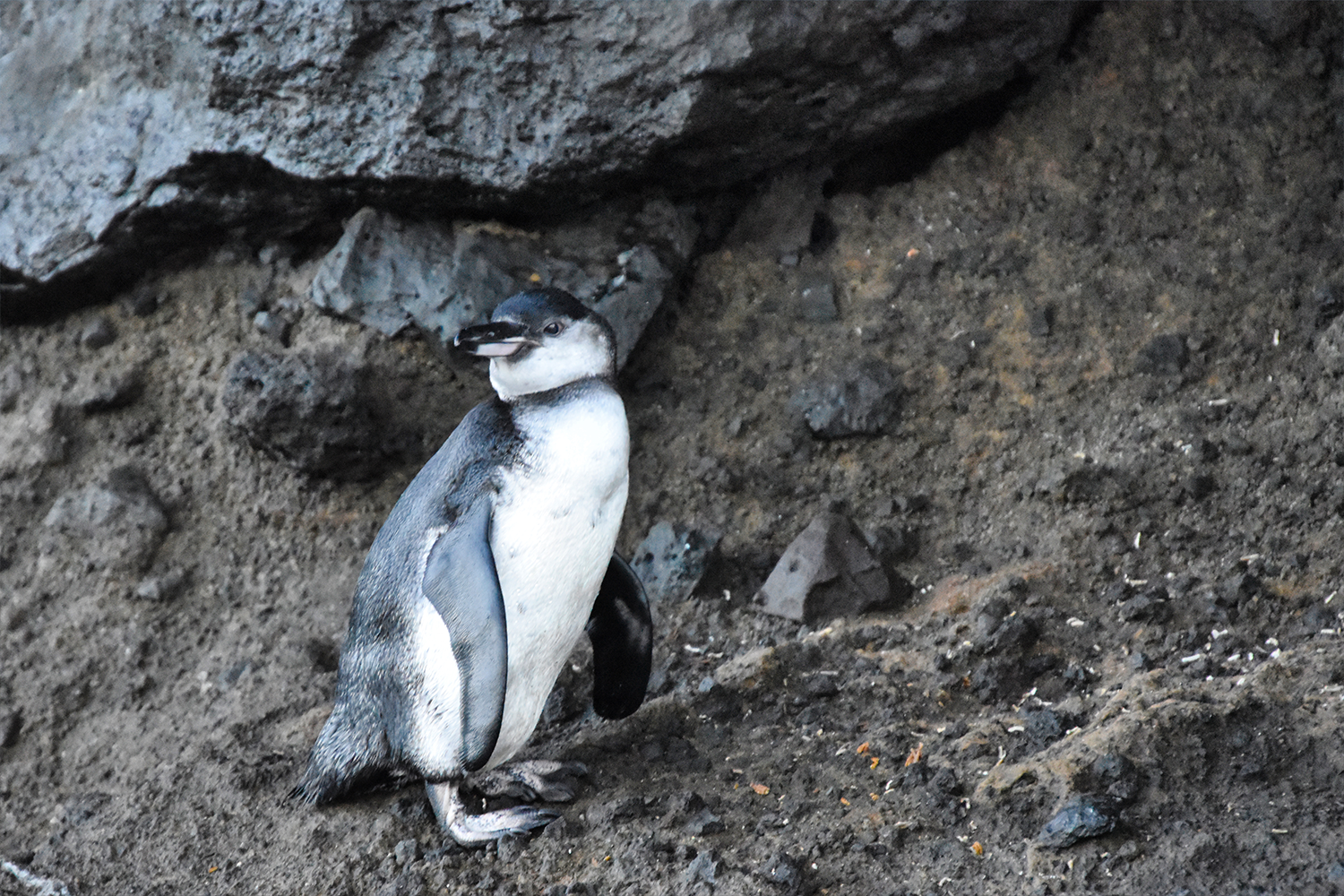
The land before time: That’s how the archipelago of Galapagos feels when you hop off a Zodiac onto one of its islands. Giant tortoises, marine iguanas, pelicans and the only penguins north of the equator — all of them call this landscape of lava beds, layered ash that looks like a cake from Bake Off and bizarre poisonous flora home. A T. rex wouldn’t feel out of place here.
A true bucket-lister, the Galapagos holds a special place for me. I was raised on young-earth creationism, a hardcore, “the earth is 6,000 years old, Noah had an ark and evolution was a lie of the devil” kind of creationism. I’ve long left this idea. When I entered my 20s, I decided to learn more about the biological diversity of the archipelago. That became an early step away from the creation story that dominated my old world, one where evolution was unacceptable. Charles Darwin’s own personal struggle to be public about the evidence in a context that was hostile to it was another.
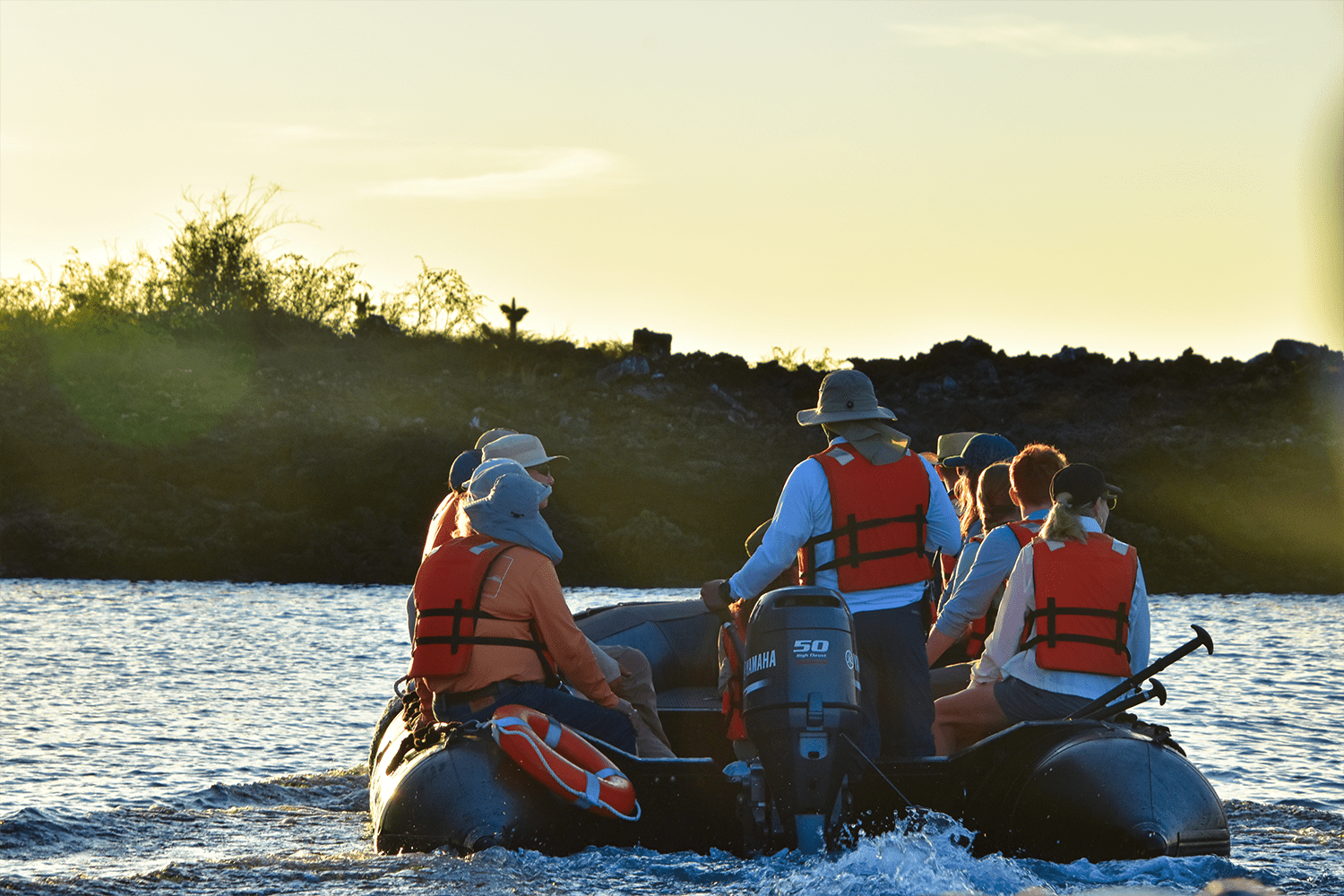
So when I visited the islands recently with National Geographic-Lindblad Expeditions, it felt like a pilgrimage. I came to see a place that not only changed science, but also helped to change me years ago.
But first, what’s so special about the Galapagos archipelago?
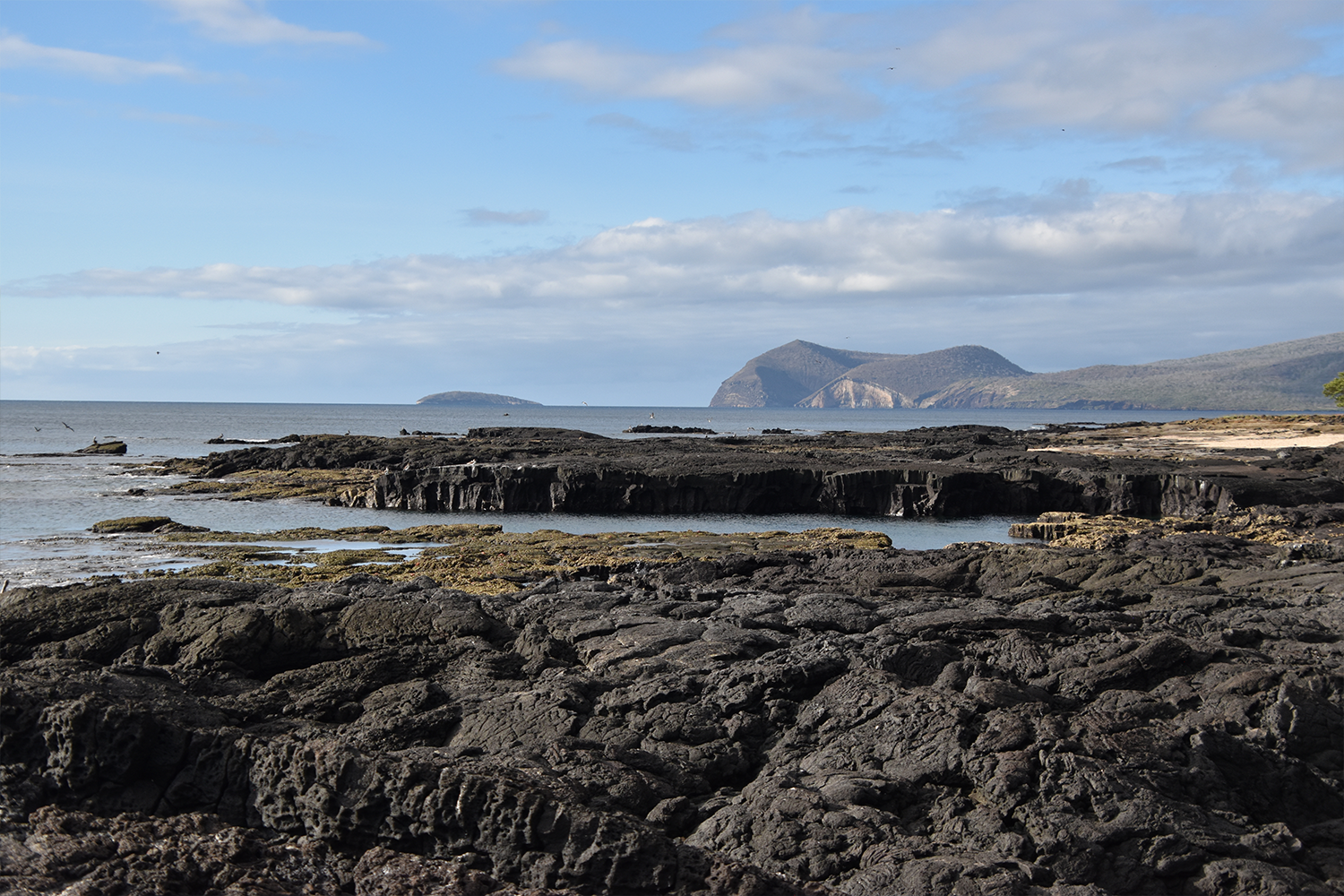
These ancient islands were created over the course of millions of years because of a hot spot in the Nazca Plate, where magma breaks through, forming volcanos. Eruptions of lava and ash formed the islands. As the islands began to drift away, new ones formed. Over millennia, seeds from plant life on the feet of birds or carried by wind and animals drifting on forest debris from the mainland began to populate the islands. The nature of the islands not only secluded them from the continent but also secluded the individual islands from each other. That made each island its own evolutionary experiment.
Charles Darwin’s books, The Voyage of the Beagle and The Origin of the Species, made the Galapagos famous. He arrived at the Galapagos on the HMS Beagle during its 1831-36 journey, serving as the ship’s naturalist. (Side note: I’ve always wanted a pet beagle that I could name HMS.) He collected specimens while the captain mapped South America. The Beagle landed on four islands in the Galapagos in September of 1835: San Cristóbal, Floreana, Isabela and Santiago and only sailed around Marchena, Pinta and Genovesa. Originally a chance to resupply, it became an opportunity for exploration and eventually a puzzle to solve.
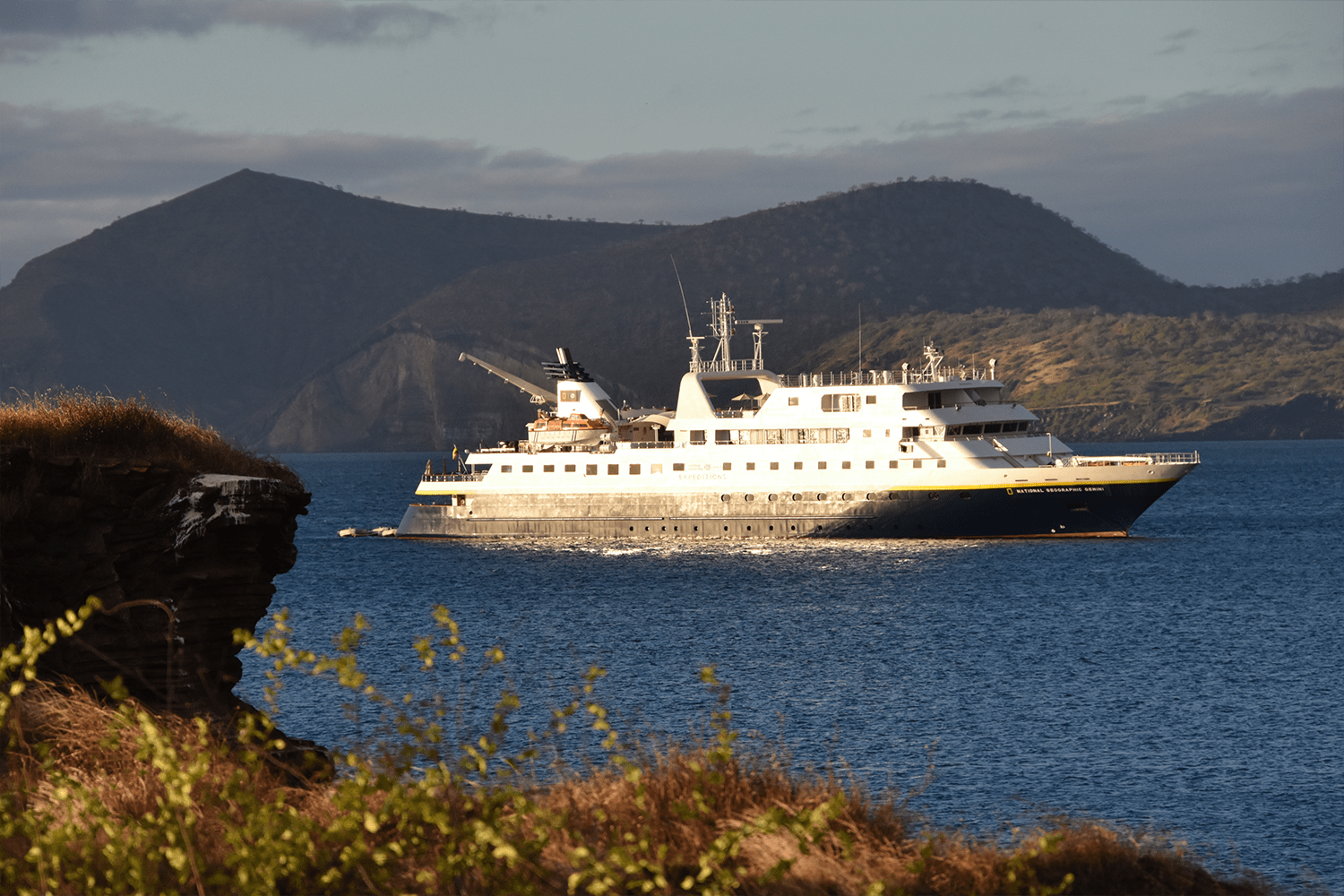
Unlike Darwin on The Beagle, I arrived on the luxe National Geographic Gemini, the newest in the National Geographic-Lindblad Expeditions’ Galapagos fleet. Gemini balances the humidity of the equator and the intensity of island adventures with an elevated stay on board, endless cocktails and gourmet meals. (Also, unlike the Beagle, we didn’t have to eat tortoises to survive.) Lindblad’s expedition included landings on some of the same islands Darwin visited — Isabela and Santiago — as well as others: Rábida, Fernandina, Santa Cruz, Genovesa and Baltra.
Darwin worked; we played. He collected specimens for science; we collected memories for Instagram. But for me, the Galapagos also memorialized a firm break I made a long time ago with creationism.
Young earth creationism holds that the Bible is without error. When science contradicts the Bible, they often crafted alternative explanations. God created “kinds,” said Genesis, which became a very pliable Creationist term meaning that birds are birds and cats are cats, and they never become something else. Only changes within kinds, they might say, create species (different kinds of birds or cats). And all of this rapid production of millions of species somehow happened in less than 6,000 years.

The Journey by InsideHook
Join over 100K travelers seeking trip ideas, the latest travel news, and all the inspiration you need for your next vacation.
Evolution, however, takes its time, relying on natural pressures and small biological changes that have occurred over billions of years, giving rise to new traits that may improve chances of survival and be passed on to future generations. With enough changes, there can even be dramatic differences. Humans, for example, are members of the great ape family (gorillas, orangutans, bonobos and chimps), but our oldest mammalian ancestors were shrew-like and burrowers.
As a living evolutionary lab, the Galapagos is a stark contrast to the rest of the planet.
“The natural history of this archipelago is very remarkable,” Darwin said, “it seems to be a little world within itself,” with its vegetative and wildlife “being found nowhere else.” He was right, but what he never fully realized during his expedition was that in many cases, not only did those unique species not appear outside of the Galapagos, they were often limited to only a single island or two.
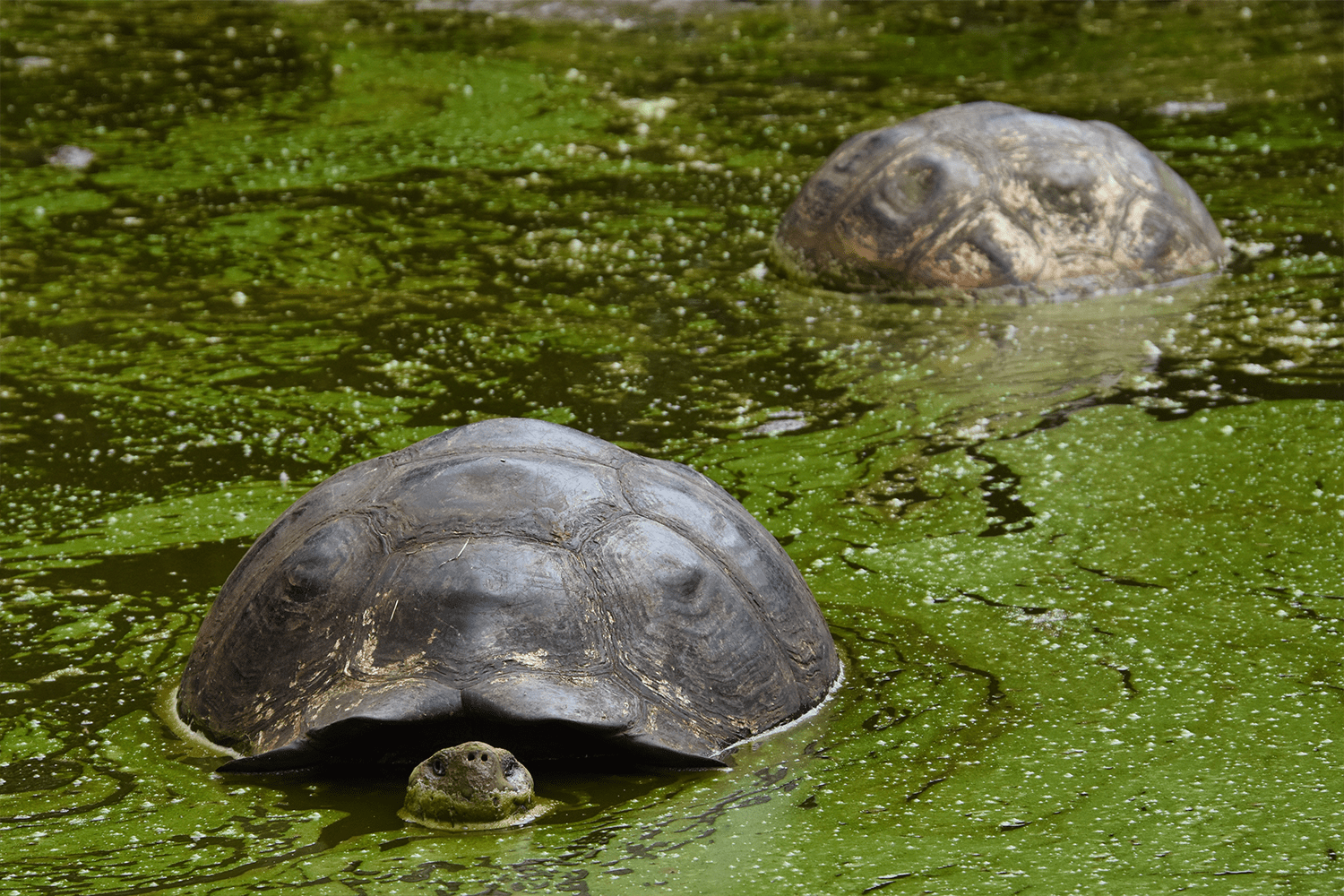
Giant Galapagos Tortoises, for example, have two-types of shells: domed and saddlebacked. For those tortoises that grazed on grassy islands, a dome shell dominates. But for others on drier islands, the ability to stretch their necks upward to eat taller cacti was made possible by a shell adaptation of an arch, giving it a saddle-like shape.
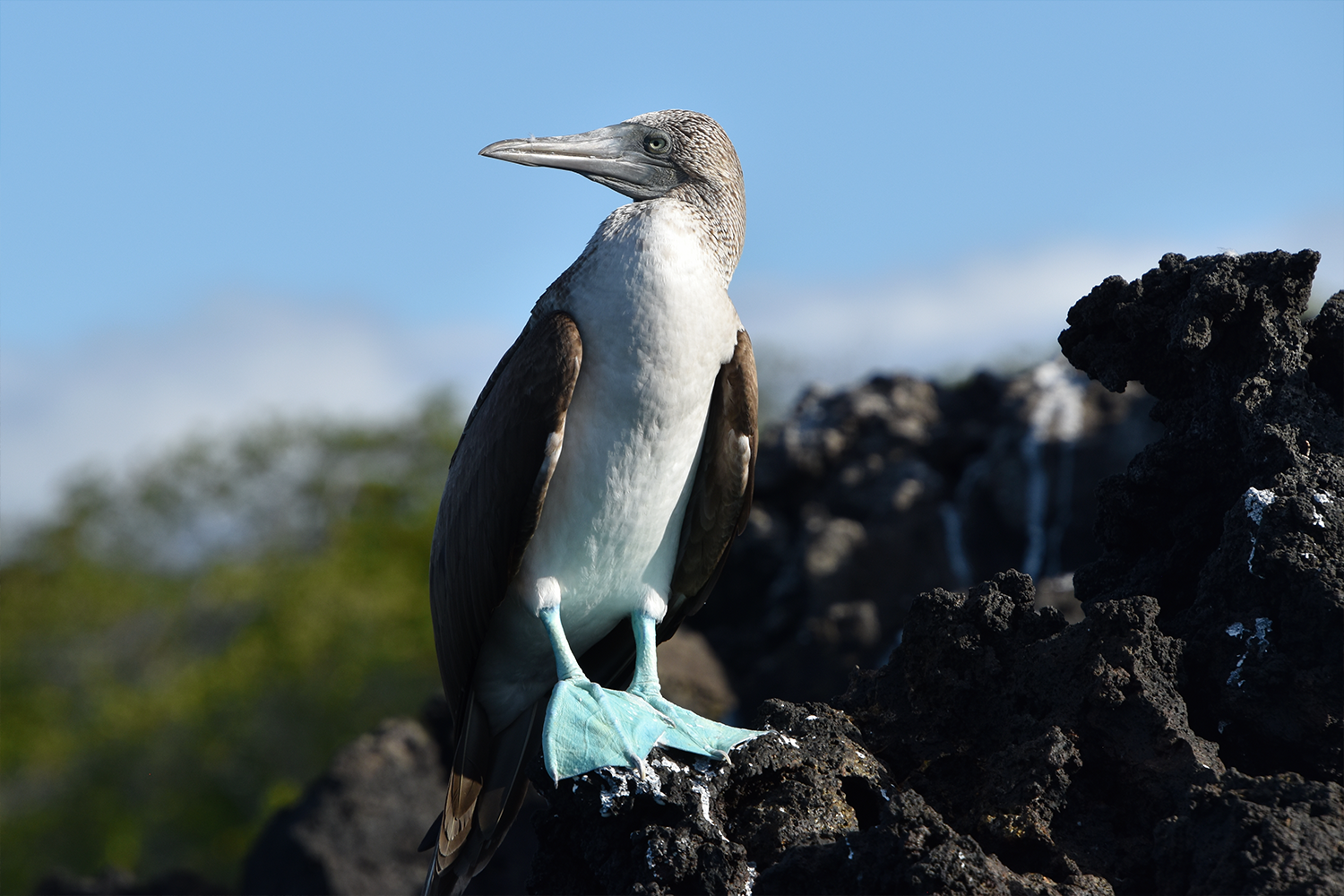
Galapagos finches, which ornithologists now classify in the tanager family, are unique to their islands, with different diets and beak shapes and lengths to accommodate the spaces where they find their food. Sometimes small adaptations are nightmarish: On the islands of Darwin and Wolf, blood-sucking vampire finches use their beaks to break the skin under the feathers of larger birds (like blue-footed boobies) to drink their blood.
Among the many examples of changes, the marine iguana is a standout favorite of mine. Darwin found these lava-rock-black lizards “hideous” and “clumsy.” (They struck me more as friendly little monsters.) They are the only sea-faring lizards on earth. While snorkeling, I watched them swim smoothly and forage for algae on rocks along the ocean floor. Not only are they sea foragers, their bodies don’t have the ability to process the salt, so they’ve developed a unique evolutionary solution: A gland connected to their nasal passages expels salt by sneezing it out.
Travel exposes us to ideas, cultures and strange new worlds. When Darwin returned home, his travels became an identity crisis.
Early ideas of evolution were already in the air in England. Darwin’s friend Alfred Russel Wallace, for example, had come to the same conclusions on the mechanism for evolution: natural selection. Because of potential social backlash, Darwin was reluctant to say humans evolved without divine intervention, which he said felt like “confessing to a murder.” He eventually took that leap in his book The Descent of Man (1871).
Darwin’s willingness to follow the evidence and take the public step of saying the tough part aloud eventually encouraged my younger self to make those steps in my own context. It was a principle I took with me as I earned degrees in religious history. As a result, the more of an academic I became, the less religious I stayed — until I left the faith entirely. (Darwin eventually labeled himself an agnostic.)
My adventure in the Galapagos was a pilgrimage that brought me full-circle to the surreal primal world full of confounding creatures and ideas I had only known third-hand. It was a chance to see an archipelago menagerie, and it reminded me of how amazing and wonderful the world is when we just embrace it as it is.
How To Get To the Galapagos:
The Galapagos is now a national park, and in an effort to conserve it, there are restrictions on who can visit and how. This makes it necessary to have guides who know what they are doing. I was hosted by National Geographic-Lindblad Expeditions, and they have a long-established history in the archipelago. (Lars-Eric Lindblad, father of founder Sven Lindblad, paid the salaries of the park’s first two rangers.) Their team is always local, and their itineraries are exceptional and adventurous. Galapagos tours run throughout the year.

More Like This

This article appeared in an InsideHook newsletter. Sign up for free to get more on travel, wellness, style, drinking, and culture..