The “beer dinner” was a staple of craft beer’s growing relevance in the 2000s and 2010s. These sit-down events paired food courses with varying brews, fostered connections in the beer community and spread the word about beer’s viability for even the finest pairings. But something strange has happened in the last few years: These dinners seem to have vanished.
Is the disappearance from event calendars yet another harbinger of craft beer’s flagging novelty factor? Do people just not care about discovering beer and how it pairs with food anymore? Did these dinners get too expensive? Or are they still happening, but in new, different formats? The answer is actually all of the above.

First, Some History
If you’ve been a craft beer fan for a while, this 2014 dinner menu at now-closed beer haven Jimmy’s No. 43 might ring familiar: A Game of Thrones-themed feast, it paired cheese and honey with Bell’s Oberon, a “dragon’s egg” frittata with Le Trou Diable’s Saison du Tongka, “pigeon pie” (a.k.a. ground lamb) with Ommegang’s Abbey Dubbel, duck with Ommegang’s Fire & Blood red ale, and baked apple crisp with Birrificio Grado Plato’s Strada San Felice chestnut ale. But 11 years has proven to be a lifetime for the craft beer industry, as dinners like this already seem quaint. One pictures gastropubs done up in a lot of wood and rich colors, breweries known for magnums of Belgian-style ales and what Jimmy’s No. 43 owner Jimmy Carbone calls beer food: “pulled pork, sausages, a lot of meat.”
What currently feels dated was practically revolutionary 20 years ago. Breweries were popping up in towns across America, but as Carbone points out, they either didn’t offer food or what they did serve wasn’t that great or interesting. In order for this then still-fledgling industry to succeed, breweries needed to show people how wonderfully beer could pair with all kinds of food. This also behooved beer bars and restaurants with strong beer programs, and collaborations were forged.
“We did a lot of beer dinners in the early days when they were still thought to be unusual,” says Michael Roper, co-owner of Hopleaf, a Chicago spot beloved by beer enthusiasts since it opened in 1992. “People knew about wine dinners, but pairing dinners for beer were still a very different thing.”
Hopleaf started hosting dinners around 2003. Roper says they went really strong from 2005 to 2015. The bar worked with breweries like New Belgium, Dogfish Head, Revolution and Lost Abbey. Around the same time, Carbone was hosting Mahr’s Bräu from Bamberg, Hitachino from Japan, Peekskill Brewery from upstate New York, Carton Brewing from New Jersey and many more. Jimmy’s No. 43 also held a monthly series of pairing dinners where a well-known guest chef would come in, and Carbone would pair their menus with different beers.
Roper says these dinners were successful for both Hopleaf and the visiting breweries. “Maybe 40 or 50 people would show up, and then they talked about the dinners, and other people interested in beer wished they’d gone, and the word just spread,” he says.

Is Craft Beer Cringe Right Now?
Years ago, loving an IPA meant you were hip. What happened?“In the beginning, there was a lot of excitement because there were all these new, unique styles,” says Anne Becerra, a certified cicerone, consultant, educator and event organizer in the beer and hospitality industries. “Everyone wanted to showcase how well they all worked with food, how exciting these beers were and how they were on par with the best cocktails and the best wines.”
Not only was craft beer new enough of a concept that breweries and bars functioned with some level of consumer education built into their operations, but the industry was also still small enough that breweries were motivated to expand their presence in different parts of the country. Today, nearly 10,000 breweries in the United States add up to almost every city having at least a couple of options, and most breweries are focused on hospitality in their immediate area rather than national distribution. Roper says that in the beer dinner heyday, when breweries launched in a new market, they’d drum up interest with tap takeovers, brewer meet-and-greets and these multi-course meals. With the smaller number of larger, wider-reaching breweries at the time, there also existed an element of celebrity culture.
“Certain brewery owners became a little bit like rock stars,” Roper says, citing examples like Brooklyn Brewery brewmaster Garrett Oliver, Dogfish Head founder Sam Calagione and Allagash Brewing Company founder Rob Tod. Beer fans knew who these brewery owners and brewers were and relished the opportunity to hobnob with them at these dinners.
So, What Exactly Happened, and When?
Much of the decline in beer dinners boils down to proliferation, of both the dinners themselves and the breweries. As the number of breweries in the country skyrocketed, there were too many to keep up with. These breweries now tend to stay local and don’t need to introduce themselves to new markets with elaborate feasts, instead concentrating on food and events in their own taprooms. For the brief period during the brewery explosion, bars and restaurants attempting to keep pace led to a glut of events. But how many $70, $80, $90 dinners could a person attend in a month? At what point did the shiny new thrill of discovery drop off?
It didn’t help that as beer dinners became so ubiquitous, their quality at too many venues took a beating.
“The beer dinners that worked best were the ones at places that had the hospitality aspect down and could communicate well with their customer base,” Becerra says. “But restaurants and bars that may have not had that connection started to look at [beer dinners] as a way to fill an empty night — just throw it on the calendar and sell tickets. It wasn’t as curated or tailored, and these events started getting expensive. After going to one that wasn’t successful, people would think one beer dinner represents all beer dinners.”
Rising ticket prices reflected rising costs for venues. Roper says Hopleaf reached a point where those costs were no longer being recouped. “When you do a beer dinner, you’re developing a menu for that,” he says. “The prep, the labor, the additional promotion — it gets very expensive. Places started charging over $100 per person.”
When beer dinners were booming, breweries would supply the beer gratis or at least deeply discounted, which made the dinners profitable even at somewhat lower ticket prices. But as the demand multiplied, breweries had to start charging. That drove ticket prices up, which impacted attendance.
With craft beer no longer novel and people no longer needing to be sold on its place at the dinner table, neither the venues nor the customers could justify the sticker shock of beer dinners. But these events didn’t actually die — they shape-shifted.
The Beer Dinner, Reimagined
“I see a lot fewer venues wanting to do generalized [beer dinners], but I am seeing more people wanting to do events with specialized culinary concepts,” says David Nilsen, an advanced cicerone, beer writer and educator who leads beer-driven events. “Events have gotten more experiential and conceptual. Have a beer while you do this specific thing, like painting.”
Nilsen also points out that people have gotten more selective with their spending post-Covid. “People are less likely to see a five-course dinner and think, ‘I don’t even know if I’ll like everything on the menu but sure, let’s spend $80,’” he says. “But when it’s a specific thing they know they like, like cheese or chocolate, it tells them who the event is for.”
Gen Z, in particular, responds to personalization, and consumers at large expect some level of this. They get it — craft beer is good, they can drink it with dinner. They’ve got a million options. So a brewery or beer bar has to stand out with unique and engaging events.
Nilsen recently hosted “Chocolate, Beer & Chocolate Beer.” At the time of writing, Becerra was about to lead a beer and breakfast pairing. Early in 2025, Brewery Ommegang held its own beer dinner with a 1980s murder mystery theme. When Girl Scout cookies make the rounds each year, you’re likely to see beer pairings hosted at places like Right Proper Brewing Company in Washington, D.C.

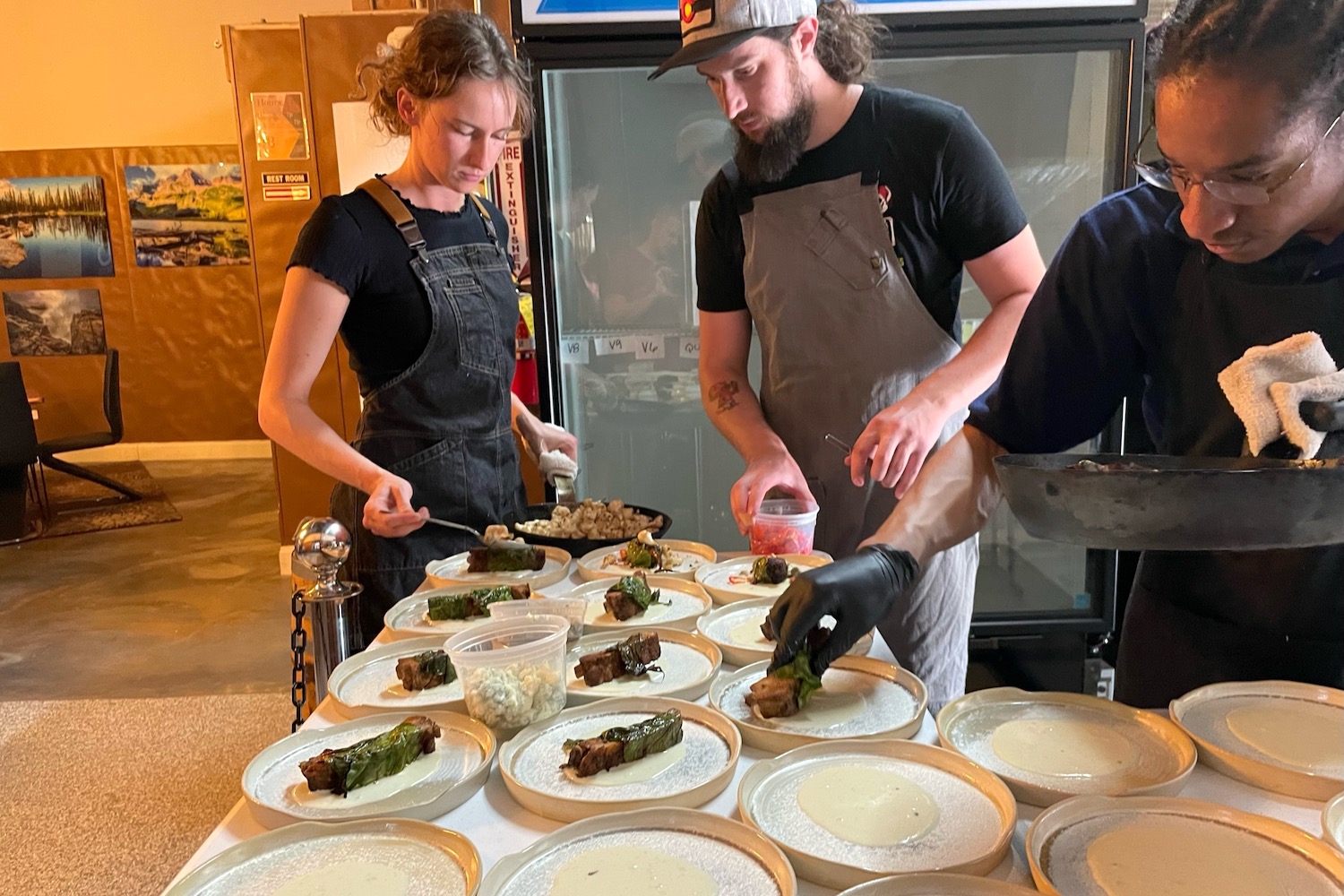
A focus on local ingredients also appeals to both beer enthusiasts and foodies who might appreciate beer from a culinary perspective. In and around Denver, Jared Kendall runs Thistle & Mint, a catering operation built around showcasing Colorado ingredients. “Colorado is so rich in craft beer,” he says. “We source everything locally. And I didn’t want to do wine dinners because the wine industry in Colorado is so small, it limited my options. When I started six years ago, there were over 350 breweries in Colorado. Now there are over 500.”
Costs for a full, multi-course beer dinner only continue to rise. But Kendall says he hosts them as marketing for his catering company. By the time he pays a brewery for its space and beer and buys his ingredients, these dinners aren’t profitable, despite drawing a crowd, often with repeat attendees. But they’ve proven an effective way to reach both beer geeks and more food-interested guests who may book Thistle & Mint for their future events.
Within the craft beer industry, beer dinners don’t stand to return in their original iteration. In order to keep up with today’s consumer, events must either narrow their focus with specialization or open things up entirely by weaving in wine and spirits, reflecting the lack of category loyalty that modern imbibers have. Thankfully, today’s pairings are also more likely to venture into more diverse cuisines. Anyone who attended their fair share of primetime beer dinners has likely had enough märzen and bratwurst for one lifetime.

More Like This
This article appeared in an InsideHook newsletter. Sign up for free to get more on travel, wellness, style, drinking, and culture..