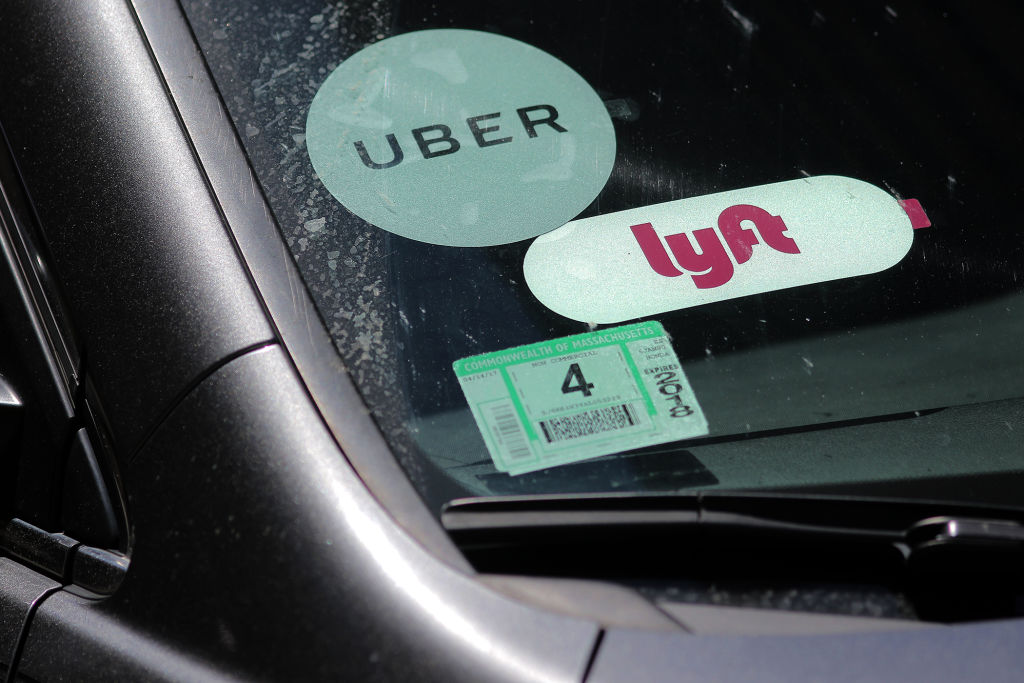
On Sunday Uber and Lyft fired a Missouri driver who was believed to have livestreamed hundreds of rides to thousands of followers without telling his passengers, NBC News reports. According to a report published by the St. Louis Post-Dispatch, Lyft said it had “deactivated” the driver’s account, while Uber said it had ended its “partnership” with him. The driver, Jason Gargac, 32, is reported to have used the livestreaming platform Twitch, which would not comment on specific users but said in a statement that it “does not allow people to share content that invades others’ privacy.”
Gargac told the Post-Dispatch that he used the livestream for safety and for what the newspaper described as “people-watching.” Was it legal and ethical for him to livestream the unsuspecting passengers’ rides to about 4,500 followers, who, among other things, rated the passengers’ looks?
Missouri requires consent from only one party to a recording for it to be legal. Daxton Stewart, a journalism professor at Texas Christian University in Fort Worth and who’s studied the legal implications of livestreaming, said that there is no case for criminal charges to be brought against Gargac. A civil action could be successful if the livestream revealed something private, like a sexual encounter or medical information, NBC writes. Gargac may have also made money from people’s images since the Post-Dispatch said he made about $3,500 from Twitch subscriptions, donations and tips.
Donald Heider, the founder of Center for Digital Ethics and Policy at Loyola University in Chicago, said that though the livestreaming may have been legal, it was “clearly unethical.”
“He should have been notifying people and giving them the option to opt in or opt out,” he said to NBC.

More Like This




From bleeding-edge menswear and wellness reportage to dining, dating, culture critique and beyond, all brought to you in their respective fields. Choose your favorites and sign up now.