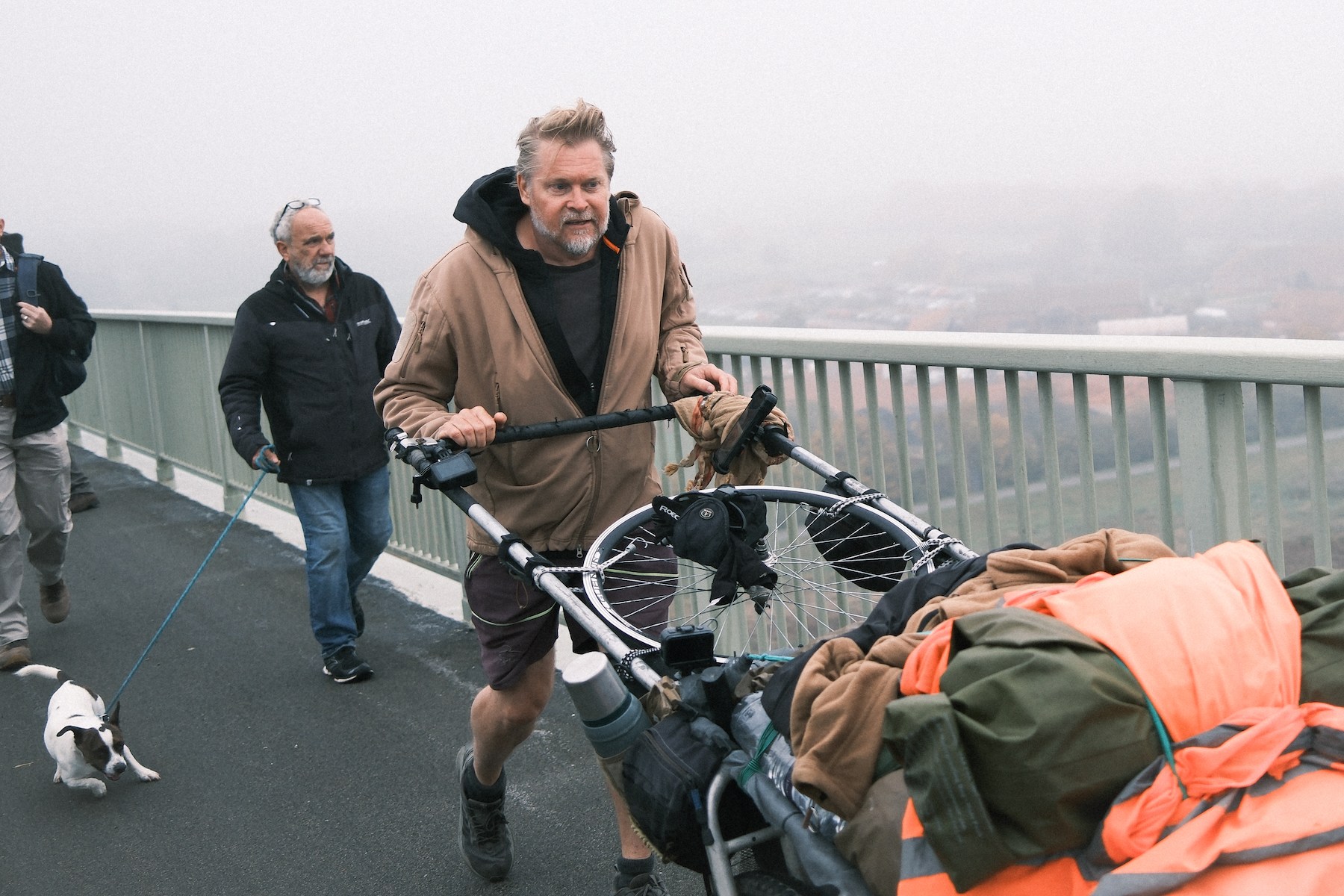
Karl Bushby’s only been home for a little over a week and already he looks a bit antsy.
At 57, the Yorkshireman spent almost three decades walking from the southern tip of South America back to his childhood home of Hull in the northeast of England. That means north through Central and North America, west across the Bering Strait by foot, then down through Russia and China and some of the most treacherous terrain imaginable. After so long away, and in such harsh conditions, civilian life — including cups of tea at his mum’s house — must seem like landing on Mars.
Bushby originally envisioned his literal globe-trot would take 12 years, but his 31,000-mile “Goliath Expedition” eventually came to an end on November 2 after 28 years and one day. It was half a lifetime ago — November 1, 1998 — that he set out from Punta Arenas, Chile. A former soldier with the British Parachute Regiment, Bushby was just 29 when he started. Now his beard’s gone gray. The odyssey wasn’t a distraction from life; it became his life.
As Bushby figures out what’s next after a lifetime of walking, I caught up with him to hear about the original impetus for the journey, his close calls with death and his advice for those considering following in his many, many footsteps.
Tom Ward: How does it feel being back home?
Karl Bushby: There’s a lot of trepidation in coming home. I struggle because it’s such an unusual experience after 28 years away. I’ve been here a week or so, and I still don’t have a bank account or a working phone number. I’ve got to slowly inch my way back into the real world. I’ve never been a civilian. I went from school into the army [and then walking around the world]. At the age of 57, I now have to grow up and get a job.
What made you want to become an adventurer?
I’ve always had that affinity for horizons. I found myself in a situation in the mid ’90s where I’d suddenly got divorced. As a paratrooper, we were living through some of the most peaceful times in the world, and the regiment wasn’t being used. So I was looking for something more challenging.
The parachute regiment is all about physical ability and how far can you go, and being independent, having stamina, endurance, all that good stuff. We started having conversations like, “How far could could you go if you just left home and started walking?”
We ended up with this monster route from the U.K. all the way to the bottom of South America. Theoretically, you could do that without using any form of transport. Everyone said it was a dumb idea, but I knew I could do it. It was a sort of “hold my beer” situation.
If I wanted to follow in your footsteps, where would I start?
It starts with conversations. Those conversations turn into lines on maps. Lines on maps turn into math: distance, time, speed. Before you know it, you’ve got some kind of a plan. For me it took three or four years to get to the point where I realized, this does not lend itself well for sponsorship. That’s the hard bit. Then, you’ve got to start.
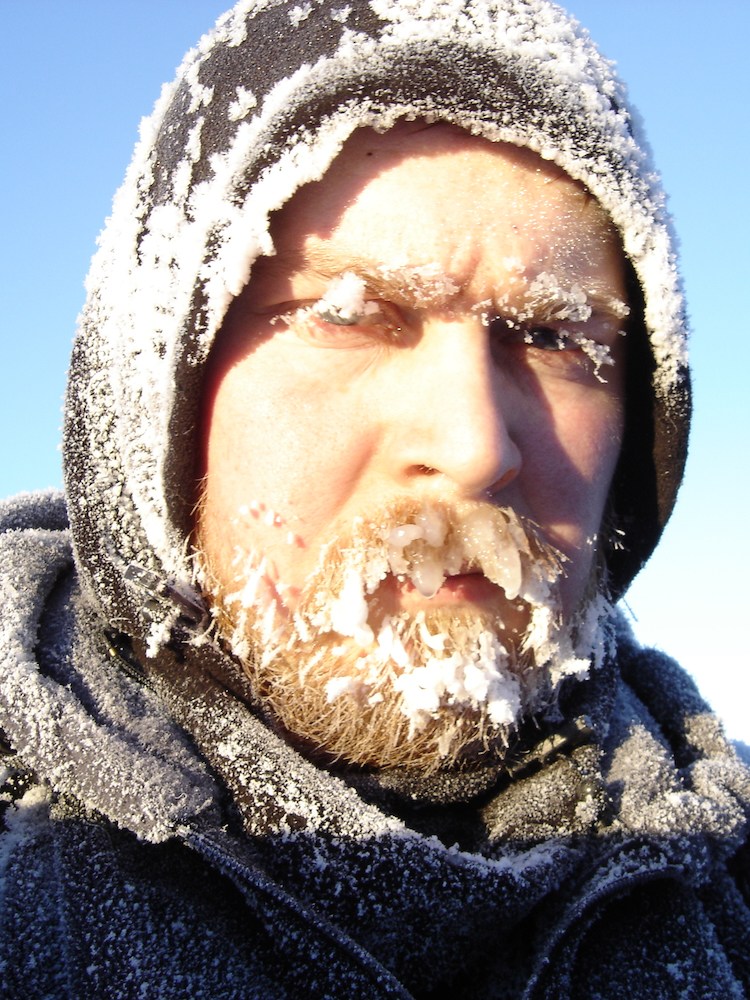
[T]here were moments where I thought I was going to die. Walking off a cliff in a whiteout, or falling through ice in the middle of the night in Alaska, for example … that really is the adventure.
– Karl Bushby
Do I need to have served in the military to become an adventurer like you?
There’s plenty of people that do this stuff without being in the military. I don’t think I would have done this if I hadn’t been in the military. The amount of self confidence required to step out into the world with nothing more than 500 bucks is almost delusional, but the army is really good at instilling that in young soldiers, and making them feel bulletproof.
Then, there’s the confidence that comes with the physical training. With the parachute regiment, I’ve been taken to my limits and beyond so many times that I understood in fine detail what I was capable of. And we had trained in all the environments that I was going to find: jungles, deserts, Arctic warfare. So I had the basics under my belt.
What gear would I need?
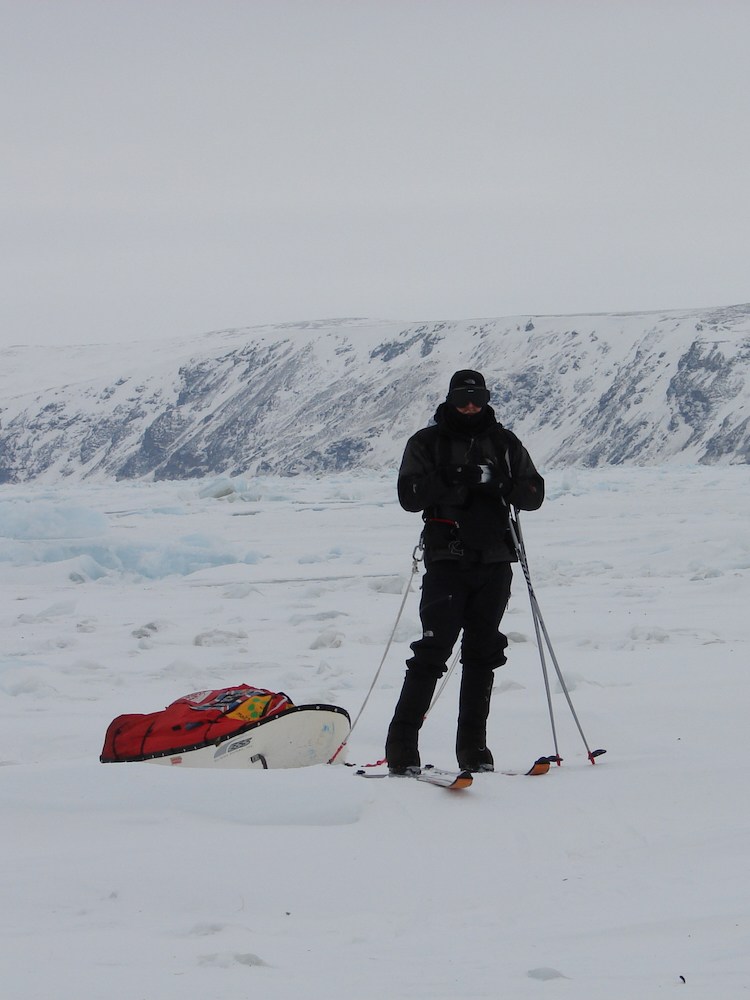
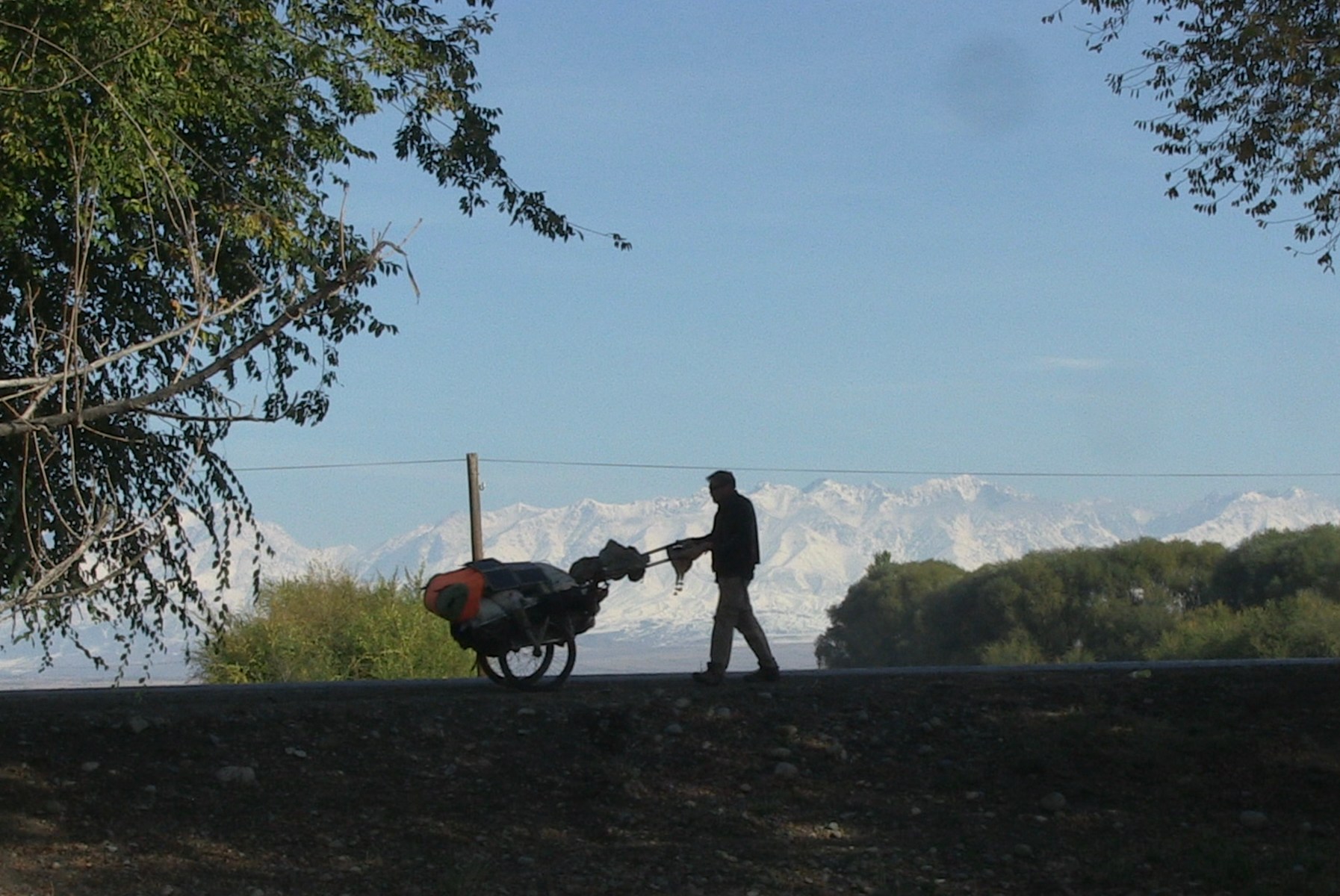
Your basic camping equipment, but also clothing that’ll survive freezing conditions. We were doing altitude, going over the Andes, so we needed to be prepared. [Editor’s note: When Bushby uses “we” in reference to his journey, he’s talking about himself and his trolley, which he calls “The Beast.”]
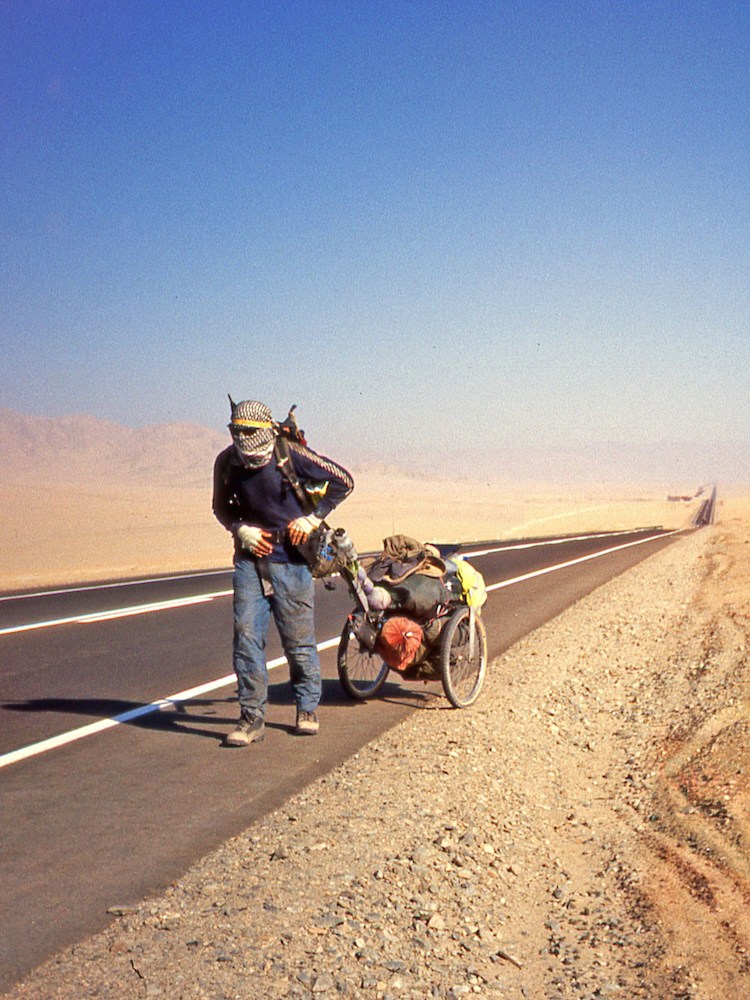
I built a machine: The Beast. I’d taken a golf trolley and converted it into something that could carry 100 pounds of gear, because I would have to carry a lot of food and water, and you don’t want that on your back for years because your knees, ankles and hips are going to get wrecked.
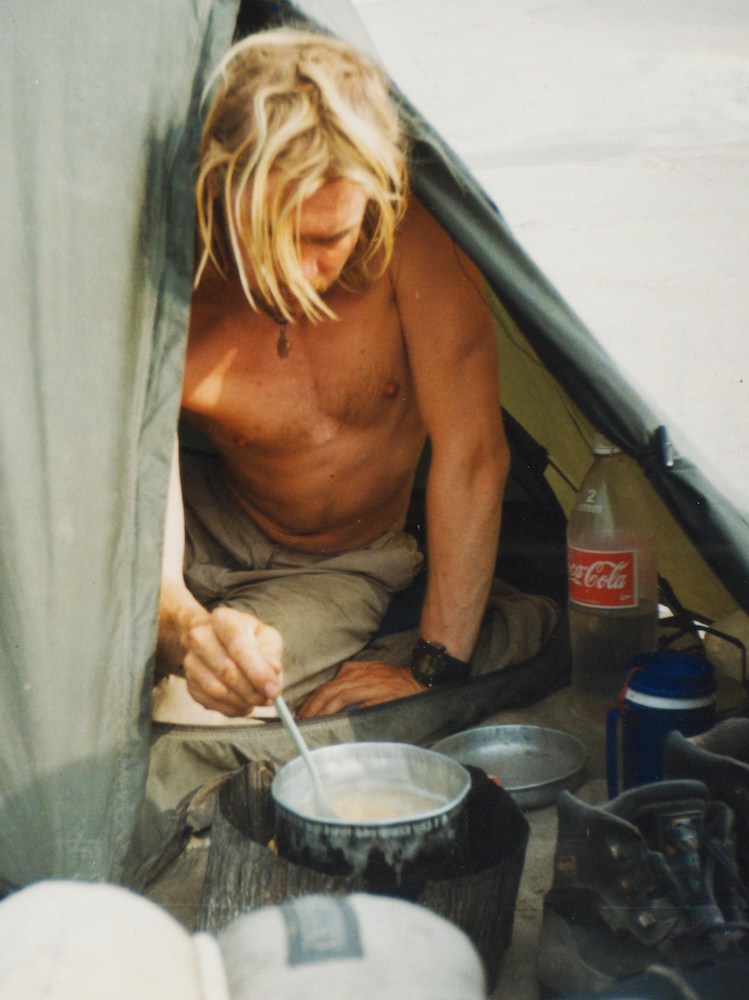
Feet wear and tear is obviously going to be an issue. I’d been through various types of footwear, and eventually I settled on Merrell as being the ones that work for me. They were very comfortable and had extra width in them, so they fit my foot profile really well. You’ll lose a bit of skin and blood along the way for sure, but you’ll figure it out with trial and error.
What’s the toughest element on your body?
I have been almost inconceivably lucky. There were countless days where it felt like, there is no way I am going to make it through today without getting hit by a car. There were so many close misses.
The only real injuries I’ve had have been a broken rib in Mongolia, and one point in remote Patagonia where I slipped with my Leatherman multitool and jammed it into my wrist. I pulled it out and had blood jetting out in rhythm with my heart. That’ll get your attention.
I remember just slamming my thumb on it kind of wide-eyed, and then having to lay down and do breathing exercises because I felt very faint. I took a little while, and put enough pressure on it that next time I released my thumb the blood bubbled and frothed. Then I managed to get three stitches in it and splint it.
I carried on for a day or two until I got to a town. Turns out I had nicked the artery. A few millimeters more, and I probably wouldn’t have gotten out of the desert that day.

The Adventurer’s Guide to Staying Calm in Any Situation
They’ve led Everest expeditions and escaped shark-infested caves. Here are their 6 lessons on keeping your cool.Are you afraid of death?
Yes! I’m totally normal and everything I did was a calculated risk. I had a window of opportunity in life to make that decision. You get one life. What are you going to do? I didn’t want to live with regret, not finding the strength to dive into something like this.
But there were moments where I thought I was going to die. Walking off a cliff in a whiteout, or falling through ice in the middle of the night in Alaska, for example. There were so many episodes where things could have gone horribly wrong, and that really is the adventure.
Did you miss home?
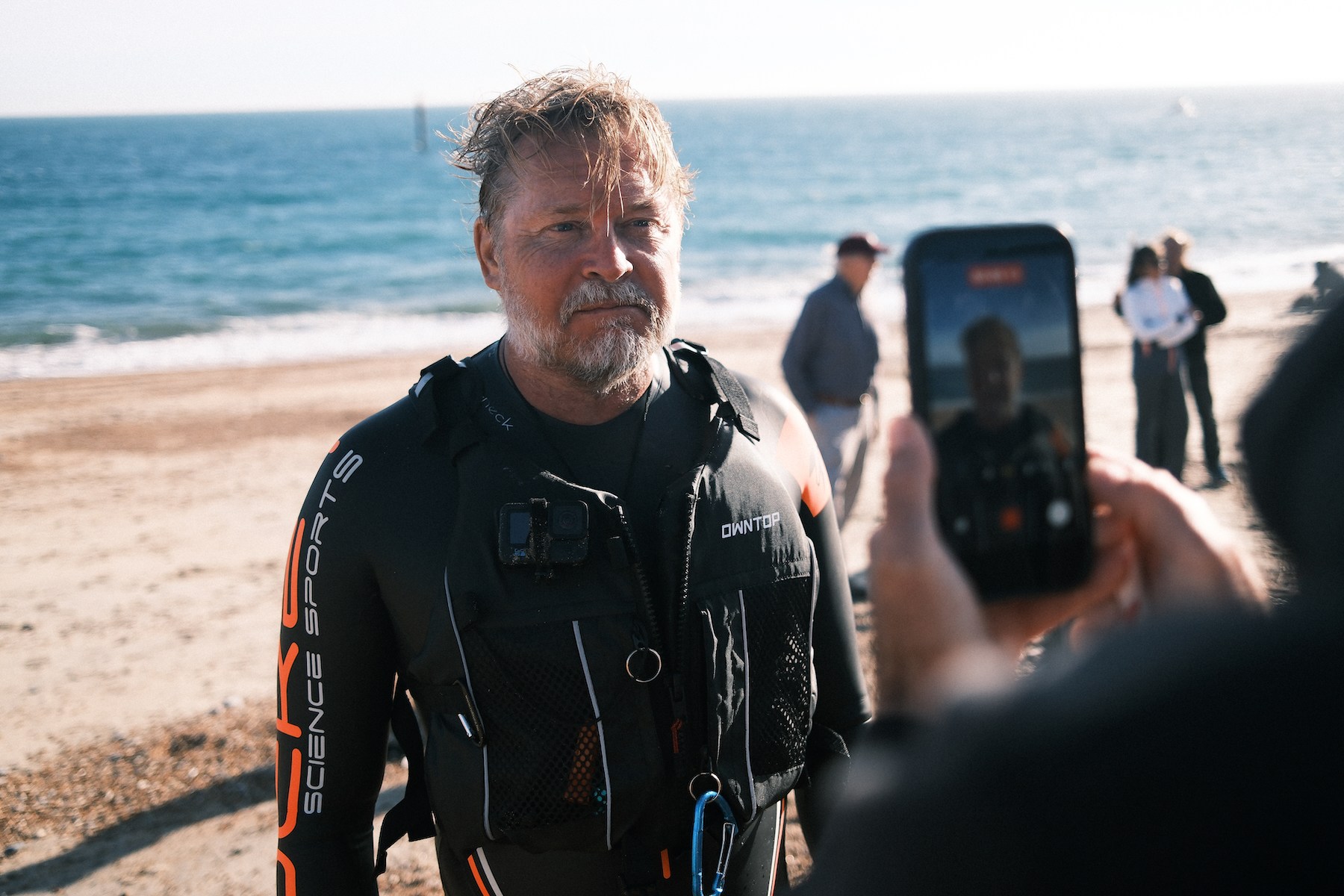
The concept of home is a little skewed. There wasn’t anything really to go back to. I didn’t have anything at home, other than family. I missed it to an extent, but having spent life in the army, you’re away from home a lot so you’ve kind of gotten over it. I remember not really seeing much of my own father [who also served in the parachute regiment] when I was growing up because he was always deployed. That’s army life.
What kept you going when times were tough?
I had put everything into this. At no point did we think of quitting. There was always just the next waypoint to get to, the next problem to solve. It was just almost like a job. There were times where we seemingly faced insurmountable odds, and that kind of made me question whether or not we’re going to be able to pull this off. We had to wait out the pandemic, the global financial crisis. But we just stuck at it. It’s my favorite word: tenacity.
What’s next?
Long term, I don’t know what the future looks like for me. There are things I want to focus on, like aSIMetric, my nonprofit designed to get kids interested in science. I’ve also done a documentary with Werner Herzog, and I’m supposed to be writing a book. So yeah, there’s a whole new reality that I get to play with.
More Like This
We're always on the scene eating, drinking and traveling near and far to bring you the best of what's happening out in the real world. Sign up for IRL now.