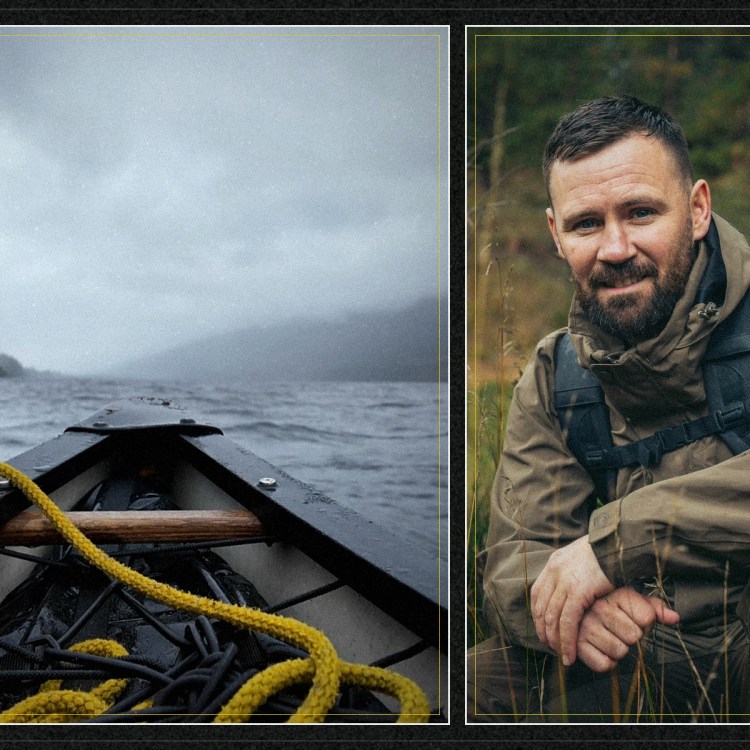
It wasn’t the cold that took Steven Kelly’s breath away. It was the sudden surprise of finding himself underwater — the last thing you want on a canoe odyssey, especially in the freezing lochs of the Scottish Highlands. But in some ways, flipping the boat had been inevitable.
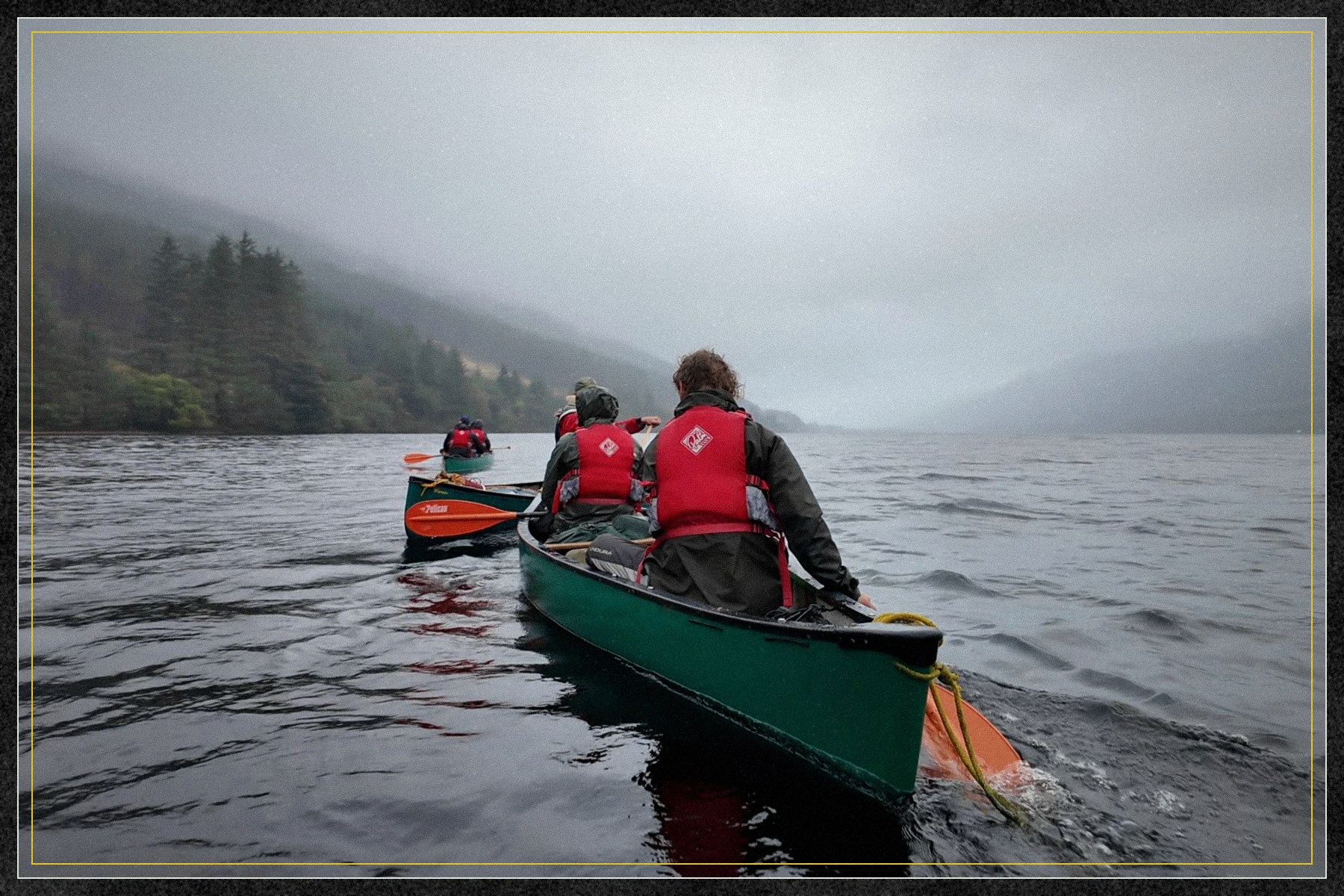
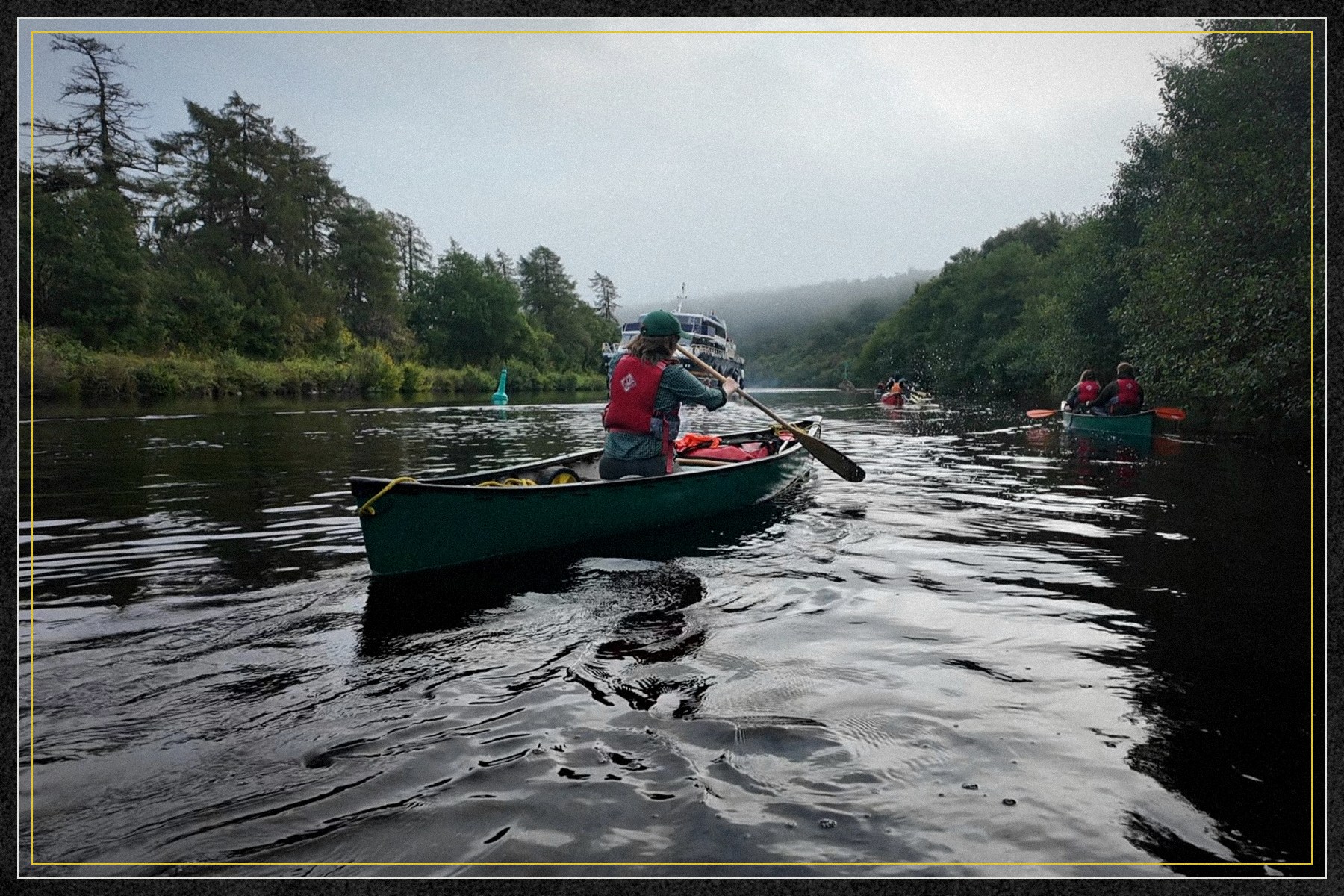
Scotland is known for unpredictable weather, and Kelly’s five-day expedition along the Great Glen Way was no exception. Sharing a canoe with a man he’d met just a few days earlier (one of three pairs, for a total of three canoes and six men and women), Kelly found himself battered by wind and white horses, the frothy waves racing towards him resembling a Roman cavalry charge. That’s when he could see at all. Curtains of torrential rain and hailstones lashed down on the expedition.
Worse, paddling out on the waters of Loch Lochy, they were still at the very start of their trip. On a good day, the 12.5-mile loch should take two to four hours to cover. This was not a good day.
“The wind was so bad, and we were all quite inexperienced in our canoes,” Kelly tells me from his home in Liverpool. A former solider in the British Army, 40-year-old Kelly was used to inhospitable terrain, but boats were a blind spot.
With the wind blowing from starboard, Kelly and his companions were being driven to port. Waiting for them there was the slope of the near bank, where water rushed in a sudden fall. “It was like being inside of a washing machine,” Kelly recalls. Caught between the two currents, his boat was flipped over like a toy.
As expedition leader, he was responsible for the five other souls along for the ride. Civilians all, they’d signed on for a bit of adventure. Having appeared on Bear Grylls: Wild Reckoning and Naked and Afraid (twice), Kelly was the man to lead them. If he could get himself right way up again.
“I thought I was going to drown,” he says, “but it’s all part of the experience.”
Even soldiers get scared, but Kelly couldn’t let panic overcome him. With rocks and boulders along the bottom of the loch, he knew breaking an ankle was a real possibility, but the only option was to go into focus mode. His partner in the canoe was not used to outdoor conditions and had been pushing himself out of his comfort zone, doing his best to immerse himself in the trip. Kelly had to stay calm to help them both out of the scrape.
Thankfully, the canoe had not capsized on top of them, so their heads were free. Together, the pair remerged from the water, dragged the canoe to shore and dumped it out. As the others straggled onto land, they made a decision: hunker down for two days and wait out the storm. The rest of the Great Glen Way would be waiting for them — if and when the weather cleared.
Soldier of Fortune
Kelly loved being in the military. Born in Liverpool, he signed up to the elite British Army Commando unit at 16. For him, it was a way to adventure and see the world. The experience met his expectations and then some, forcing him to train in the toughest conditions and preparing him to deal with challenges like floods, wildfires and extreme weather.
Best of all, by whisking him off to remote mountains, rainforests and deserts, the army gave him plenty of opportunity to undertake extracurricular adventures in some of the planet’s most intense locales. “I was always doing expeditions,” he says. “I was skiing, hiking and doing everything I could in various jungles, rock climbing in the Dolomites and even Arctic mountain environments.”
Growing up in an economically depressed city, Kelly describes his previous activities as “running around Liverpool, being a scally.” The army fed his sense of adventure in a way that his upbringing couldn’t.
When he left the military after 23 years, he wanted to make sure he had his future set up, aware that so many former soldiers suffer mentally and financially without the routine they’ve been used to for most of their adult life. His survival business South West Survival, through which he’s come to be known as “Survival Ste,” was the logical next step. Interested in pitting yourself against the elements? Want to see what you’re made of? Through command-style group expeditions, Kelly can help.
Still, canoeing the Great Glen Way was a first, even for him.
Keep on Paddling
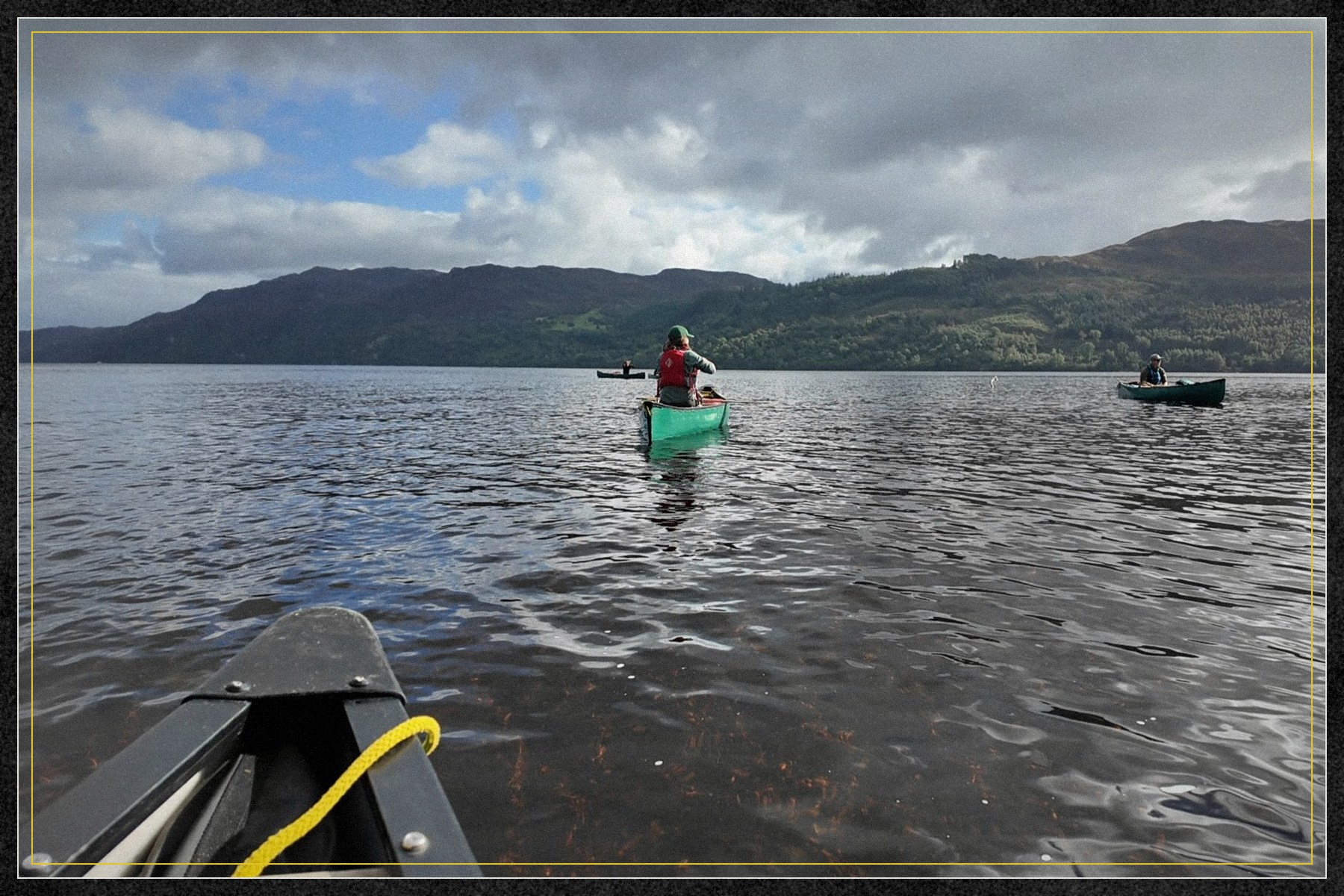
Running through Loch Lochy, Loch Oich and world-famous Loch Ness, the Great Glen Way usually takes five days and four nights to paddle. Despite the early near-washout, Kelly and his crew made it, lugging their gear with them as they paddled through miles and miles of Scottish water.
“You’re setting up camp and fending for yourself. It was a crazy experience,” Kelly says, having purposefully selected the expedition to challenge himself.
Even when they weren’t capsizing, they were soaked through with spray. “Getting dry would be the first thing we’d try to do when we made camp,” he says. It didn’t help that the expedition took place in mid-October (though to be fair, the weather in Scotland is always pretty tempestuous).

Inside Scotland’s Most Beautiful (and Brutal) Trail Race
The Highland Ultra is a 78-mile odyssey through rugged terrain — and ends with a pint at Great Britain’s most remote pubThere were moments of beauty, too. Kelly describes the Highlands as looking like “something from Lord of the Rings.” On windy days on the lochs, the three canoes would tie together, using a tarp as a sail to push them along. It was in these conditions that Kelly remembers having the best conversations with the other folks on the trip.
Naturally, it was in these moments — particularly when crossing the 22.5-mile-long, 755-foot-deep Loch Ness — that their conversation turned to local legend. “Loch Ness has more water than all the lakes, rivers and streams in the U.K. combined,” Kelly says. “It’s such a deep loch that we did start to speculate about what could be below us.”
He’s referring to the infamous Loch Ness monster, of course, the famous beast believed by some to be a remnant of prehistoric times. People have made entire careers of searching for “Nessie”; despite the odd photograph or anecdote told over a dram of whisky, objective proof of her existence is yet to materialize. Still, like Bigfoot or Atlantis, it’s a nice story to ponder around the campfire. Or, if you’re part of Kelly’s group, over the 14 hours it takes you to paddle across the loch.
“We were all looking for it,” he says. “We were all saying, ‘There’s got to be something in this water,’ thinking we’re going to see some crazy animal.”
Nessie didn’t make an appearance. But after five days, the expedition was complete — without any further potential drowning incidents. “The trip was tough, endurance-wise, especially because you’re working with people of different abilities,” Kelly says. “But that’s what it’s all about.”
That, and the feeling of accomplishment when, after two days of paddling, they finally crossed Loch Ness, and the finish line. “It was a tough challenge that felt like a real expedition,” Kelly says.
“Get Out There and Do It”
The morning after we speak, Kelly flies to Atlanta to attend “a big outdoor festival thing” run by Georgia Bushcraft. After that, his next adventure — and the one after that, and the one after that — is in the works.
You can get involved with Kelly by signing up at his website. More importantly, though, he suggests you “just get out there and do it.”
“Get to your local national park,” he says. “Don’t go too far. Get a backpack. Make sure you’ve got a decent hat, gloves, a coat. Got some sort of tarp in case the weather comes in. Let friends and family know where you’re going, and just get out and push yourself out of your comfort zone.”
“The only time you’re going to start growing is when you start doing stuff like that.”
Just save the big canoe trip until someone like Kelly is by your side.
More Like This
We're always on the scene eating, drinking and traveling near and far to bring you the best of what's happening out in the real world. Sign up for IRL now.