Not all phone pickups are created equal. Some are conversational (texting a friend an article), some curious (checking the Knicks score), some noble (paying a Venmo within 24 hours). But the lion’s share of my pickups are utterly, idiotically random. I’d offer some concrete examples, but you and I both know there’s no need.
The aftermath of these anytime, anywhere pickups also varies. Sometimes I’m in and out in a few minutes. Other times I’m fighting my way up the subway steps, urgently shopping a 30% OFF EVENT I’ve only just learned about. It’s like falling asleep and teleporting straight into a fight scene. In an alternate universe, my existence might constitute an embarrassing, almost-bemusing anomaly; a sage pedestrian would notice me bumping into people and take me under his wing, say Hey, what’s inside that thing? Remember the sky? It’s a nice idea. But in our reality, that wise old fella picks up his phone 14 times an hour (or 224 times a day, like the average Boomer).
Speaking of generational warfare, Gen Z is on the front lines fighting back against this status quo, perhaps because they never got the chance to live any differently. They’re the ones launching Luddite clubs, turning dumb phones into a grassroots movement and taking fliers on plug-ins like SocialLite (which blocks Reels and ads) and Opal (which makes you solve frustrating math problems before you get to open a distracting app again).
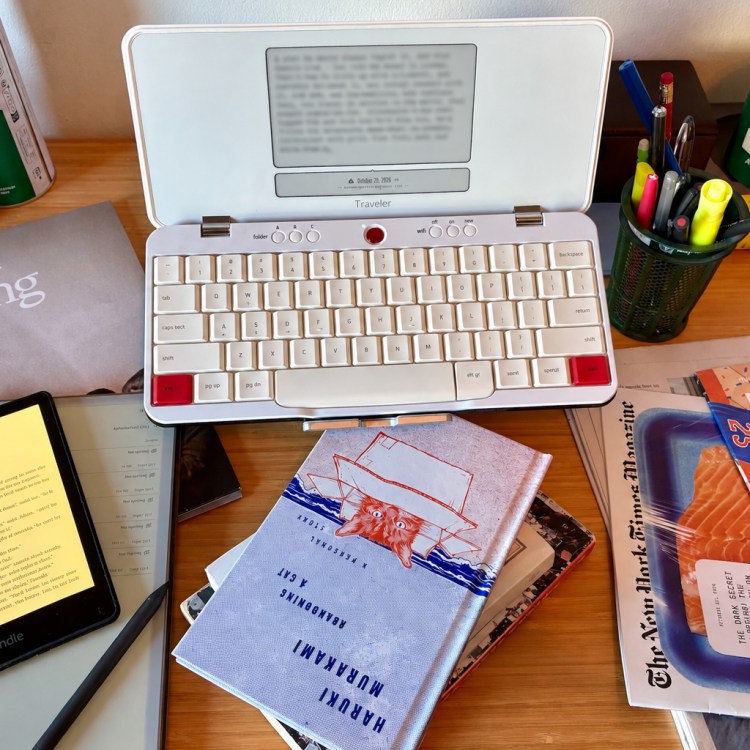
Gen Z’s latest intervention is “brain stacking,” which dovetails from last year’s analog revival. Essentially, the concept is proactive counterprogramming to another hour wasted with your phone. When you feel the siren call of screens, you just reach for hard copies of intellectually stimulating material instead. Devotees have proudly shared their bespoke brain stacks, which include journals, crosswords and sudoku books.
The trend found its footing on TikTok, as many of these things do, which means it’s invited the inevitable criticisms. (If she’s filming herself taking a phone break, she’s not taking a phone break.) Yeah, fair enough, but at this point that chirp is so obvious I’m not sure it’s worth our time. Offline CTAs need to appear online to reach the people who could most benefit from them.
I like the idea of keeping worthwhile materials nearby. It reminds me of tsundoku, the Japanese practice of surrounding yourself with books, regardless of whether you get around to reading them. It’s a powerful act of identity priming: readers own books, so if I buy some I’m on my way to considering myself a reader. Keeping literature (or any intellectual diversion) around is humbling, too. It reminds you that education doesn’t have to end at graduation. At a certain age, this idea actually starts to get very exciting.
Where brain stacking loses me is in the insistence on stacking one’s activities, one after another. “Habit stacking” is a separate TikTok darling, derived from the world of self-help, which encourages miracle mornings and wind-down routines on the back of a curated checklist. I don’t see anything wrong with that sort of approach, assuming you’re reasonable with your expectations and kind to yourself on tough days. Besides, mornings and nights each have a clear endgame: get the day going, fall asleep.
But why should brainy pastimes subscribe to an itinerary or shot clock? The reward of reading a chapter or solving a puzzle isn’t just finishing, it’s the act of losing yourself in the activity, that feeling of sliding down a flume outside of time. If you’re consciously aware that you’d better get a move on, because you’ve got journaling to do once you finish listening to a classical arrangement, aren’t you subjecting the activity to the same breathless rigors of your 9-to-5?
It’s the ultimate irony, I guess, that scrolling on a phone also seems to manipulate one’s minutes: people regularly look up in shock to discover they’ve burned an hour. In a way, they’re both distractions. But where the latter devolves into shame, self-pity or pure apathy, an hour spent consuming or creating art typically has something to offer the soul.
I’d gently suggest this riff on the brain stacking trend: build your stack, then sample from it one “focus” at a time, a day at a time. Get print magazine subscriptions and tell yourself you’re capable of tackling the longform stuff. Buy lots of books and stop feeling guilty about it. Invest in single-use tech (e-readers, Bluetooth typewriters, digital paper tablets). Listen to entire albums with the lights off. Set aside some desk space for sketches, crafts, puzzles. Pick things up and put them down with impunity. We don’t have to count our pickups in this realm, because each one earns its due.

More Like This


Twice a week, you'll find proven advice and tips, expert interviews, deeply reported features and personal essays on living better — for however long you’re here. Subscribe to Champ now.