Nota bene: All products in this article are independently selected and vetted by InsideHook editors. If you buy something, we may earn an affiliate commission.
All workouts have their own prayers and epithets, hissed in the heat of battle. Running: “How is that not six miles?!” Yoga: “Not another goddamn downward dog.”
Rucking, I’ve now learned, has its own too: “Get this shit off me.”
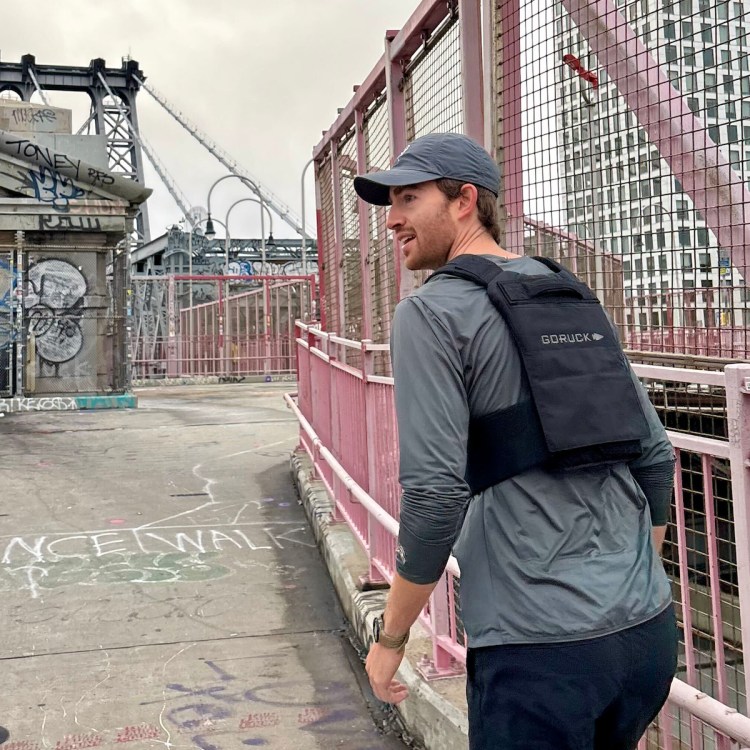
But that’s not the only thing I discovered over a three-mile, 45-minute ruck of the Williamsburg Bridge last week. For all the years I’ve spent reading and writing about rucking, a 2020s fixation of the wellness world, it was about time I got out there and guinea-pigged the activity myself.
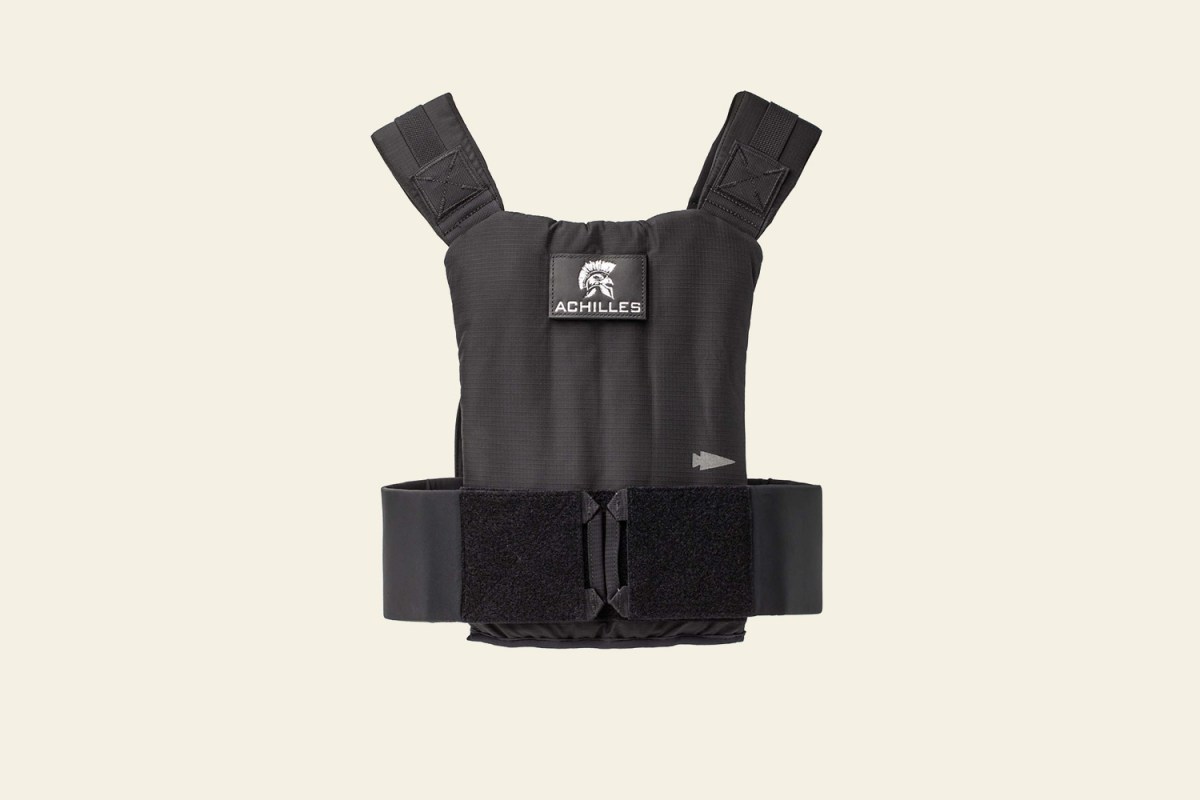
Here are five other takeaways from my sojourn into the sport, including an endorsement of my pack, the GoRuck Achilles Weighted Vest.
1. Point to point felt right
Quick refresher: rucking is just walking with weight on your back. It’s been a staple of military marches since Ancient Rome, and in recent years, military veterans and fitness influencers have become evangelists for the activity’s full-body benefits. They’re not blowing smoke. When you add elevation, distance and a bit of pace to such a simple activity, you’re getting a truly unique combination of cardiovascular and muscular engagement.
For my first ruck, I wanted to zero in on a tough-but-practical challenge that I could measure against in the future, as opposed to wandering around a local park. The Williamsburg Bridge is right in my backyard. It peaks at about 150 feet above the East River, and its pedestrian path is a protected point-to-point route. Plenty of pros: no intersections to worry about, no turns and no choice but to continue walking forward. I was able to completely lock in.
It’s Never Too Late to Start Rucking. Here’s How.
Rucking is full-body fitness at its finest. Here’s how to get started, with help from GoRuck co-founder Emily McCarthy.2. Stay frosty, it’s a slow burn
I appeared to be the only person rucking the bridge on a moody October morning. There were countless runners (the route is a favorite of marathon trainees), a few people walking to work on the Lower East Side, and one guy, a local legend I never tire of spotting, who was pushing a stroller with two babies and towing a yellow Lab — while jogging uphill.
I was able to divide the bridge into four sections in my mind: first ascent, first downhill, second ascent, second downhill. Like most NYC bridges, the ascents/descents on either borough aren’t actually perfect mirrors of one another.
I felt amazing out of the gate. The initial climb out of Brooklyn was steep, but aided by morning adrenaline, it passed fairly quickly. I engaged a forward lean, established an easy “shuffle cadence” and within 10 minutes I was at the top of the bridge, taking in New York Harbor. From there I plowed into the first descent. After years of being a little intimidated by rucking — its biggest proponents seem to be ripped guys who hunt caribou — I started wondering what the big deal was.
Naturally, I was humbled for my mortal hubris on the second ascent, which takes its time getting you back out of Manhattan. I remember checking my watch when the going got really tough (when it started to feel like the Lord Almighty was using my shoulders as arm rests). This is where I started thinking, Get this shit off me. I’d just reached the 30-minute mark, which tracks with anecdotal evidence I gathered from other ruckers. A half hour in, assuming you’ve chosen an appropriate weight and path, is when things start to get quite spicy.

3. Achilles!
Speaking of weight, the Achilles Vest that I wore was 30 pounds. That’s roughly a sixth of my bodyweight. Seasoned ruckers can easily haul a third of their bodyweight or more, but I felt good about this as a starting point. I also felt good in the literal sense, because GoRuck did a hell of a job designing the vest.
Unlike typical rucking packs, which are heavy-duty backpacks with slots for weighted plates, this vest is full of little steel pellets. That makes it extremely heavy to move around your apartment, but luckily there’s a carry handle on the back collar.
One thing you have to embrace head on: the workout starts the second you velcro that cummerbund. Before runs, I typically laze down the stairs, do some hip swings outside, etc. With a weighted vest, you’re in go-mode before you leave your kitchen. Same goes for finishing a workout. Even after I conquered the bridge, I had one final test: my fifth floor walk-up.
But even though the ruck was challenging in itself, I never found myself blaming the equipment. The place where I was hurting the most — the shoulders — was also the spot reinforced with extra padding. And crucially, the vest doesn’t ride; it sits high on the torso by design.
I could understand why regular ruckers, who play with different weighted plates (and sometimes haul lots of other gear), might not want to be locked into a specific weight. But I see myself rucking a few times a month as a unique workout alternative, a way to complement my running, yoga and conventional strength training. In that vein, a single 30-pound vest is all I need.
4. Call it a posture corrector
There are lots of ways to combat the sedentary crisis — standing desks, cat-cow progressions and daily “exercise snacks” among them. I’d add rucking to that list. GoRuck made sure the vest distributes weight evenly throughout your shoulders and core; as I walked around in the vest, I instinctually pulled my shoulders back, tightened my midsection and pumped my arms and legs when I needed them. I’d compare the feeling to a plank in motion.
5. Sneaky errand companion?
I have plenty of adventures ahead of me with the Achilles. Most of them, I’d imagine, will be on the Williamsburg Bridge. But I hope to also use it for weighted calisthenics around the apartment: push-ups, squats, lunges and planks. Maybe even burpees or pull-ups at the playground, if I’m feeling brave. One other use case I’m mulling: the hardest milk run of all time. Putting this on under a fleece and treating Whole Foods as a point-to-point feels like a no-brainer way to add a workout to a busy day.