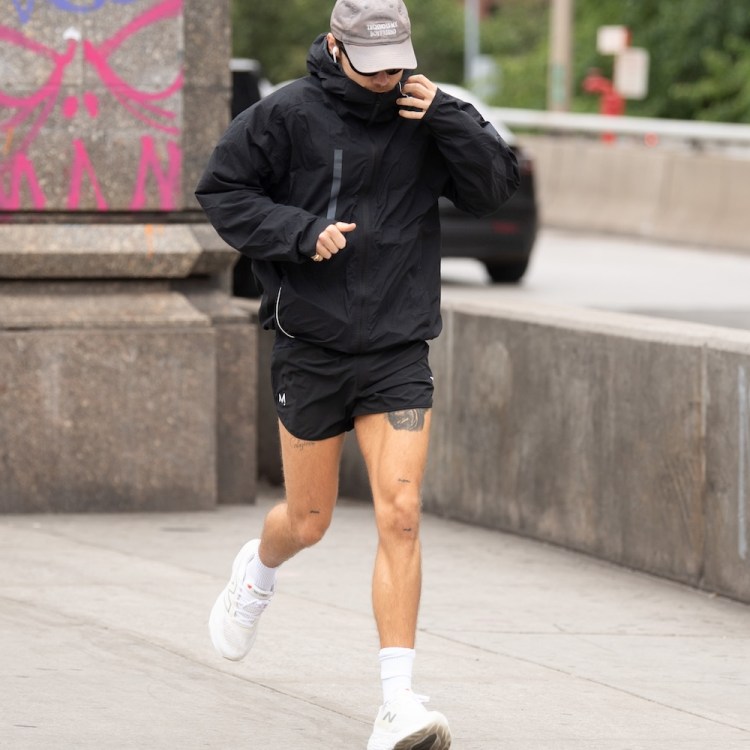
It began with jealousy. My sister-in-law, who, it pains me to say, is an influencer, keeps getting invited to run the New York City Marathon. At 36, I’ve been a runner for 20 years, and running 26.2 across the Big Apple has always been my white whale. Except it’s notoriously difficult to get into, and no one’s inviting me. Fine. I’m also nowhere near fit enough to run a decent marathon time right now. One day, though, I decided to enter the lottery for some interesting halfs and go from there.
In December, I was amazed to learn I’d gotten into the New York Half. Well, all right — next best thing. This wasn’t my first rodeo, but if I was traveling from the United Kingdom (where I live) to New York to run, I wanted to get a good time. I was also pretty out of shape when the invitation arrived, having not raced for distance in roughly a year. As no one this year seems to be able to run a single mile without signing up for the Runna app, I figured I’d get in on the act. It eagerly devised a rigorous plan to whip me into shape before the race in March.
After that half was done and dusted, I decided to keep the party going by signing up for East London’s Hoka Hackney Half in May. Both races entailed a heck of a lot more training and pain (albeit some euphoria, too) than I’d foreseen.
Here’s everything I learned along the way. Hopefully it will inspire you, help you with your own running or at least make you laugh (at me).
1. The Japanese Are Light Years Ahead
I’ve tried a lot of running shoes, with Saucony and On being recent favorites. However, nothing is yet to beat the Mizuno Neo Vista 2. I won’t bore you with the stats, but it’s incredibly comfortable to wear, with laces that don’t dig in; and with a glass-fiber reinforced nylon wave plate and dual-layer foam, it’s bouncy while still being race-legal. Best of all, they look so good that the workman outside my house stopped what he was doing one day, stared at the shoes and simply said “Beautiful.”
2. Runna Makes You Feel Good
I don’t run to share my times and I’d previously been happy with privately logging my exercise on the MapMyRun app. But when it came time to figure out a training plan for New York, I found the app lacking. So I enlisted Runna, and followed a program that included just four workouts a week. Most of these were sprint variations, something I’d previously overlooked. Not only did having a training structure keep things interesting, I felt great as my fitness improved. There was a point near the end of my training for New York where I was flat-out sprinting two miles at a speed I’d previously been able to do for about 30 seconds. It felt like a light-bulb moment in life; using the app taught me I do have more left in the tank, and that even the most brutal efforts will eventually come to an end.
3. (Some) Gels Are Your Friend
Specifically, the SiS Beta Fuel gels. (I’m partial to the strawberry and lime flavor.) I had only occasionally used gels before, but these days they’ve become an essential component of endurance culture, so it was time I committed. While the pro-favorite Maurten gels sent me dashing for the bathroom, the SiS ones went down easily. I did start to feel a bit of a stomachache during Hackney, but I’d attribute that more to not-so-great sleep and a lacking breakfast than these gels.
Unfortunately, because I was going all out with half-marathon training between December and March (hill sprints on Boxing Day, anyone?), I ended up mentally fucking myself.
4. Overtraining Never Works
Because I wanted to do well in NYC, I set a ridiculously ambitious time goal of 1:30:00. I’ve never even come close to this, and didn’t truly think I would in New York. Shoot for the moon, land among the stars, I reasoned. Here’s what this mindset actually leads to in real life: you’ll fuck up your knees, groin and hips by pushing yourself too hard, too soon. I had to visit the PT and adjusted my program accordingly. I made it to the finish line, but six months later I’m still dealing with some issues from that overaggressive training block.
5. Magnesium Is Amazing
Part of my reasoning for signing up for these runs was that I wanted structure to my exercise. Previously, I’d run most mornings, but they’d be slow five-milers with a podcast. On top of that, I’d go to the gym once or twice a week, and mix in some bouldering, too. It was all fine and fun, but none of it was really building towards anything. Setting myself a half-marathon target meant I had to get a bit more serious about exercise, and recovery. Not only did magnesium tablets help me get to sleep, they had me feeling more rested and less achey when I woke up. Go for magnesium glycinate, specifically.
6. Apps Can’t Replace Human Trainers
For both New York and Hackney, I never felt completely confident about the distance. When I’d trained on my own for previous halfs, I would just run a bit further every week, building up the distance without worrying about timings. Runna set me up to do the opposite; my weekly long runs rarely approached half-marathon length. This isn’t uncommon in long-distance training (some marathon trainees go to the starting line having never pushed past 18 miles). But for the mental side, I would’ve appreciated a bit more mileage. This is likely my fault for not adjusting the plan, and placing too much faith in the app. In future, I’ll make my app-mandated long runs much longer so that I feel super confident about the distance before the race.

A Guide to Running’s Underrated “SuperHalfs” Series
The circuit stomps through some of Europe’s most stunning small cities7. Don’t Fall Into the Race-Day Trap
If you’ve ever run any sort of race, you’ve probably fallen into the trap of running faster than you planned at the start. It’s understandable; everything’s exciting, you’re playing Frogger with slower runners, you want to bank some time. I didn’t do that exactly in New York, but by the time I started those four monotonous miles on FDR Drive along the East River, I was absolutely cooked. In future, I’ll be more tactical and figure out exactly how fast I want to go in each section, instead of relying too much on feel.
8. Sleep Is Vital
The Hackney Half took place two months later than NYC, in mid-May. I didn’t sleep well the night before due to nerves, and comparatively speaking, the race felt horrible. I was heavy and slow, the course was continually winding around another corner, and there were numerous times I wanted to stop. The lesson? Do whatever you can to sleep well — not just the night before, but for the entire week leading up to your race.
9. Too Much Pressure = Not Good for the Head
Over the years I’ve learned that my mental health doesn’t do well when I’m overly tired. Unfortunately, because I was going all out with half-marathon training between December and March (hill sprints on Boxing Day, anyone?), I ended up mentally fucking myself. Life in general was a bit tricky during this period, and because I was so exhausted from all this running, I didn’t feel like I had the strength to deal with it. The upshot is I learned a lesson and started therapy again. The takeaway is as follows…
10. Acceptance Is Key
It may seem a bit wet to say that whatever race you’re running, you should do it for yourself first and foremost. It shouldn’t be about competing or chip time. But I’d lost sight of this a bit, and that’s likely why I didn’t sleep well and was so stressed before both races. In the end, I accepted my performances for what they were. I focused on the highlights of each experience — like running across the Brooklyn Bridge with thousands of others, and drinking a free pint after Hackney.
And after all that, I took six weeks to eat whatever I wanted and barely run. I’m not one of these TikTok runners who can just keep going indefinitely. I didn’t PR in either of my races this year, but in hindsight, I loved training for them. I’m now tentatively eyeing a local half in September. That’s 10 weeks away. I’ll train for it using the lessons I learned here. But above all, I’ll try not to worry so much.

More Like This

Twice a week, you'll find proven advice and tips, expert interviews, deeply reported features and personal essays on living better — for however long you’re here. Subscribe to Champ now.