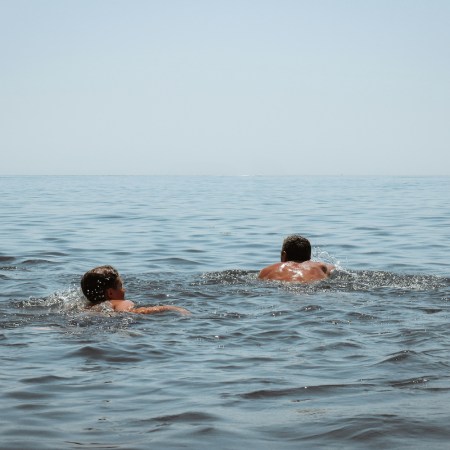
The summer after I graduated college and on the way back from a weekend in Montreal, my friends and I stopped in Vermont to jump into Lake Champlain. There’s a park in South Burlington called Red Rocks that features a few hiking trails lined by hemlocks, a pebble-set beach and easy-enough routes down to the boulders that line the water.
We couldn’t have spent more than a couple of hours there — we jumped in, waded around and stared at Juniper Island, an islet the state paid just $200 for in the early 19th century — and for much of the ride home, packed into an air-conditioned Jeep, our suits remained damp and uncomfortable.
But years later, that slice of afternoon, more an unexpected aside than a premeditated adventure, is what my friends still text about when referencing the Montreal trip. (I’m sure it helped that it cured our hangovers.) Little did we know we’d embraced a beloved practice started by our friends across the pond: “wild swimming.”
A National Pastime
Half a million Brits go wild swimming each month, even during the coldest days of the year. Inspired by the aquatic adventures of writers like Roger Deakin and Kate Rew, they seek out swims in the United Kingdom’s 40,000-plus lakes, from lochs in Scotland’s volcanic national parks to the ponds at London’s Hampstead Heath. The procedure is simple and invigorating: jump in, kick around, swim if you wish.
Wild swimming has proliferated despite the country’s famously dour weather, and perhaps even because of it. British water temperatures hang around the low 50s, but the nation’s swimmers — competitive and casual alike — embrace the chilliness. (Not that they have much choice.) They were in on cold-water therapy long before it was cool.
As you’ve no doubt heard on a podcast by now, immersion in frigid water has positive (if not conclusive) correlations with injury prevention, decreased blood pressure, increased metabolic rate and immune system support. But I’d vouch for the practice’s mental health benefits above all: consistent dips have been associated with the release of neurotransmitters like dopamine, adrenaline, norepinephrine and serotonin, all of which have anti-depressive effects.
In simpler terms: a good dip feels transformative. It’s the reason Lake Champlain still gets top billing in the group chat with my friends, as opposed to our wild night at a dive bar with an indoor skate bowl. Our swim felt completely separate from the rest of the trip, and a solar system away from the long hours I routinely spend in front of a computer at home in New York City.
With employee burnout surging as usual and July 2026 destined to break heat records in the Northern Hemisphere, a little “blue mind theory” is exactly what your brain and body deserve.
It’s Your Turn for a Dip
Wherever you do end up splashing around, whether in a local stream or a glacial lake, make sure it belongs to the public domain and is open for recreation. And before you go, consider The Outdoor Swimmer’s Code, a set of rules outlined by the United Kingdom’s Outdoor Swimming Society. Here are a few to keep in mind:
- Keep a good distance from anglers
- Be considerate of nesting birds
- Own up to your swimming ability
- Remember, there aren’t any lifeguards on duty
- Honor the buddy system
- Don’t disturb waterweed and gravel beds
- Forego single-use plastics
- Keep your pants on
If anything, you might want to bring extra gear. In an ode to wild swimming for The New Yorker, Rebecca Mead reports keeping a pair of neoprene booties handy for when the water is especially cold. She also recommends taking note of the water’s temperature and converting it to Celsius — that’s roughly the number of minutes you should feel comfortable in frigid water.
Meet your guide

More Like This



The Charge will help you move better, think clearer and stay in the game longer. Subscribe to our wellness newsletter today.