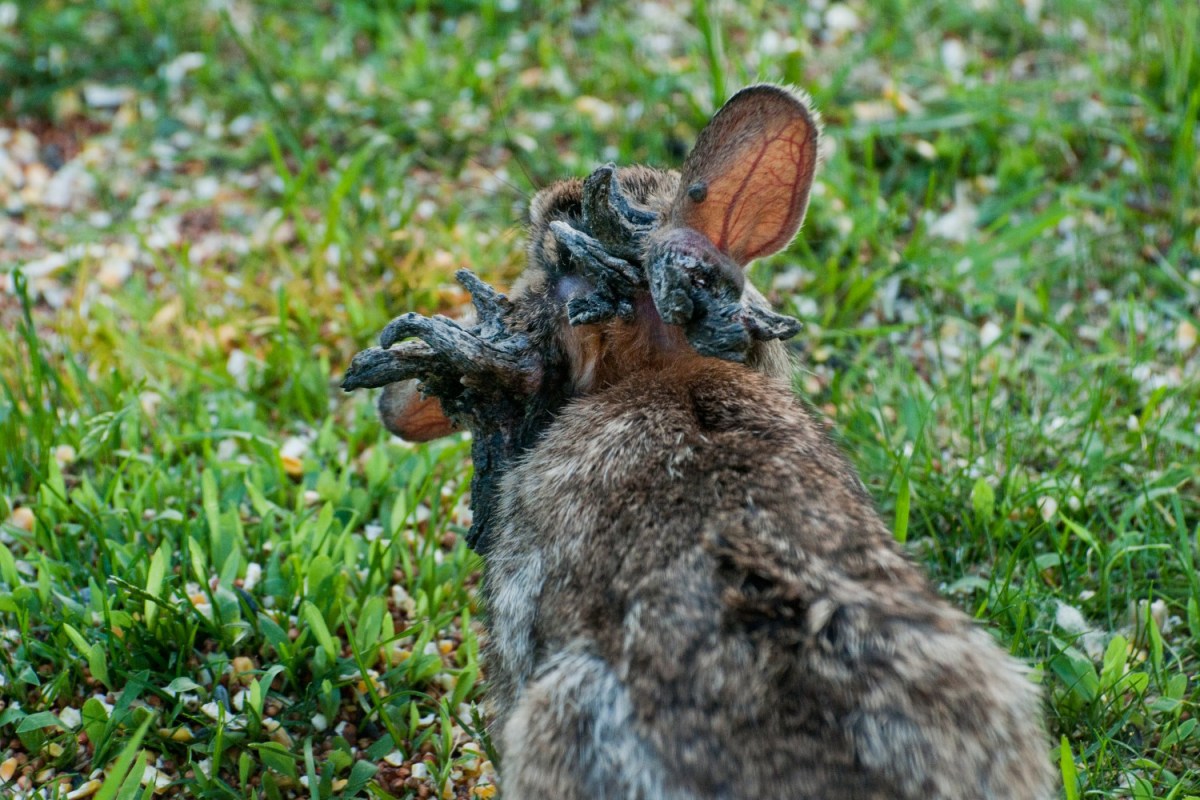
If you find yourself wandering through the Colorado wilderness and you spot a rabbit exhibiting characteristics not traditionally associated with rabbits — horns, specifically — take a deep breath. You haven’t accidentally stumbled into a horror movie; you also aren’t wandering around the phantasmagorical wildlife of speculative fiction novels like Jeff VanderMeer’s Southern Reach trilogy. There’s a more mundane explanation afoot.
Earlier this month, KUSA’s Amanda Gilbert described the phenomenon as “black, tentacle-like protrusions coming from [the rabbits’] heads” and noted that some Fort Collins residents had seen multiple rabbits in the wild exhibiting those characteristics.
As Stephanie Pappas reports at Scientific American, the wild rabbits have been infected by the Shope papillomavirus. The good news, Pappas writes, is that this virus can’t spread to other types of animals — and the rabbits’ own immune systems are usually strong enough to overcome the infection, at which point the horns become a thing of the past.
The state agency in charge of monitoring wildlife is currently exploring whether or not this year’s iteration of the disease is more severe than it was in previous years. “It’s also difficult to say, if we get 10 reports, if it’s 10 different rabbits or if it’s two rabbits that maybe we’re seeing five different times,” Colorado Parks & Wildlife spokesperson Kara Van Hoose told Scientific American.
According to the University of Missouri College of Veterinary Medicine’s website, this condition “is seen most frequently in cottontail rabbits of the Midwest with outbreaks in domestic rabbits.” CBS News’ coverage of the rabbit virus points out that this disease may be responsible for the mythology surrounding the fabled jackalope.

Jeff Koons “Rabbit” Sculpture Sets Record With $91.1 Million Sale
The bunny likeness’s shiny stainless steel matches it’s pretty penny price tagMidwestern rabbits aren’t the only wild animals that are susceptible to a disfiguring illness, but the effects of their condition are relatively mild compared to some similar afflictions. In the most severe instance, Tasmanian devils have been dealing with contagious facial tumors over the last few decades. This has led to significant declines in their population, landing them on the endangered species list.

More Like This



This article appeared in an InsideHook newsletter. Sign up for free to get more on travel, wellness, style, drinking, and culture..