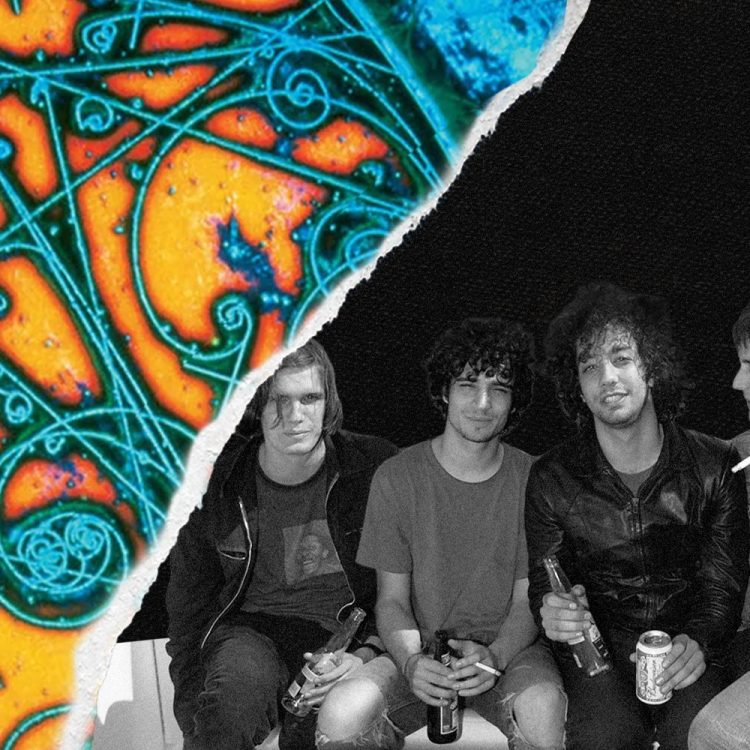
I was about 15 years old when I first deliberately tuned into Is This It. I faintly recall hearing a catchy tune at the beginning of Delivery Man, the 2013 Vince Vaughn film about his army of sperm-donor children, but I stumbled upon the first two Strokes albums while digging through Pitchfork’s archives, uncovering catalogs of indie rock birthed just boroughs over. While abiding by my Upper East Side high school’s dress code meant I looked more like a member of Vampire Weekend than a sleazy downtown rocker, I hummed the riffs of “Hard to Explain” and “The Modern Age” in the hallways, wishing I was old enough to attend those first Mercury Lounge shows at the turn of the millennium.
Though The Strokes are still around and headlining festivals all around the globe, the world they inhabit is quite different from the one that propped them up decades ago as the potential saviors of rock music. Sometime since the heyday of The Strokes, the music industry moved away from the quartets and quintets in favor of single pop stars who play in stadiums and re-release albums over and over to maximize profits. Despite the current state of things, some of us still think about that old world that revolved around The Strokes, and what became of it.
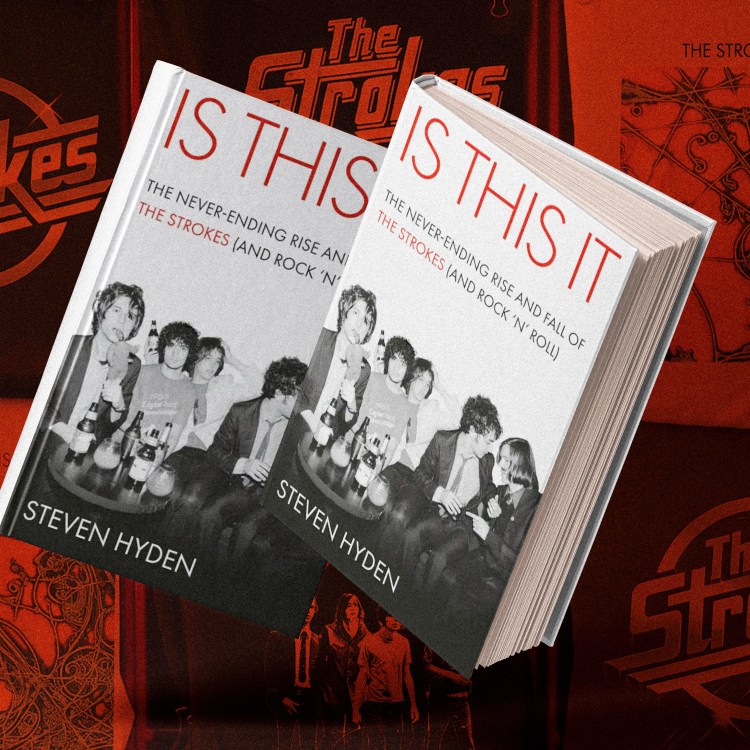
Steven Hyden is an author and critic whose work has appeared in The New York Times Magazine, Rolling Stone, Pitchfork and The Ringer. His newest book, Is This It: The Never-Ending Rise and Fall of The Strokes (and Rock ‘n’ Roll), chronicles the enduring legacy of the greatest indie-rock band of the millennium. Over the course of my video call with Steven, we chatted about the relevance of music media, the DNA of rock music in all genres, The Strokes’ younger audience and, of course, Geese.
This interview has been edited for length and clarity.
Minh Tran: I want to open by actually talking about my own experience getting into The Strokes. I was four years old when Is This It came out, but I started getting into them in high school while obsessively reading Pitchfork, going through all their archives, reading about all these bands from years prior that felt just out of reach. I was wondering if you think there are any parallels to your experience living in Minnesota, hearing about [The Strokes] and this moment happening far away.
Steven Hyden: I know what you mean about being a younger person and seeing this older band and wondering, “Oh, did I miss the boat here or was I born too late?” What I was writing about in the book was a little bit different. There’s a glamour when a band comes from New York where they have a certain mystique they wouldn’t have if it was the same band living in Oshkosh, Wisconsin, or Spokane, Washington. But there’s also a resentment for the same reason people generally resent New York, which is this feeling that there’s so much attention on New York and so much media about New York. So it was more about that feeling of these guys being really glamorous and part of a world that I’m not allowed to be a part of. And that’s what makes it attractive and also what makes it annoying.
How much do you think their story and your book is also a story of the media — of you as a critic, and those who are passionate about music criticism?
I think [the media] played a significant role in The Strokes being a culturally significant band. None of it would matter if the songs weren’t there and that they didn’t present a package that was very attractive, but what I get at in the book is this narrative about a band coming from the outside of the mainstream and taking over and changing the culture. And it sort of happened. There were certainly a lot of bands that followed The Strokes, many of whom had more success than The Strokes, but it wasn’t the paradigm-shifting revolution that people were expecting when they were writing about Is This It.
I remember when Getting Killed [by Geese] came out and you saw these people complaining about the hype and the critics saying these incredible things. I had just turned in my Strokes book at the time, so this was all fresh in my mind, and I just kept telling people, “You don’t remember when Is This It came out.” I mean, this is nothing compared to that. Like no one is claiming that Geese is going to save rock ‘n’ roll, that we’re going to stop listening to Taylor Swift and start listening to Geese and they’re going to be playing stadiums.
They don’t have a song you play at weddings, football games and CVS stores that transcends the band. But it’s a bonus for The Strokes because no single song is bigger than their identity as a band.
– Steven Hyden
I wonder what people mean when they say they want a modern band to save rock music.
I mean, that’s always the thing that’s unanswered. I think what people want is a band that has a lead singer that is out front that resembles an amalgam of Mick Jagger, Axl Rose, Keith Richards, Liam Gallagher, maybe a little Julian Casablancas. People in leather jackets, beer bottles, cigarettes. When people say, “Oh, there’s no rock bands anymore,” they’re talking about bands like that.
Yeah
Because even if you look at pop music, there are a lot of people that play guitars and write songs about their love life, which is basically what rock music is. I remember I said something last year on Twitter about how Noah Kahan is a long-haired, bearded guitar player who plays personal songs in stadiums. That is a broad definition of rock music, right? You would never confuse it with “Welcome to the Jungle” or something, but there was also a lot of soft rock when those bands were popular. And I think when you try to nail down what people mean when they say that rock is dead, they’re talking about bands that kind of resemble The Strokes. Because Coldplay is a rock band. They’re a hugely successful rock band, but they’re also mopey British guys that play power ballads.
I agree with you that the DNA of rock music is actually everywhere. Even so many rappers these days like to think of themselves as rock stars. Playboi Carti sees himself as a rock star.
There’s not a lot of rap music on the pop charts anymore, but I think you could argue in the same way with rock music that hip-hop is so integrated into every form of music that everything, in a way, is hip-hop. Even music that isn’t really explicitly hip-hop. It’s the double-edged sword of being so victorious culturally that you become part of the atmosphere and it becomes much harder to define what it even is anymore. Pop music just kind of absorbs all of these other genres and becomes this amorphous blob in the middle of the charts and blocks everything else out over time.
Morgan Wallen is selling out stadiums and even though [his music] is country, it’s so indebted to hip-hop.
It’s funny how country absorbs all — because what we call country, a lot of that is rock music. A lot of it is southern rock and heartland rock from the ’80s. Like John Cougar Mellencamp is like a rock star from 40 years ago, but also I feel like he would be a country star now if he came out.
How 9/11 Changed The Strokes’ Debut, “Is This It”
In an excerpt from his latest book, “Is This It,” author Steven Hyden reflects on why “New York City Cops” was ultimately pulled from rock saviors’ seminal first recordSomething I’ve noticed is that I don’t think The Strokes have done a 25th anniversary Is This It tour. And I think that’s actually quite interesting that they’ve refused to cash in on nostalgia.
The thing with The Strokes is that they don’t need to do the 25th anniversary tour because whenever people bring up The Strokes, they instantly remember Is This It. If anything, Julian Casablancas seems to be constantly rebelling against that. It’s been interesting because there really are a couple different audiences at this point for their music. You’ve got the older people that remember what it was like when that first record came out and then you have a younger audience who came on board because of The New Abnormal and they love “The Adults Are Talking.”
When I saw The Strokes this summer, they were playing this big amphitheater and all the people around me were probably between the ages of 15 and 25. I was clearly the oldest person sitting in my section, and you could just tell in the crowd that they got really excited by the New Abnormal songs. There’s an interesting tension in the Strokes fanbase where you’ve got older people that still believe that they were finished after Room on Fire, who maybe look at them as a nostalgia act. But then you have actual young people who don’t really think of them that way. They think of them as a cool older band that is still making music that they think is interesting.
Do you think that part of their continued relevance is due to this idea that they don’t have a clearly definable banger, the way other bands do?
There was a debate recently on social media about The Strokes versus The Killers, noting that The Strokes don’t have a song as popular as “Mr. Brightside,” which was proposed as a strike against them. They don’t have a song you play at weddings, football games and CVS stores that transcends the band. But it’s a bonus for The Strokes because no single song is bigger than their identity as a band. Who they are and what they represent lends itself to younger audiences rediscovering them because there’s an aura about The Strokes that other bands of their generation don’t have, even bands more successful than them. It’s similar to the Ramones: a famous band, not necessarily a top-selling commercial band, but a band whose T-shirt you want to wear. The Strokes are a band people want to wear on a T-shirt.
You started writing this book before Reality Awaits was announced. Does its release change the arc or ending of your book in any way?
It doesn’t change the trajectory, just makes it more up to date. My point that every Strokes album is judged as a disappointment until the next one comes out was confirmed by the reception of Reality Awaits. When it came out, people rushed online to say they hated it, but a week or two later started saying, “Actually, ‘Lonely in the Future’ and ‘Going to Babble On’ are really good.” I love that people felt compelled to say they hated it immediately, because they’re not doing that with the new Interpol record. People want to argue about The Strokes publicly, and that will continue for as long as they’re around. Even if they’re listening to the new Interpol record, they’re probably not going to talk about it all that much online because it doesn’t feel like something you need to express publicly. But The Strokes still are a band that people want to argue about and it’s going to continue for as long as they’re around.

More Like This



This article appeared in an InsideHook newsletter. Sign up for free to get more on travel, wellness, style, drinking, and culture..