In 1826, Julien Gallet established his eponymous firm in La Chaux-de-Fonds, Switzerland. By the mid-20th century, the company was offering an incredible range of useful chronographs and other complications, from the signature Flying Officer to the MultiChron Navigator to the Astronomic. While the Quartz Crisis severely damaged Gallet — which was effectively mothballed by the mid-1990s — Breitling’s recent acquisition promises to revive its historic models, opening up this compelling brand to a wider range of enthusiasts and collectors.
Having acquired both Gallet and Universal Genève within a relatively short time frame, Breitling has built, through its House of Brands paradigm, a small ecosystem covering a relatively wide price range. At the top end of this spectrum is Universal Genève, which features numerous high five- (and certain six-) figure models and references, while the middle is occupied by Breitling itself, with many watches priced in the $6,000-$12,000 category. Gallet, finally, will serve as the House of Brands’ “entry-level” offering — though with prices currently beginning around $2,900, this is certainly “entry-level” in firm luxury terms. Still, with Breitling (and many other) watchmakers moving well upmarket over the past decade, a marque under the same management that offers chronographs below $10,000 is a welcome sight.
Gallet’s heritage is one of adventure: Known mostly for its chronographs, it made stopwatches and pocket watches during its early history, two of which were even used by the Wright brothers during their historic first flight in Kitty Hawk, North Carolina. Later, in 1940, a Gallet MultiChron Regulator was presented to American racing driver Rex Mays following his victory during the 1940 Springfield Mile at more than 100 mph. Even more famously, then-Senator Harry Truman commissioned the Gallet Flying Officer for Army Air Corps pilots in 1939, receiving one himself as a Christmas gift that he subsequently wore throughout his presidency. (He supposedly called it “the most elaborate wristwatch I ever saw.”) Most of these Gallet models were designed for specific purposes — flying, yachting, navigating, racing, etc. — and featured useful complications and striking (but never overwrought) aesthetics.
At (re)launch, Gallet’s catalog is split into four different collections: Flying Officer, MultiChron Pilot, MultiChron Sport, and Gallet Classics. Each model is manufactured by Breitling using either third-party or in-house movements, can be purchased through Breitling boutiques and utilizes Breitling’s after-sales and global distribution network. Furthermore, all straps and bracelets featured throughout the collection will feature quick-release systems for easy interchangeability, while all cases are currently produced from stainless steel.
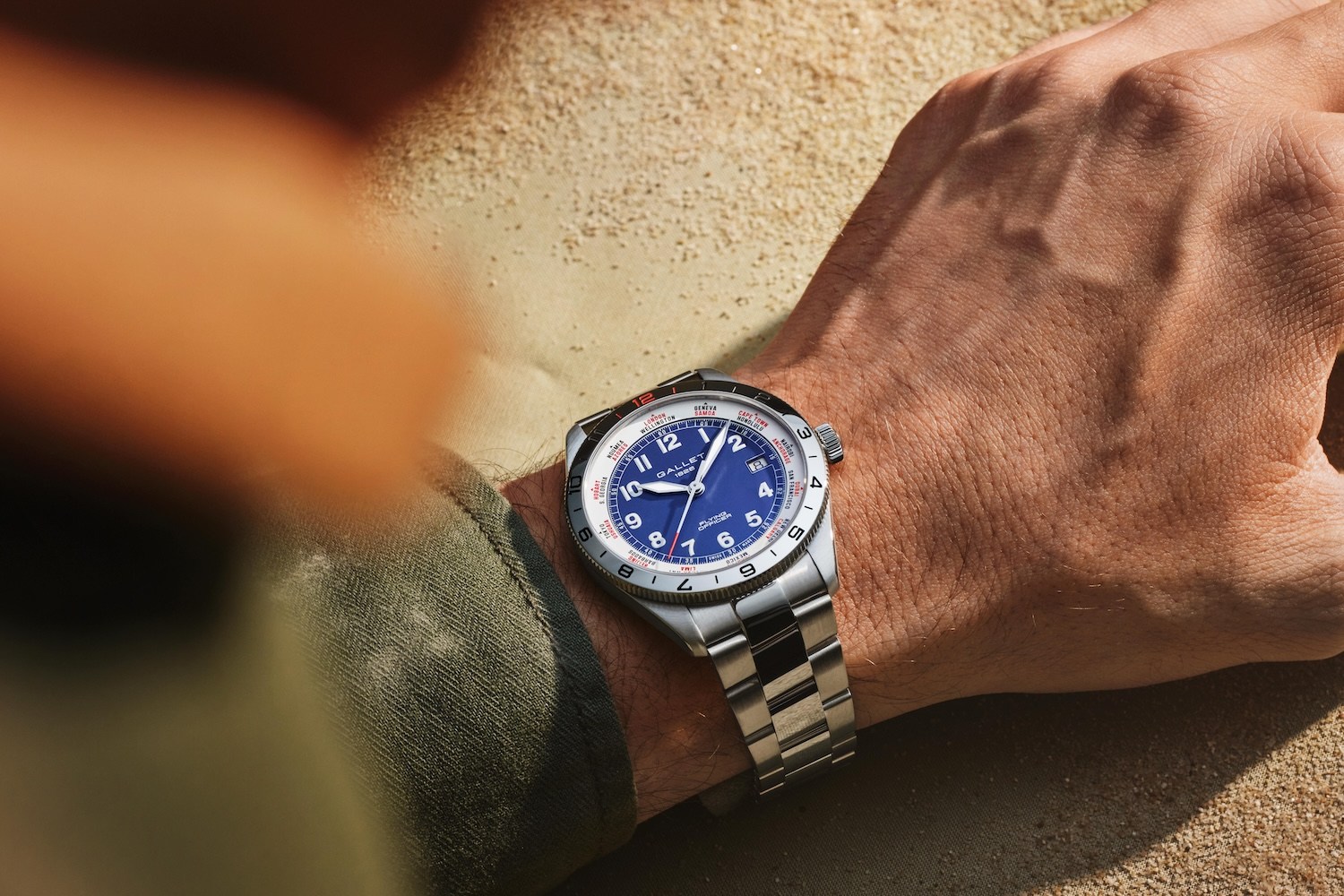
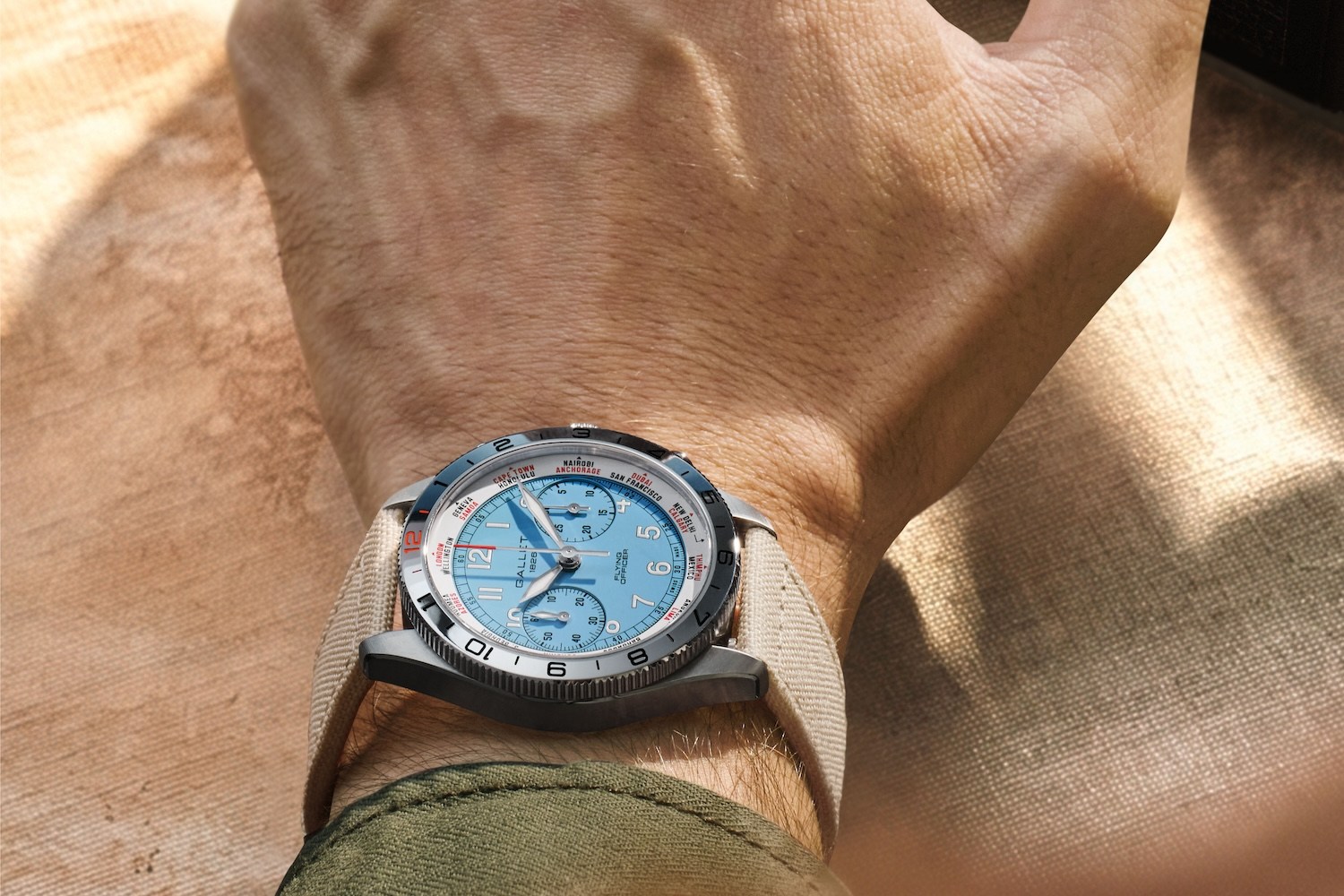
The Flying Officer — Gallet’s most idiosyncratic and famous design — will serve as the reborn brand’s flagship collection. Having debuted on the eve of the Second World War, it was designed for frequent travelers — military officers, businessmen and the like — and became even more relevant as the age of the propeller gave way to the age of the jet engine, quickly closing the distances between foreign cities. Effectively a dual-register chronograph with an inner city ring and an outer 12-hour bezel, it provides a simple world-time function, allowing the wearer to track both local time as well as that of different cities around the globe. Thankfully, Gallet’s new owners kept the case size under control, yielding a 40mm Flying Officer Chronograph on either a stainless steel multi-link bracelet ($4,600) or a fabric or leather strap ($4,400). A black-dialed version is emblematic of the original’s purpose: Stark and reserved, it features the aforementioned outer rotating 12-hour bezel, a dual-register display with 30-minute and running-seconds registers, luminous Arabic indices and sword hands, and the model’s signature outer city ring with 24 updated city names in black and red on a white background.
Despite the wealth of information displayed, the design remains legible and restrained, with a simple color palette and little branding. Within the case — which features dual pump pushers, a signed crown and both brushed and polished surfaces — the Gallet cal. 23 movement keeps time. Effectively a Sellita cal. SW510, this engine gives the new Flying Officer a touch of old-world charm in the form of hand-winding, which should also help to keep the case height down. (I haven’t had my hands on one of these since I viewed the prototypes in Dubai last winter, and thus don’t have a final case height measurement yet. Keep your eyes peeled for a review once I have the opportunity to borrow a few pieces.)
Strangely, the other colorway available for this model is in light blue — an odd choice, perhaps, but certainly one that provides a lighthearted counterweight to the restrained seriousness of the black-dialed reference. The black-dialed Flying Officer, at least at first glance, does the original justice while updating it for modern tastes. Would I have personally preferred a 38mm case, thinking it a platonically ideal diameter for a chronograph? Always. But I’m pleased about the use of the SW510-based movement, which retains the hand-wound quality of the original while keeping the price reasonable.
In keeping with Breitling’s recent modus operandi, the Flying Officer has also been given a simple three-hand automatic incarnation, which retains the outer 12-hour bezel and inner city ring but jettisons the dual-register chronograph in favor of a simple date window. Powered by the Gallet cal. 17 — effectively the Sellita SW200 — it offers a straightforward world-time solution for just $2,900 on a strap or $3,100 on a bracelet and comes in either an orange or dark blue colorway. (The former, with an orange inner dial and a khaki green city ring, should logically be hideous… but somehow works. The blue is handsome if otherwise unremarkable.)
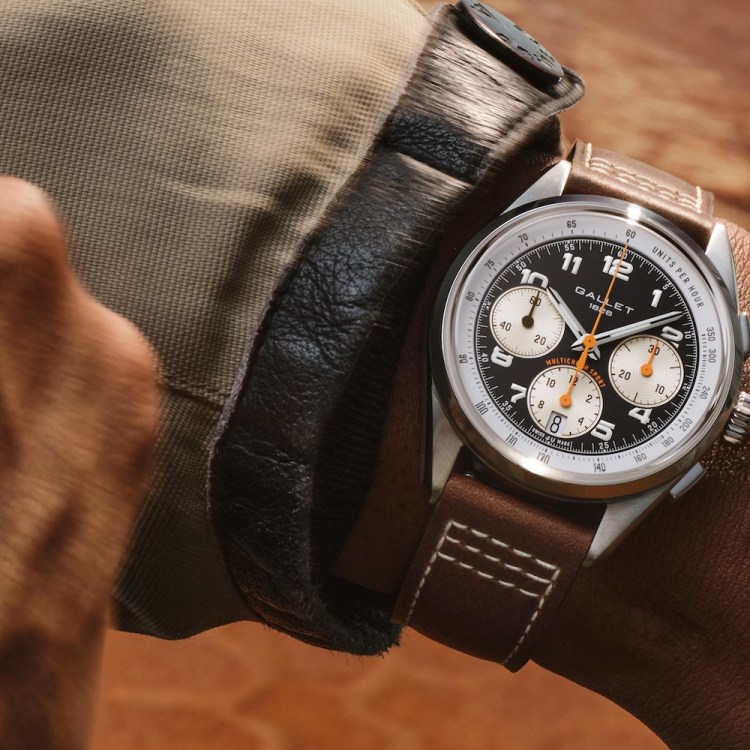
Next up is the MultiChron Pilot collection. Based upon a model released in 1969 with a 38mm steel case, a bidirectional 12-hour bezel and the hand-would, triple-register Valjoux 72 movement, this model was designed for adventurers of all stripes who needed to track a second time zone or time a long-duration event. The new version — priced, like the Flying Officer Chronograph, at $4,400 on a strap and $4,600 on a steel multi-link bracelet — has been upsized to 42mm. Fitted with dual pump pushers, a signed crown and a bi-directional 12-hour bezel, it frames a genuinely good-looking upgrade to the original MultiChron Pilot dial: A telemeter scale in orange typeface pops against a black track, while within this is a white 1/5th-seconds hand with luminous hour indices. The dial center — executed in black or blue with a slightly raised, grained texture — features luminous, applied dart indices; a triple-register display with 30-minute, 12-hour and running-seconds registers; and a luminous baton handset in white.
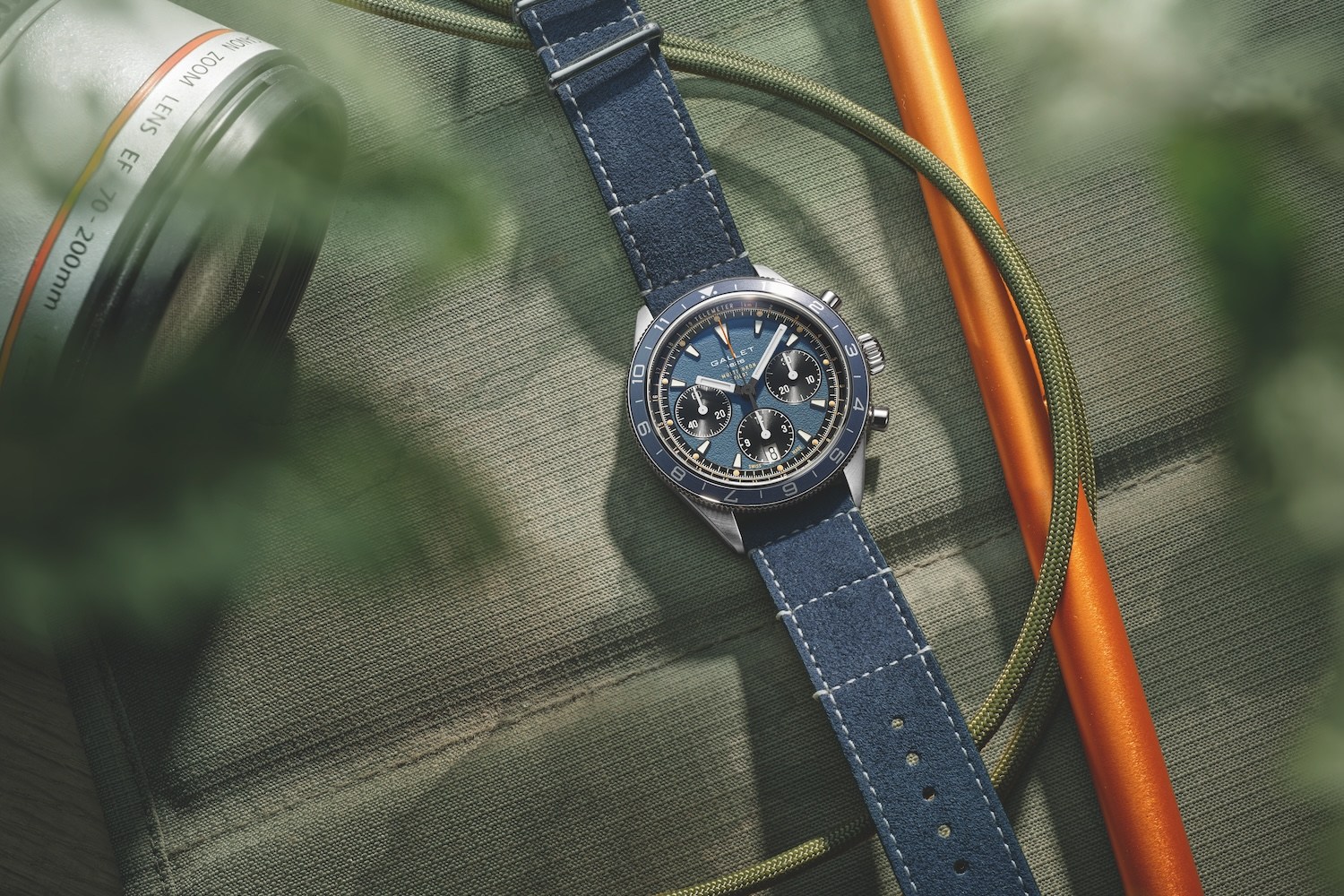
Legible, dynamic, cool looking — the new MultiChron Pilot has a lot going for it. I do, however, think the brand could’ve skipped the date window, especially in its intrusive position within the 12-hour chronograph register. If you ask a watch company executive why they included a date in such-and-such a watch, the answer will invariably be that date-equipped timepieces simply outsell dateless ones. Fair enough. But to indulge my own cynicism for a moment: It’s 2026. No one is actually buying a watch to tell time with. Likewise, Millennial and Gen Z hipsters aren’t actually buying vintage Leicas to take pictures with. They’re not saving up for air-cooled 911s to get to the dentist. They’re buying this stuff for the vibe. They’re buying it to communicate economic means and to indulge fantasies. Thus, the notion that a young professional — invariably the brand’s target demographic, given its pricing — is going to have second thoughts about shelling out a couple weeks’ salary on a watch because it doesn’t have a date window seems, well, dated. It could’ve been left off, and the watch would’ve been better for it.
The other thing is the case diameter. While someone who genuinely preferred a 42mm, 44mm or 46mm case diameter could always count on modern Breitling to deliver, we were finally reaching a cultural moment in which enough of us had exerted sufficient influence to put a stop to this utter nonsense. I’m sure there was an all-hands meeting in which Breitling/Gallet leadership decided that it simply needed to offer at least one 42mm chronograph in order to please the angry horological deity, Carouge the Terrible. But I contend that if the brand simply made the MultiChron Pilot 38mm or 39mm… no one would’ve complained that it was too small. What army of 6-foot-4, 20-centimeter-wristed hedge fund bros would’ve taken up arms against Georges Kern? I posit that such a buyer doesn’t know what he wants — rather, he must be told what is cool. So next time, put a sub-40mm watch on his wrist — one that the rest of us want — and call it a day.
But I digress. Powering the MultiChron Pilot is, once again, the Gallet cal. 23/Sellita SW510, while strap options include a stainless steel multi-link or leather options. In sum, this is a great-looking watch, and the price is palatable — though there will invariably be lads who complain about paying this much for a Sellita-based design. More on pricing in a moment, however…
Moving on, we have a second MultiChron chronograph collection to touch upon, the MultiChron Sport. Based upon three-register models from the 1960s, it utilizes the same movement and triple-register configuration as the MultiChron Pilot but tweaks the case and dial layout: Measuring 41mm in stainless steel, it features rectangular pushers rather than pump pushers and a smooth bezel rather than the Pilot’s rotating 12-hour bezel. Within the bezel is a tachymeter scale in black with white printing or white with black printing; an inner dial in blue or black, large, luminous Arabic indices in white or a kind of pale, sand-looking shade; chronograph registers in black with white printing or white with black printing and a luminous, partially skeletonized handset with chronographs hands in orange. Sporty and contemporary (despite the flat chronograph pushers), it likewise comes on a steel bracelet ($4,600) or a leather strap ($4,400), and it’s powered by the Gallet cal. 23/Sellita SW510.
Finally, we get to the Gallet Classics collection, which consists of three references: the Tribute to MultiChron Yachting Big Eye, the Tribute to MultiChron 45 and the Tribute to Silverlight. Direct modern reinterpretations of vintage models, each measures 38mm in stainless steel and features lyre-style lugs, dual pump pushers, a signed crown, a smooth bezel and a leather strap. The Tribute to MultiChron Yachting Big Eye, with its oversized 30-minute register in blue and red, will excite collectors of yachting chronographs. (Used to time the countdown to a yachting race, it demarcates 10-minute periods with easily legible color coordination.) A thin black sword handset, matching black Arabic indices and a black open 1/5th-seconds track round out the design.
The Tribute to MultiChron 45 is next up. Featuring a black dial with both outer tachymeter and telemeter scales, it boasts blocky luminous indices, a luminous white sword handset and two smaller 30-minute and running-seconds registers. This is a gorgeous design — the only curious thing being that it features a 30-minute chronograph counter and not a 45-minute totalizer, like the original watch that it references by name. (This is quickly explained away by the original’s use of an Excelsior Park or Landeron movement equipped with a 45-minute register, whereas the modern Sellita caliber doesn’t have this feature. Fair enough.)
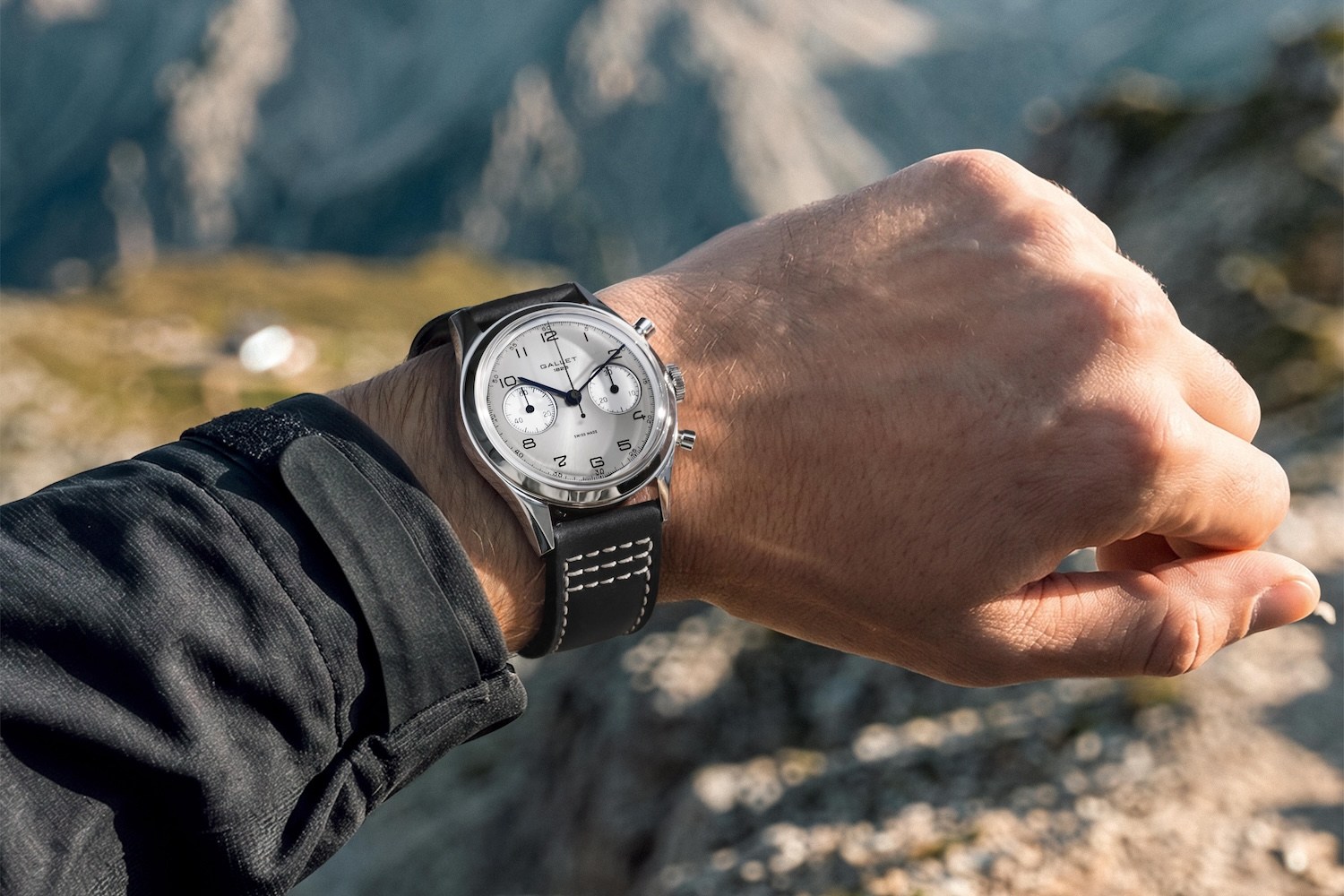
Finally, we have the Tribute to Silverlight, which features a clean, silver dial, stylized black Arabic indices, a thin black sword handset and two small registers of the aforementioned 30-minute and running-seconds variety. Search the vintage Gallet catalog and you will indeed encounter such a watch, a MultiChron 45M, with its stunning typography and plenty of negative space. I’m frankly not sure where the “Silverlight” nomenclature comes from, but this is certainly a tribute to a real MultiChron.
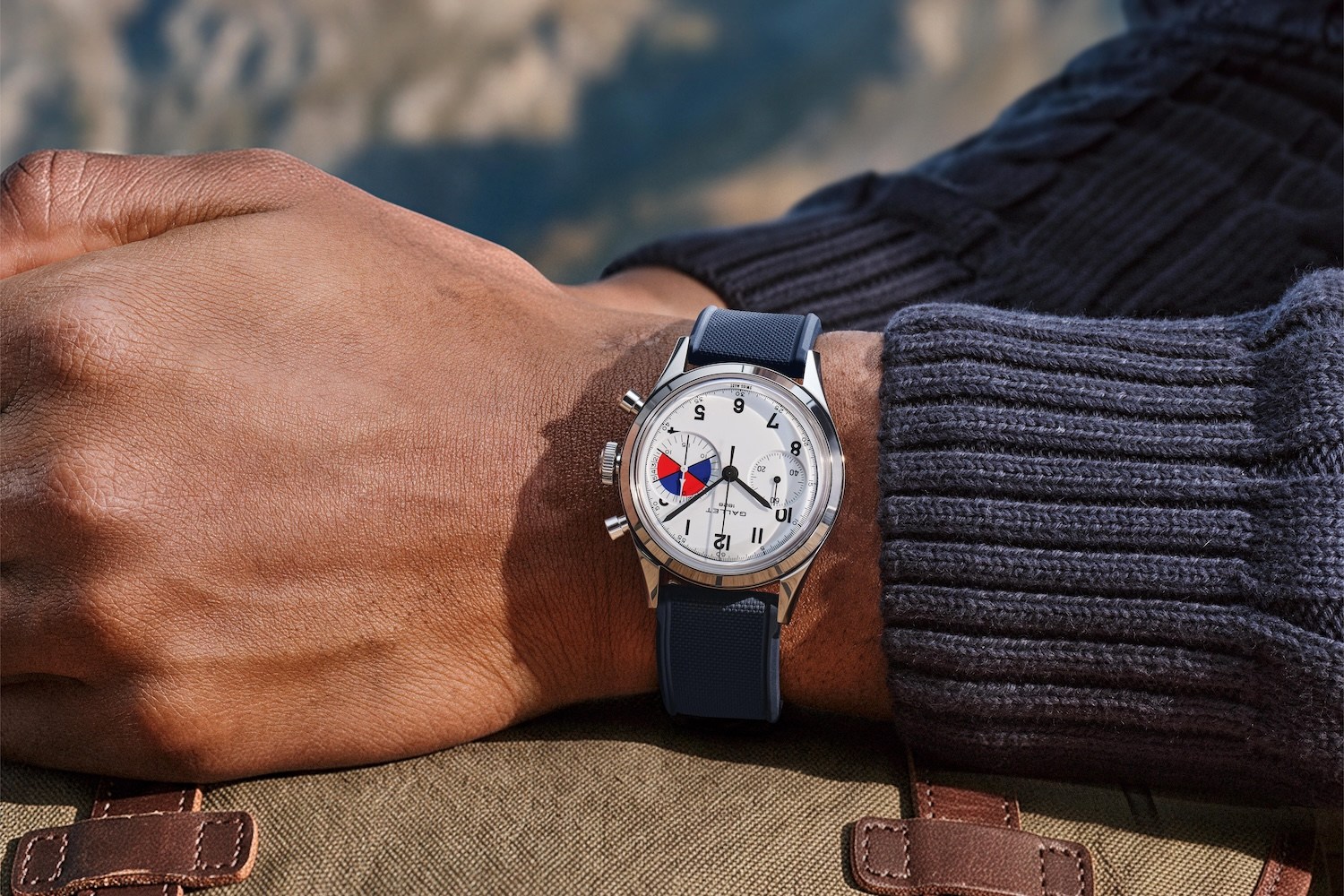
As for these three watches: I think they’re stunning. While simply modern recreations of extant vintage pieces, they’re well done, and I’m thrilled the brand kept them at 38mm and that they’re hand-wound. And seeing as they’re being made especially for Gallet’s relaunch and its 200th anniversary, I understand why they’re fitted with Breitling’s manufacture cal. B09 movement with 70 hours of power reserve. But this choice drives the price of the Gallet Classics to $6,700 — which I find interesting…
My understanding is that these are not limited editions. While I find the notion of modern sub-$5,000 Flying Officer, MultiChron Pilot and MultiChron Sport models, situated within Gallet’s core catalog, incredibly compelling, I personally would’ve preferred higher-end movements in the flagship Flying Officer collection — with higher prices to boot — and more affordably priced Classics, which feature fixed bezels, only two registers, no date complication and, frankly, have no need for a higher-end movement. These are the type of watches that someone such as Guillaume Laidet, who reconstituted Nivada-Grenchen, Vulcain and Excelsior Park, would recreate beautifully and sell for well under $3,000. If it were me, I would’ve priced these watches where the Flying Officer and MultiChron chronographs are currently priced and priced those watches above $5,500. (Or, at the very least, I would’ve made the Classics into limited editions in order to help justify the pricing.)
Alas, I am a greasy-fingered watch blogger and have little understanding of the complex machinations of Swiss watch manufacturers, so I should probably keep my mouth shut about how much stuff should cost. (I will not.) Overall, being a vintage-watch die hard, I will say that the Classics are by far my favorites of the new Gallet collections. After previewing them in Dubai last fall, I immediately wanted one of each. (Which, at $6,700, will not be happening.)
Having gone down many an internet rabbit hole over the past 15-or-so years related to Gallet’s deep back catalog of incredible chronographs, I was perhaps more thrilled than most to hear of the brand’s rebirth. None of that enthusiasm has diminished, and despite my spirited nitpicking, I remain excited for what the future holds for the company. For someone who appreciates mid-century watch design, who loves off-roading, flying, racing, all manner of Hemingway-esque activities and who’s in search of watches under $10,000 that can stand up to modern adventuring, Gallet’s phoenix-like resurrection is welcome news.

More Like This

The world of men’s style, from the streets of NYC to the showrooms of Milan, run down weekly by writer and photographer Christopher Fenimore.