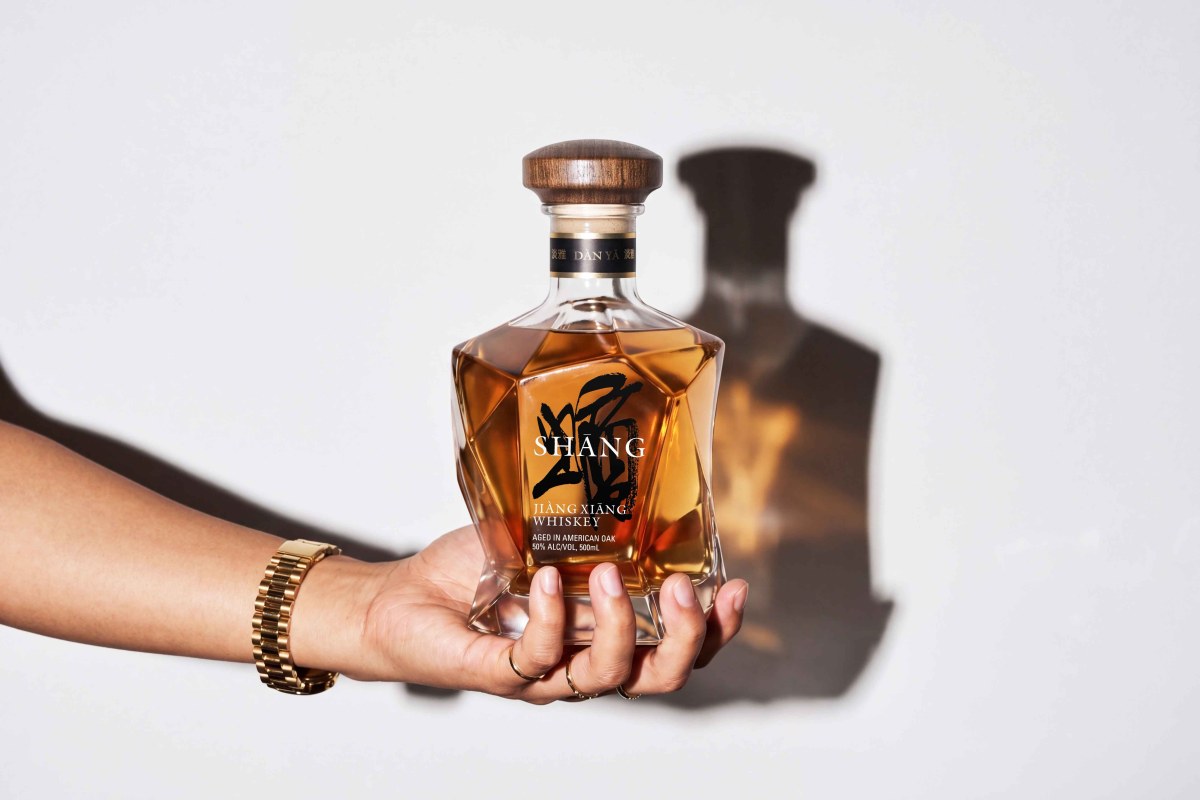
What we’re drinking: Two expressions of Shāng Whiskey, a potential new spirits category they’re calling “baijiu whiskey”
Where it’s from: Shāng is produced by Maritine Brands, a joint venture between True Essence, LLC and Guìzhōu Guótái Shùzhì Liquor Group Co., in partnership with Whiskey House of Kentucky and The Blending House (also based in Kentucky).
Why we’re drinking these: Wait, there’s a new category of whiskey? I flew down to Kentucky on an early June weekend to witness the launch of Shāng, a five-company, two-country partnership that’s going to take a bit of explanation.
“What better way to start and celebrate National Bourbon Week than by announcing the creation of a completely new category of whiskey — in fact, a completely new category of spirits altogether, a new product that brings together two of the largest and oldest industries in the world,” said David Mandell of Whiskey House of Kentucky (which specializes in custom whiskey production) during the opening ceremony at the Whiskey House facility in Elizabethtown, KY. The event was important enough that Kentucky’s 58th Lieutenant Governor, Jacqueline Coleman, attended and spoke (and it’s also where many of us found out she was running for state governor).
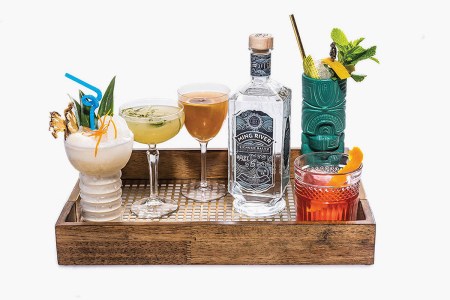
Baijiu Is More Popular Than Whiskey. Here’s Why You’ve Never Had It.
Explaining the Chinese spirit to AmericansThe idea here is that the spirit known as baijiu is more popular than whisk(e)y, but you probably wouldn’t know that in America. “Shāng unites centuries-old Chinese fermentation techniques with the precision and structure of American whiskey making,” Mandell says.
Loosely, Shāng is a sauce-aroma baijiu that undergoes an American whiskey transformation. The brand is calling this cross-cultural category jiàngxiāng (pronounced jong-shong) whiskey. The five companies involved see it as a blending of two of the oldest and largest spirits categories, positioning the spirit as “Eastern culture meets the West.”
The base of Shāng is red sorghum from the Chìshuǐ River basin in China. After distillation and aging in traditional clay pots, the spirit is redistilled to a whiskey base, matured in American oak and blended in Kentucky. The East Meets West Kentucky Blend is interesting because it also includes a proprietary American red sorghum whiskey.
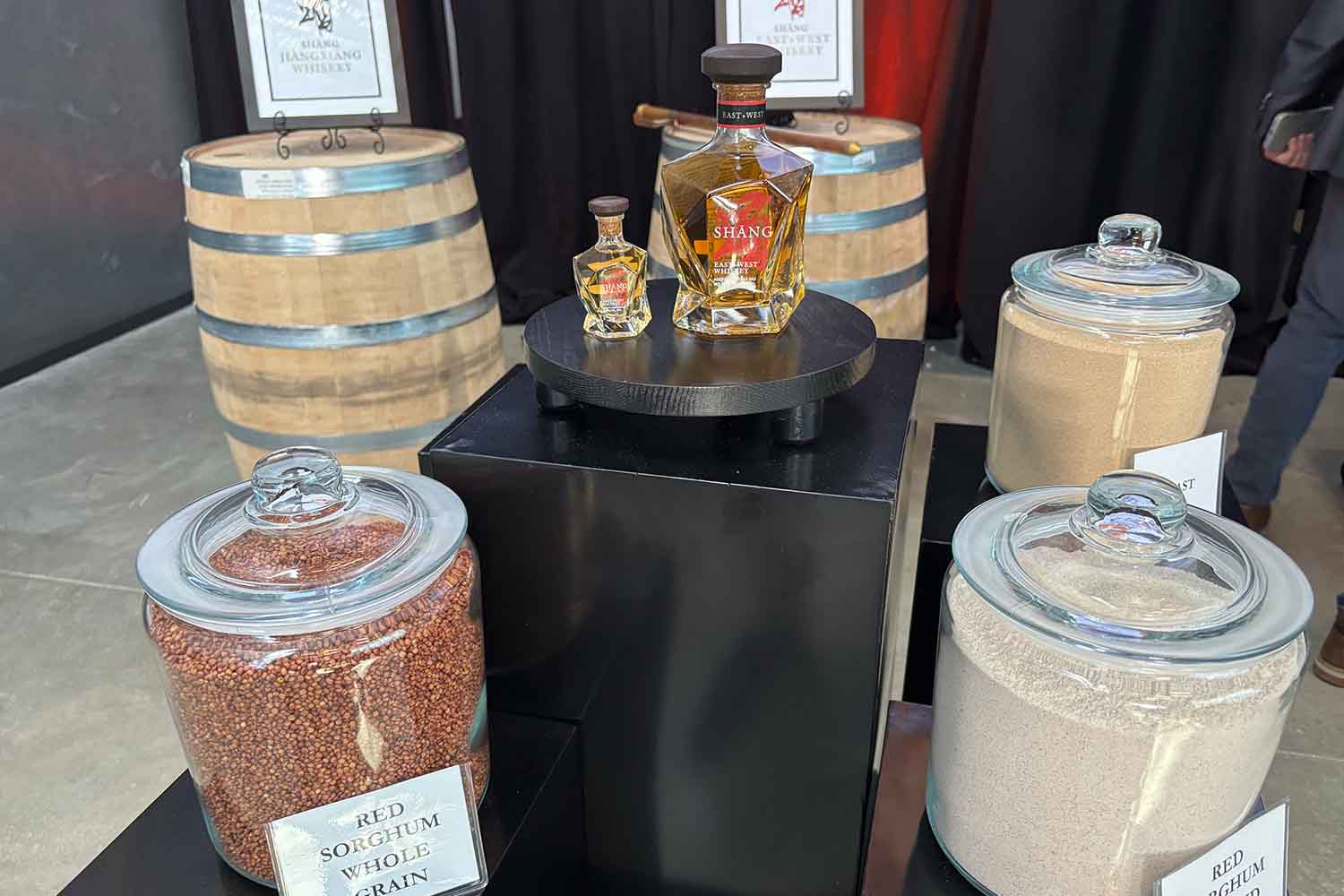
That’s the how. As for the why? “In the United States, consumer preferences have begun to change, and the curiosity towards internationally inspired products has increased,” says Matt Rubin of Maritine Brands. “At the same time in China, the younger generation has very rapidly begun to shift towards Western-inspired spirits, so it came before us to put a team together to realize this vision.”
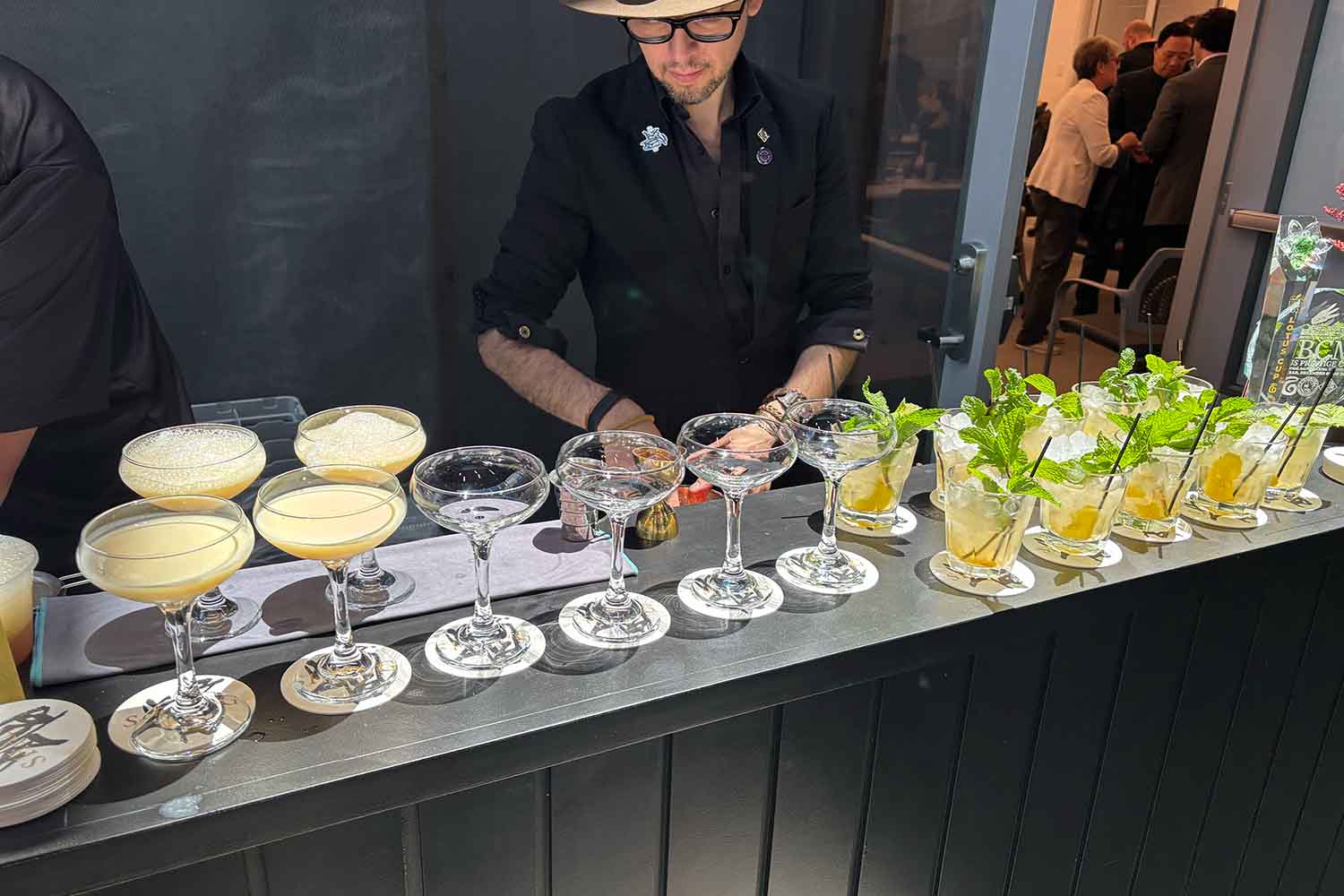
How they taste: I tried both expressions neat during an hour-long tasting session, as well as in various cocktails and at barrel strength (the latter not being available to the public).
- Dàn Yǎ (50% ABV): The funkier of the two, this expression is full of stone fruits, dark chocolate, lychee and a modest salinity. While they’re positioning this one as more of a sipper, I actually think the fruit/floral/sweet/umami notes lend themselves to a broad range of cocktails, whiskey-focused or not.
- East Meets West Kentucky Blend (46% ABV): Conversely, I could see whiskey fans gravitating toward this one a bit more, although it still offers a unique profile. While you’ll find some traditional bourbon notes (vanilla, toffee, apple), I also tasted plenty of sesame and candied ginger. One person in our tasting group even suggested “cucumber,” and a umami savoriness is certainly present.
Overall, this is going to be an acquired taste, but it may be a good start for whiskey fans who want to learn a bit about baijiu, or vice versa. The expansive flavor profiles suggest these may work best with a creative bartender in sweet, floral or savory drinks.
Fun fact: The process of making baijiu requires a “solid-state fermentation” process, which is very different from whiskey fermentation. Thankfully, Ryan Poe of Whiskey House has a quick explanation. “In high-temperature solid-state fermentation, rather than grinding the grain and making a thick slurry or a soup, we ferment the grain solid — we cook it,” he says. “It stays looking like a grain and slowly ferments as a solid. It’s put into pits, and through sequential fermentations, it will slowly break down, develop the flavor, and go through nine different fermentations, eight different extractions and seven distillations.”
Where to buy: Shāng Dàn Yǎ and Shāng East + West Kentucky Blend are available for pre-order online. Dàn Yǎ is available at an SRP of $64.99 for 500mL and $15.99 for 50mL, while East + West Kentucky Blend is available at an SRP of $45.99 for 500mL and $13.99 for 50mL.

More Like This
We're always on the scene eating, drinking and traveling near and far to bring you the best of what's happening out in the real world. Sign up for IRL now.