A growing number of airlines are teaming up with satellite internet providers like Starlink and Project Kuiper to make it easier for passengers to use wifi. In that way, at least, the rapid proliferation of low Earth orbit satellites is a positive for air travel. But the net effect may be negative, due to one major risk: falling space junk.
Last January, the journal Scientific Reports published a paper that looked into the issue of orbital debris closing airspace. “[O]ver 2,300 rocket bodies are already in orbit and will eventually reenter in an uncontrolled manner,” the paper’s authors wrote. And while they point out that the odds of such debris colliding with an airplane are low, they also note that “the consequences could be catastrophic” if such a collision did take place.
The authors of the paper point to rockets falling back to Earth as potentially more dangerous than the satellites themselves, given the differences in size between the two. This hasn’t been the only effort to raise an alarm over space junk’s risk to air travel, either. Writing at Space.com, Kiona N. Smith provided a good overview of the issues at hand — and the growing opinion of experts that something could go very wrong.
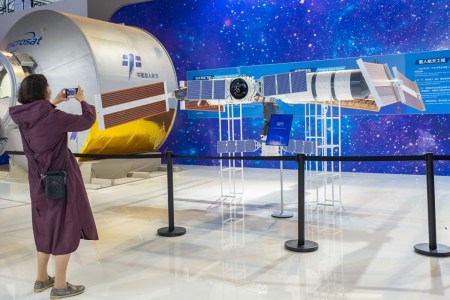
Space Junk Strands Astronauts on China’s Space Station
Plans are underway to send up a working return vesselSmith’s analysis of the risk also points to another issue: while large debris falling to Earth can be a problem, even smaller objects can put flights at risk. “Aircraft can be affected by much smaller pieces of debris,” the European Space Agency’s Benjamin Virgili Bastida told Space.com. “For example, airplanes flying through the ash of a volcano is risky because of the small particles.”

More Like This

We're always on the scene eating, drinking and traveling near and far to bring you the best of what's happening out in the real world. Sign up for IRL now.