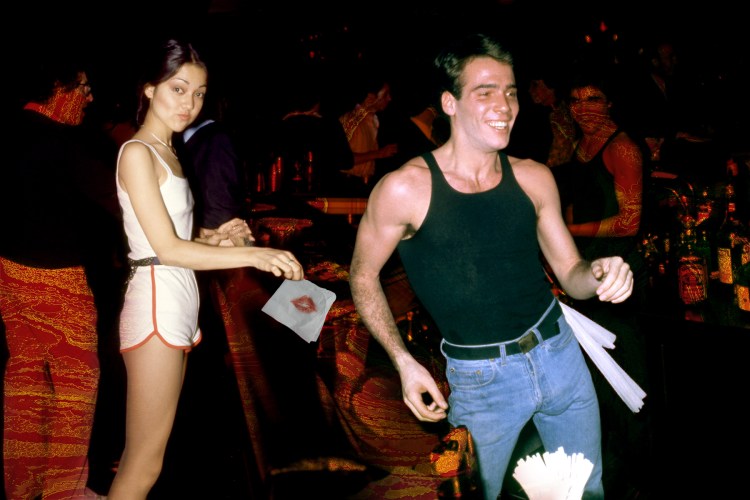
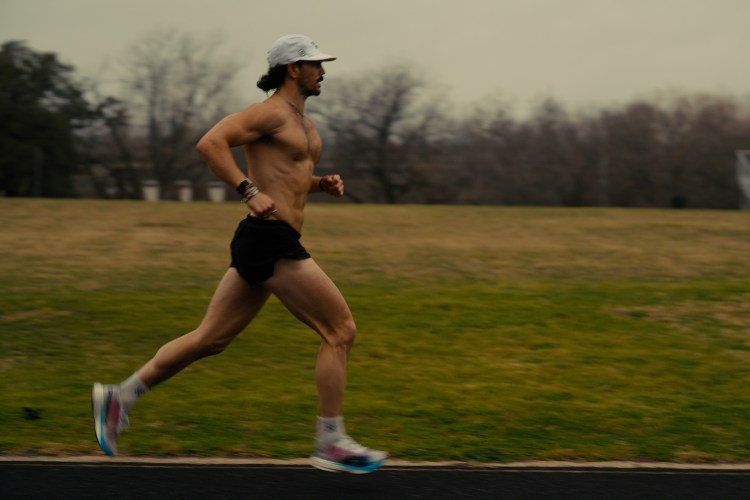
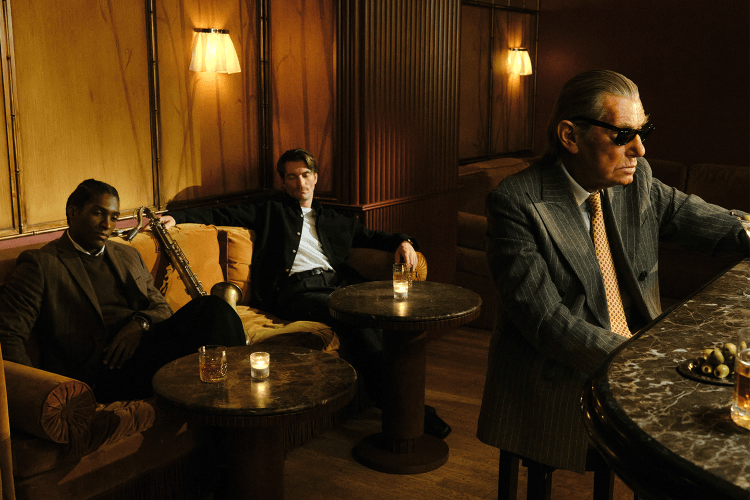
I can’t remember exactly when I met Mayan Rajendran, model, stylist, DJ, designer and founder of the small-but-mighty fashion label called Again. I believe it was at a showroom called M5 in the late 2010s. M5 represented some incredible labels like Stone Island, Barena Venezia and Ten C. It also had a special group of staff and a rotating cast of equally interesting friends at any given time. Mayan worked there for five years, but we connected on a photoshoot for Diesel in 2018 — I was the photographer, he the model.
At some point during the pandemic, we became a lot friendlier through exchanging Instagram DMs about music, food and exercise. Like most of my menswear friendships, fashion was ancillary. All of these cultural elements inform style; not the other way around.
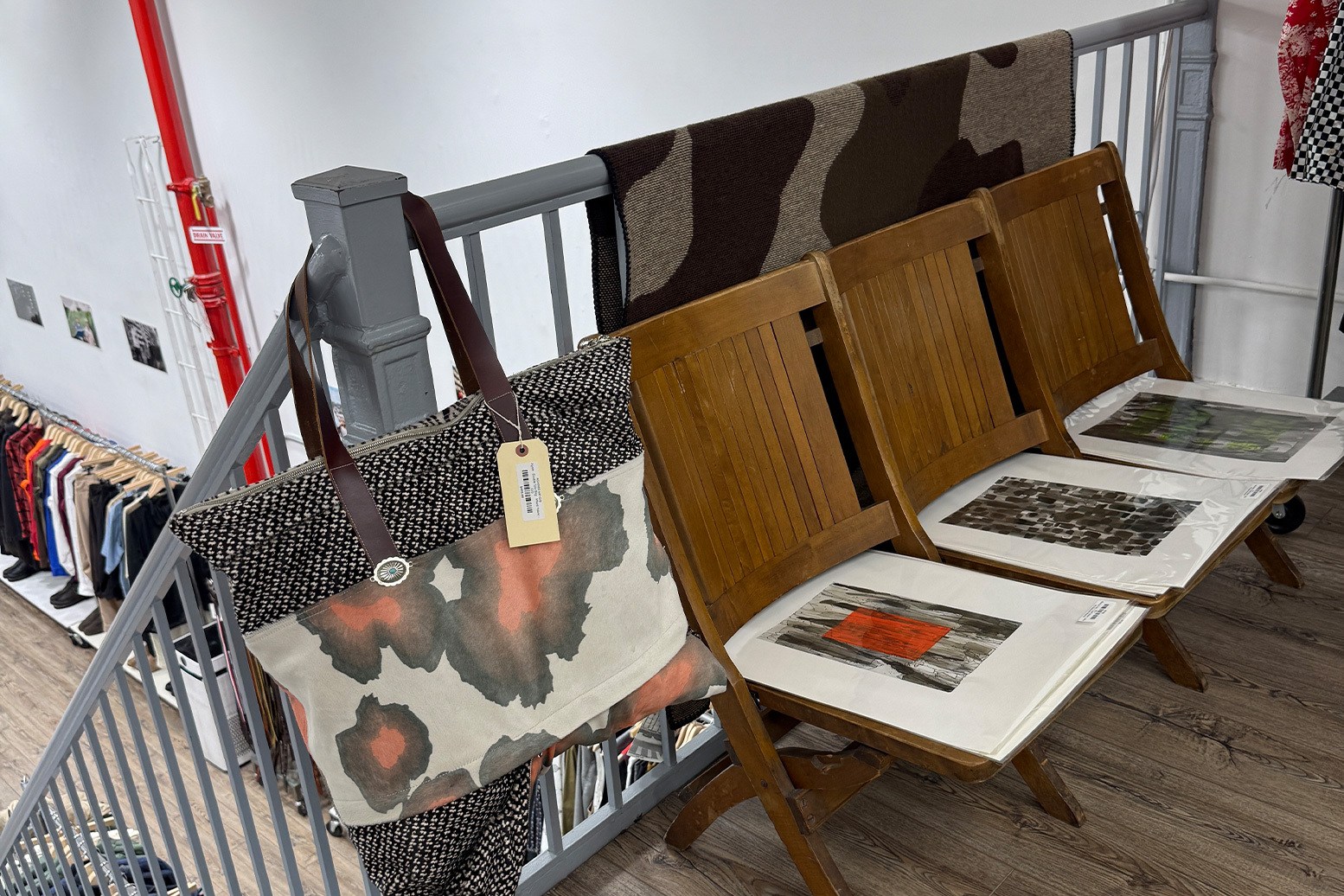
A month and a half ago, Mayan presented his newest Again collection with a pop-up at Nepenthes, the New York City retailer that houses Japanese Americana from Engineered Garments, Needles and South2 West8. It felt like the perfect opportunity to catch up and also see his hard work in person. For now, Again doesn’t have e-commerce. You can give him a follow to keep an eye out on what’s next for the brand or where he’s spinning next. He’s a great DJ, too.
Read on to find out about Mayan’s Canadian-Indian heritage and the impact it’s had on his work, some influences on his brand, the music he’s playing out in New York City and much more.
Christopher Fenimore: Tell me a bit about yourself.
Mayan Rajendran: I have a hard time describing myself. I enjoy doing a few different things and those things help me sustain the life I want to live. I grew up in Nigeria, India and Abu Dhabi before immigrating to Canada in 1997. I am a first-generation immigrant, the oldest of two sons. I moved to New York in the summer 2011 to intern at WGSN and Robert Geller while finishing my MA in fashion. I eventually moved here in 2013. I come from a traditional South-Indian household, but I grew up in the art education system as a painter. That led me to learn about visual and color theory and eventually fashion.
CF: Why did you guys move around?
MR: My dad wanted to give my brother and me a better life. He was a bit displaced after losing his father as a young boy and had to leave Sri Lanka as a result of the disenfranchisement of Hill Country Tamils. As a result, he became nomadic at a young age, having to live in different homes of family members in South India. So, after he and my mom had my brother and me they tried different places around the world. Canada provided a good sense of socialism, and that was their last stop.
CF: What is Again? Why did you start it? How long has it been a brand?
MR: I started Again in 2018 and showed my first little offering in Paris in January 2019. I come from a South Indian background and having grown up in North America, I felt like I was living between cultural identities. My clothes became the space that reflected both my heritage and upbringing. It’s Indian Americana through a South Indian lens. “Fusion,” as my aunties would say [laughs].
CF: How often do you do new collections?
MR: Up until this point, I have been rolling one style into another and haven’t been part of the traditional fashion calendar. All of those added up last year, and I showed a full collection in July 2025. Moving forward, I will be releasing capsule collections throughout the year.
CF: How did you first get into clothing?
MR: While in my undergrad, I was introduced to fashion as a career. That led me to start making samples and got me really curious about textiles. But for many of us in menswear, it began with sneakers, then the internet and then the introduction of magazines and blogs.
CF: What are some influences on Again? It’s pretty wild stuff.
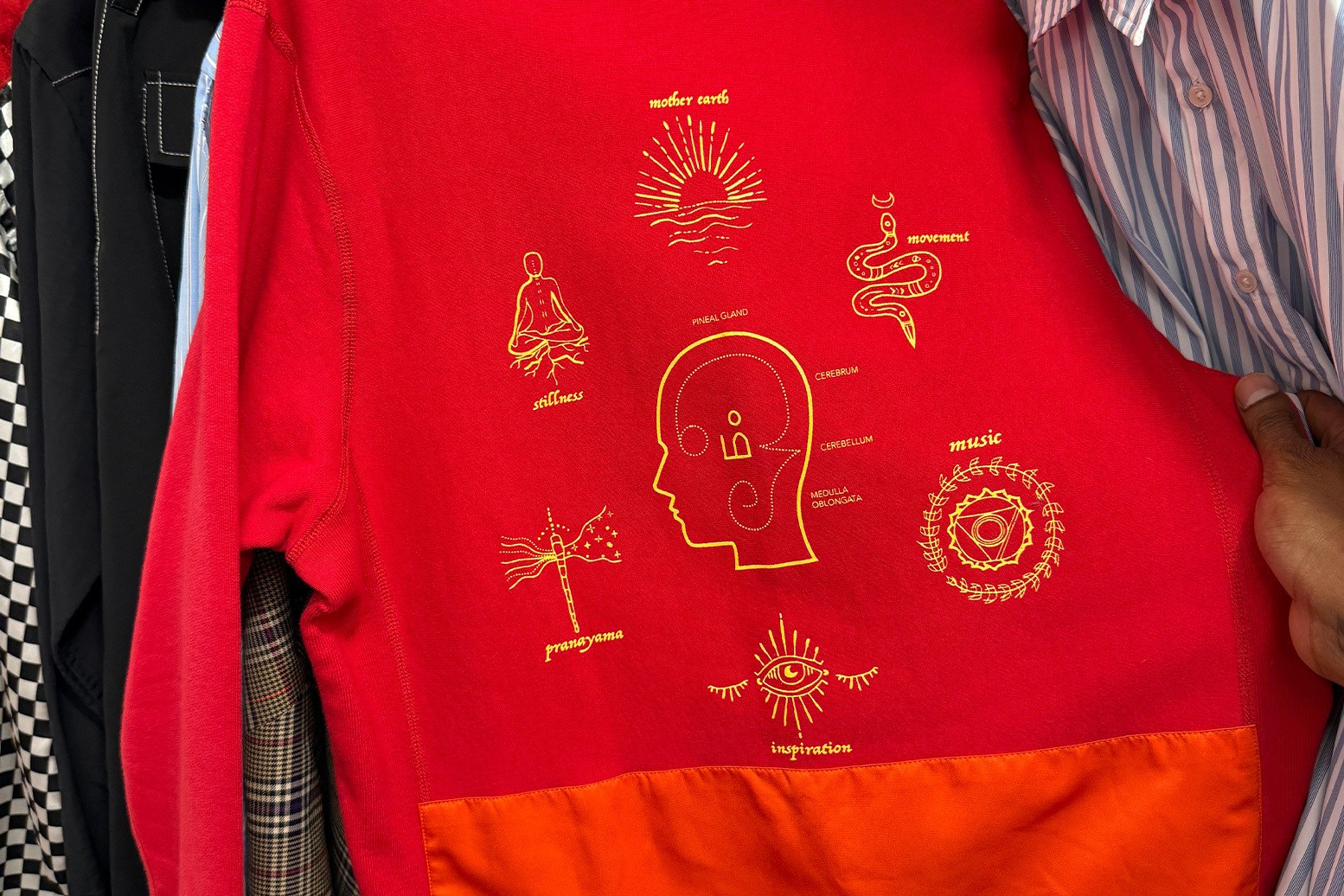
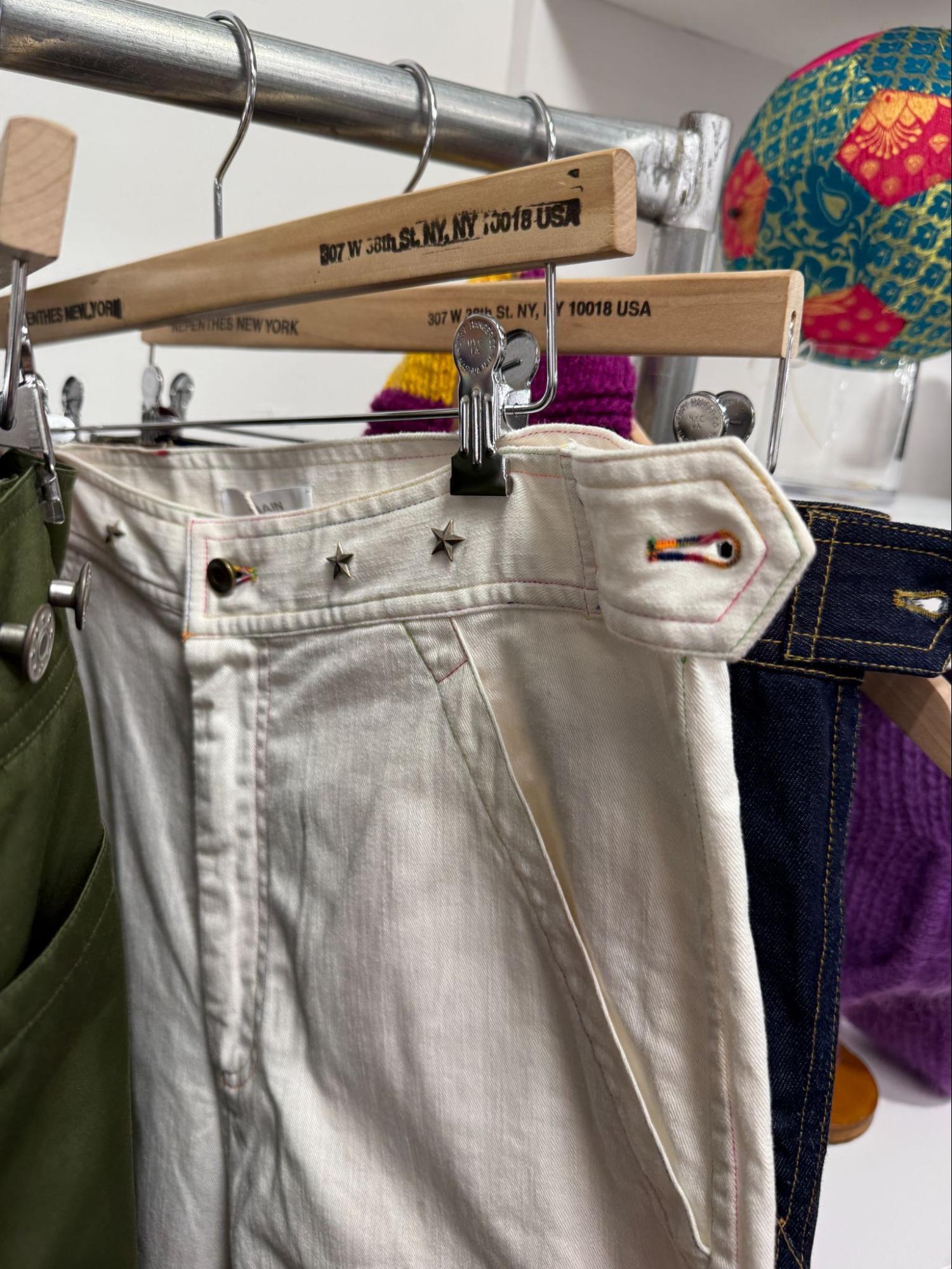
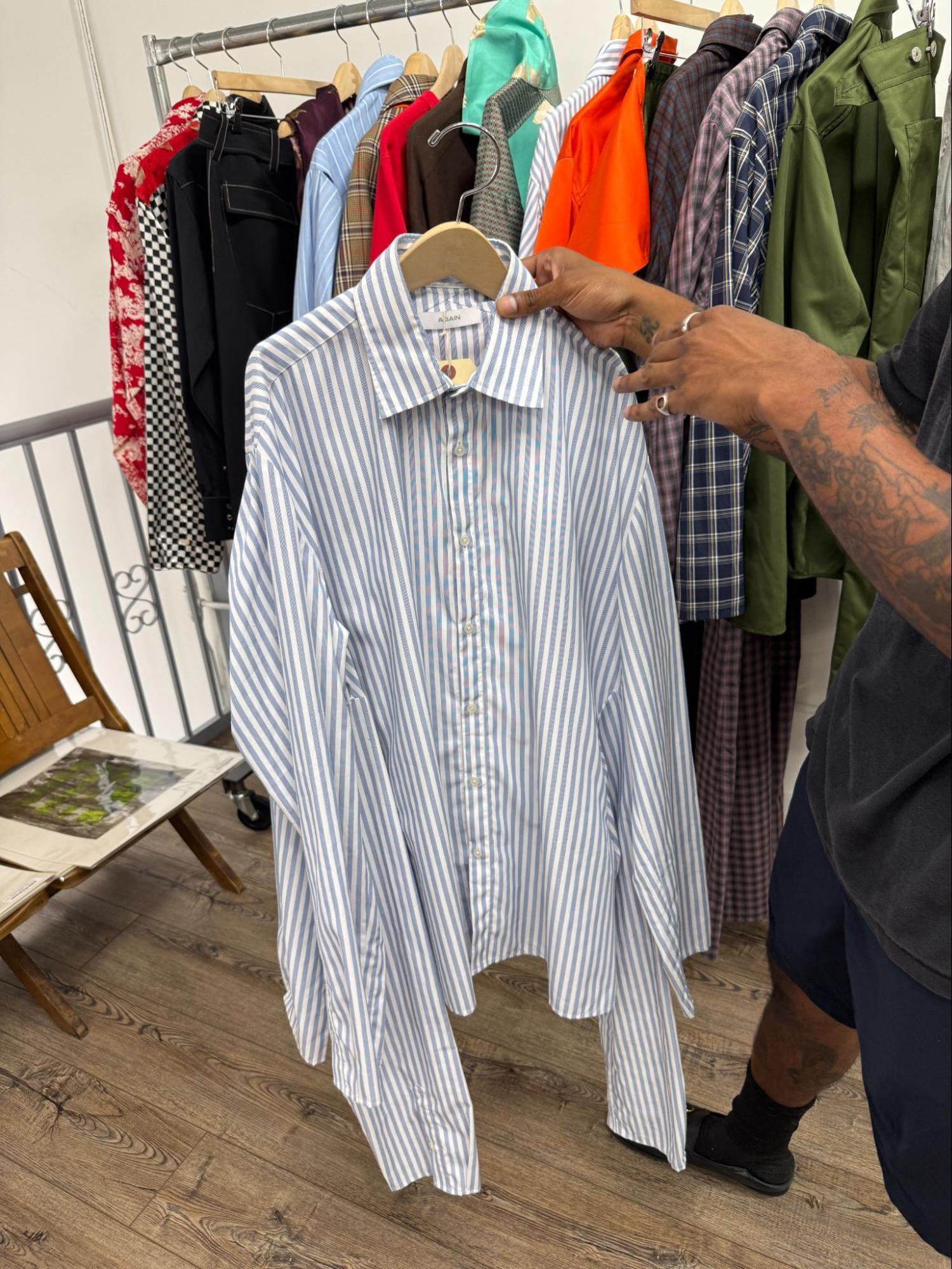
MR: They are elements and memories of my Tamil heritage and being a New Yorker. Take the “Six-Sleeve Shirt” for example. It might look like a traditional Brooks Brothers shirt but created for a Hindu deity heading down to Wall Street. Living here has us constantly balancing this juggling act, and I personally felt like I was using two extra sets of hands every day. Modularity and duality are some of the pillars of my work, so each item has a few different ways it can be worn. My pieces are meant to take on different appearances depending on how you are feeling.
CF: Do you have any wholesale accounts?
MR: None. I’ve been doing trunk shows, pop-ups and personal orders. This one [at Nepenthes] is my most recent.
CF: What are some other brands you’re rocking with these days, or at least inspired by?
MR: I have been wearing a mix of surplus and vintage, leaning into oversized bombers and pants, tie-dye and knitted prints, vintage Valentino blazers and cowboy and harness boots. I’ve been hugely inspired by Prada, [specifically] 2014 to 2016 when there was a little bit of whimsy around menswear, but yet it still felt very menswear-y. I’m a huge Dries [Van Noten] fan, especially because Dries makes me feel so proud of my heritage. A lot of the fabrics [he uses] do come from the South, especially silk. It’s nice to see appreciation through that lens. But something that someone told me is, you know, nobody’s going to ever own your culture like yourself. I’ve been trying to keep that in mind. And the customer, too. I don’t know how many other guys or girls are like me who feel like they’re stuck in this limbo space of being Indian or American, but not having a middle ground where they can exercise both sides of their personalities.
CF: We’ve had this conversation before about people who are mixed with different races or come from different places. It’s interesting; it’s becoming a more common feeling because people are mixing more, too. There are more people who are just not one thing. It’s cool when you can link up with people of a similar mindset or a similar background and have those conversations and those shared experiences. It’s great to meet with people who have had similar struggles because then you can relate empathetically.
MR: For sure. Especially as men, these types of conversations help us drop our guard. I mean, that’s how you and I really started chopping it up. We started talking about personal things and then that opened the floodgates for us to feel very comfortable in how and what we communicate.
CF: We’ve had some deep conversations over the years. Almost nothing to do with clothing, actually. Like, music is huge for us, for you.
MR: For sure, since I started DJing, music and going out dancing has become a constant in my life. It gets me into a state of flow where I can clear my head and feel centred. And if I am sharing it with people I love, it means I really love them.
CF: What are you spinning?
MR: When I play at Botanica, it’s old-school New York vibes; dancehall, R&B and throwbacks, baby. Dutty wine. When I play in Bushwick, it’s a lot of hard groove, acid, really fast dancy stuff. It’s a fun sound for me, and I’m hoping it’s a new sound for someone else, too. I just want to share what I love.
CF: Ideally, what do you hope for the brand in a few years?
MR: I would love to see the brand in cities that have a population of the Tamil diaspora. Toronto, Paris, Zurich, Oslo, London, Cape Town.
CF: And you said it’s all made in New York? Where are you sourcing fabrics from?
MR: At the moment, everything is sourced and made right here in the Garment District. But my fabrics come from all over. I’ve found them in Germany, India, Italy, Mexico. So it all depends.
CF: How’d you get connected with your Garment District people?
MR: I’ve had a number of different people help me out. Some people were kind enough to share their resources. It was great, and it does feel like a How to Make It in America moment, on so many different levels. It was so amazing. What a time.

CF: It really was. All of Deveaux’s [where I worked for some time] stuff was made up here.
MR: I think your stuff was made in the same factory too. Shoutout Legacy Sewing.
More Like This
This article appeared in an InsideHook newsletter. Sign up for free to get more on travel, wellness, style, drinking, and culture..