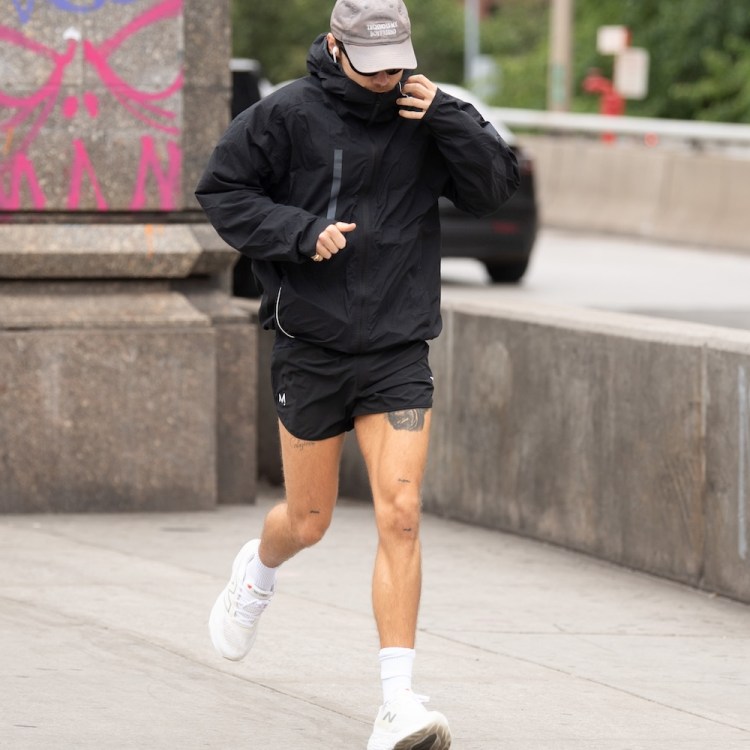
Looking exhausted used to be a badge of honor. The dark circles after an all-nighter. The unkempt hair. The coffee in hand. Speaking as someone who has battled dark circles for my entire life, it can also carry a sort of nonchalant indie-rocker, “I’ve been up all night doing something interesting” energy, which has previously implied a certain sense of cool. But somewhere along the way, men’s cultural aspirations shifted.
“A lot of disillusionment from overworked, overpromised, underpaid millennials proved that working relentlessly doesn’t always fulfill one’s definition of success,” says Adam Hurly, grooming journalist and founder of Blue Print. “Now, there’s currency in having peace of mind, separation between work and personal life, and focusing on the things we have more control over, like getting more sleep and taking better care of ourselves.”
These days, guys don’t want to look like workaholics, they want to look well rested. I can see it in the new products that land on my grooming shelf — it’s not just anti-aging serums and moisturizers anymore, it’s LED masks, eye patches, eye serums and even jet-lag pills.
“What I’ve noticed is that many men today aren’t necessarily focused on looking younger,” says Dr. Alexander GolBerg, a double board-certified physician. “They want to look healthier, more energetic and more vibrant. They want people to say ‘You look great,’ not ‘You look younger.’”
How did we go from celebrating the all-nighter to trying to erase every sign of one?
The Camera’s Always On
First, there are the obvious culprits for this change: endless FaceTimes and Zoom calls, and the constant possibility of being photographed. No one wants to be caught with dark circles or a puffy face when the camera appears. If you spend your day bouncing between video calls, you already know how lighting hits differently.
“We are so aware of how we appear on camera now, and our lives are constantly surveilled by other people’s phones, photos, even down to Ring lights on porches,” says Hurly. “We are much more aware of how we present to others.” He adds that looking optimal on camera has become “a baseline expectation these days,” and sometimes a video call or meeting is “the only real opportunity we have in a day to show off ourselves, so it’s just as important to look good there as it is for work or a date.”
Anti-Aging Isn’t Going Anywhere, But the Goal Has Changed
This isn’t to say men have stopped caring about the idea of anti-aging. If I had a dollar for every serum, cream and moisturizer I’ve tested as a grooming editor to make recommendations for healthier, more youthful skin, I’d probably be writing this from a mountaintop retreat somewhere. What I see now is less a departure from anti-aging and more an evolution of the conversation. Guys still want better skin, but it’s increasingly about looking like the healthiest version of yourself at the age you are.
“I feel like we are still trying to look younger or at least preserve what we have and maximize what we’re working with… looking rested and fresh is the best way to do that,” says Hurly. “I think more men are coming around to the notion that skincare longevity is, in fact, an incremental, daily effort, and even doing preventative things like daily facial SPF can play a big role in our ability to look healthy, relaxed and our most youthful selves.”
Dr. GolBerg notes that aging and looking tired often overlap, but they’re not the same thing. “When we talk about aging, we’re usually talking about gradual structural changes — collagen loss, skin thinning, changes in elasticity,” he says. “Someone can be relatively young and still look exhausted. Puffiness, dark circles, dull skin, dehydration, stress, poor sleep, allergies and even diet can all contribute to that tired appearance.”
We are all going to age. The goal isn’t to fight that reality, but to work with it. While there are countless ways to support skin health over time, there are also immediate ways to look more like the best version of yourself today.

The 9 Best Eye Creams for Men Will Make You Look and Feel Rejuvenated
Turns out you don’t need to live with dark circles, wrinkles and puffinessThe Eyes Tell All
No facial feature gives away a long night or a stressful week quite like the eyes. So it’s no surprise that eye patches, creams and serums have all exploded in popularity. “The eye area is usually the biggest giveaway,” says Dr. GolBerg. “People notice puffiness, dark circles, hollowing under the eyes or a generally heavy appearance around the eyelids.”
The skin around the eyes can also appear dull or dehydrated, making the area look less bright and more fatigued. “Sometimes patients think they look tired because of wrinkles, but often it’s actually swelling, discoloration or volume loss around the eyes creating that impression,” he adds. “This delicate area is particularly sensitive and often reveals what’s happening internally, whether that’s chronic stress, poor sleep, inflammation or other lifestyle factors.”
A good eye cream or serum can help brighten and refresh the area in a pinch. But no product is going to completely erase years of dark circles overnight, especially because not all under-eye circles are created equal. The reason your friend’s miracle eye cream worked for him may be exactly why it doesn’t work the same way for you.
“That’s one of the most important parts of the evaluation — dark circles are not all the same,” Dr. GolBerg says. “Some are caused by pigmentation, others by thin skin that makes underlying blood vessels more visible and many are simply shadows created by volume loss beneath the eyes. The key is identifying what’s causing the darkness.”
Does This Stuff Actually Work?
The modern grooming shelf isn’t just a curated collection of goop. Eye patches, cooling masks and LED devices all reflect how far the conversation about looking well rested has evolved. Many of these products can make a noticeable difference — at least temporarily. But how much of it is backed by science?
“Some definitely have more evidence behind them than others,” says Dr. GolBerg. “LED therapy, particularly red-light therapy, has growing scientific support for improving skin quality over time, while cooling masks can temporarily reduce puffiness by constricting blood vessels.”
Good skincare products are worth the investment, too. “Retinoids, antioxidants, peptides, niacinamide and targeted eye treatments can improve skin quality and soften visible signs of fatigue,” says Dr. GolBerg, but the key is keeping expectations realistic. “These tools can help, but they’re not magic. They work best as part of an overall strategy rather than as a replacement for good sleep, healthy nutrition and stress management.”
Quick Fixes and Long-Term Habits
So, what helps when you want to look like you slept eight hours, even though your under-eye circles, your third cup of coffee and your camera roll say otherwise?
First, you can’t moisturize your way out of burnout. “Nothing beats a good night of sleep and minimal vices,” says Hurly. “Smoking, drinking and junk food are some of the biggest obstacles to looking fresh and having clear, bright skin.” Dr. GolBerg agrees that sleep remains the foundation. “During sleep, the body repairs itself. Inflammation decreases, hormones rebalance, circulation improves and the skin has an opportunity to recover,” he says. “No skincare product can completely replace that process.”
He also recommends avoiding alcohol and excessive sodium before bed, both of which can contribute to facial and specifically under-eye puffiness the next day. If you’re prone to swelling, sleeping with your head slightly elevated can also help. “One thing I frequently recommend is magnesium glycinate before bed,” he adds. “Many people find that it improves sleep quality and helps them wake up feeling more rested.”
That said, there are certain products that can help you look a little more refreshed when life gets in the way. Hurly recommends looking for face masks with invigorating, stimulating ingredients like caffeine, niacinamide and peptides that can wake up the skin, calm redness and provide a temporary firming effect.
He also points out that grooming tweaks beyond your skincare routine can make a difference. “Don’t underestimate the power of well-manicured facial hair and a hairstyle,” he says. “Even the slightest intention with both things can make you look put together rather than disheveled. I’m not saying you need to be clean-shaven or have a fresh fade. Just give yourself the time in the morning to groom yourself, wash and condition your hair, style it (maybe even with a blow dryer), and make everything feel more intentional. Oh, and spritz on a fresh cologne — maybe an aquatic or barbershop style. It’ll help you project the freshness to others.”
Consistency Is Key
The men who look the most refreshed usually have something in common: consistency. Healthy-looking skin starts long before you open a jar of cream.
“If I look at the patients who age exceptionally well, the common denominator is not a specific product — it’s overall health,” says Dr. GolBerg. “They prioritize sleep, keep inflammation under control, stay physically active and maintain healthy habits. The face reflects what’s happening inside the body.” That means the less glamorous habits matter: consistent sleep, staying hydrated, wearing sunscreen, eating well, exercising regularly and managing stress. Eye patches and cooling masks can help you fake a good night’s sleep, but they can’t replace one.
Maybe that’s the healthiest place men’s grooming has landed. The goal isn’t to necessarily turn back the clock — it’s to look like the best version of yourself now. For years, looking exhausted meant you were busy, ambitious and always on. Now, looking well rested might be the new flex — even as some of us still reach for eye patches before the morning Zoom call.
About the Experts
Adam Hurly, grooming journalist for GQ, Robb Report, Esquire and more. He’s the founder of the men’s grooming platform Blue Print by Adam Hurly across web and YouTube.
Dr. Alexander GolBerg, MD, DO, is a double board-certified doctor specializing in functional and aesthetic care. After completing his medical education at St. Petersburg Medical Academy and the New York College of Osteopathic Medicine, he went on to a fellowship at the American Academy of Anti-Aging and served as chief resident at Peninsula Hospital. His New York-based practice focuses on groundbreaking, concierge-style integrated medicine and non-surgical aesthetic treatments. Today, he brings a revolutionary approach to integrative health, bridging functional diagnostics with aesthetic innovation in a practice trusted by celebrities and discerning patients alike.

More Like This

We're always on the scene eating, drinking and traveling near and far to bring you the best of what's happening out in the real world. Sign up for IRL now.