For much of my life, whenever I’ve spotted a neglected novel in my periphery, I’ve looked away. I’m not an “extreme empath,” but I can’t help feel guilty — like the book’s sitting there wondering when the hell I’m going to get my act together.
Despite my editorial profession, I’m actually a really slow reader, capable of only finishing 12 books a year. I can reach 15 if I throw some light page counts in there. The problem is I tend to read pages two or three times, determined to make sure I understood exactly what I read. It’s useful in the long run, maddening in the short term.
Making matter worse: I love bookstores, I maintain a wide variety of reading interests (literary fiction, history, science, humor, sports) and happen to date someone who works in books, who can’t get through a week without bringing at least one galley home.
Recently, though I discovered some relief from this low-grade affliction. There appears to be legitimate value in the act of acquiring books….that you’ll potentially never read. Simply surrounding yourself with novels, memoirs and non-fiction appears to convey positive and lasting effects, even if they end up piled high and caked in dust.
Get to Know “Tsundoku”
What kind of nonsense philosophy is that? It’s actually rooted in a Japanese practice called tsundoku, which is an efficient portmanteau of the words tsunde-oku (letting things pile up) and dukosho (reading books).
The term originated in the 19th century to chastise teachers who never seemed to read the books they owned, and shares some cross-cultural DNA with “bibliomania,” which was tossed around in England at a similar time to describe obsessive book collectors.
In the 150 some-odd years since, though, tsundoku has assumed a more positive connotation. Various authors and statisticians have described the process of surrounding oneself with books as a “fruitful relationship with knowledge,” as opposed to heedless hoarder behavior. Keeping an “antilibrary,” some have argued, may be a reminder of one’s ignorance — but that’s a good thing. It’s a signal that you have more to discover and learn, that your ideas can always be challenged, that the work is never done.
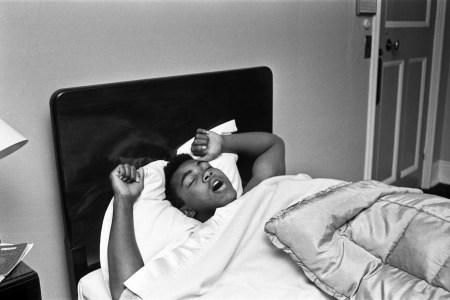
How to Completely Empty Your Head Before Bed
Pilots, surgeons and other professionals who can’t afford a bad night’s sleep share their strategies for reliable shut-eyeLessons From Hemingway
Obviously, it’s a little harder to romanticize that concept if you have a tiny apartment (or a tiny paycheck). But if you’re a reader by trade, you’re used to making room in your bedroom or budget for books anyway. This argument suggests you should never feel bad about bringing more of them into your life. And surely they have more use to you if they haven’t yet been read? What’s so great about sitting amidst a bunch of information you already know? Where’s the thrill (or humility) in that?
One of the most fascinating trips I took as a young writer brought me to Ernest Hemingway’s Finca Vigía in Havana. It was his home for 20 years, and has been a museum for over 60. The place is an open-air marvel, with all sorts of interesting views, furniture and stuffed mammals, but what’s stuck with me the most was the size of Hemingway’s library.
It wasn’t confined to one room, but spread and scattered across every single room of the house. There were books over his fireplace, in his kitchen, stuffed between his toilet and the shower. Could he have read every single one of them? It’s possible. Were they invaluable research tools in an era long before Google? Almost certainly. That collection could be considered a tacit vote for tsundoku: as long as books are around, information and inspiration are never far away.
If you’re a reader, this is neither a denouncement of Kindles, nor a PSA to go purchase a full Knausgård set at your local mom-and-pop. It’s simply a nudge to go a little easier on yourself. Cluttered space, cluttered brain…perhaps. But what then can we expect from a completely empty space?
Meet your guide
More Like This



Twice a week, you'll find guinea pig features, personal essays and expert interviews on living better — for however long you’re here. Subscribe to Champ now.