Welcome to Watchword — a series in which we break down key terminology to help you better understand the lay of the horological land. In this episode, we dig into the manufacturer-retailer double-signature and its effect upon watch prices.
When one thinks of Patek Philippe, one invariably conjures images of old-world Europe: of the Jet d’Eau proudly spewing 7,000 gallons of Evian per minute into the Genevan atmosphere, of young regents donning their dress uniforms with solid-gold perpetual calendar-chronographs poking out from their cuffs, of dinners that begin slowly at 8 p.m. and continue into the wee hours of the following morning.

The Best Skeleton and Openworked Watches
These fascinating pieces give a glimpse inside a watch as it’s workingThat’s all well and good, to be sure, but did you know that among the maison’s oldest commercial relationships is that with Tiffany & Co, an American jeweler? (Or, at least it was an American jeweler until it was acquired by LVMH in 2021 for nearly $16 billion.) After concluding an informal handshake deal in New York City in 1854 — three years after Tiffany began selling Patek Philippe timepieces — Antoine Norbert de Patek and Charles Tiffany signed an exclusive agreement in 1876 that would lead to one of the most profitable and longstanding maker-retailer relationships in the world.
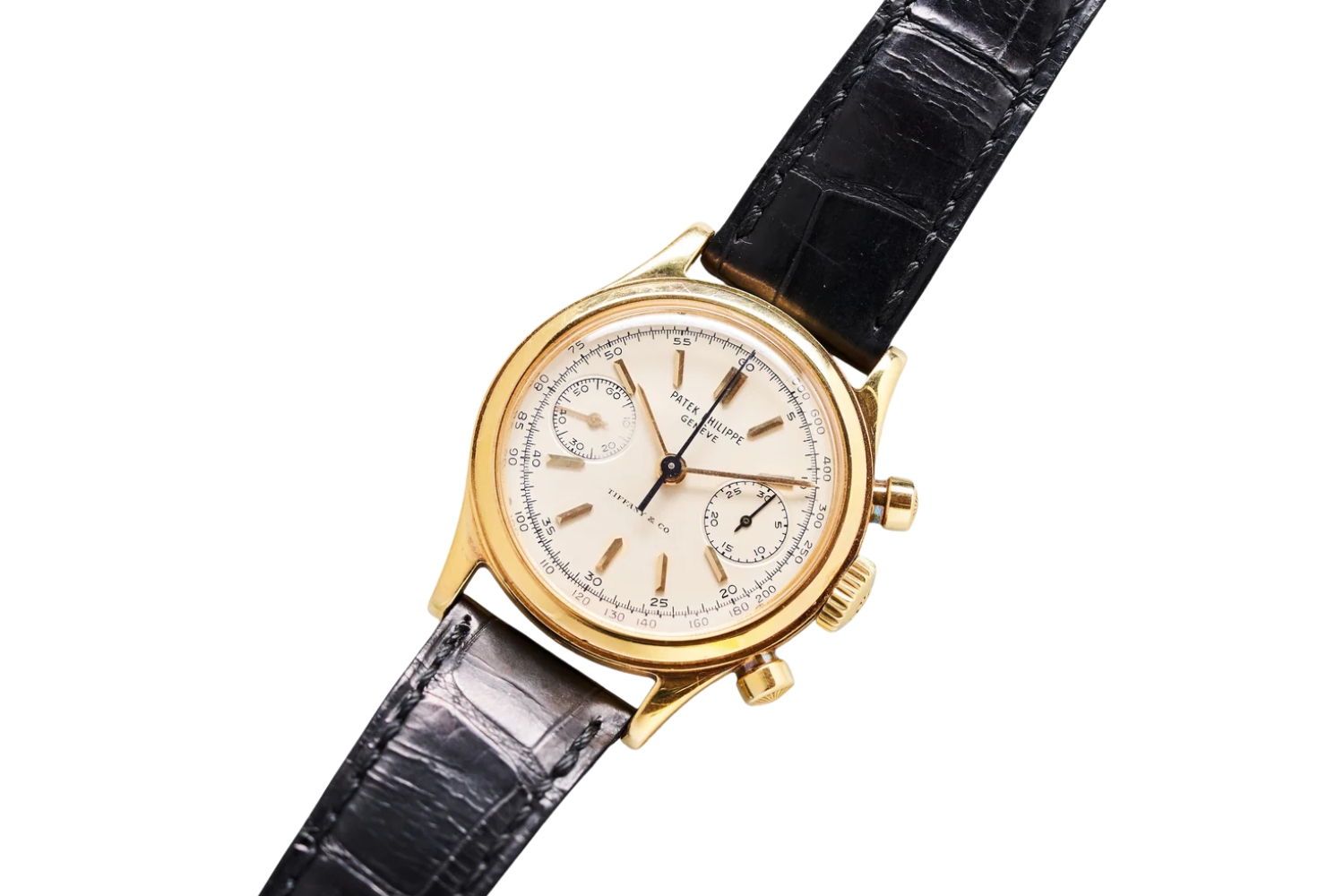
In honor of this partnership, Patek would add the Tiffany & Co. wordmark to the dials of certain watches sold within Tiffany locations — a sign of distinction that further served to differentiate such timepieces from otherwise-identical pieces sold elsewhere. In fact, beginning in the 1930s, Patek allowed Tiffany & Co. to sign the dials themselves upon taking delivery of the watches — an honor that not many other retailers shared. (In industry parlance, we call this a “double-signed” watch.)
There were, of course, other retailers: Those who have a penchant for flipping through auction catalogs will recognize Swiss names such as Beyer, Gübelin and Bucherer (the latter now owned by Rolex) as well as famed South American retailers, now defunct, like Serpico y Laino, Freccero and Gondolo & Labouriau, which was once responsible for as much as a third of Patek’s annual sales. And this is to say nothing of other well-established European retailers outside of Switzerland such as London’s Asprey, Rome’s Hausmann & Co, Milan’s Ronchi and Naples’s Trucchi Orologeria. Patek’s partnerships with certain of these esteemed businesses spanned decades or well over a century — in the case of Beyer, the relationship is closing in on two centuries! — and resulted in myriad double-signed watches sold throughout the old and new world.
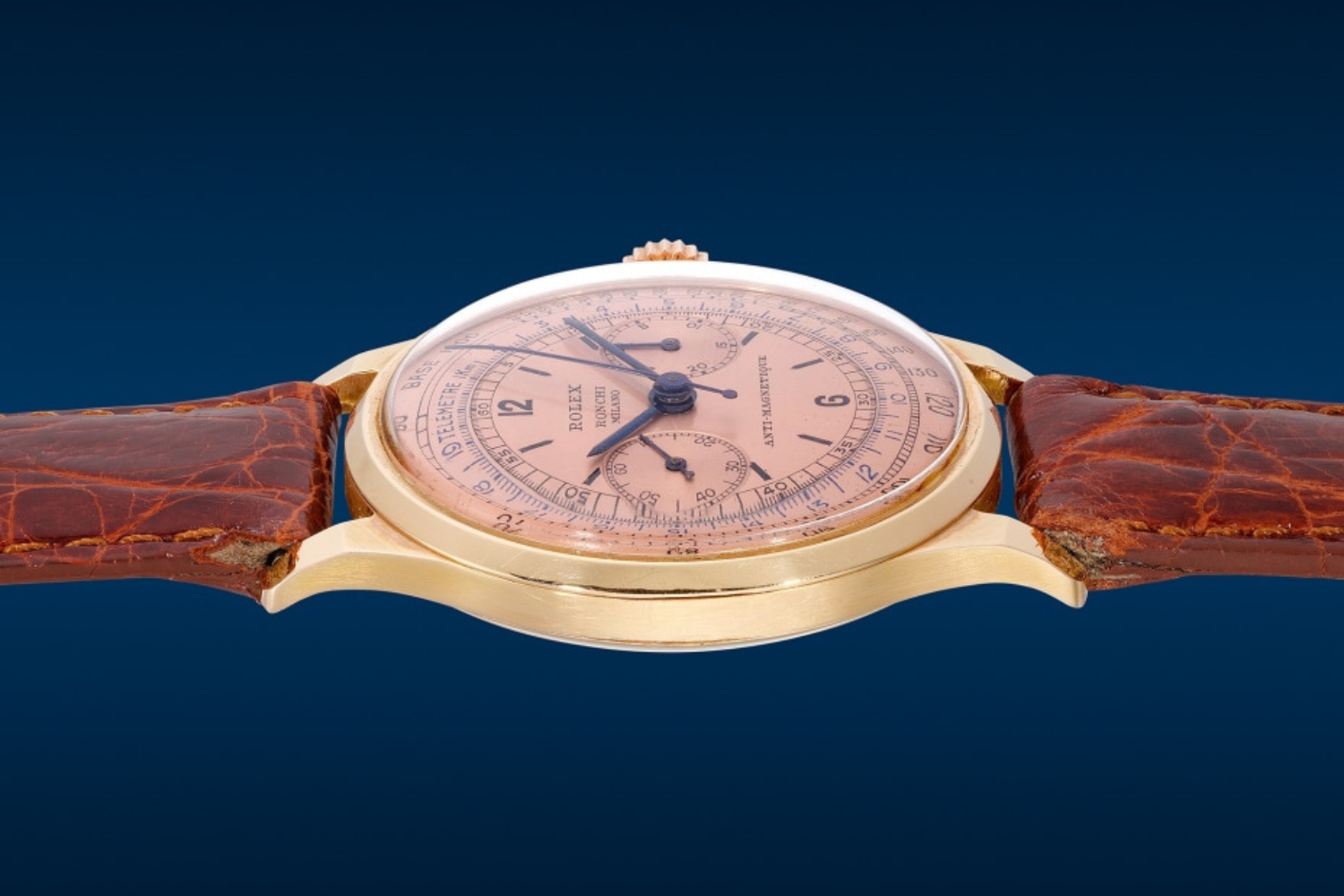
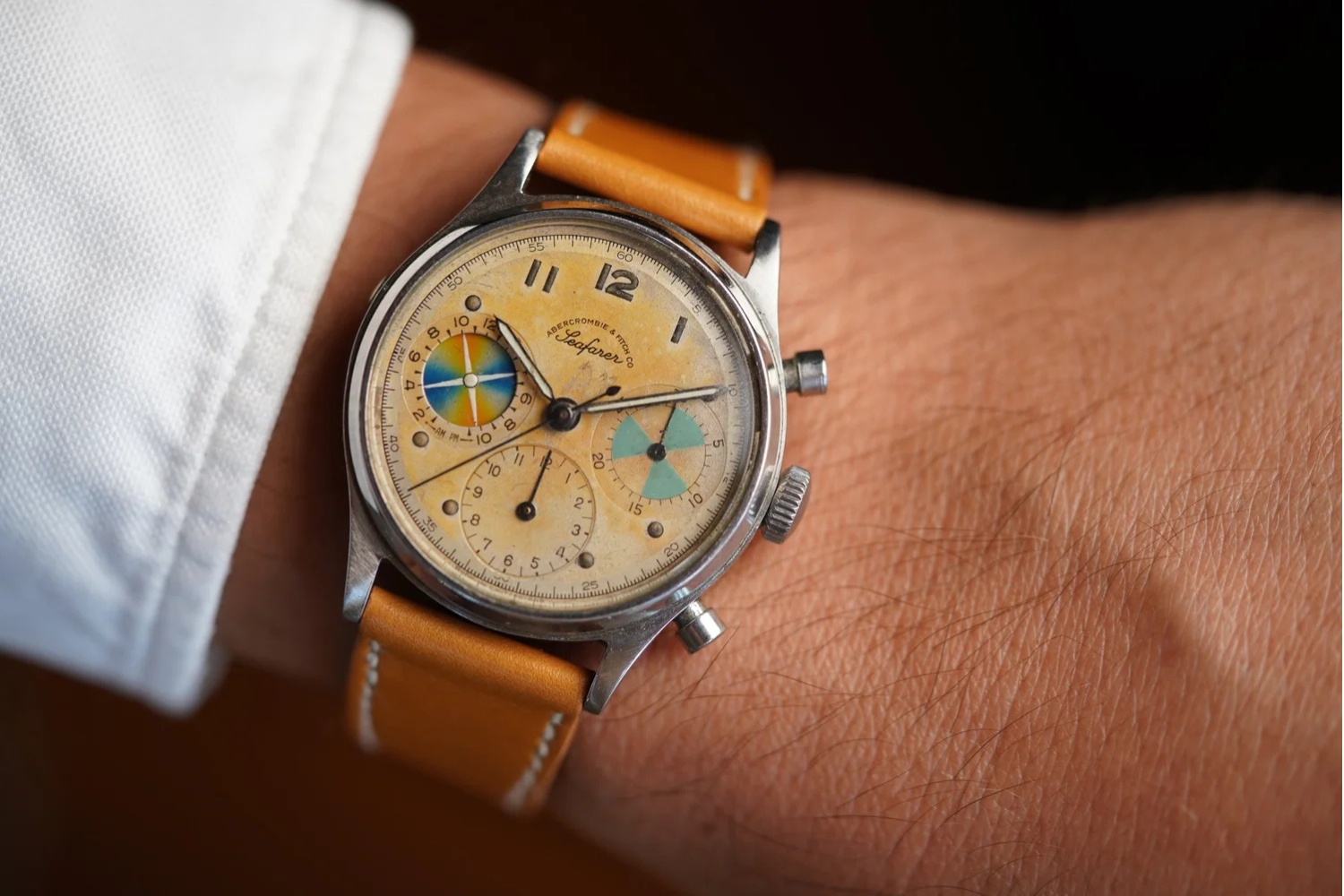
Patek, however, was hardly the only maison whose watches carried the signature of famous retail partners: Auction catalogs and watch resellers are rife with Rolex pieces carrying the wordmarks of the aforementioned names, plus others such as Canada’s Birks, Paris’s Cartier, Zürich’s Meister, New York City’s Abercrombie & Fitch and Nairobi’s Dobbies Ltd. Other watchmakers also engaged of the practice, which was common from the beginning of the 20th century through the midcentury, and then tapered off both as retailers closed their doors (Serpico y Laino, for example); as brands themselves ceased operations or changed hands (Universal Genève); or as watchmakers ended the relationship (Rolex and Tiffany).
Perhaps predictably given their pedigree, the double-signature practice has continued unabated into the 21st century in the form of the relationship between Patek Philippe and Tiffany & Co, with the retailer offering a handful of references each year that feature its wordmark subtly displayed on the dial — the offerings are updated as Patek debuts new references and retires old ones — as well as limited-edition runs of special pieces like the blue-dialed Nautilus ref. 5711. Representing the pinnacle of both jewelers/luxury retailers and watchmaking, this mutually beneficial relationship bears the torch for a practice that largely fell by the wayside and is only recently enjoying somewhat of a renaissance — albeit in slightly altered form.
In 2017, Tudor launched an exclusive version of its flagship Black Bay 41 in concert with Harrod’s, the famed London retailer, offering a green bezel inspired by the department store’s signature color and a special caseback engraving. While the watch isn’t double-signed on the dial, it does offer a configuration unique to this edition, marking a unique evolution of the watchmaker-retailer partnership model.
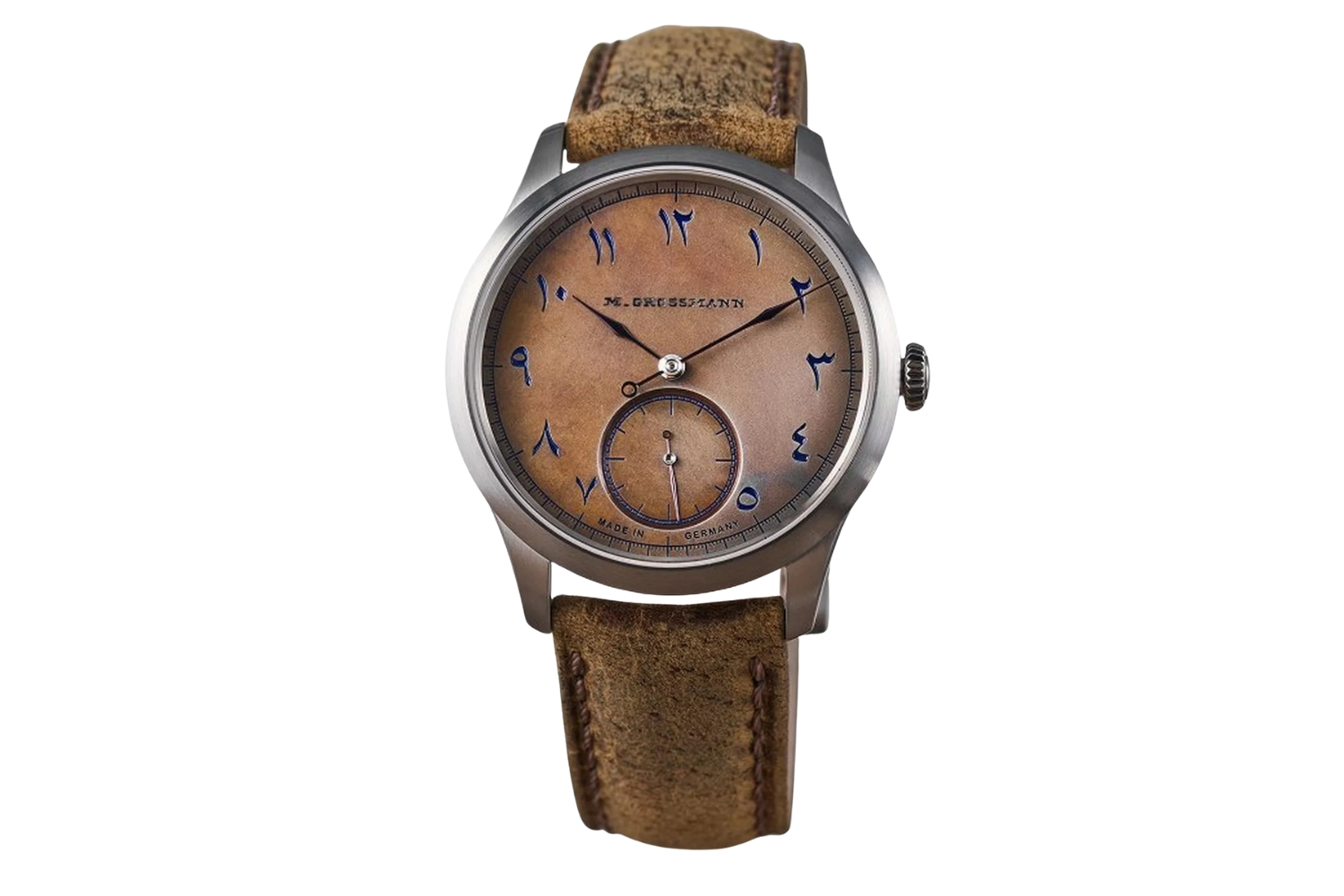
Other examples of such pieces include Bucherer’s line of special-edition watches produced by the likes of Breitling, Girard-Perregaux, Blancpain and others and various makes and models produced especially for the Emirati retailer Ahmed Seddiqi, which often feature Eastern Arabic dials. Likewise, Patek Philippe continues to make special-edition pieces in concert with other of its important retailers such as Beyer, which might be double-signed either on the dials or on the casebacks.
Today, double-signed watches continue to fascinate the collecting community for their rarity, storytelling and association with particular locations and eras. Indeed, Phillips’ Double Signed thematic auction offered no fewer than 60 of these incredibly special watches in 2019, while other non-thematic auctions continue to feature them regularly. Meanwhile, vintage watch retailers and dealers such as Eric Wind of Wind Vintage and James Lamdin of Watches of Switzerland’s Analog:Shift offer them for sale on their respective websites.
“All vintage watches tell a story — a picture can be painted of the life they have lived and the things they have been witness to by factoring in their age, style, condition and historical data points about the model or brand,” says Lamdin. “But it’s rare that an enthusiast collector is able to glean much in the way of specific provenance pertaining to an individual timepiece — and short of being handed a decades-old watch from the original owner with a detailed diary of their life to go along with it, a double-signature or engraving can go a long way to ensuring that the picture being painted is an accurate depiction.”
Indeed, it’s the storytelling associated with vintage watches that is at least partially responsible for their absolute explosion in popularity over the past 15 years. While brand-new watches offer a “clean slate” for an owner to imprint his or her memories upon, there’s something intangible about a decades-old timepiece — especially one with a particularly double-signature — that stirs the imagination.
“While a collector may not feel any particular association with the company or retailer specifically, these signatures fall solidly into the category of ’emotional X-factor’ that drives so many enthusiasts to collect,” continues Lamdin. “It is the unknowable romance of vintage things — just ever so slightly more knowable.”
Meet your guide

More Like This

This article appeared in The Stitch. Sign up for free to get an expertly curated guide to the ever-changing world of fashion, offering insights and and advice on how to navigate current trends and elevate your personal style.