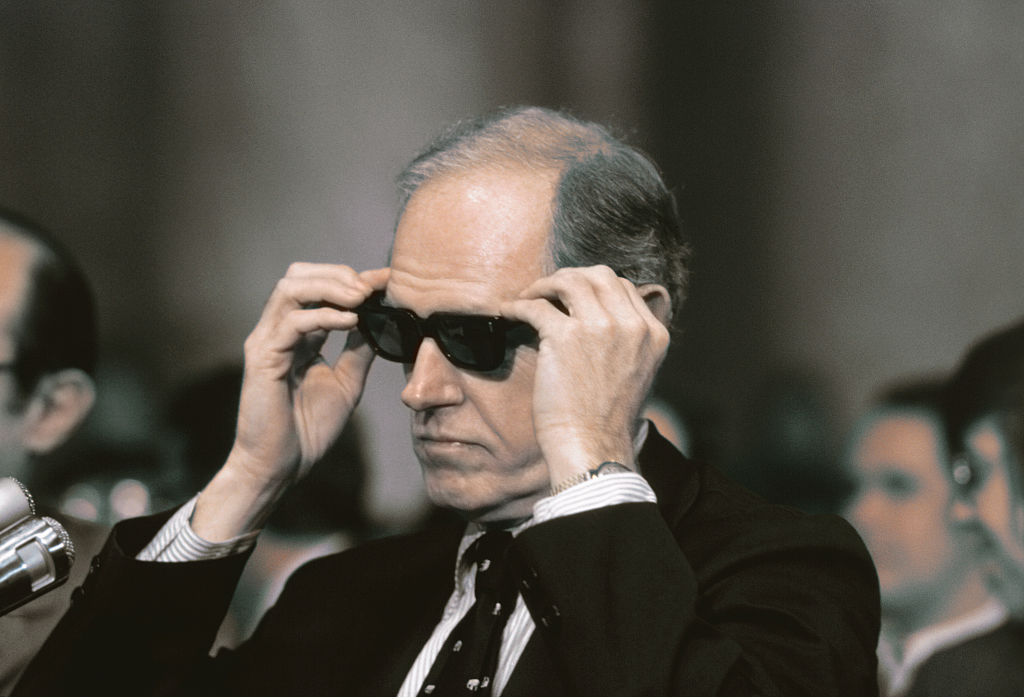
For entirely understandable reasons, E. Howard Hunt is best known for his role in the Watergate break-in — which resulted in him spending several years incarcerated in the mid-1970s. “He served 33 months in prison for burglary, conspiracy and wiretapping and emerged a broken man,” wrote Tim Weiner in Hunt’s New York Times obituary. But the years he spent at the CIA were also responsible for one of the stranger directions Hunt’s life went in.
As with a number of other intelligence officers, Hunt had a sideline in writing spy novels. In a new article for Air Mail, Jefferson Morley — author of a forthcoming book about Watergate, Scorpions’ Dance — zeroes in on Hunt’s literary side. Morley writes that Hunt “fancied himself the agency’s answer to Ian Fleming.”
Relying on information found in William F. Buckley’s papers at Yale — specifically, Buckley’s correspondence with Hunt — Morley describes Hunt’s novels as “actually an undercover mission in the cultural cold war,” with the goal of making the CIA look good to a skeptical public.
Hunt’s novels, written under the pseudonym David St. John, never quite broke through the way Fleming’s had. Morley quotes a few reports from unimpressed Paramount staffers who balked at the idea of turning them into movies.
Used copies of Hunt’s novels can still be purchased today — one edition even touts Hunt’s Watergate conviction on its front cover. It’s not entirely clear whether this worked as a marketing ploy; still, stranger things have happened in both publishing and espionage.

More Like This



From bleeding-edge menswear and wellness reportage to dining, dating, culture critique and beyond, all brought to you in their respective fields. Choose your favorites and sign up now.