I patiently waited in the lobby of my hotel in Fairbanks, trying to ignore that it was nearly 10 p.m. — normally when I’d be switching off my bedside lamp. Tonight, though, I wasn’t winding down. I was winding up, wired with anticipation and primed to trade sleep for the chance to witness one of the world’s great bucket-list wonders: the aurora borealis.
A plain white passenger van soon eased to the curb. Out stepped Aaron Lojewski, founder of Fairbanks Aurora Tours, a man who spends eight months of the year pursuing the Northern Lights. His greeting was brisk, no-nonsense. He was all business, a man singularly focused on the craft of anticipating when and where the aurora borealis would make an appearance.
I squeezed into the back of the van, crammed in with nine other aurora-seekers, all bundled up in down jackets and wool hats. No one spoke but the anticipation was noticeable. I felt lucky to be there, having only secured a spot just days earlier. Northern Lights tours can sell out weeks, sometimes months, in advance, especially near the new moon when night skies are at their darkest, allowing for the aurora’s subtle glow to be more visible.
Prepping for the Hunt
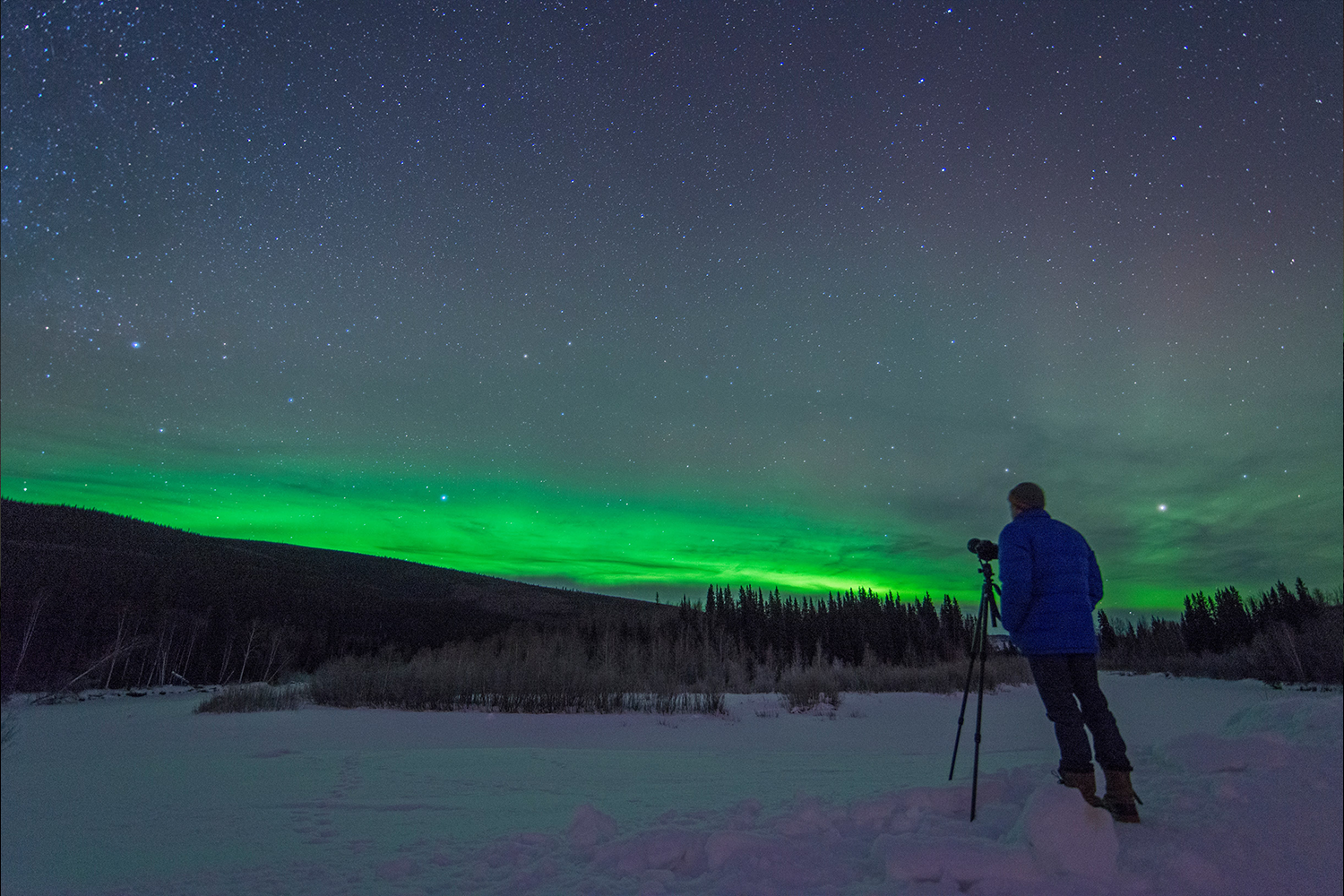
Some of my fellow aurora seekers brought serious-looking camera rigs — tripods, wide-angle lenses, remote shutter releases. Lojewski explained that a tripod is practically non-negotiable. Even slight camera movement can result in blurry images. Me, I had only my iPhone. I felt modestly ill-equipped for the adventure, yet thrilled to be there all the same.
As the van rumbled south out of Fairbanks, the city lights fell away and we were enveloped by the ink black night. Thick clouds pushed us to chase clearer skies. The aurora was stirring above, but hidden for now. Lojewski had already scanned a rotation of apps and plotted our first stop, about 90 minutes from downtown.
As he drove, he talked, not idly, but in the language of a space scientist, explaining solar winds, the earth’s magnetic field and geomagnetic storms. Interestingly, even with today’s technology, the aurora’s likelihood and location can only be forecast about an hour in advance.
A Photographer’s Guide to Capturing the Northern Lights During the Solar Maximum
How to choose the right gear, camera settings and the perfect time to photograph the colorful skies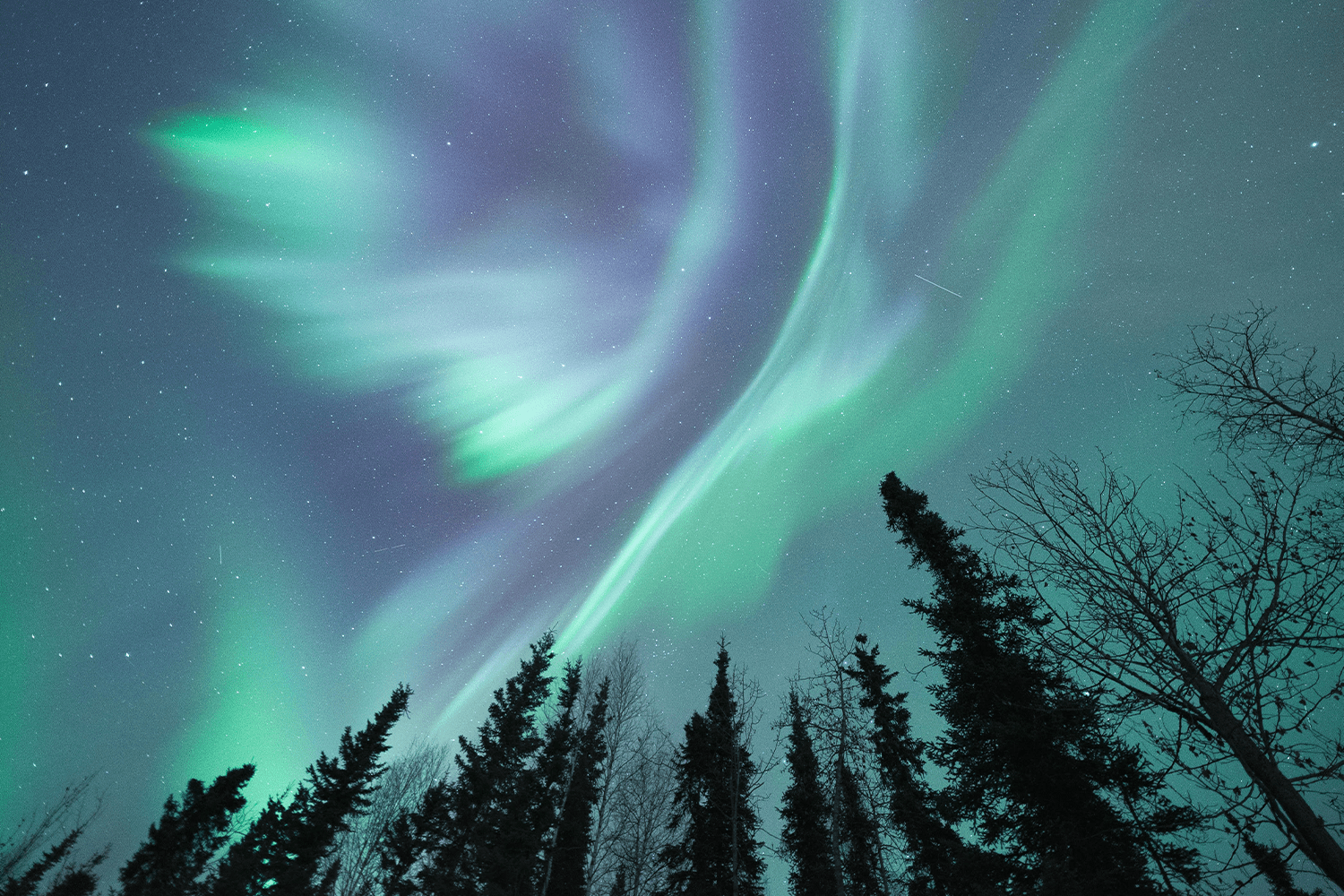
Reading the Sky
Aurora hunting, I came to realize, isn’t about chasing the lights so much as chasing the holes in the sky. Where would the clouds break open, and for how long? Could we get there before it closes up? “You’re chasing the conditions that you can enjoy the aurora. Clear sky visibility, low amounts of light pollution, beautiful scenery, hopefully not a lot of wind,” noted Lojewski.
He likened it to a game of Tetris. Each piece must lock into place for the night to succeed — the clouds, humidity, even the shape of the roads and plowed pull-outs. “You have to have a mental model of what’s going on everywhere,” said Lojewski.
Many aurora seekers fixate on the Kp index, believing it predicts their chances of seeing the lights, but Lojewski dismisses it. “The Kp index is planetary, it’s an earth-wide geomagnetic measurement. It’s not an aurora measurement,” he explained. What does play a role, he acknowledged, are equinoxes, which offer “a little bit of a technical advantage” when Earth briefly lines up more cleanly with the “interplanetary magnetic field lines of the solar winds.” By then, my head was spinning.
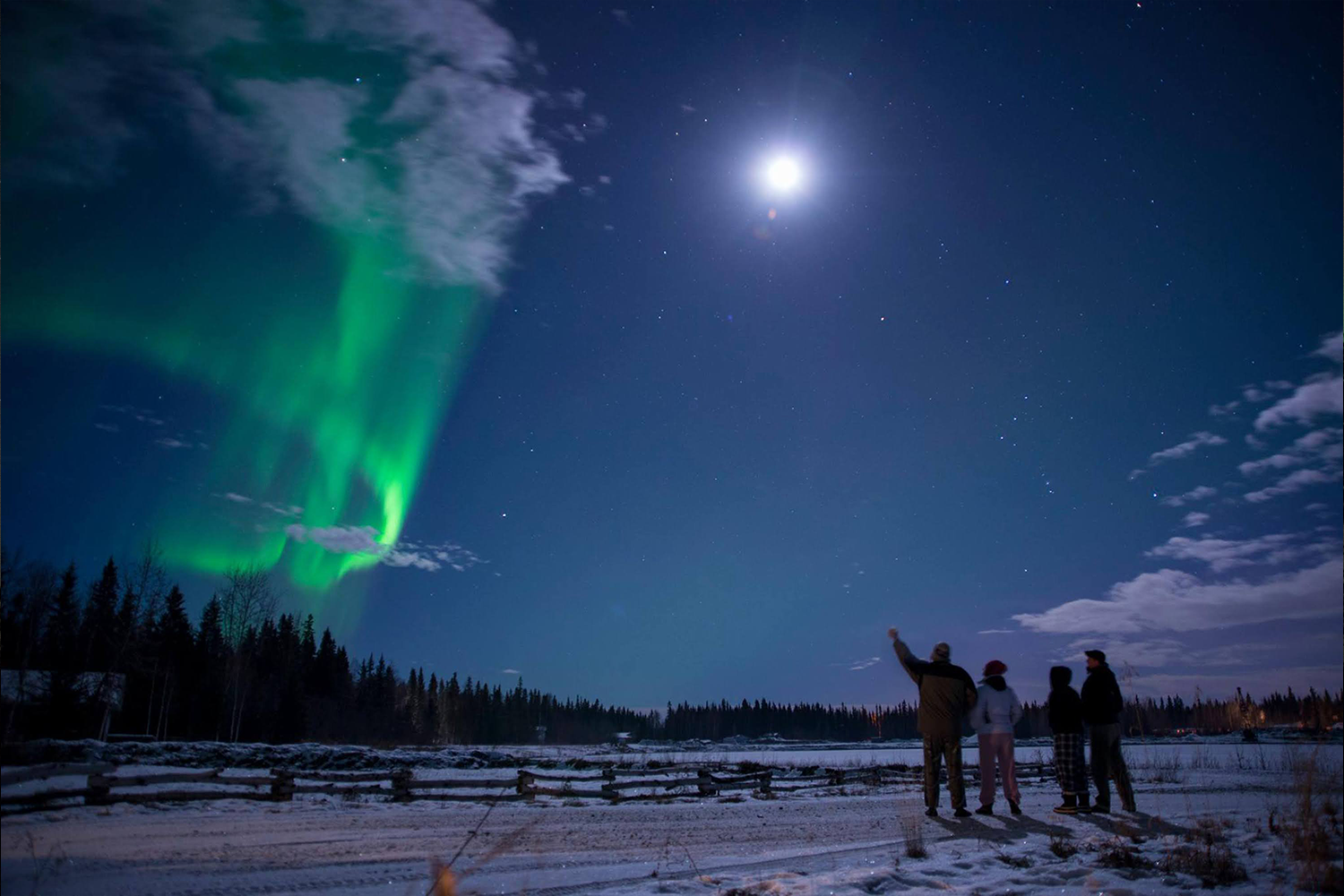
The moon, too, surprised me. I had assumed it would spoil the view, but that’s not the case. “The brighter the aurora, the more moon I want in the sky. The moon provides ambient, natural lighting. It lights up the landscape so it can be seen in your photos,” added Lojewski. For weaker auroras, it’s best when the moon is dim, since its brightness can wash out the delicate colors in the sky.
Dancing Lights
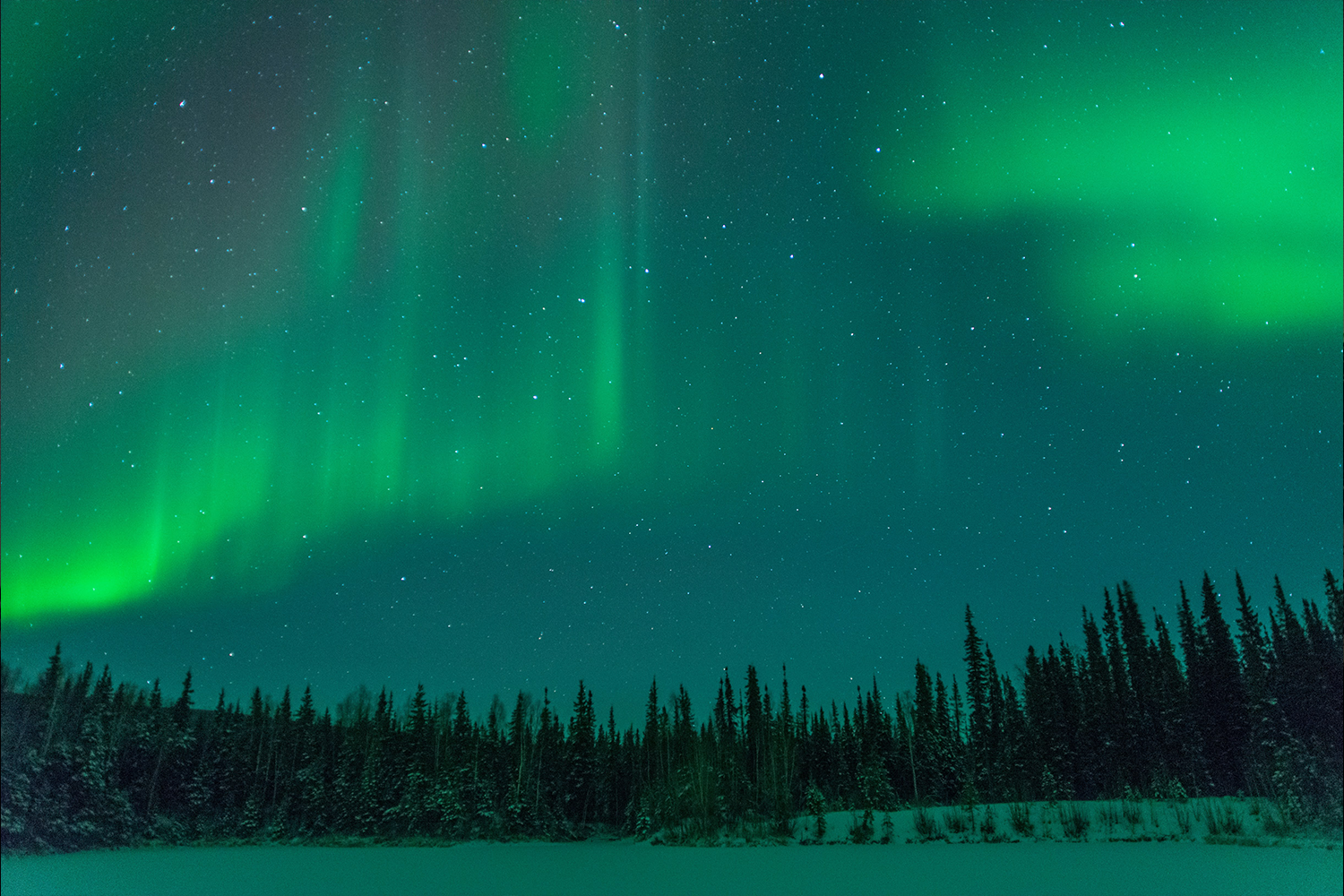
By 11:30 p.m., we made our first stop. The van door slid open and we spilled out into the cold, our heads tilted toward the sky. I lifted my phone and caught a few faint ribbons of green. Three photos in and Lojewski’s voice cut through the stillness. It was time to move on. Clouds were closing in. We piled back in the van. The hunt pressed on.
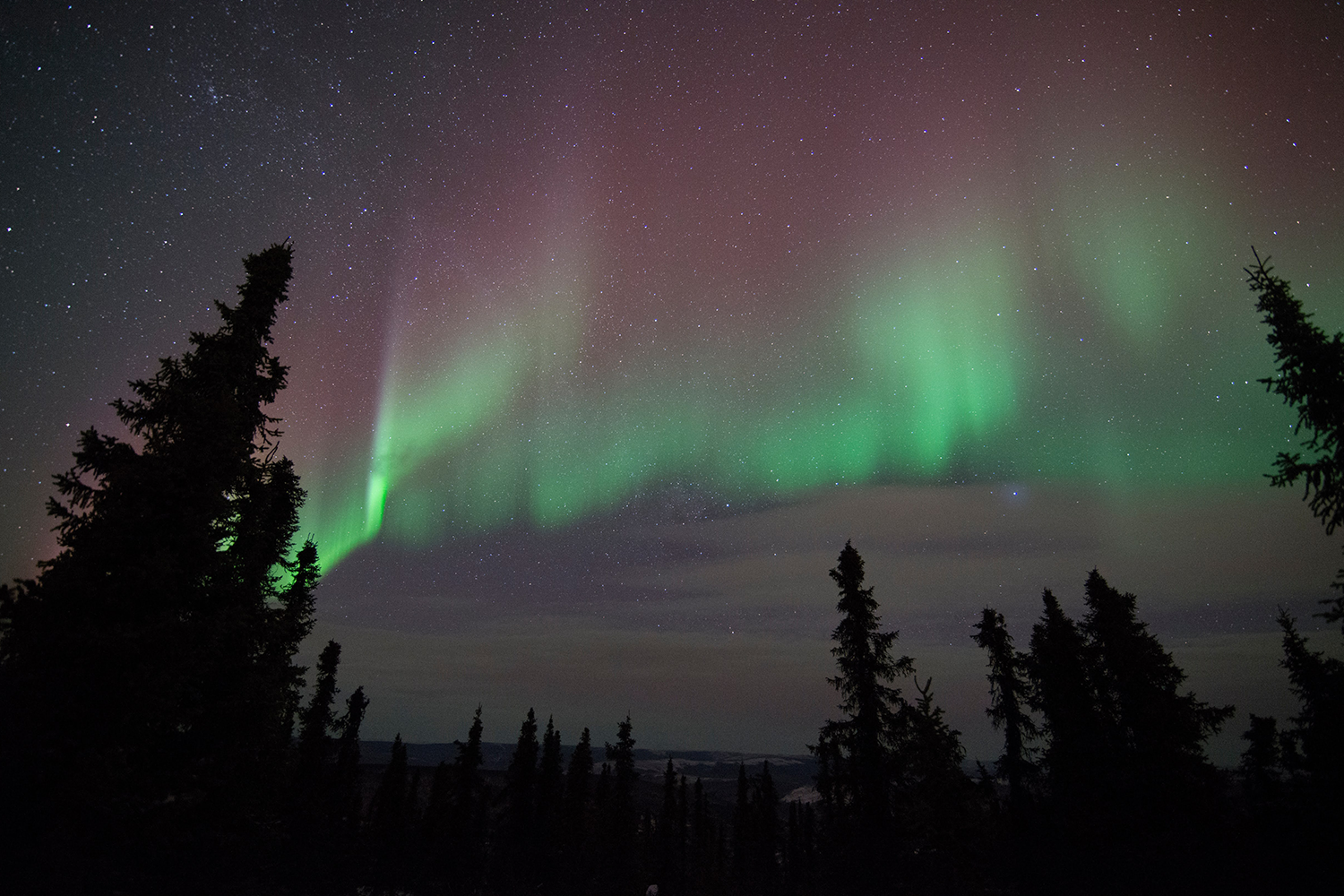
Nearly two hours later, we steered into another pull-off. This time muted greens, purples and pinks danced across the horizon. The aurora has been photographed millions of times, but no lens can capture the way you feel beneath a vast sky that stirs and sings above you.
Lojewski, meanwhile, was everywhere at once, adjusting tripods, answering questions, lining up portraits with guests framed beneath the light. He was a man who never doubted we’d find the lights. Later he told me, “The night you were on the tour was tough. Probably 100% of the people who went out on their own missed the aurora that night.”
Wrapping Up the Night
One by one, guests drifted back into the van, shivering but reluctant to abandon the sky. Lojewski lingered outside with the few still mesmerized. By the time we finally rolled back into Fairbanks, it was well past 4 a.m. I stumbled into my hotel, pulled the curtains tight and sank into my bed, grateful that the sun would not rise for a few hours.
For me, it had been a long night, but for Lojewski, it was just another shift in a season of hundreds. Tomorrow night, he’d be back out again. And the night after that. And the night after that, until the season wound down. Even then, in the so-called off-season, he rarely turns in before midnight. More often, it’s one or two in the morning.
For many, seeing the Northern Lights is a once-in-a-lifetime dream. For Lojewski, it’s become a calling. He only cancels tours for extreme conditions, often wind. Otherwise, he’s out there nearly every night of the season, ushering people into the cold and dark in search of wonder.
As for me, I’m back to my 10 p.m. bedtime. But part of me will always remain in Alaska at 3 a.m., standing in the snow, breathless beneath an endless sky lit up by the aurora.
More Like This
We're always on the scene eating, drinking and traveling near and far to bring you the best of what's happening out in the real world. Sign up for IRL now.