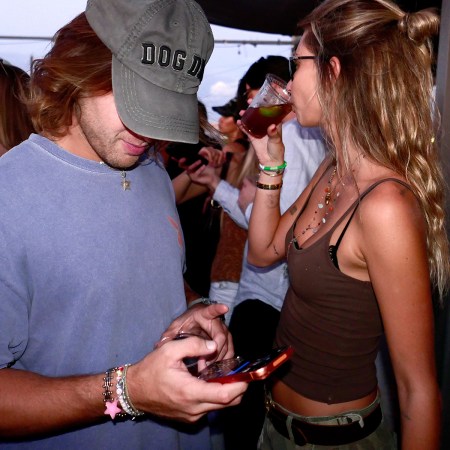
On a Monday in late August at Dear Friend Books in Bed-Stuy, I stood in the store’s backyard drenched in sweat. At a reading celebrating the newest launch of books by Loose Tooth Press, I crammed in shoulder to shoulder with all types of hip, young people as we struggled to hear writer and anti-tech activist August Lamm recite an original work of fiction over the strange, crooning noise in the distance.
When I arrived at the bookstore earlier in the evening, things were relatively calm. Maggie Kennedy, co-founder of and designer at Loose Tooth, had just arrived with boxes of books, toothbrushes, tables and sound equipment for the night’s reading. As she and her associate editors Marina Friend and Richard Zhang began setting up in the backyard, there was some nervousness about the turnout, but little by little, the space began to fill up until the exits were blocked. People were sitting on the concrete floors around the center of the room where writers read original work — some from the collection and some not — until evening turned to night.
Kennedy and Lamm first had the idea to start a literary magazine sometime in 2023, inspired by the “great lit mag boom of 2022,” possibly in reference to a period of time when literary magazines like Forever Mag, The Drunken Canal and Heavy Traffic were all people seemed to be talking about. While thinking more about the concept, Kennedy, a designer by trade, sought a way to lean into her aesthetic sensibilities, imagining a model slightly different than that of those typical upstart literary magazines that line the display shelves of independent bookstores like sympathy cards at Walgreens.
Unlike your typical literary quarterly, thick with short stories, poems and artwork, each work exists as an individually bound book, built like sturdy chapbooks no larger than the size of a hand. They’re pleasing to the eye as a collection, but they work just as well on their own, the perfect size and length to gift to a friend. In another subversion of the traditional economics of publishing short stories, instead of the flat fee one might receive from a magazine for a story (if you’re lucky), half of the profits go back to the contributors themselves, even if they’re at a point where they’re still breaking even.

Starting a press independently from scratch often means wearing many hats, an experience Kennedy described like “discovering publishing from first principles.” Kennedy and Lamm function as publishers, editors, designers and distributors, handling every step of the process from submission to stocking in bookstores (when I spoke with Kennedy, she had just come from dropping off books at UPS).
While starting something small from the ground up can be exciting, it also presents its fair share of challenges. Each of the first two collections feature a mix of bigger-name writers like Mary Gaitskill and Tao Lin and lesser-known, emerging writers who might be fresh off an MFA or a few published stories online. Curating and selecting stories from the submission pile presents a tough conundrum: On one hand, you want to bring in big-name writers because the attention can generate more sales, meaning more opportunity down the road to expand one’s operation; on the other, there’s a desire to champion and support emerging writers who wouldn’t be able to get their fiction published by more traditional outlets.
In dealing with this, the folks at Loose Tooth Press trust their instincts. Each of the stories are read at least twice by the various editors, with an eye for a story’s completeness and ability to stand on its own. For Kennedy, a little humor doesn’t hurt either. I enjoyed reading a story in the recent collection by Torrey Paquette, about a slighted documentary producer who believes the key to his career is interviewing Sir James Dyson of vacuuming fame.
The response and attendance at readings are a sign that things are going well. Whenever I go to literary readings for independent magazines and presses, I usually expect the crowd to mostly consist of friends of the readers and men who go to these things in search of romantic connection. The event from this past August was packed with strangers, and Kennedy was pleasantly surprised by how many people she didn’t know. Taking it as a sign that they could do it again, they’ve kept the train moving. Loose Tooth Press recently opened submissions to build a chapbook of more experimental work and are in the process of finding a distributor so they don’t have to go bookstore to bookstore asking the employees if they’d be willing to stock the collection — just like Kennedy and Marina Friend the day after we spoke. If you buy a book, maybe they can wear one less hat.

More Like This
This article appeared in an InsideHook newsletter. Sign up for free to get more on travel, wellness, style, drinking, and culture..