
Life Lessons From an Oregon Motorcycle Adventure
Hard falls in the high desert. Here's what it's like to off-road the most remote region of the Beaver State.
In a high desert ecosystem like Eastern Oregon, rain is your best friend — until it’s not. Shaped by the rain shadow of the Cascades, little to no precipitation falls in the desert for months at a time, reducing the vegetation to sagebrush and grasses and the soils to a silty and sandy mix. Wildlife is sparse and human development even more so. You can easily ride a hundred miles without seeing another soul.
Storms, most common in the winter, are a necessary ingredient for good motorcycling conditions, transforming the soft ground into a tacky surface that is trustworthy at speed. However, with too much rain, the surface evolves into a clay-like adhesive that can cake a tire in seconds, creating almost zero friction between rubber and road — a dangerous ice rink effect. Therein comes the rub.
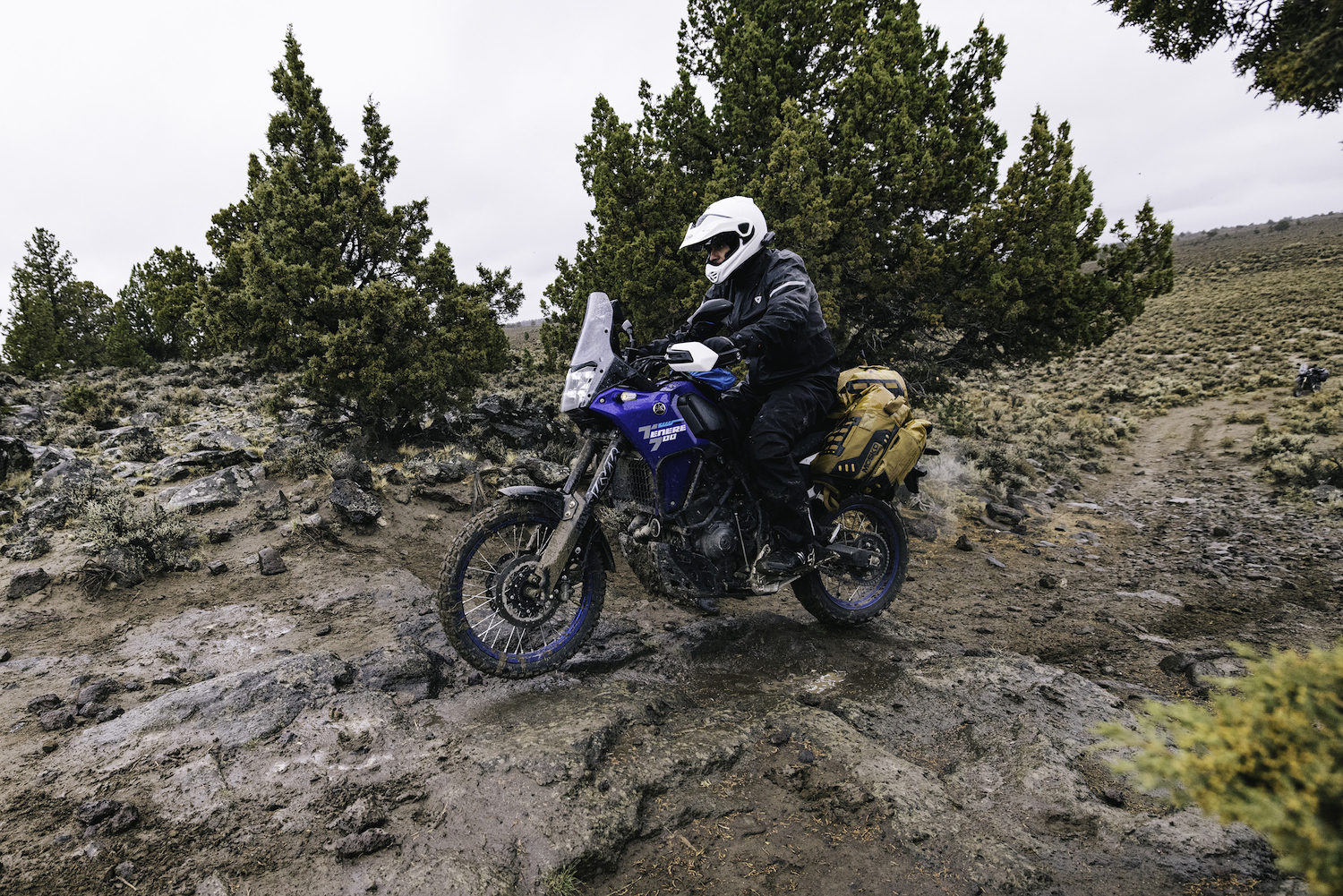
As we flew by Wagontire Mountain, halfway between the small outpost of Burns and the even smaller hamlet of Christmas Valley, the rain picked up and the invisible threshold was crossed. Unknowingly, I pulled my front brake a little too hard on a downhill corner, triggering the front tire to wash out and throwing me sideways off the bike. A small mistake with potentially huge consequences.
How We Got There
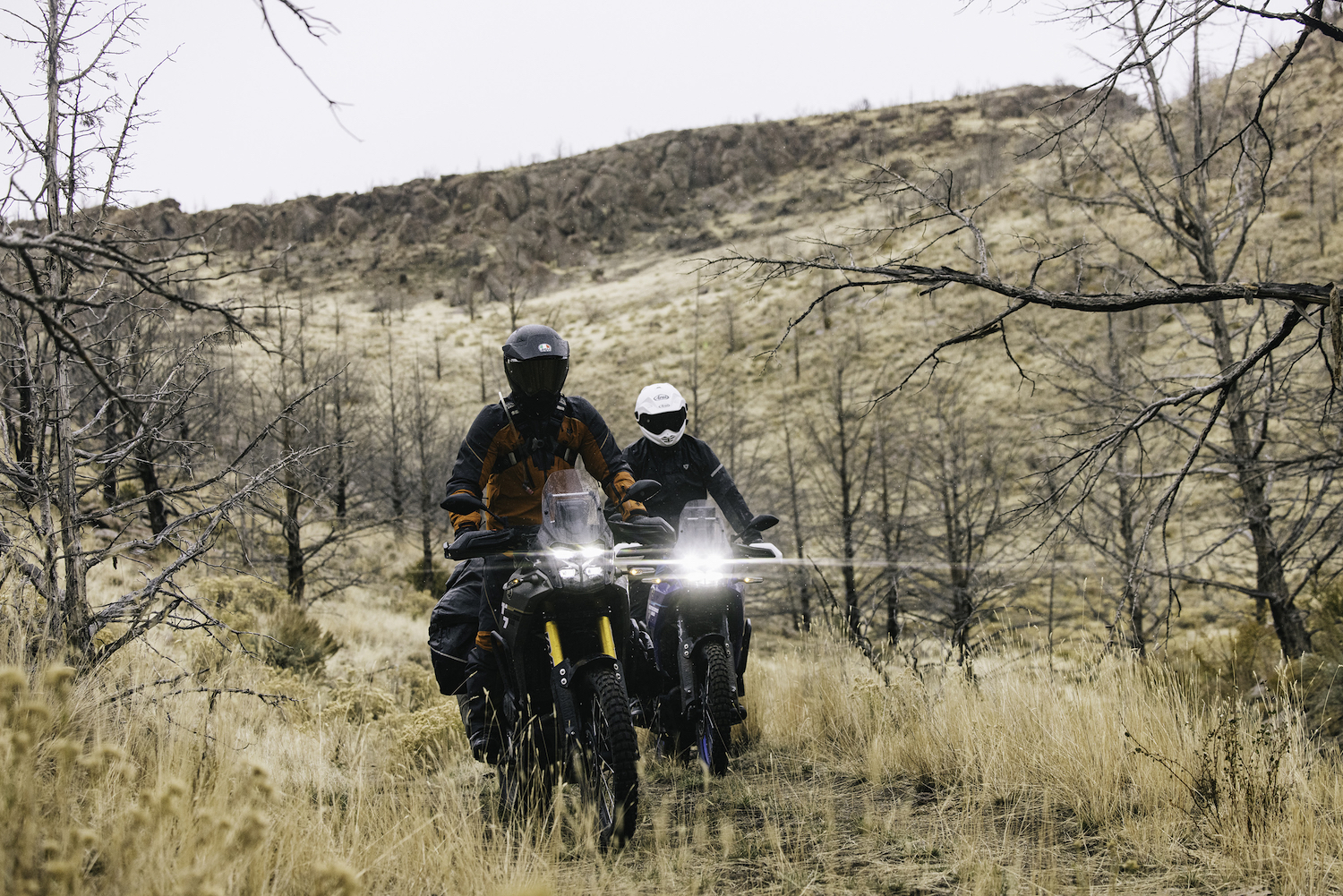
The idea was simple. Load our motos with food, tools and camping gear for a 400-mile off-road loop along a section of the Oregon Backcountry Discovery Route (ORBDR), starting and ending at home. This route, popular in the adventure motorcycle world, follows forest roads and remote two-tracks across the state that my friends Sean, Josh and I now call home. Oddly enough, while we’ve ridden over 10,000 miles across 20 countries on four continents together, this would be our first trip in our new backyard.
A week before our trip, the forecast began to deteriorate, putting us in a pickle. What had been enjoyable fall days in the 50s and 60s slipped to sub-freezing temps and more than an inch of precip, spanning the entire Pacific Northwest. With multiple feet of snow predicted in the high country to the west, we begrudgingly pivoted to the high desert to the east, hoping the soft ground would be wet — but not too wet.
The new route would take us from our homes in Bend past the Badlands and into the Ochoco Mountains, along Beaver Creek, and through the Malheur National Forest to get to Burns. From there, we would play it day-by-day, assessing if the Steens Mountains and Alvord Playa were still ridable, or if we would need to stay at lower elevations, exploring the dunes, lava beds, and unique volcanic features of the Great Basin area. In short: plan for everything and hope for the best.
Back to The Crash
I landed bluntly on my side, just before the bike pinned my ankle backward. I was able to wiggle it free, but even with adrenaline rushing, I could feel a sharp pain immediately. Later diagnosed as a grade one sprain, it would have been worse if I wasn’t wearing boots that provide a ton of support. Sean walked over and helped me lift the bike upright, giving it a second before starting it. The next few miles took longer than I’d care to admit, riding slowly and carefully, as the rain poured and the ground became more slick.
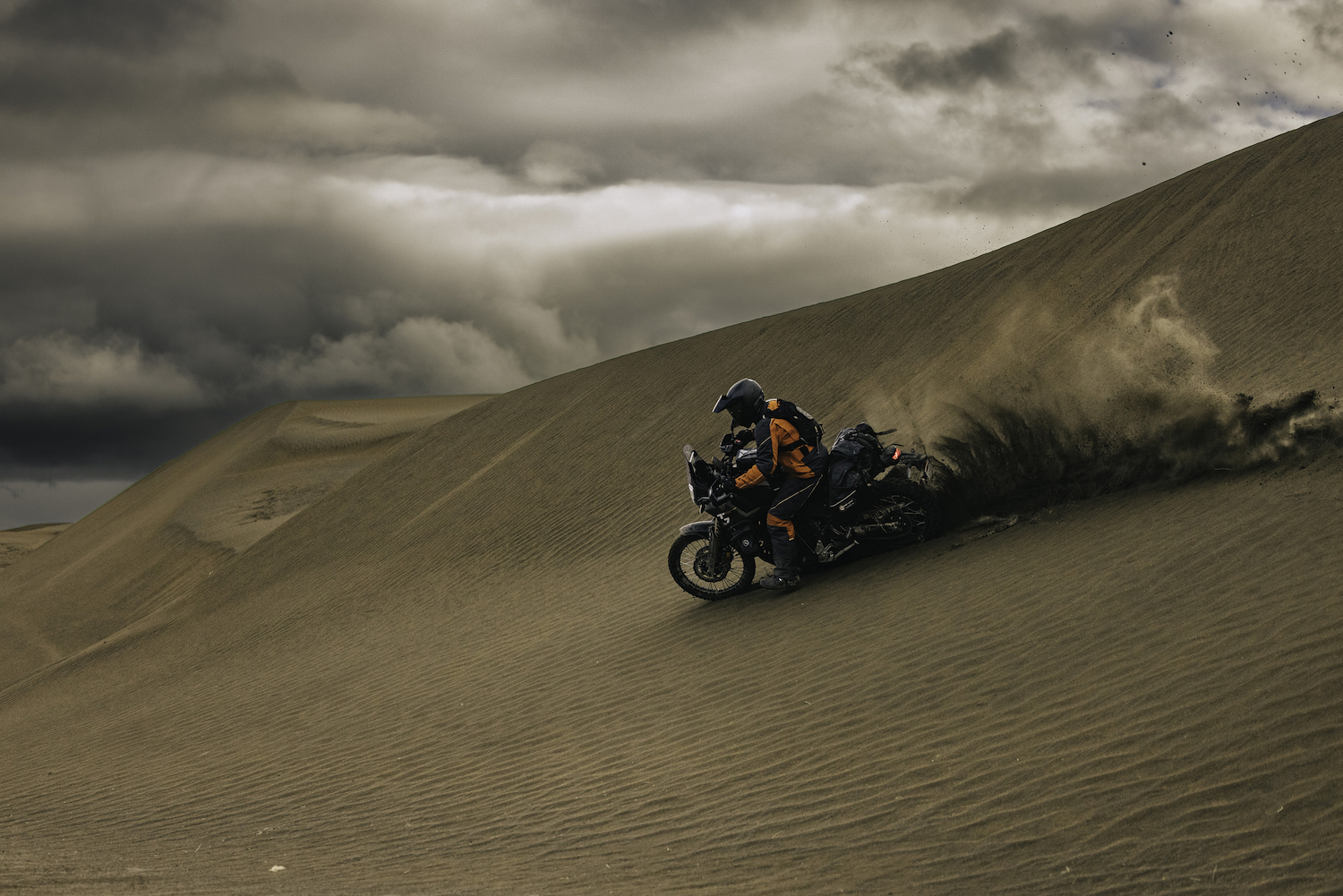
Grinding our teeth, we pushed on to the Lost Forest Sand Dunes. Despite another storm cell hovering in the distance, we opted to stop and play — that was the entire purpose of the trip anyway. Sand dunes are typically best for lighter two-strokes, but with so much rain, even our burly motos loaded with gear were able to stay afloat. With beams of light shooting down, I pulled out my camera and snapped a few of my all-time favorite photos — a reminder that lemonade always comes from lemons.
After an hour of mischief, we got back on the road, reaching a town of 1,300 people at dusk. With overnight temps in the teens, we opted for a motel over camping. Although I typically prefer to stay away from the street lights and road noise, there are exceptions to every rule. Drying out in a cheap motel, eating at the only restaurant in town and laughing about the day was more than worth it.
Riding Back Home
After a slow morning to let the bikes thaw out, we got back in the saddle and headed north, with a plan to hit a few hidden gems on our way home. We stopped first at Crack-in-the-Ground, a two-mile-long, 70-foot-deep volcanic fissure straight out of a sci-fi movie. After an exploratory hike, we continued to Fort Rock, a horseshoe-shaped rock wall created by a volcanic eruption, which looks much like a giant sports stadium. Finally, we rode the motos to the bottom of Hole-in-the-Ground, a 500-foot-deep and mile-wide volcanic crater, formed by a steam explosion 14,000 years ago.
Our original itinerary didn’t include any of these stops, but we wanted to make the best of a cold, wet and dreary situation. Our self-guided geological tour concluded a few miles short of Paulina Peak in Newberry National Volcanic Monument, running into deep snow that was slick and treacherous on bikes, forcing us to turn around and drive a different way back to our homes in Bend.
Looking back, my main takeaway is that it’s never the trip that matters most, it’s the people you choose to do it with. Along with two of my best friends, I was confident we could solve any problem, affording us a lightness that made some of the trip’s most difficult situations a lot easier. Hard falls, a dead battery, an empty gas tank, freezing temps, and huge storms were all solvable if we just viewed them that way.
The Gear That Worked
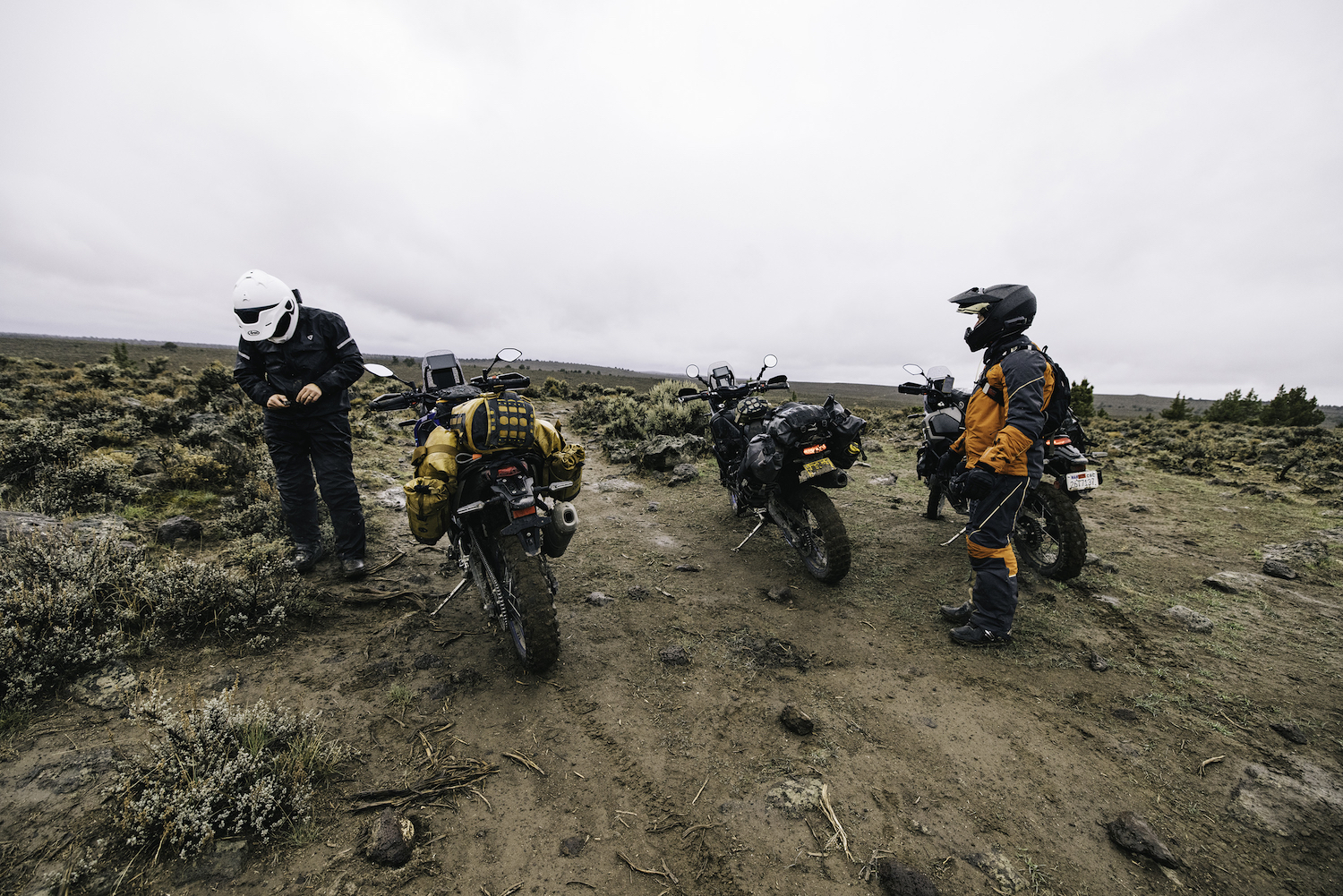
Yamaha Tenere 700: A long motorcycle trip starts and ends with the bike itself. If your bike isn’t capable enough for the route, you’re dead on arrival, regardless of your skills. Fortunately, the T7 isn’t just pleasant at highway speeds — it truly excels on dirt roads and rugged two-tracks. The handling and suspension are remarkable; this bike has truly changed the type of trips our trio can accomplish together.
Michelin Anakee Wild Tires: Perhaps the only lacking thing on the stock Tenere is a good pair of tires. For a trip like this, we needed a tire that could handle long miles on tarmac, while providing traction in sand, lava rock and plenty of slick sections. Other than the clay-like mud that would be impossible for any tire, the Anakees impressed us with their versatility across a huge range of terrain.
Fox Defend Jacket and Defend Pants: Completely waterproof and remarkably warm, we were able to ride in rain and 40-degree temps all day while rarely needing to stop to warm up. The Defend kit employs fully seam-sealed construction and reinforcement in high-wear areas to be one of the most durable motorcycle kits I’ve ever tested, making it perfect for fringe season and cold-weather trips like this one.
REV’IT! Taurus GTX Gloves: Nothing can ruin a fringe season motorcycle trip faster than cold hands. Anyone who has spent time on a bike in rain, sleet, wind or even snow knows this. Without heated grips, I needed a pair of gloves that would keep my hands cold during long highway miles at 80mph, while still providing the dexterity to ride technical off-road sections. The solution is the Taurus GTX gloves, which have a GORE-TEX waterproof liner, a ton of Primaloft insulation and protective hard knuckle armor.
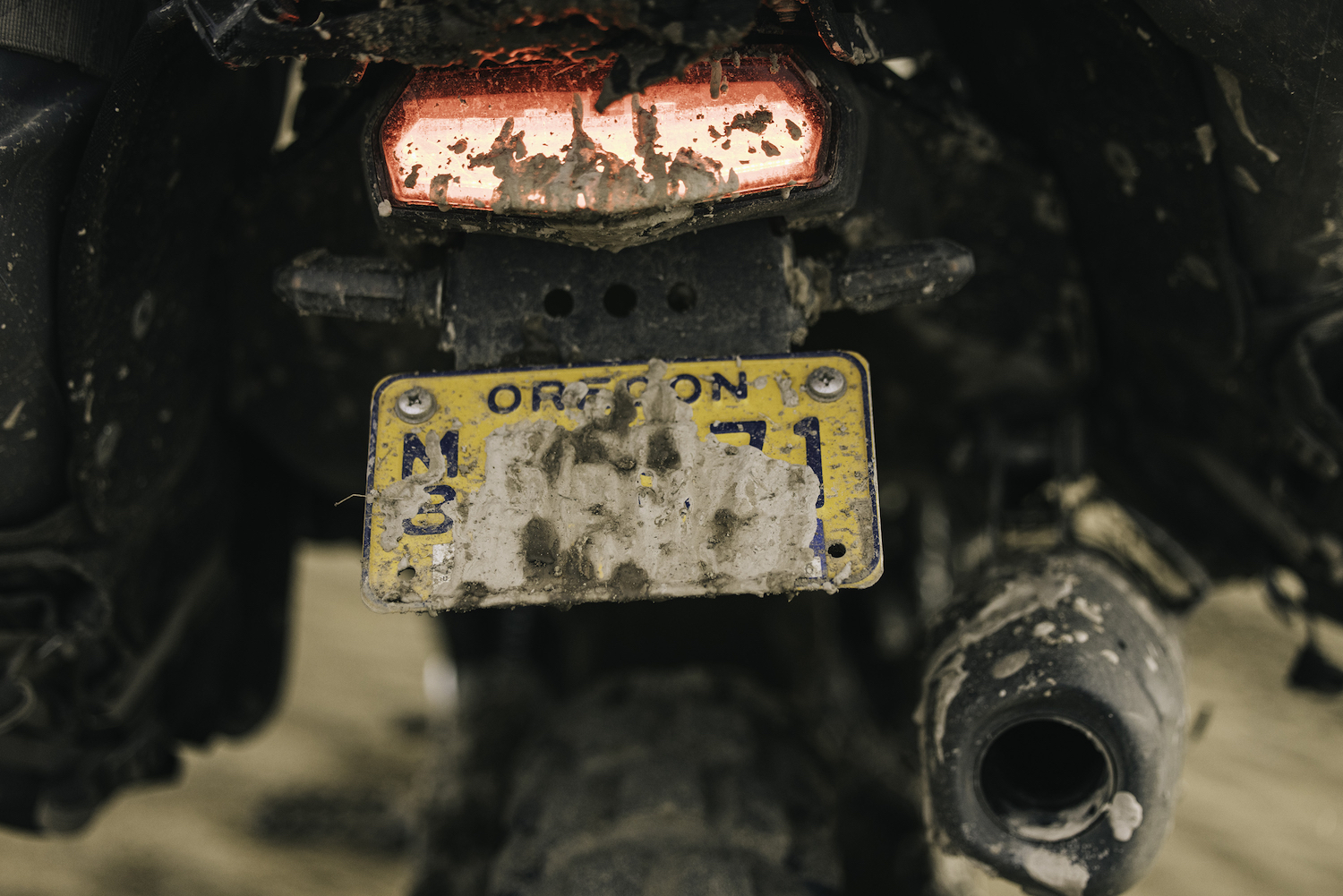
Mosko Reckless Luggage System: Designed for long-distance, off-road trips, the Mosko system is best in class. Even with hard falls, heavy rain and overnight frosts, my clothes stayed dry and my camera gear stayed in one piece. The modular system makes it easy to adjust for different trips or climates and the mounting system works with any bike, meaning your luggage is one less thing you have to worry about.
Cardo PackTalk Pro: For the last five years, we’ve been using the Cardo in-helmet communication system for all our trips, and I’m certain we’ll never go back. It truly changes how our group communicates and navigates, especially on the fly, making it simultaneously safer and more fun. The new Pro version is a big step forward in crispness and clarity, not to mention a breeze to set up.
Peak Design Moto Charging Mount: I’ve used a variety of phone mounts over the years and each one has its pros and cons, but only one has everything you need. The Peak Design mount is easy to use while still having a great locking mechanism for rough, off-road riding. The charging is fast without needing to plug in a cord, and I can mount it almost anywhere on my bike.
Chigee AIO-6 Display: Instead of clunky navigation units with proprietary hardware, I’ve become a huge fan of Chigee displays, which allow me to use CarPlay from my phone and apps I’m used to, like Google Maps and Gaia. The latest AIO-6 has a bright screen that is easy to read in any condition, plus it’s durable and waterproof, which makes it great for cold-weather trips like ours.

More Like This
Twice a week, you'll find guinea pig features, personal essays and expert interviews on living better — for however long you’re here. Subscribe to Champ now.