
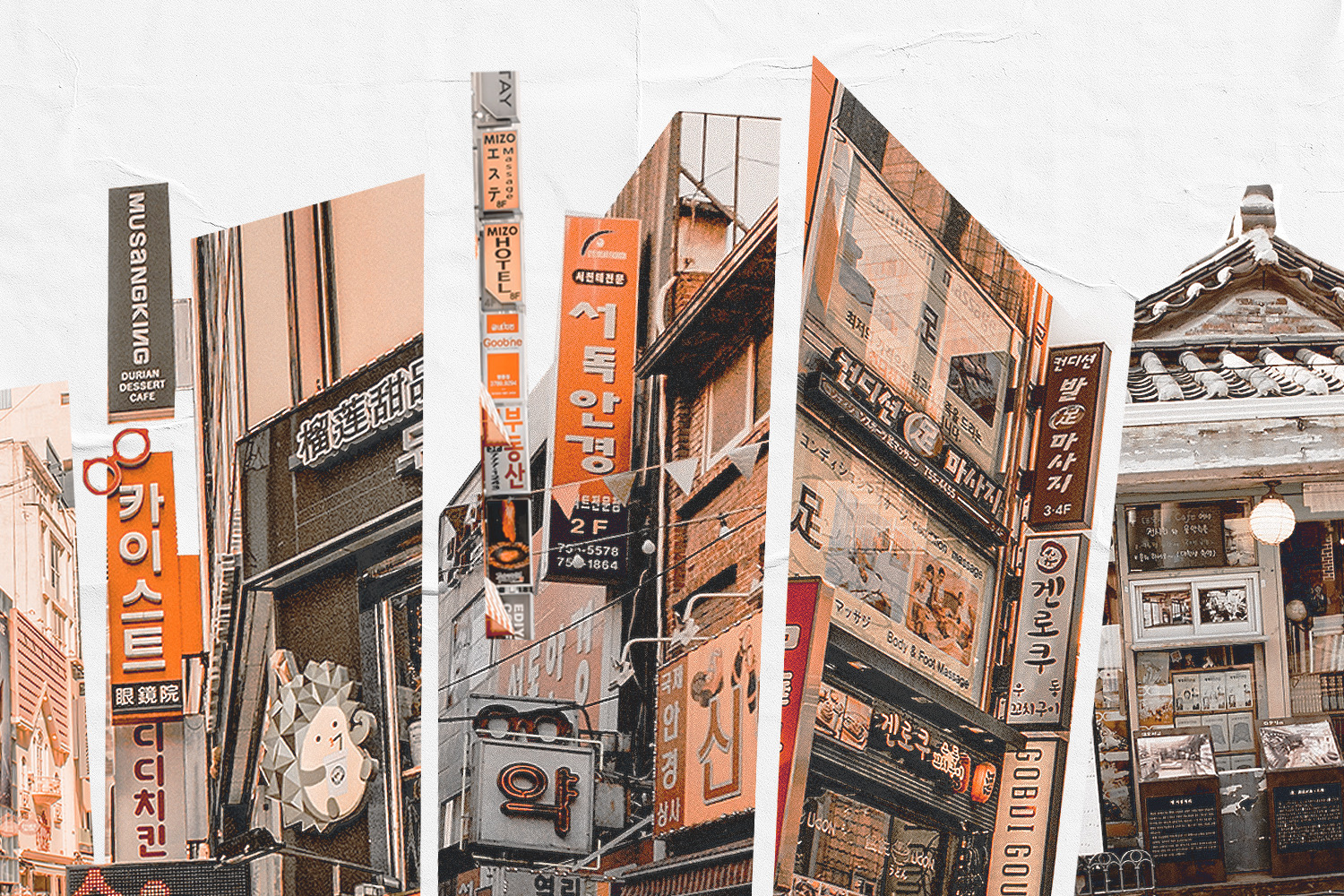
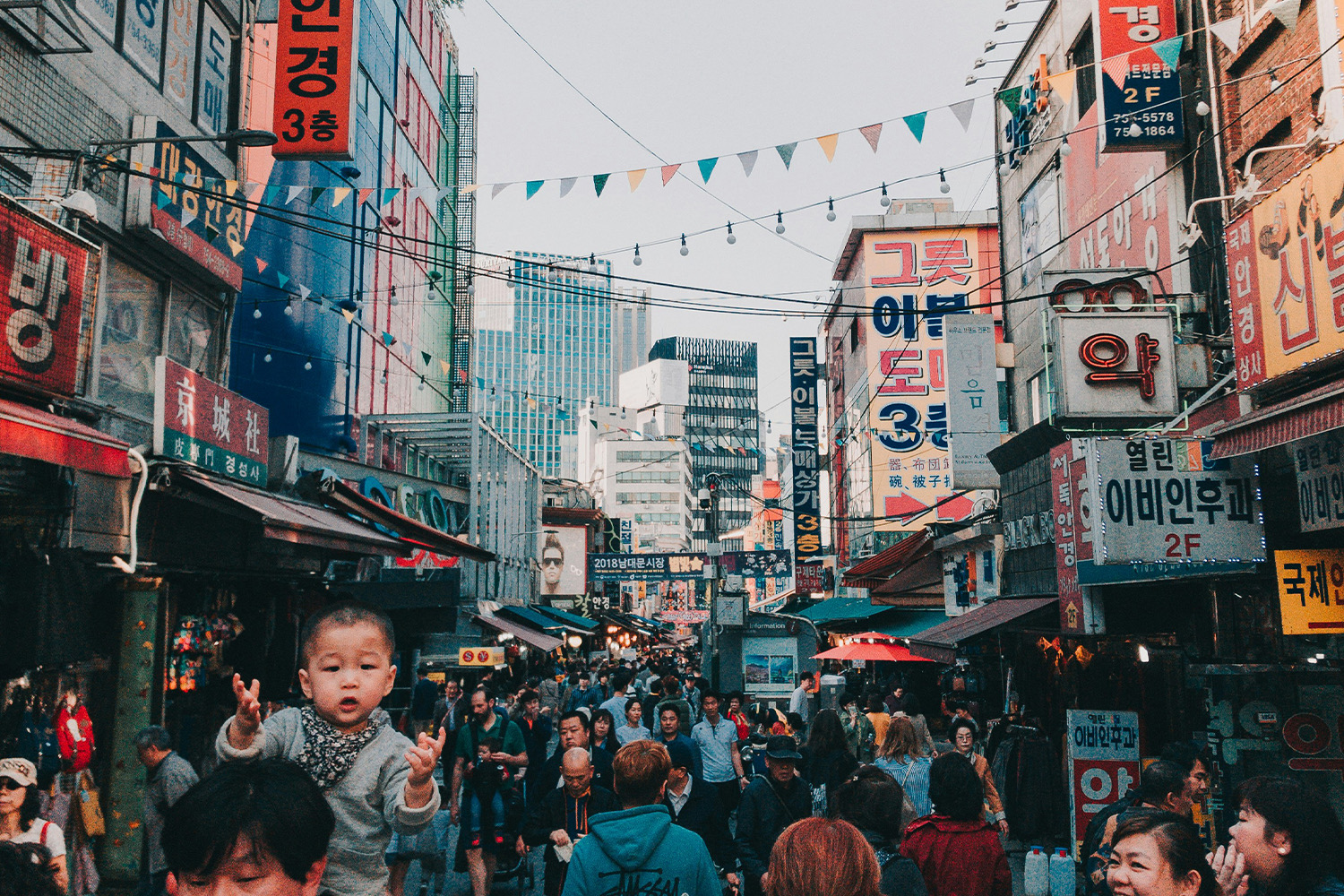
Pop-up shops appear next to 10-story malls stocked with every kind of store imaginable. A food hall fusing half a dozen cuisines might be tucked three floors underground. Meanwhile, a line stretches down the block for the latest streetwear drop or K-beauty opening.
As a major metropolis, Seoul has all the global shopping insignia you’d expect, just on a grander scale. Commerce here is built around tightly packed neighborhoods and contemporary mega-malls, most opening late morning and staying lit well into the evening.
It’s efficient and overwhelming in equal measure. Many of Korea’s top brands run multiple “flagship” stores across the city’s major neighborhoods, so you can see a lot by committing to just a couple of them, which is fortunate, since Seoul’s size makes exploring more than two neighborhoods in a day nearly impossible.
The real draw, though, is the sheer scale and variety. Global luxury houses and household names are everywhere, but often with Korea-exclusive collections, collaborations and concepts you won’t find anywhere else. Seoul is a shopping destination in the truest sense, one that puts the country’s cultural influence on full display.
The only question is where to start. Consider this your roadmap to the neighborhoods, department stores and flagship shops worth building an itinerary around.

The Journey Awards
It’s a big world out there. Here are the boutique hotels, unforgettable destinations and singular travel experiences worth your time.Understanding Seoul’s Duty-Free Shopping
Most foreign passport holders can shop tax-free in Seoul two ways: asking for tax refund receipts at checkout in most stores, or heading to the duty-free floors at the city’s largest department stores and malls.
Unlike Japan, where refunds typically happen at the point of sale (though that’s changing this year), South Korea requires foreign passport holders to collect theirs — minus processing fees — at the airport before departure. You’ll be offered a choice of currencies, but if you can wait, taking the refund in Korean Won and converting it at your local bank once home gets you a far better rate than the airport counter.
Select branches of Lotte and Hyundai Department Stores dedicate at least one floor to duty-free shopping, sometimes more, divided by category — cosmetics, watches, clothing. Pricing runs in U.S. dollars, the standard currency for global duty-free. Anything you buy gets paid for in-store, then picked up at a post-security counter before your flight.
Much of Seoul’s duty-free shopping is built around the 4.6 million Chinese tourists who visit the country each year, and it shows in how the floors are staffed. Service here is straightforward rather than warm, a departure from what Westerners might expect, with salespeople typically waiting for you to ask rather than approaching first. The whole exchange can feel more transactional than the American or European equivalent.
Don’t Skip the Pop-Up Shops
Koreans love a fully integrated shopping experience, one that folds in social posting, app usage and real-time deals. Korean and international brands alike have taken note, building out “pop-up” experiences that run for about a month and might feel familiar to Westerners, if more elaborate. Many require visitors to complete a stamp-based “journey” through the store to earn a free gift, sample or discount. The activities are simple, usually hands-on and span nearly every industry, though skincare and beauty brands dominate the pop-up circuit. Best of all, most don’t require a Korean phone number or ID, so anyone can join in. The catch is that promotions are almost entirely in Korean, so keep a translation app handy to know when and where things are happening.
It’s More About the Malls
The malls in Seoul rise high above street level with no space left bare. Everything is here: eating, recreation, groceries and, of course, lots of shopping. You’ll find fewer standalone stores and more brands clustered by category on a shared floor: New Balance and Umbro near Fila and Yonex, Snow Peak tucked into an “outdoors” floor. Contemporary menswear — suits, sweaters — gets its own dedicated area.
Malls are also where you’ll spot “event” placards flagging sales or promotions. These pop up regularly and aren’t always advertised, so it’s worth asking a salesperson about additional discounts before you buy.
What You’ll Find in Various Seoul Neighborhoods
Myeongdong
The beating heart of Seoul shopping, and its biggest tourist draw. Myeongdong Shopping Street packs in major names and trinket stalls alongside street food catering to visitors, and comes alive after dark as most stores stay open late. Nearby Hongdae shares the same DNA, spread across more streets with more of a late-night party scene.
Seongsu
Home to a rotating cast of Korean skincare and beauty pop-ups alongside flagship branches of international names. One of the trendier corners of the city, expect a younger crowd, and the occasional celebrity sighting.
Dosan / Apgujeong
Seoul’s answer to Beverly Hills. High-end names dominate the small streets here, and patrons dress to impress for an evening of shopping and expensive eats. The neighborhood even has its own “Rodeo Street,” lined with luxury boutiques and well-to-do cafés.
Itaewon / Hannam
A centrally located neighborhood with Seongsu’s trendiness in a quieter package. The hilly streets hide independent fashion stores along with some interesting art shops. The hill’s crest gives way to a major thoroughfare lined with more broadstroke Korean shopping and the Leeum Museum of Art up above.
Seochon Village
Old hanoks (traditional Korean housing) sit alongside new, innovative artisan shops in this neighborhood hugging the mountains on the city’s north end — a combination that makes for a charming, slightly surreal afternoon of vintage stores, bookshops, cafés and old-school architecture. Big-name shopping is refreshingly absent here, replaced by upstarts still making their name.
More Like This
This article appeared in an InsideHook newsletter. Sign up for free to get more on travel, wellness, style, drinking, and culture..